“I was aware of my own breathing and of the effort not to look at her breasts.”
— Cheryl's initial awkward encounter with Clee, highlighting her social anxiety.


Miranda July (2015)
Genre
Literary Fiction
Reading Time
360 min
Key Themes
See below
Sign in to track this book
A lonely woman's meticulously ordered life unravels and reweaves into a tapestry of unexpected love and raw self-discovery when a disruptive young houseguest forces her to confront her deepest fantasies and maternal longings.
Cheryl Glickman, a single woman in her early forties, lives alone in Los Angeles. She works at a non-profit called Open Palm, which teaches self-defense to women. Cheryl's life is marked by intense internal monologues and peculiar rituals. She is fixated on a baby boy she encountered briefly when she was six years old, believing he reincarnates and appears to her in various infants she sees. She also harbors a deep, unrequited love for Phillip Bettelheim, a married, older board member at Open Palm, with whom she fantasizes about a karmic, multi-lifetime romance. Her home life is meticulously ordered, and she practices a form of self-defense called 'Golda,' which involves a specific abdominal clench.
Cheryl's carefully constructed world is abruptly disrupted when her bosses, Carl and Paula, ask her to house their twenty-one-year-old daughter, Clee, for a few weeks. Clee is introduced as a beautiful, blonde, and seemingly self-absorbed young woman with a history of difficult behavior. Cheryl, despite her initial apprehension and desire for solitude, agrees to the arrangement. From the moment Clee arrives, her presence is a jarring contrast to Cheryl's quiet existence. Clee is messy, loud, and disrespectful of Cheryl's routines and personal space, immediately creating tension and discomfort within the small house.
Clee's behavior quickly escalates from merely annoying to actively hostile. She takes over Cheryl's living room, leaves her belongings everywhere, and makes rude remarks. Cheryl, initially passive-aggressive, attempts to assert herself but is often intimidated by Clee's brazenness. The tension in the house becomes palpable, with Cheryl feeling increasingly violated and out of control in her own home. She begins to have vivid, often violent, fantasies about confronting Clee, but in reality, she mostly retreats into herself, feeling helpless and overwhelmed by the younger woman's disruptive presence. The dynamic becomes a power struggle.
One evening, the dynamic shifts dramatically when Clee, seemingly out of nowhere, initiates a strange and aggressive physical game. She begins to physically assault Cheryl, punching and kicking her, while simultaneously demanding that Cheryl fight back and call her 'bad man.' This unexpected turn of events is shocking and terrifying for Cheryl, yet she finds herself compelled to participate. The 'bad man' game becomes a recurring, almost ritualistic, activity between them, characterized by its intensity and the blurring lines between real pain and theatrical performance. This game begins to redefine their relationship in a profoundly unsettling way.
As the 'bad man' game continues, Cheryl's initial fear and confusion slowly transform into something else. She discovers a perverse pleasure in the physical confrontation, a release she hadn't known she craved. The game forces her out of her passive existence and into her body in a way her 'Golda' practice never did. Through these intense, violent encounters, Cheryl starts to feel an unexpected connection to Clee. She begins to see beyond Clee's initial cruelty, sensing a vulnerability and even a strange form of care in her actions. This shift marks the beginning of Cheryl's emotional awakening and a developing, complex attachment to Clee.
The 'bad man' game is abruptly paused when Clee reveals a significant secret: she is pregnant. This revelation completely alters the dynamic between the two women. The focus shifts from their violent encounters to the impending arrival of a baby. Cheryl, who has always been obsessed with the idea of 'her baby,' finds herself in a unique position to care for and protect Clee and her unborn child. They begin to prepare for the baby's arrival, shopping for baby items and discussing the future. This shared purpose further deepens their bond, fostering a sense of interdependence and domesticity that was previously unimaginable for Cheryl.
Clee gives birth to a baby boy, whom they name Pootie. Cheryl immediately embraces a maternal role, caring for Pootie with an intensity she has always reserved for her imagined baby. She feels a profound connection to Pootie, seeing him as 'her baby' in a tangible way. However, the 'bad man' dynamic doesn't entirely disappear. Clee, struggling with postpartum emotions and the demands of motherhood, occasionally reverts to a version of her 'bad man' persona, though now less violent and more emotionally manipulative. Cheryl, in turn, finds herself navigating this new, complex family unit, torn between her fierce love for Pootie and her evolving relationship with Clee.
Phillip, Cheryl's long-standing obsession, re-enters her life in a more direct way, inviting her to dinner. Previously, this would have been the culmination of her fantasies. However, with Pootie in her life, Cheryl's priorities have drastically shifted. While she still feels a flicker of her old attraction, her overwhelming focus is now on Pootie and Clee. The dinner with Phillip is anticlimactic, highlighting how much Cheryl has changed. Her previous, singular obsession with Phillip has been replaced by a more complex, messy, and real love for her new family.
Cheryl, Clee, and Pootie settle into an unconventional but deeply bonded family unit. Cheryl fully embraces her role as Pootie's primary caregiver, experiencing the joys and challenges of motherhood. Clee, while still occasionally difficult and unpredictable, also shows moments of tenderness and dependency, solidifying her place within Cheryl's life. Their relationship remains complex, marked by both deep affection and lingering power dynamics. They navigate the daily routines of life with a baby, learning to rely on each other and creating their own unique domestic rhythm, despite the lingering strangeness of their origins.
By the end of the book, Cheryl has undergone a profound transformation. Her anxieties and obsessions have largely dissolved, replaced by the responsibilities and joys of caring for Pootie and being intertwined with Clee. She no longer seeks validation from Phillip or yearns for an idealized baby from her past. Instead, she finds a deep, if unconventional, sense of fulfillment in her present life. The 'bad man' game, while still a part of their history, has evolved into a foundation of their bond. Cheryl has found her 'baby' and a family, accepting the messy, beautiful reality of her new existence.
The Protagonist
Cheryl transforms from a reclusive, fantasy-driven individual into a capable, loving caregiver, finding a sense of belonging and maternal fulfillment.
The Supporting
Clee evolves from a rebellious, destructive force into a mother figure, still volatile but capable of dependency and contributing to an unconventional family unit.
The Supporting
Phillip remains largely static, serving as a foil against which Cheryl's emotional growth is measured. His importance to her diminishes as she finds real love.
The Supporting
Pootie's arrival marks the beginning of a new family structure and anchors Cheryl in a loving, maternal role.
The Supporting
Carl remains a static background figure, serving as a catalyst for the plot rather than undergoing significant personal change.
The Supporting
Paula serves as a background character, setting events in motion but not directly participating in Cheryl's internal or external transformation.
The Mentioned
The baby boy exists primarily in Cheryl's past and imagination, eventually replaced by the real presence of Pootie.
The Mentioned
Golda's efficacy is challenged and ultimately superseded by Cheryl's real-world experiences with Clee.
Cheryl's journey is fundamentally about discovering her true self beyond her anxieties and fantasies. Her encounter with Clee, particularly through the 'bad man' game, forces her to confront her passivity and explore hidden aspects of her personality, including a capacity for aggression and a deep maternal instinct. She sheds her idealized self-image and embraces a more complex, messy, and ultimately authentic identity as a caregiver and partner. Her transformation from a woman defined by internal obsessions to one grounded in real-world relationships is central to the narrative.
“What I wanted to be was a person who was good at something. I wanted to be a person who could survive. And the Golda was helping me be that.”
The novel explores love in its most unconventional and uncomfortable forms. Cheryl's initial 'love' for Phillip is an obsessive fantasy, devoid of real intimacy. Her relationship with Clee, however, is born from hostility and physical violence, yet evolves into a profound, complex bond characterized by dependency, care, and a strange, undeniable attraction. This challenges traditional notions of romance and family, suggesting that love can emerge from unexpected places and through unconventional means, often requiring a confrontation with one's own 'bad' or uncomfortable parts. The maternal love for Pootie is the most pure, grounding form of love in the story.
“It was just a terrible game, a bad man game. But it was also... it was everything.”
Cheryl lives predominantly in a world of elaborate fantasies – her imagined lifelong romance with Phillip, her reincarnated baby boy, her internal monologues, and her 'Golda' practice. The arrival of Clee violently shatters these carefully constructed illusions. Clee's raw, unfiltered presence and the aggressive 'bad man' game force Cheryl into an uncomfortable, visceral reality that her fantasies could never prepare her for. The book demonstrates how confronting reality, no matter how painful or bizarre, can ultimately be more fulfilling and transformative than retreating into a world of imagination.
“I had been living in a house of cards, and Clee was the wind.”
The theme of power is central, particularly in the escalating conflict between Cheryl and Clee. Initially, Clee exerts power through aggression and disruption, while Cheryl struggles with passivity. The 'bad man' game is a direct exploration of this, with Clee dictating the terms and Cheryl learning to reclaim agency through submission and then participation. The power dynamics shift again with Clee's pregnancy and Pootie's birth, as Cheryl gains a different kind of power through her maternal role and caregiving. The novel suggests that power can be fluid, complex, and found in unexpected places, even in vulnerability.
“She was the first bad man. She was the one.”
Cheryl's lifelong obsession with 'her baby' is a profound manifestation of her unfulfilled maternal instincts. The unexpected arrival of Clee's baby, Pootie, provides Cheryl with a tangible outlet for this deep-seated desire. She embraces motherhood with fierce dedication, finding a purpose and connection she had long sought. The book explores the complexities of unconventional motherhood, where the biological mother (Clee) and the primary caregiver (Cheryl) form a unique, interdependent family unit centered around the child. It highlights the transformative power of nurturing and the diverse forms a 'family' can take.
“He was my baby. He was the baby.”
Cheryl's constant, detailed, and often anxious inner thoughts drive the narrative.
The novel is almost entirely narrated through Cheryl Glickman's first-person internal monologue. This device provides intimate access to her anxieties, obsessions, fantasies, and peculiar interpretations of the world around her. It allows the reader to experience events filtered through her unique, often unreliable, perspective, highlighting her isolation and the contrast between her rich inner life and her struggles in external interactions. The detailed inner world is a defining characteristic of July's writing and Cheryl's character, making her transformation all the more impactful when she is forced out of her head and into reality.
A recurring, ritualistic physical and psychological role-play between Cheryl and Clee.
The 'bad man' game is a central and highly symbolic plot device. It begins as a series of physical assaults initiated by Clee, where she demands Cheryl call her 'bad man' and fight back. This game serves multiple functions: it's a catalyst for Cheryl's physical and emotional awakening, a means of exploring power dynamics and aggression, and a bizarre form of intimacy that ultimately binds the two women. It represents the uncomfortable, violent, yet ultimately transformative path to their connection, challenging conventional notions of how relationships are formed and love is expressed. It's both literal and metaphorical.
The 'baby' represents Cheryl's lifelong longing for connection, purpose, and maternal love.
The recurring motif of 'the baby' – first as a memory from Cheryl's childhood, then as a generalized obsession, and finally as Clee's son, Pootie – serves as a powerful symbol. It represents Cheryl's deep-seated desire for unconditional love, a sense of belonging, and maternal fulfillment. Her fixation on the idealized baby highlights her emotional isolation and unfulfilled needs. When Pootie arrives, he becomes the tangible embodiment of this longing, grounding Cheryl in reality and providing her with the purpose and connection she had yearned for, effectively replacing her abstract fantasies with a concrete, messy love.
Cheryl's subjective, fantasy-driven perspective shapes the reader's understanding of events.
Cheryl Glickman acts as an unreliable narrator due to her highly subjective, anxious, and fantasy-prone internal world. Her interpretations of events, particularly regarding Phillip and the initial interactions with Clee, are often colored by her obsessions and anxieties, rather than objective reality. The reader is often left to infer the true nature of situations, especially the 'bad man' game, through Cheryl's skewed lens. This device creates a sense of disorientation and intimacy, drawing the reader into Cheryl's peculiar mind and making her eventual shift towards reality all the more significant.
“I was aware of my own breathing and of the effort not to look at her breasts.”
— Cheryl's initial awkward encounter with Clee, highlighting her social anxiety.
“I had a system in my head for people, a way of organizing them so I could bear to be around them.”
— Cheryl describes her coping mechanism for social interactions.
“The baby was a tiny, perfect stranger, and I loved him immediately.”
— Cheryl's unexpected maternal feelings after Clee gives birth.
“I was a container for a feeling that was so big it didn't have a name.”
— Cheryl reflecting on her overwhelming emotions.
“Sometimes I think the only thing that separates human beings from animals is our ability to accessorize.”
— Cheryl's quirky, philosophical musing on humanity.
“I felt like a house with the lights on and no one home.”
— Cheryl describing her sense of emptiness and dissociation.
“The world is a terrifying place, but it's also the only place we have.”
— Cheryl's resigned yet accepting view of existence.
“I wanted to be the kind of person who could say 'I love you' without it sounding like a threat.”
— Cheryl's desire for emotional vulnerability and connection.
“There is no such thing as a small act of kindness. Every act creates a ripple with no logical end.”
— Cheryl reflecting on the impact of kindness.
“I was a ghost in my own life, haunting the places I used to live.”
— Cheryl feeling disconnected from her past and present self.
“The body is a map of all the places we've been and all the things we've felt.”
— Cheryl's philosophical take on physical and emotional experience.
“I realized that the only way to change your life is to change your mind.”
— Cheryl's epiphany about personal transformation.
“Sometimes the most radical thing you can do is to stay exactly where you are.”
— Cheryl's unconventional thought on resistance and acceptance.
“We are all just trying to find a way to be comfortable in our own skin.”
— Cheryl's universal observation on human struggle.
Ready to see how well you understood this book? Take our interactive quiz with 10 questions.
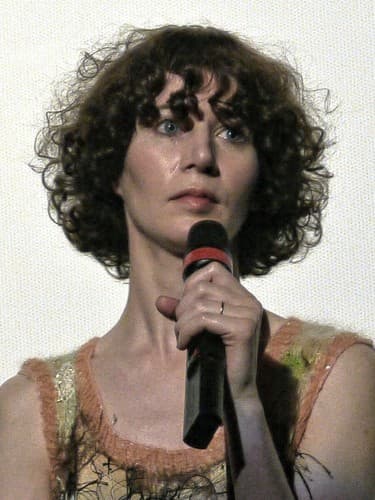
Biography coming soon.







