“The world didn't end with a bang, but with a cough.”
— Opening line describing the global pandemic of Dragonscale.

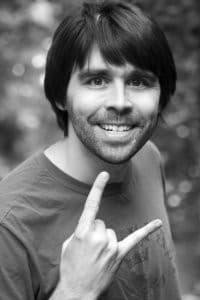
Joe Hill (2016)
Genre
Thriller / Fantasy / Science Fiction
Reading Time
1280 min
Key Themes
See below
Sign in to track this book
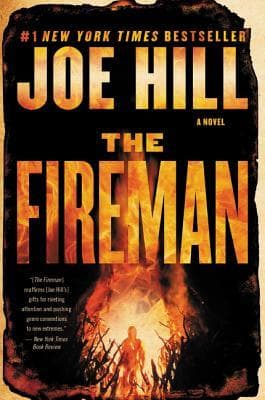
During a pandemic that causes spontaneous human combustion, a pregnant nurse marked for death finds safety with a mysterious fireman who controls the flames threatening humanity.
Harper Grayson, a nurse in New England, works as the Dragonscale plague spreads, causing spontaneous human combustion. She sees many deaths and the collapse of medical services. One day, she finds the black and gold marks on her own skin, showing infection. Devastated, but also eight weeks pregnant, Harper decides to try and survive for her unborn child, despite a previous suicide pact with her husband, Jakob, if either became infected. Jakob, horrified and convinced Harper infected him, becomes erratic and abusive, eventually abandoning her in fear. Harper, alone and pregnant, flees into a world consumed by fire and fear, where vigilante 'Cremation Squads' hunt the infected.
After Jakob abandons her, Harper walks through burning areas, barely surviving. She has a brief, scary encounter with a Cremation Squad but is rescued by a mysterious figure in a yellow firefighter's jacket, carrying a hooked iron bar. This man, known as 'The Fireman,' is also infected with Dragonscale but controls the fire within him, using it as a weapon and a shield. He directs Harper to a hidden community of infected individuals, giving her instructions and hope. Harper, needing safety for herself and her baby, follows him, navigating the dangerous, collapsed world toward this rumored sanctuary.
Harper reaches Camp Wyndham, a secluded former summer camp used as a sanctuary for Dragonscale survivors. Here, she finds a community of hundreds of infected individuals who have learned to live with their condition, using the fire within them through rituals and shared purpose. The camp is led by a strong woman named Carol, who teaches acceptance and control over the Dragonscale. Harper, at first overwhelmed, begins to join the community, finding belonging and hope for her unborn child. She meets other survivors, including some who knew the Fireman, and starts to understand the unique workings of this new society.
At Camp Wyndham, Harper finds some peace. She learns about the 'kindling' ritual, a communal practice where members intentionally burn together to release controlled flames, which strengthens their control over the Dragonscale. She makes friends, especially with Nick and Allie, and starts to develop feelings for the Fireman, who often visits the camp. The Fireman, whose real name is John Rookwood, tells her more about his past and his ability to control his fire. Their relationship grows, offering Harper a new sense of love and security in a world that had taken everything from her. She also begins to learn ways to manage her own Dragonscale, which is important as her pregnancy progresses.
Life at Camp Wyndham has dangers. The threat of the Cremation Squads, led by Governor Cross, is constant. These squads patrol the surrounding areas, hunting and executing the infected. The camp maintains strict security and relies on the Fireman's unique abilities for defense. Inside, tensions arise. Carol's leadership, while at first unifying, starts to show weaknesses as some members question her rigid rules and selective use of resources. Nick, a former EMT, expresses concerns about Carol's methods and the chance of a power struggle within the camp, hinting at future conflicts.
As Harper's pregnancy reaches full term, the camp supports her, eager for the birth of the first 'Dragonscale baby.' Despite the worries and dangers, Harper gives birth to a healthy baby boy, whom she names Charlie. The birth is an important event for Camp Wyndham, symbolizing hope and the chance for a new future for humanity, even during the plague. Charlie's arrival also strengthens Harper's resolve to fight for survival and protect her child. The community celebrates, finding new purpose and a shared vision for a world where the infected can survive and thrive.
Harper's peace ends with the unexpected return of Jakob, her estranged husband. He reappears at Camp Wyndham, claiming to be reformed and seeking forgiveness. However, his true intentions are bad. Jakob, now infected himself, has been working with the Cremation Squads, specifically with Governor Cross, to infiltrate the camp. He manipulates Harper, trying to gain her trust and gather information, while secretly telling details about the camp's defenses and inhabitants to the outside world. His presence creates unease and suspicion among the other camp members, especially the Fireman, who immediately senses Jakob's deception.
Carol's authoritarian leadership and her focus on the 'kindling' ritual as the only path to control start to alienate members. She becomes paranoid and ruthless, punishing those who disagree. A major conflict happens when Carol suggests a mass kindling event, which many fear is too dangerous. Nick, supported by Harper and others, openly challenges Carol's methods, advocating for a more balanced way to manage their condition. This disagreement leads to a power struggle, showing the weaknesses in Carol's leadership and her own mental instability. Her actions become more erratic, leading to a confrontation that weakens her authority within the camp.
Jakob's betrayal leads to a devastating attack on Camp Wyndham by Governor Cross's Cremation Squads. The camp is overrun, its defenses broken. A brutal battle follows, with the infected using their controlled fire against the heavily armed soldiers. Many camp members are killed, and the sanctuary burns. Harper, with baby Charlie, fights for survival, seeing great loss. The Fireman, John Rookwood, uses his full power, becoming a blazing force to protect the survivors. The attack is chaotic and destructive, pushing the remaining members of Camp Wyndham to their limits.
During the Cremation Squad attack, the Fireman makes a heroic stand, drawing the enemy's attention and releasing a massive, controlled firestorm to create a diversion. This selfless act allows Harper, Charlie, Nick, Allie, and a small group of other survivors to escape the burning camp. The Fireman is last seen in flames, seemingly sacrificing himself to protect those he loves. Harper is heartbroken but driven by the need to protect her son. The survivors flee into the wilderness, now hunted and displaced, but carrying the Fireman's legacy and the hope of their new community.
After Camp Wyndham's destruction, Harper, Nick, Allie, and the remaining survivors travel to a new, more secluded location the Fireman had previously found. They begin the process of rebuilding, applying the lessons learned from their time at Wyndham. Harper, now a strong leader, helps establish a more democratic and sustainable community, focusing on both survival and the responsible use of their Dragonscale abilities. They honor the Fireman's memory and continue to understand the spore, finding ways to live with it peacefully and productively, imagining a future where humanity and Dragonscale can coexist.
The Protagonist
Harper evolves from a terrified, abandoned woman into a powerful, self-reliant leader, embracing her Dragonscale and creating a new future for her son and community.
The Supporting
The Fireman moves from a solitary protector to a leader and lover, ultimately making the ultimate sacrifice for his community.
The Antagonist
Carol transforms from a visionary leader into a tyrannical figure whose obsession with control leads to her isolation and the near destruction of her community.
The Antagonist
Jakob descends from a fearful husband to a cowardly betrayer, ultimately responsible for the attack on Camp Wyndham.
The Supporting
Nick evolves from a camp follower into a key figure in challenging Carol's authority and establishing a more democratic community.
The Supporting
Allie maintains her resilience and adaptability, becoming a member of the new community.
The Antagonist
Cross remains a steadfast antagonist, representing the unyielding force of fear and persecution against the infected.
The Mentioned
Charlie's birth symbolizes hope and the potential for a new generation, driving Harper's fight for survival.
The central theme is humanity's fight for survival against a catastrophic plague. Characters like Harper and the Fireman show great endurance, not just in avoiding death, but in adapting to a world changed by Dragonscale. Camp Wyndham is an experiment in adaptation, where the infected learn to live with and even use their condition. The theme explores how individuals and communities find new ways of living, forming new social structures, and redefining what it means to be human after an apocalypse.
“"The world had changed, and the people in it had to change too, or die."”
The novel contrasts two reactions to the Dragonscale: the fear-driven persecution by the Cremation Squads and Governor Cross, and the empathy and acceptance sought by Harper and the Fireman's community. The 'Dragonscale' itself acts as a metaphor for any 'otherness' that society fears and tries to remove. The story explores the destructive power of intolerance and paranoia, leading to violence and betrayal, versus the redemptive power of understanding, community, and finding common ground, even among those considered monstrous.
“"Fear was a fire, too, and it burned hotter than Dragonscale."”
Characters deal with their identities after being infected with Dragonscale. Harper, a nurse, must redefine herself as a survivor and a mother. The Fireman accepts his new identity, controlling his fire and using it for protection. The entire community at Camp Wyndham shows individuals changing their perceived curse into a unique ability. The theme questions what defines a person – their humanity, their illness, or their ability to adapt and control their circumstances. It shows the potential for growth and self-discovery even in the worst situations.
“"She wasn't just Harper anymore. She was Harper, the Dragonscale. And that was okay."”
The book explores different models of community and leadership during a crisis. Camp Wyndham represents an attempt to build a new society, but it shows the challenges of maintaining unity and ethical leadership under pressure. Carol's authoritarian rule eventually leads to conflict and destruction, contrasting with the more democratic and empathetic approach taken by Harper and Nick in the new community. The theme examines the importance of trust, shared purpose, and responsible governance in creating a strong and humane society.
“"A community was a kind of fire, too. It needed to be tended, or it would burn out."”
Throughout the story, characters swing between moments of despair and hope. The initial spread of Dragonscale throws the world into chaos and hopelessness. However, Charlie's birth, the Fireman's protective presence, and Camp Wyndham's establishment offer glimmers of hope. Wyndham's destruction tests this hope, but the survivors' endurance and their decision to rebuild mean an ongoing belief in a better future. The story shows that even in the darkest times, the human spirit's capacity for hope can drive survival and renewal.
“"Hope was a stubborn thing. It flickered, but it rarely went out entirely."”
A highly contagious fungal infection causing spontaneous combustion, serving as the central conflict and metaphor.
Dragonscale is the primary plot device, driving all conflict and character development. It is a fungal infection that manifests as beautiful black and gold marks on the skin, eventually leading to spontaneous combustion. Beyond its literal function as a deadly disease, Dragonscale acts as a powerful metaphor for 'otherness' or any marginalized group feared by society. It forces characters to confront mortality, adapt to extreme circumstances, and choose between intolerance and acceptance. Its unique ability to be controlled by the infected also introduces elements of superpower and transformation, complicating simple good vs. evil narratives.
A communal ritual used by the infected to control and express their Dragonscale.
The 'kindling' ritual is a significant plot device within Camp Wyndham. It's a communal practice where infected individuals intentionally burn together, releasing controlled flames and somehow strengthening their ability to manage the Dragonscale. This ritual serves multiple purposes: it's a social bonding exercise, a form of therapy, and a way to practice and harness their powers. It also becomes a point of contention and a symbol of Carol's increasingly dogmatic leadership, highlighting the tension between communal well-being and individual autonomy, and the dangers of ritual taken to an extreme.
A symbolic weapon and tool, representing the Fireman's unique control and purpose.
The Fireman's hooked iron bar is more than just a weapon; it's a symbolic extension of his character. It evokes images of traditional firefighters, but also of a shepherd's crook, guiding and protecting his flock. He uses it both to defend himself and others, and at times, to subtly manipulate objects or create a sense of authority. The bar represents his groundedness amidst the fiery chaos, a tool of control and a physical manifestation of his unique ability to harness and direct the destructive power of fire, much like a fireman controls a blaze.
A hidden community serving as a temporary haven and a microcosm of a new society.
Camp Wyndham functions as a crucial plot device, representing a temporary haven and a societal experiment. It provides a setting where Harper can find safety, learn about her condition, and develop relationships. As a microcosm, it allows the novel to explore themes of community, leadership, and the challenges of building a new society from scratch. Its eventual destruction serves as a turning point, forcing the survivors to apply the lessons learned and build a better, more resilient community elsewhere, demonstrating the iterative nature of societal reconstruction in a post-apocalyptic world.
“The world didn't end with a bang, but with a cough.”
— Opening line describing the global pandemic of Dragonscale.
“You can't save everyone. But you can save someone.”
— Harper Grayson's personal mantra during the crisis.
“Fire is a living thing. It breathes, it eats, it grows.”
— The Fireman explaining the nature of Dragonscale.
“Sometimes the only way to stay human is to do something monstrous.”
— Reflection on the moral compromises in survival.
“Fear is the real plague. It spreads faster than any disease.”
— Observation about societal breakdown during the outbreak.
“We're all just stories in the end. Make yours a good one.”
— Harper's thoughts on legacy and meaning.
“The fire doesn't destroy you. It reveals who you really are.”
— Metaphor for how crisis exposes true character.
“Hope is the most dangerous thing in the world. It keeps you fighting when you should give up.”
— Cynical view from a survivor in the camp.
“Love isn't a feeling. It's an action. It's what you do when things are at their worst.”
— Harper's realization about her relationship with John.
“Monsters aren't born. They're made, one bad choice at a time.”
— Commentary on the creation of villains in the story.
“The end of the world is a great time to find out what you're made of.”
— Ironic observation about personal growth in crisis.
“We don't get to choose how we die. Only how we live until then.”
— Harper's philosophy while pregnant during the pandemic.
“Sometimes saving yourself means saving others first.”
— Lesson learned about community and interdependence.
“Fire purifies. It burns away everything but the truth.”
— The Fireman's mystical view of the Dragonscale.
Ready to see how well you understood this book? Take our interactive quiz with 10 questions.
Biography coming soon.







