“It is not the gods who are unjust, but men who are unwise.”
— Cassandra reflecting on the human condition and the actions of those around her.


Marion Zimmer Bradley (1987)
Genre
Fantasy / Historical Fiction / Romance
Reading Time
12-15 hours
Key Themes
See below
Sign in to track this book
Through the visions of Kassandra, a Trojan princess and priestess, witness the human drama and downfall of heroes and empires as the Trojan War unfolds.
Kassandra, daughter of King Priam and Queen Hecuba of Troy, is introduced as a sensitive child who often falls into trances and speaks of future events. These visions, often dark, concern her family, especially her mother, Hecuba, who worries about her sanity. Her twin brother, Paris, is her closest companion. As she grows, Kassandra's prophetic abilities become more pronounced and less controllable, often appearing as frantic warnings that are dismissed as madness, even by her father, King Priam, who struggles to understand her. She feels increasingly isolated by her gift, which brings her more pain than comfort.
Paris, due to a prophecy predicting he would cause Troy's downfall, was sent away as a shepherd in his youth, though he eventually returns to the city. While tending sheep, he is tasked by the gods with judging the most beautiful goddess among Hera, Athena, and Aphrodite. He chooses Aphrodite, who promises him the love of the world's most beautiful woman. This woman is Helen, Queen of Sparta and wife of Menelaus. Paris, with his cousin Aeneas, travels to Sparta, where he charms Helen and, with Aphrodite's help, persuades her to elope with him back to Troy. Kassandra foresees this catastrophic event and tries to warn her family, but her pleas are ignored as mere ravings.
News of Helen's abduction reaches Menelaus, who, enraged, calls upon his brother Agamemnon, King of Mycenae, and other Achaean lords to gather their forces. Heroes like Achilles, Odysseus, and Ajax are summoned to wage war against Troy. Kassandra, suffering from vivid and terrifying visions, foresees the immense fleet gathering and the bloodshed to come. She tries to impress upon her father, King Priam, and the Trojan council the gravity of the situation and the impossibility of victory, urging them to return Helen. However, the Trojan elders, fueled by pride, dismiss her warnings, believing their city is impregnable and that Paris's actions were justified.
The Achaean fleet arrives at Troy's shores, and the long siege begins. The early years of the war involve skirmishes outside the city walls, raids on surrounding territories for supplies, and the construction of the Achaean camp. Kassandra watches from the city walls, her heart heavy with the knowledge of every death and setback, both Trojan and Achaean. She witnesses the bravery of her brother Hector, Troy's greatest warrior, and the growing weariness among the Trojan people. Her attempts to persuade the Trojans to make peace or to see their struggle's futility are met with increasing hostility, as she is seen as a harbinger of ill fortune.
Driven by her visions and a desire to understand them, Kassandra dedicates herself to Apollo, the god of prophecy. She becomes a priestess in his temple, hoping to channel her gift for Troy's good. Apollo, drawn to her beauty, desires her. He promises to make her prophecies clear and irrefutable if she surrenders to him. Kassandra initially considers it but rejects his sexual advances, valuing her autonomy. Enraged, Apollo curses her: she will always speak the truth, but no one will ever believe her. This curse solidifies her tragic fate, making her a prophetess of doom to deaf ears.
As the war drags on, the Achaeans face setbacks and internal strife. Patroclus, Achilles' companion, wears Achilles' armor and leads the Myrmidons into battle when Achilles withdraws due to a quarrel with Agamemnon. Patroclus fights bravely but is slain by Hector, the greatest Trojan warrior. This event devastates Achilles, plunging him into grief and rage. He returns to battle, seeking vengeance for Patroclus's death. Kassandra, witnessing these events, knows that Patroclus's death is a turning point, sealing Hector's doom and hastening Troy's destruction.
Achilles, consumed by revenge, confronts Hector outside Troy's walls. In a brutal duel, Achilles slays Hector. In an act of desecration, Achilles ties Hector's body to his chariot and drags it around Troy's walls, tormenting the grieving Trojans. Kassandra, along with her family, watches in horror. King Priam, overwhelmed by sorrow, makes a perilous journey to the Achaean camp, guided by Hermes, to plead with Achilles for his son's body for proper burial. Achilles, moved by Priam's grief and a moment of humanity, relents, allowing Hector to be mourned by his people.
After years of siege, the Achaeans appear to retreat, leaving a large wooden horse as an offering to Athena. Kassandra, seeing through the deception with clarity, frantically warns her people that the horse is a trick, filled with Achaean warriors. She screams it will be Troy's downfall, even seeing the men hidden within. Laocoön, a priest of Poseidon, also warns against the gift. However, the Trojans, desperate for an end to the war and convinced the Achaeans have fled, are swayed by the lies of Sinon, a planted Achaean spy, and interpret Kassandra's frantic warnings as the ravings of a madwoman. They bring the horse inside the city walls, celebrating their perceived victory.
Under cover of night, the Achaean warriors, led by Odysseus, emerge from the Trojan Horse. They open the city gates, allowing the rest of the Achaean army, which had sailed back under darkness, to pour into Troy. The city is plunged into chaos, fire, and slaughter. Kassandra witnesses the massacre, the burning of her city, and the deaths of her family and people. She runs through the burning streets, her prophecies now grim reality, her cries of warning turning into screams of despair as the Achaeans pillage and destroy everything. The once-proud city falls completely, its inhabitants either killed or enslaved.
During the sack of Troy, Kassandra seeks refuge in Athena's temple, clinging to the goddess's statue. However, she is dragged away by Ajax the Lesser, who violates her within the sacred precinct, further cementing her tragic fate and the city's desecration. Later, as the spoils of war are divided, Kassandra is given to King Agamemnon as his concubine and war prize. She is forced to leave her ruined homeland with the Achaean fleet, knowing the bloody fate that awaits Agamemnon upon his return to Mycenae, a fate she again foresees but cannot prevent, bound by Apollo's curse.
Kassandra endures the journey across the sea with Agamemnon, her spirit broken but her prophetic sight clear. She knows of the treachery awaiting him in Mycenae. Upon their arrival, she senses the pervasive evil and danger. She tries to warn Agamemnon of his wife Clytemnestra's murderous intentions, but he dismisses her as a mad foreign prophetess. As she enters the palace, she has a final, vivid vision of Agamemnon's murder and her own impending death. True to her vision, Clytemnestra and her lover Aegisthus murder Agamemnon and then, completing the prophecy, execute Kassandra as well, silencing her truth forever.
The Protagonist
Kassandra transforms from a hopeful, if troubled, young prophetess into a jaded, despairing seer, witnessing the inevitable destruction she cannot prevent, ultimately finding peace only in death.
The Supporting
Paris begins as a favored prince, driven by personal desire, and ends as a figure whose actions lead to the destruction of his city and family, though he remains largely unrepentant.
The Supporting
Hector embodies the tragic hero, fighting valiantly against inevitable defeat, ultimately sacrificing himself for his city.
The Supporting
Priam descends from a proud monarch to a heartbroken father, forced to beg for his son's body, and ultimately witnessing the destruction of his entire legacy.
The Supporting
Hecuba begins as a matriarch concerned with appearances and ends as a grieving queen, stripped of her family and city.
The Supporting
Achilles' arc is one of escalating rage and grief, culminating in his vengeful act against Hector, ultimately leading to his own fated death.
The Supporting
Agamemnon achieves his victory over Troy but carries the seeds of his own destruction, returning home to be murdered.
The Supporting
Helen's arc is less about transformation and more about endurance, as she lives through the war as the symbol and catalyst of its devastation, ultimately returning to Sparta.
This theme is central to Kassandra's character and the narrative. Her gift of prophecy, meant to be a blessing, becomes her greatest curse due to Apollo's intervention. She sees the future with clarity, from Helen's abduction to the Trojan Horse and the fall of Troy, but cannot convince anyone to believe her. This leads to isolation and despair, as she watches her loved ones walk unknowingly into their doom. The theme explores the tragedy of knowing the truth but being powerless to change events, highlighting the human tendency to dismiss uncomfortable truths in favor of comforting lies or pride. This is shown when she tries to warn about the Trojan Horse, only to be dismissed as mad.
“I saw what was to come, and the sight was a fire within my skull. But the words that came forth were not words of warning, but of madness to their ears.”
Troy's downfall is largely attributed to the hubris of its leaders, particularly King Priam and the Trojan council. Their pride in their city's strength, their refusal to return Helen, and their dismissal of Kassandra's warnings are all part of this theme. They believe themselves favored by the gods and impregnable, leading them to ignore all signs of disaster. This pride prevents them from making pragmatic decisions that could have saved their city, such as returning Helen or heeding Kassandra's warnings about the Trojan Horse. The Achaean heroes also show pride, particularly Achilles, whose wrath and desire for glory often outweigh reason, though his hubris is tempered by grief.
“Pride is a blindfold, and a heavy one. It keeps us from seeing what is truly before our eyes, even when the truth screams in our ears.”
The novel explores the tension between characters' choices and the will of the gods or predetermined fate. Kassandra's curse from Apollo is a direct intervention of divine will, sealing her tragic role. However, human choices, such as Paris's abduction of Helen or Priam's refusal to return her, are also presented as catalysts. While the gods nudge and curse, the characters still make decisions that contribute to the unfolding tragedy. The narrative suggests that while fate might set the stage, human actions often fulfill or accelerate the prophecies, making characters both victims and agents of their own destruction. This is evident in the Achaeans' decision to build the Trojan Horse, a human trick facilitated by divine indifference.
“The gods may spin the web, but it is we who are caught in it, and we who pull the threads that tighten the noose.”
The Trojan War, and its aftermath, is shown with a focus on its human cost. The novel portrays the suffering of both sides, the loss of life, the destruction of cities, and the psychological toll on survivors. The war is a cycle of vengeance, starting with Helen's abduction, leading to the Achaean's quest for retribution, and culminating in Troy's brutal sack. Even after the war, the cycle continues, as seen in Agamemnon's murder by Clytemnestra, fueled by events during the war. Kassandra's visions show her the endless chain of suffering that each act of violence perpetuates.
“When the sword is drawn, it remembers only blood, and it hungers for more, no matter whose veins it empties.”
Kassandra's story is an exploration of this theme. Despite her gift, her gender and perceived 'madness' make her voiceless and powerless in the male-dominated Trojan society. Her warnings are dismissed, her body is violated, and her fate is decided by men. Helen, too, is largely a pawn, her beauty both a gift and a curse, used by men and gods. Even Queen Hecuba, a powerful figure, is limited in her ability to influence major decisions. The novel highlights how women's voices, even when they speak truth, are often silenced or ignored within a system that values male authority above all else. Kassandra's rape by Ajax the Lesser is a brutal illustration of this powerlessness.
“A woman's truth, if it does not serve a man's purpose, is but the babbling of a fool to be ignored.”
Kassandra's visions constantly reveal future events, creating dramatic irony and a sense of impending doom.
Kassandra's prophetic gift serves as the primary plot device, driving the narrative forward while simultaneously creating a profound sense of tragic inevitability. Her visions of Helen's abduction, the Trojan Horse, Hector's death, and the fall of Troy are all explicitly detailed early in the story, acting as powerful foreshadowing. This device creates dramatic irony, as the reader knows the outcome of events long before the characters do. It heightens the tension and tragedy, making Kassandra's desperate, unheeded warnings all the more poignant and reinforcing the themes of fate and powerlessness.
The gods actively participate in human affairs, shaping destinies and influencing outcomes.
The presence and actions of the Olympian gods are crucial to the plot. Apollo's curse on Kassandra is the most significant divine intervention, directly shaping her role and the tragic trajectory of her life. Aphrodite's promise to Paris and her influence on Helen's abduction are also pivotal. These interventions highlight the theme of divine will versus human agency, suggesting that while humans make choices, they are often playing roles in a larger, divinely orchestrated drama. The gods are depicted as powerful, capricious, and often self-serving, using mortals as pawns in their own rivalries.
A deceptive stratagem that leads to the ultimate downfall of Troy.
The Trojan Horse is the ultimate embodiment of deception and a crucial turning point in the plot. It serves as a physical manifestation of the Achaeans' cunning and the Trojans' fatal hubris. As a plot device, it creates immense suspense, particularly as Kassandra's desperate warnings are ignored. Its success hinges on the Trojans' collective desire for an end to the war and their dismissal of uncomfortable truths. The horse represents the final, decisive blow against Troy, not through brute force, but through trickery, directly leading to the city's destruction and the end of the war.
Kassandra's cursed inability to be believed makes her truth seem like madness to other characters.
While Kassandra is the primary perspective character, from the viewpoint of other characters, she functions as an 'unreliable narrator' of truth. Her prophecies are always accurate, but Apollo's curse ensures that everyone else perceives her words as ravings or lies. This device is fundamental to the tragedy, as it isolates Kassandra and prevents any intervention. It forces the reader to experience the frustration of knowing the truth alongside Kassandra, while simultaneously witnessing the blind folly of those around her. This heightens the dramatic irony and underscores the themes of unheeded truth and the burden of knowledge.
“It is not the gods who are unjust, but men who are unwise.”
— Cassandra reflecting on the human condition and the actions of those around her.
“The threads of fate are not so easily broken, not even by the strongest will.”
— Cassandra's internal struggle with her prophetic visions and the inevitability of Troy's doom.
“Love is a dangerous thing in a world where men make war.”
— Cassandra observing the tragic consequences of Helen and Paris's love affair.
“A woman's power lies not in her strength of arms, but in her strength of spirit and mind.”
— Cassandra's belief in the inner power of women, contrasting with the patriarchal society.
“To know the future is a curse, for one cannot change what is to be.”
— Cassandra lamenting the burden of her prophetic gift.
“The gods do not care for the individual, only for the greater pattern.”
— Cassandra's cynical view of the divine intervention and its indifference to personal tragedy.
“There are some truths too terrible to be believed, even when spoken by a prophet.”
— Cassandra's frustration that her warnings about the Trojan Horse are ignored.
“Even in defeat, there is a kind of victory in having fought with honor.”
— Hector's philosophy on war and the importance of integrity.
“The strongest walls are those built not of stone, but of loyalty and love.”
— Priam's reflection on the true strength of Troy.
“Sometimes, to survive, one must become what one despises.”
— Cassandra contemplating the compromises and sacrifices required in desperate times.
“The past is never truly dead; it whispers in the present and shapes the future.”
— Cassandra's understanding of the cyclical nature of history and its influence.
“What is freedom, if not the right to choose your own doom?”
— Cassandra's bitter reflection on the choices made by her people, leading to their destruction.
“A king's duty is not to be loved, but to be wise, and sometimes, to be cruel.”
— Priam's internal struggle with the harsh realities of leadership.
“There are many kinds of courage, and the greatest is to face what you cannot change.”
— Cassandra finding a form of strength in accepting the inevitable.
Ready to see how well you understood this book? Take our interactive quiz with 10 questions.
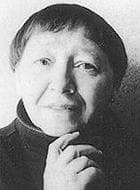
Marion Eleanor Zimmer Bradley was an American author of fantasy, historical fantasy, science fiction, and science fantasy novels, and is best known for the Arthurian fiction novel The Mists of Avalon and the Darkover series. Noted for the feminist perspective in her writing, her reputation has been posthumously marred by her daughter Moira Greyland's accusations of child sexual abuse, and for allegedly assisting her second husband, convicted child abuser Walter Breen, in sexually abusing multiple unrelated children.







