“He knew then that there were some fires you just couldn't put out, no matter how much water you poured on them. Some fires were meant to burn.”
— Liam reflects on his feelings for Maeve.

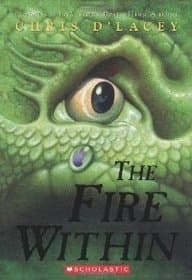
Chris d'Lacey (2001)
Genre
Young Adult / Romance
Reading Time
360 min
Key Themes
See below
Sign in to track this book
When lonely David discovers a hidden world of sentient clay dragons, he must unlock the ancient magic within himself to protect his fiery companion and unravel a mystery threatening their existence.
David Rain arrives at the house of Elizabeth Pennykettle and her daughter, Lucy, in the village of Scrubbley, seeking accommodation after his mother's death. He is a struggling author. The house, called 'Wayward Crescent,' is full of clay dragons, each with a unique name and purpose. Lucy, an imaginative eleven-year-old, quickly befriends David. Elizabeth, a kind artist, creates these dragons. David soon discovers they are not just ornaments but have a life of their own, fueled by imagination and belief. He is initially skeptical but is drawn into their world, especially by a small, unpainted dragon he finds in his room, which he names Gwillan.
Inspired by the dragons and encouraged by Lucy, David begins to write a story. He focuses on his own dragon, Gwillan, and as he writes, Gwillan shows signs of life, glowing faintly and moving. This phenomenon links directly to David's creative energy and belief. Elizabeth explains that imagination and the stories around them give the dragons life. David learns about the different types of dragons Elizabeth creates, like 'fain' dragons that bring good fortune or 'gadzooks' that offer protection. He starts to understand that his writing is not just a hobby but a direct link to the dragons' magic.
A sinister feeling emerges as some of Elizabeth's dragons mysteriously disappear from various places in the house. Lucy is distressed by the loss of her beloved 'Gadzook,' a protective dragon. David and Lucy try to investigate, but Elizabeth remains quiet, hinting at an ancient evil or a 'dark fire' that threatens the dragons. David's growing connection to Gwillan and the dragon world makes him feel more responsible for protecting them. This pushes him to look deeper into Elizabeth's secrets.
A mysterious and imposing man, known only as 'the Potentate,' arrives in Scrubbley and takes an unsettling interest in Elizabeth's dragons. He is cold, calculating, and seems to have a power that repels the dragons. David senses danger from him. The Potentate's presence coincides with more dragon disappearances and a feeling of dread in the Pennykettle household. David realizes that the Potentate is not just a collector but someone who wants to exploit or destroy the dragons' magic for his own malevolent goals.
David finds an ancient, hidden book in Elizabeth's study, 'The Book of the Dragon.' It details the history and magic of the dragons. He learns about the 'fire within,' the magic that gives dragons life and can be used by those with a pure heart and strong imagination. The book reveals that the dragons are not just clay figures but vessels for ancient, powerful spirits. It also hints at a coming conflict between creation and destruction, with the dragons caught in the middle. David begins to understand his role in this ancient battle.
As the Potentate's influence grows and dragons keep disappearing, David's beloved Gwillan weakens, his internal 'fire' dimming. This reflects David's own struggles with doubt and fear. Elizabeth explains that if a dragon's fire goes out, it becomes mere clay, its spirit lost. David feels the urgency to understand and master the 'fire within' to save Gwillan. He realizes that his story, which brought Gwillan to life, must now be the key to protecting him and the other dragons from the approaching darkness.
The Potentate confronts Elizabeth, revealing his true intentions: to steal the 'life-fire' from the dragons to fuel his own dark magic and gain ultimate power. He collects dragon essence, not just the figures. He believes the dragons are tools to be exploited. He tries to intimidate Elizabeth and David, showing a chilling ability to drain energy. David understands that the Potentate opposes the dragons' creative magic. He is a force that seeks to consume and destroy rather than inspire and create. The confrontation clarifies the stakes of their battle.
David and Lucy, guided by clues and their understanding of the dragons' magic, track the Potentate to his hidden lair beneath the village. They discover a scene where the stolen dragons are held, their life-fire slowly being siphoned away. The Potentate prepares for a final ritual to fully extract the dragons' essence. David realizes he must act quickly, using his heart and imagination to challenge the dark force. Lucy's belief and courage are crucial during this dangerous infiltration.
In a climactic confrontation, David faces the Potentate. He uses the 'fire within' – the creative energy of his imagination and his love for Gwillan and the other dragons – to counteract the Potentate's destructive magic. He channels his story, the essence of Gwillan, into a powerful surge of energy. This is not a physical battle but a clash of wills and magical forces. David's belief in the dragons' magic and his own creative spirit becomes his weapon, allowing him to tap into an ancient power he barely understood until now.
David, with Lucy's help and the dragons' spirits, overwhelms the Potentate. The creative fire he unleashes repels the Potentate and reverses the draining process, restoring the life-fire to the captured dragons. The Potentate is defeated, his dark magic crumbling, and he vanishes, leaving only a lingering chill. The rescued dragons, including Gwillan, glow with renewed vigor. David feels a deep sense of accomplishment and understands the true power of imagination and love.
With the Potentate vanquished, peace returns to Wayward Crescent. The dragons are safe, and their magic feels stronger than ever. David has not only saved Gwillan but has also found his purpose as a writer and a guardian of the dragons' magic. He has come to terms with his grief and found a new family in Elizabeth and Lucy. His relationship with Gwillan is deeper, showing the power of their shared story. David now fully understands the connection between creativity, belief, and the 'fire within,' ready to continue his journey as a dragon master.
The Protagonist
David transforms from a skeptical, grieving writer into a confident guardian of dragon magic, finding purpose and a new family.
The Supporting
Elizabeth maintains her role as a wise guardian, guiding David to unlock his own potential while protecting her creations.
The Supporting
Lucy remains a steadfast believer and a source of courage, her faith reinforcing the dragons' magic and aiding David.
The Supporting
Gwillan transforms from an inert clay figure into a living, glowing dragon, embodying David's growing creative power and belief.
The Antagonist
The Potentate appears as a fully formed antagonist, his goal to consume dragon magic, and he is ultimately defeated by the power of creation.
The Supporting
Lizzy remains a steadfast, comforting presence, embodying the enduring magic of the fain dragons.
The Mentioned
Bonnington remains a constant, observant presence throughout the story.
The Supporting
Fain dragons serve as a consistent symbol of hope and positive magic.
This theme is central to the narrative. The clay dragons come to life through human imagination and belief, especially David's writing. His story about Gwillan sparks the dragon's existence, and his creative spirit allows him to master the 'fire within' and defeat the Potentate. Elizabeth's artistic creation of the dragons is another example. The book states that imagination is not just childish fantasy but a potent, magical force capable of shaping reality and overcoming darkness.
““Imagination is the fire that gives them life, David. Your story is their breath.””
David starts the story as a young man adrift, grieving his mother's death and unsure of his identity as a writer. The Pennykettle household and the dragon world offer him a path to healing. By engaging with the magic and taking responsibility for Gwillan, he begins to process his loss and finds a new purpose. His journey to save the dragons is also a journey of self-discovery, helping him overcome his internal struggles and embrace a new, fulfilling life.
““Sometimes, David, the greatest magic is finding your own fire after the embers have gone cold.””
The conflict between David and the Potentate symbolizes the struggle between creation and destruction. Elizabeth and David represent creation – art, stories, imagination, and nurturing life. The Potentate embodies pure destruction, seeking to consume and exploit the dragons' life-fire for his own gain. The story argues that creation, fueled by love and belief, is more powerful and lasting than destructive ambition.
““He wants to snuff out the spark, David. To drain the magic that makes them more than just clay.””
Having lost his mother, David is initially an outsider. He gradually finds a new sense of family and belonging with Elizabeth and Lucy. Their acceptance, warmth, and shared belief in the dragons provide him with the emotional support he needs. The dragons themselves are treated as part of the family, showing that family extends beyond conventional blood ties to include those with whom one shares deep connections and purpose. This theme highlights the importance of community and mutual support.
““This isn't just a house, David. It's a home, and every dragon in it is family.””
The novel explores how David's internal state, creativity, and belief directly affect the external world, specifically Gwillan's life-force. The dragons are not separate entities but are linked to human emotion and imagination. The 'fire within' implies a universal energy that connects humans, nature, and magic. This theme suggests that individual actions and beliefs have far-reaching consequences and that everything in the world is part of a larger, magical whole.
““The fire within isn't just in the dragons, David. It's in everything. It's in you.””
Clay figures that are imbued with life and personality through imagination.
The clay dragons are the central magical element of the story. They serve as a tangible representation of the power of imagination and belief. Each dragon has a distinct name, purpose, and even personality, making them characters in their own right. Their ability to come to life, glow, and even move is the primary magical catalyst, driving the plot and compelling David to believe in the extraordinary. They symbolize dormant potential and the magic hidden in plain sight.
A mystical life force or creative energy that animates the dragons and resides in humans.
The 'fire within' is a metaphorical and literal plot device. It is the essence that gives the dragons life and magic, and it is also the creative and emotional energy that David must learn to master. It represents imagination, belief, love, and courage. The concept serves as the primary magical system and the key to defeating the antagonist. David's journey is fundamentally about understanding and harnessing his own 'fire within' to save Gwillan and the other dragons.
An ancient, hidden text that reveals the history and magic of the dragons.
This ancient tome functions as a classic exposition device. It provides David, and by extension the reader, with crucial background information about the dragons' origins, their different types, the 'fire within,' and the ancient conflict they are part of. Its discovery marks a turning point, moving David from simple observation to active participation in the magical world. It legitimizes the magic and outlines the rules of this fantastical universe.
David's act of writing a story directly influences the magical world.
David's struggle and eventual success as a writer are intrinsically linked to the plot. His writing is not just a hobby but a magical act; it literally breathes life into Gwillan. This device highlights the theme of imagination's power and serves as the catalyst for David's involvement in the dragons' world. The story he writes becomes a weapon against the Potentate, underscoring that art and creativity have tangible, magical effects.
“He knew then that there were some fires you just couldn't put out, no matter how much water you poured on them. Some fires were meant to burn.”
— Liam reflects on his feelings for Maeve.
“The world was a canvas, and she was determined to paint it in her own vibrant colors, even if some people only saw shades of grey.”
— Maeve's artistic spirit and independence.
“Sometimes, the bravest thing you could do was admit you were scared.”
— A moment of vulnerability shared between the protagonists.
“Their hands met, and in that simple touch, a universe of unspoken words passed between them.”
— A significant early interaction between Liam and Maeve.
“He didn't just see her; he *felt* her, like a tremor in the earth before an earthquake, a beautiful, inevitable force.”
— Liam's deep perception of Maeve.
“Every brushstroke was a whisper, every color a scream. Her art was her voice when words failed her.”
— Maeve's reliance on art for expression.
“You can't choose who you fall for, but you can choose how you fight for them.”
— A piece of advice given to one of the characters about love.
“The silence between them wasn't empty; it was full of possibilities, full of the unspoken things that truly mattered.”
— A comfortable, intimate moment between Liam and Maeve.
“He was the storm, and she was the lightning, striking sparks that illuminated everything.”
— A metaphor describing the dynamic between the two main characters.
“Even the darkest nights hold the promise of dawn, if you're brave enough to wait for it.”
— A moment of hope amidst challenges.
“To truly see someone, you have to look beyond the surface, beyond the smiles and the carefully constructed walls.”
— A character learning to understand another's true self.
“Their story wasn't a fairy tale; it was a wildfire, beautiful and dangerous, consuming everything in its path.”
— A character's reflection on the intense nature of their relationship.
“The hardest part wasn't falling, it was realizing you had nowhere left to land but in their arms.”
— A character's surrender to love.
“He learned that the greatest art wasn't always on a canvas; sometimes, it was in the way two souls intertwined.”
— Liam's evolving understanding of beauty and connection.
Ready to see how well you understood this book? Take our interactive quiz with 10 questions.
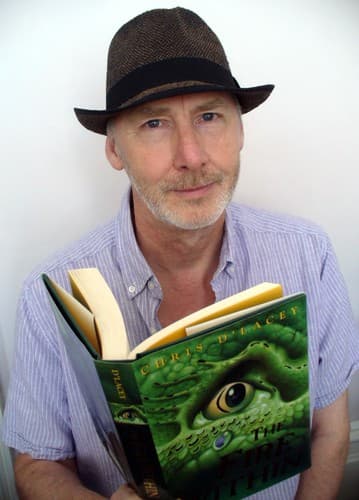
Chris d'Lacey is a British author celebrated for his "Last Dragon Chronicles" series, which includes titles like "The Fire Within," "Icefire," and "The Fire Eternal." His imaginative tales often blend fantasy with themes of courage and friendship, captivating young adult readers worldwide. D'Lacey's work has earned him a dedicated following and established him as a prominent voice in children's fantasy literature.