“We're not just birds; we're something more. Something that can change things.”
— Maxine's realization about her unique abilities and the potential of her flock.

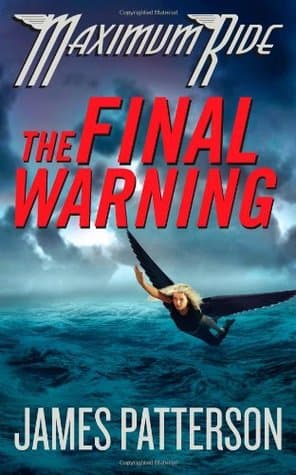
James Patterson (2008)
Genre
Fantasy / Children's / Science Fiction / Young Adult / Romance
Reading Time
210 min
Key Themes
See below
Sign in to track this book
In Antarctica, a winged teenager named Max must outsmart an army wanting to control her powers, all while fighting global warming and a government that sees her as both an experiment and a weapon.
Maximum Ride and the Flock (Fang, Iggy, Nudge, Gazzy, and Angel) are living a peaceful life when Dr. Martinez, from the Coalition to Save the Earth, contacts them. She asks them to join an expedition to Antarctica to study global warming. Max is wary, fearing a trap, but the chance to help the planet and get a break from being chased convinces her. As they get ready to leave, a new, more advanced type of Eraser ambushes them, forcing them to use their wings to escape. This encounter strengthens Max's mistrust of any group that knows about them.
The Flock, with Dr. Martinez and her team, board a research ship for Antarctica. The trip is hard, with rough seas and growing cold. Max struggles with keeping her family safe in this strange place while also trying to understand the science. They meet the rest of the research team, including Dr. Hans, a stern but knowledgeable scientist, and other experts. The children are fascinated by the unique wildlife and the vast, empty beauty of the icy continent, a stark change from their previous hiding spots.
When they arrive at the remote Antarctic research station, the Flock quickly settles in, using their abilities to help with tasks. Max, Fang, and Iggy help with heavy lifting and moving through difficult terrain, while Nudge, Gazzy, and Angel help with data and observation. Angel's telepathic abilities start picking up bits of danger and a hidden plan among some scientists. Max notices odd behavior from certain Coalition members, making her more suspicious that their mission is more than just environmental research. She feels a familiar sense of being watched.
During a harsh blizzard, unknown attackers invade the research station. These attackers are not typical Erasers but highly trained soldiers. They specifically target and kidnap several key scientists, including Dr. Martinez and Dr. Hans. The Flock, surprised by the sudden and brutal attack, fights back to protect the remaining crew but is outnumbered. Max is furious and determined to rescue the kidnapped scientists, especially Dr. Martinez, whom she has cautiously come to trust. The attack leaves the station damaged and isolated.
Using their flying skills and Iggy's heightened senses, the Flock tracks the kidnappers across the harsh Antarctic wilderness. The extreme cold, dangerous ice, and whiteout conditions make the chase very risky. They find clues suggesting the kidnappers are operating from a hidden base, possibly a secret facility in the ice. Max relies heavily on Fang's calm leadership and Iggy's navigation. Angel's fragmented visions continue to hint at a larger, more sinister plot involving the scientists' research and a powerful weapon.
The Flock eventually finds a hidden entrance to a large, underground facility deep beneath the ice. After sneaking in, they discover an advanced lab where the kidnapped scientists are forced to work. To their shock, they find Dr. Hans, not as a prisoner, but seemingly in charge of the operation, working with the soldiers who attacked the station. He reveals that the Coalition to Save the Earth was a cover, and his true loyalty is to a shadowy organization wanting to use global warming research for their own bad goals, specifically to create a weapon.
Max confronts Dr. Hans, who, under pressure and the threat of the Flock's abilities, reveals the full plan. The organization, 'The Institute,' is not trying to stop global warming but to speed it up. They plan to use the kidnapped scientists' research to cause a major climate event. Their goal is to reshape the world, for profit or power, by creating a new world order from the chaos. The 'weapon' is not one device but a way to control weather patterns and ice melt with devastating effects. Max realizes the stakes are higher than ever.
With the full scope of the threat known, Max and the Flock start a daring rescue mission inside the underground facility. They fight fiercely with The Institute's soldiers, using their unique abilities to overpower the armed guards. Iggy's explosives, Gazzy's gas bombs, and Fang's strategy prove very useful. They manage to free Dr. Martinez and the other captive scientists, but The Institute's forces are relentless. The escape is chaotic and dangerous, with the Flock needing to protect the vulnerable scientists while fighting their way out of the heavily guarded complex.
As they escape the facility, Dr. Martinez tells Max that The Institute has activated a device designed to trigger the catastrophic climate event. The Flock and the scientists realize they must disable it quickly. They race against time, with Max leading, flying ahead to find the device's location. The journey back across the icy landscape is full of danger, as The Institute's remaining forces chase them. The children push their physical and mental limits, knowing the planet's fate depends on them.
The Flock reaches the device's control center, where Dr. Hans is making final adjustments. Max confronts him, appealing to any humanity he might have left, but he remains set on his plan. A final, desperate struggle follows. While Fang, Iggy, and the others fight off the remaining guards, Max directly engages Dr. Hans. With Dr. Martinez's scientific knowledge and Max's quick thinking, they manage to override the system and disable the climate manipulation device just before it reaches its critical point. The immediate threat of global catastrophe is stopped.
With the device disabled and The Institute's plan foiled, the remaining members of The Institute are captured or flee. Max and the Flock ensure Dr. Martinez and the other rescued scientists are safe, guiding them back to the research vessel. The world remains unaware of the disaster avoided, and the Flock again finds themselves without a true home, knowing that forces seeking to use or control them are still out there. Max thinks about the vastness of the world, the constant threats, and her firm commitment to protect her family, no matter where their journey takes them.
The Protagonist
Max evolves from a purely reactive protector to a proactive leader willing to engage with external threats for a greater good, though her distrust remains.
The Supporting
Fang continues to solidify his role as a steadfast support for Max, showing increasing strategic thinking and emotional depth.
The Supporting
Iggy's resourcefulness and unique abilities are further highlighted, proving his indispensable value to the Flock.
The Supporting
Nudge's observant nature and unique ability become more central to the plot, showing her growing maturity.
The Supporting
Gazzy's combat skills and resourcefulness are increasingly important, demonstrating his growth beyond just comic relief.
The Supporting
Angel's powers continue to develop and become more central to uncovering the antagonists' plans, highlighting her invaluable role.
The Supporting
Dr. Martinez transforms from a recruiter to a captive, and then to a crucial ally, proving her integrity and scientific expertise.
The Antagonist
Dr. Hans is revealed as a primary antagonist, his betrayal escalating the conflict and revealing the true nature of the threat.
The Antagonist
The Institute is revealed as a more complex and dangerous threat than previously encountered, with far-reaching global implications.
At its core, the novel explores the strong bond of the Flock as a chosen family. Despite their unique origins and constant danger, Max's main goal is always to protect her 'siblings.' This theme is clear in every choice Max makes, from her initial hesitation to join the expedition due to safety worries to her fierce resolve to rescue the kidnapped scientists, which she sees as protecting her family's future. The children rely on each other's abilities and emotional support, showing that their strength comes from their unity, reflecting their shared past and uncertain future.
“"We're a family. Not by blood, but by choice. And that's stronger than anything."”
The story's main conflict is about global warming. Initially, the Flock believes they are helping to preserve the environment, highlighting the urgency of climate change. However, this good goal is twisted by The Institute, which wants to use and speed up global warming for power. This theme sharply contrasts the good intentions of scientists like Dr. Martinez with the evil ambition of Dr. Hans and The Institute, forcing Max to fight not just for her family but for the planet's future. It questions who truly benefits from scientific progress and the ethics of technological power.
““Some people want to save the world. Others just want to control it.””
Max's deep distrust of adults and institutions is always present. Her initial doubt about the Coalition to Save the Earth proves correct when Dr. Hans's betrayal is revealed. This theme explores how hard it is to tell friends from enemies, especially when motives are hidden behind seemingly good causes. The Flock constantly navigates a world where promises can be broken and good intentions corrupted. Max's slow, careful trust in Dr. Martinez shows how important earned loyalty is in a world of constant deception and the pain of finding betrayal from unexpected places.
““Trust was a luxury we couldn't afford, a weakness in a world that wanted to dissect us.””
Max constantly deals with the huge responsibility of leading the Flock. Every decision she makes carries the weight of her siblings' lives and safety. This burden is especially heavy in the extreme and unfamiliar environment of Antarctica, where the stakes are global. She often feels alone in her leadership, doubting her judgment and fearing failure. Her inner thoughts show her struggle to balance protecting her family with engaging in larger world-saving missions, revealing the emotional and psychological toll of being the protector and decision-maker for those she loves most.
““Sometimes, being the leader meant being the loneliest person in the world.””
The object or concept that drives the plot's urgency.
The climate manipulation device, or the method used by The Institute to accelerate global warming, serves as the primary MacGuffin. It is the tangible goal that the antagonists seek to activate and the protagonists must prevent. While its exact scientific workings are less important, its existence and imminent activation create a race-against-time scenario, providing a clear objective for Max and the Flock and escalating the global stakes of the narrative. It focuses the conflict and provides a concrete target for the climax.
A turning point where a trusted character is revealed as an antagonist.
Dr. Hans's betrayal is a crucial plot device that shatters the Flock's fragile sense of security and reveals the true, more sinister nature of the conflict. It shifts the narrative from a simple environmental mission to a fight against a calculated, human threat. This betrayal intensifies Max's inherent distrust of adults and institutions, forcing the Flock to rely solely on themselves and their proven allies. It also raises the emotional stakes, as Dr. Martinez, who genuinely believed in the mission, is also a victim of the deception.
A harsh setting that amplifies challenges and isolates characters.
The Antarctic setting acts as a powerful plot device, serving as both a formidable obstacle and a symbol of the global threat. Its extreme cold, isolation, and treacherous terrain amplify the dangers faced by the Flock, making their pursuit and escape more perilous. The environment itself becomes an antagonist, testing their physical and mental limits. It also provides a remote, ideal location for a secret facility, effectively isolating the conflict and making external help impossible, forcing the Flock to solve the crisis on their own.
Foreshadowing and information delivery through a character's special ability.
Angel's telepathic and mind-reading abilities function as a crucial plot device for foreshadowing and information gathering. Her fragmented visions and overheard thoughts provide early hints of danger, hidden agendas, and the true nature of The Institute's plans long before the full reveal. This builds suspense and allows the reader to experience Max's growing unease. It also provides a unique, non-conventional way for the protagonists to gather intelligence, often giving them a crucial edge in a world where information is tightly controlled by their enemies.
“We're not just birds; we're something more. Something that can change things.”
— Maxine's realization about her unique abilities and the potential of her flock.
“Sometimes, the only way to save someone is to let them go.”
— A difficult decision faced by one of the flock members regarding a loved one.
“Fear is a choice. You can choose to let it paralyze you, or you can choose to fight through it.”
— Fang's internal monologue during a dangerous confrontation.
“The world is full of monsters, but it's also full of heroes. You just have to decide which one you're going to be.”
— A philosophical reflection on morality and responsibility.
“Family isn't always blood. It's the people who stand by you, no matter what.”
— Maxine reflecting on the bond within her diverse flock.
“Even the smallest voice can start an avalanche.”
— A comment on the power of individual action and influence.
“Trust is a fragile thing. Once broken, it's almost impossible to put back together.”
— A consequence of betrayal within the group.
“The future isn't written. We write it with every choice we make.”
— A discussion about free will and the ability to shape one's destiny.
“Sometimes, the biggest battles are fought within ourselves.”
— A character struggling with internal conflict and self-doubt.
“To truly fly, you have to be willing to fall.”
— A metaphor for taking risks and embracing vulnerability.
“Knowledge is power, but wisdom is knowing how to use it.”
— A lesson learned about the application of information.
“Even in the darkest times, there's always a glimmer of hope, if you're willing to look for it.”
— A message of optimism amidst despair.
“The greatest weapon isn't strength or speed; it's love.”
— Maxine's ultimate understanding of what truly makes them powerful.
“You can't save everyone, but you can save someone. And sometimes, that's enough.”
— A character grappling with the limitations of their abilities and the importance of individual acts of kindness.
Ready to see how well you understood this book? Take our interactive quiz with 10 questions.

Biography coming soon.







