“The greatest battles are not fought with swords and spears, but within the hearts of men.”
— A foundational truth revealed to the main character early in his journey.

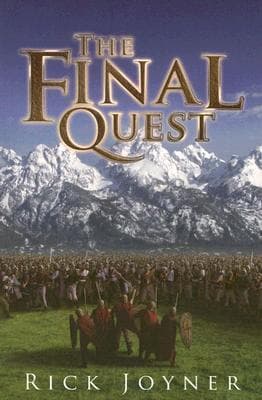
Rick Joyner (1996)
Genre
Fantasy / Spirituality
Reading Time
170 min
Key Themes
See below
Sign in to track this book
In 'The Final Quest,' a year-long prophetic vision reveals humanity's ultimate spiritual war, detailing the final clash between light and darkness with an urgency that captivated millions.
The story begins with the Seer, the main character, at the bottom of a large, challenging mountain, which represents the 'Mountain of God.' He feels he must climb it, despite its difficult look and many other climbers, some of whom are struggling, falling, or giving up. The first part of the climb is hard, with slippery paths, thick fog, and the constant threat of unseen enemies. The Seer feels a deep sense of spiritual battle, realizing the climb is not just physical but a journey of faith against spiritual opposition. He sees both others' failures and successes, learning about humility, relying on divine strength, and helping other pilgrims. This first part sets up the spiritual war context and the individual's journey to be closer to God.
As the Seer climbs higher, he starts to meet various angels and members of the heavenly host. These meetings give him important understanding about the spiritual war below and the divine plans for victory. He learns about different angel ranks, their roles in protecting believers, and their part in the battles against evil forces. The angels reveal truths about the enemy's methods, the importance of spiritual protection, and the power of prayer and worship. These interactions encourage the Seer and deepen his understanding of the cosmic conflict, preparing him for the greater challenges in the vision.
From a high spot on the mountain, the Seer sees a wide valley below, full of the 'Hordes of Hell.' These are described as ugly, demonic armies, organized and led by powerful rulers, all getting ready for a huge, planned attack. The vision shows the large number and evil nature of these forces, highlighting their specific plans to trick, oppress, and destroy humanity. The Seer watches the enemy's leaders, like 'The Accuser' and 'The Destroyer,' and their calculated moves. This scene creates a deep feeling of urgency, showing the spiritual war's intensity and the immediate threat from darkness to believers and the world.
In contrast to hell's organized armies, the Seer sees the 'Army of God' spread out across the spiritual land. Many are shown as disorganized, hurt, or unconcerned, often unaware of the coming spiritual battle. Some are fighting among themselves, while others focus on small things, not seeing how serious the situation is. The Seer sees small groups of dedicated believers, but the overall impression is of disunity and being unprepared. This part of the vision calls for the church to repent and wake up, emphasizing the need for unity, spiritual discipline, and a renewed focus on God's goals to stop the enemy's advance.
At a key moment, loud trumpet blasts sound across the spiritual realm, signaling a divine call to arms. These trumpets are not just sounds but carry specific messages: a call to repent, a call for unity among believers, and a summons to prepare for the final conflict. The Seer sees that these blasts wake up many in the Army of God, stirring them from their sleep. Some respond right away, starting to let go of worldly things and personal issues, while others resist. This moment is a turning point, starting a process of spiritual alignment and preparation for those who choose to listen to the divine call, showing the urgency and need for immediate action.
As the spiritual intensity grows, a dedicated 'remnant' within the Army of God begins to appear. These are people who have fully responded to the call to repent and unite, showing real humility and a strong desire for God's will. The Seer witnesses a special anointing fall on this remnant, giving them greater spiritual understanding, prophetic gifts, healing abilities, and a deep measure of divine power. This anointing prepares them not only to withstand the enemy's attacks but also to actively engage in spiritual war and lead others to deeper faith. This shows God's preparation of a leading group for the coming final battle, demonstrating His faithfulness to those who seek Him diligently.
The vision then shows the fierce spiritual battles happening in the 'valleys'—representing different areas of life. The anointed remnant of God's army, now united and empowered, directly faces the Hordes of Hell. These battles are not fought with physical weapons but through prayer, worship, prophetic words, and acts of love. The Seer observes specific fights against demonic strongholds like 'Deception,' 'Fear,' and 'Division.' While the fighting is intense and people are hurt, the remnant shows great courage and faith, often changing the battle's course through their steady commitment to Christ. This section highlights believers' active part in spiritual war and the power of divine help.
As the remnant wins victories in the spiritual battles, a great 'harvest' of souls begins. The breaking of demonic strongholds frees many who were spiritually bound, leading them to repent and believe in Christ. The Seer sees many people being brought into God's Kingdom, often in dramatic and miraculous ways. This harvest is directly connected to the faithfulness and spiritual power shown by the anointed remnant. It shows the main goal of the spiritual war: humanity's redemption and God's Kingdom's growth. The joy and celebration with this gathering of souls are a sharp contrast to the earlier scenes of spiritual darkness and struggle.
The vision shifts to the 'Bride of Christ,' representing the pure and prepared church. Having been made pure through trials and spiritual war, the Bride is now dressed in righteousness, eagerly awaiting her Groom's return. The Seer observes the final steps of her preparation, marked by deep worship, profound closeness with God, and a shared longing for Christ's appearing. This ends in a symbolic 'Marriage Supper,' a celebration of the eternal union between Christ and His church. This section emphasizes believers' ultimate hope, highlighting purity, devotion, and the fulfillment of God's plan for His people.
The vision's peak shows Jesus Christ's glorious return, announced by heavenly trumpets and joined by the heavenly host. He descends with great power, ending the spiritual war and starting His eternal rule. The Seer witnesses the 'Final Judgment,' where all creation stands before Christ. The forces of darkness are completely defeated and sent to eternal punishment, while the righteous enter their eternal home. This grand ending shows Christ's ultimate power, justice, and love, bringing the whole story to its end-times conclusion and confirming good's victory over evil.
The Protagonist
From a bewildered observer, he transforms into a knowledgeable interpreter of divine mysteries and a messenger of urgent spiritual truths.
The Central Divine Figure
His authority and glory are progressively revealed, culminating in His triumphant return and final judgment.
The Supporting
They consistently execute divine commands, revealing more of their roles and power as the conflict intensifies.
The Collective Protagonist
From disunity and weakness, a remnant emerges, becoming unified, empowered, and victorious.
The Antagonist
Their power and cunning are revealed, but they are ultimately defeated and judged.
The Antagonist
His tactics are exposed, and his power is ultimately rendered ineffective against those who walk in Christ's righteousness.
The Antagonist
His destructive power is unleashed but ultimately constrained and nullified by divine intervention.
The Collective Protagonist
From a fragmented and unprepared state, she is purified and adorned, ready for eternal union.
The main idea is the truth and intensity of spiritual war. The vision carefully details evil forces' plans and believers' need to fight actively through prayer, worship, and prophetic words. It says battles are not against people but against rulers and powers, requiring spiritual protection and understanding. The Seer's observations of both hell's armies and God's army show the constant spiritual struggle and prayer's power to change the battle's course, moving from watching to active involvement.
“For we do not wrestle against flesh and blood, but against principalities, against powers, against the rulers of the darkness of this age, against spiritual hosts of wickedness in the heavenly places.”
A repeated idea is the urgent call for personal and group repentance in the church. The vision clearly shows the results of pride, complacency, and unconfessed sin, how these weaken God's army and make them open to enemy attacks. Climbing the mountain symbolizes a journey of cleansing, where believers must let go of worldly things and embrace humility. Only through true repentance and seeking purity can individuals and the church become truly effective in God's service and ready for His return, leading to the anointed remnant's appearance.
“The greatest victories are always preceded by the greatest humility.”
The vision sharply contrasts hell's organized unity with God's army's often scattered and disunited state. It shows how internal conflict, church divisions, and personal issues weaken the church's effectiveness. A large part of the divine call to arms is a summons to unity, where believers put aside their differences and fight as one body. The 'remnant' appears because they can overcome disunity and work together under divine leadership, showing that true spiritual power comes from harmonious cooperation.
“Disunity among God's people was a greater weapon for the enemy than any of his own devices.”
Throughout the story, the Seer's ability to 'see' into the spiritual realm is most important. The idea of understanding means believers need to tell the difference between divine truth and evil deception, to recognize the enemy's plans, and to understand God's timing and purposes. Without spiritual understanding, people and the church remain open to manipulation and error. The angelic guides often provide insights that improve the Seer's understanding, helping him correctly interpret the spiritual situation and guide others.
“Many were fighting the wrong battles because they lacked spiritual discernment.”
The whole vision builds toward the ultimate end-times hope: Jesus Christ's glorious return and His eternal Kingdom's start. From the first climb to the final judgment, every event is set within the context of the end times and God's plan for redemption. The Bride of Christ's preparation and hell's armies' ultimate defeat show the certainty of Christ's victory and believers' eternal destiny. This idea gives a strong sense of purpose for the spiritual battles being fought.
“The ultimate victory was never in doubt, for the Lamb of God had already overcome.”
The entire narrative uses symbolic representations for spiritual truths.
The book is a profound allegory, where almost every element represents a spiritual reality. The 'Mountain of God' symbolizes the journey of faith and spiritual ascent. The 'Hordes of Hell' and the 'Army of God' are symbolic of demonic forces and the church. The 'valleys' represent spheres of spiritual battle, and the 'trumpets' symbolize divine calls to action. This device allows complex theological concepts to be conveyed through a vivid, narrative form, making the spiritual truths more accessible and impactful to the reader, encouraging introspection and application to their own spiritual lives.
First-person perspective of a visionary experience.
The entire story is narrated from the first-person perspective of 'The Seer,' who is experiencing a panoramic vision. This narrative technique immerses the reader directly into the visionary experience, making the events feel immediate and personal. It allows for subjective interpretation and emotional responses, enhancing the reader's engagement with the spiritual realities being depicted. The Seer's learning and understanding throughout the vision mirror the reader's own potential spiritual growth, making him a relatable guide through the supernatural landscape.
Juxtaposition of light and darkness, order and chaos, to highlight spiritual realities.
The author frequently employs contrasting imagery to emphasize the spiritual distinctions within the vision. For example, the organized, malevolent Hordes of Hell are sharply contrasted with the often disorganized, complacent Army of God. The darkness and confusion of the valleys are contrasted with the light and clarity found on the higher parts of the mountain. This device effectively highlights the nature of good and evil, unity and disunity, and the consequences of spiritual choices, making the spiritual lessons more vivid and memorable for the reader.
The narrative itself is presented as a divinely revealed prophetic vision.
The fundamental plot device is the presentation of the entire book as a direct divine revelation or prophetic vision given to the author. This immediately frames the content as having spiritual authority and significance. It's not merely a fictional story but a message believed to be from God, intended to instruct, warn, and encourage believers. This gives the narrative an urgent, imperative tone, as the events described are presented as actual spiritual realities and future occurrences, demanding a response from the reader.
“The greatest battles are not fought with swords and spears, but within the hearts of men.”
— A foundational truth revealed to the main character early in his journey.
“True authority is not found in demanding obedience, but in living a life worthy of emulation.”
— A lesson learned about leadership and true power in the spiritual realm.
“The path to glory is often paved with misunderstanding and persecution.”
— Reflecting on the experiences of many who have walked a righteous path.
“Fear is the enemy of faith, and doubt is its closest companion.”
— A constant struggle faced by the pilgrims on their quest.
“Humility is not thinking less of yourself, but thinking of yourself less.”
— A profound insight into the nature of true humility.
“The Lord does not call the equipped; He equips the called.”
— An encouraging word given to those feeling inadequate for their tasks.
“Love is the only weapon that can truly conquer all.”
— A central theme emphasized throughout the spiritual battles.
“There is no shortcut to maturity, only the journey through trials.”
— Understanding the necessity of hardship for spiritual growth.
“The greatest deception is to believe that you have no need of help.”
— A warning against pride and self-sufficiency.
“Every step of faith, no matter how small, is a victory.”
— Encouragement for those struggling with their journey.
“Grace is not a license to sin, but power to overcome it.”
— Clarifying the true nature and purpose of divine grace.
“The voice of truth is often a whisper amidst the clamor of lies.”
— Learning to discern truth from deception in a chaotic world.
“To truly live, one must first be willing to die to self.”
— A paradox of spiritual life and transformation.
“Hope is not a wish, but an anchor for the soul.”
— Understanding the steadfast nature of true hope in challenging times.
Ready to see how well you understood this book? Take our interactive quiz with 10 questions.

Biography coming soon.







