“The feeling of insignificance, which for so long had been a source of torment to Alain, had suddenly become his most precious possession.”
— Alain's realization about his personal insignificance.

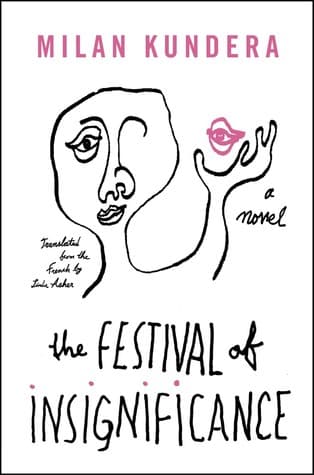
Milan Kundera (2015)
Genre
Literary Fiction / Philosophy
Reading Time
90 min
Key Themes
See below
Sign in to track this book
In a world without humor, Milan Kundera writes about the 'unserious,' showing readers how to find laughter and wisdom in life's small moments.
Alain, a man who thinks a lot about women's navels, gets a birthday party invitation from his friend Ramon. Alain thinks about how real beauty is gone and how modern life is crude, focusing on the lost art of the navel. He remembers his mother leaving him as a child and how much this affected his view of female beauty and absence. Ramon's invitation is for his own birthday, which he says is a necessary act of self-worth in a world that makes individuals feel less important. Alain, despite his philosophical thoughts, decides to go.
Ramon is at a café, trying to practice a speech for his birthday party. It is full of big, self-important statements about how important it is to celebrate oneself. He struggles to find the right words, constantly changing and discarding his ideas. This shows his deep insecurities and his wish to seem profound. Meanwhile, Charles, another friend, is busy making food for the party. He plans a cooking performance with ducks, intending to present them in a way that is both nice to look at and conceptually important, though his artistic vision's details remain unclear and strange.
Caliban, an out-of-work actor, is working as a waiter at a cocktail party, a job he hates. To ease his boredom and perhaps to mock the snobby guests, he invents a character: a Pakistani man who speaks a made-up language. Caliban acts as this character, pretending to translate the Pakistani's profound, but entirely fake, observations about life, love, and existence. The guests, wanting to seem cultured and open-minded, are fascinated by this act, completely unaware they are being subtly made fun of. Caliban finds a strange satisfaction in their gullibility, showing how superficial their intellectual interests are.
Queenie, a friend of the group, shares a story she says she heard about Joseph Stalin. The story involves Stalin's hunting trips and how he would purposely miss his shots to let his subordinates catch the game. This made them feel important and secured their loyalty. This story, which Queenie later reveals to be completely made up, comments on power, manipulation, and the human need for recognition, even if it is based on a lie. The friends discuss how believable and what the story means, blurring the lines between historical truth and convenient fiction.
D'Ardelo, a man obsessed with his own importance and wanting to be noticed, tries to pretend to have a serious illness. He believes that by appearing very sick, he will get sympathy and attention from others, thereby proving his existence. He carefully plans his performance, practicing his coughs and expressions of suffering. His efforts are clumsy and obvious, however, showing his deep loneliness and desperate need for outside approval. This event highlights how silly it is to seek importance through fake suffering and the common human desire to be seen and cared for.
Alain, still dealing with his childhood abandonment and his mother's absent navel, finally faces his past. He meets his mother again, and in their talk, he begins to understand the deeper meaning behind his lifelong obsession. It is not just about the physical absence of a navel but the emotional emptiness left by her leaving. Through this confrontation, Alain starts to come to terms with his past, moving beyond his focus on the superficial to a deeper understanding of connection, loss, and the lasting presence of the past in the present. He realizes that true beauty is more than just physical traits.
Ramon's long-awaited birthday party begins. His friends, Alain, Charles, Caliban, and Queenie, gather, expecting an evening of philosophical talk and celebration. Ramon, still nervous, tries to give his carefully prepared speech about the importance of celebrating unimportance. However, his delivery is awkward, his words stumble, and his grand statements fail. The speech, meant to be profound, instead shows his own self-consciousness and the basic absurdity of trying to make the ordinary meaningful. The guests politely sit through his performance, showing the social customs of politeness and the underlying triviality of their gathering.
Charles reveals his elaborate cooking creation: the ducks he had carefully prepared. His artistic vision, however, does not quite work. The presentation is more strange than beautiful, and the conceptual meaning he intended is lost on the guests. The ducks become another part of the evening's general unimportance, adding to the feeling of mild chaos and the failure of grand plans. This event further shows the novel's main idea: that trying to give life deep meaning often results in comical failure, and that real joy might come from accepting how trivial existence is.
During the party, Caliban, still acting as the waiter, subtly continues his performance as the translator for the fictional Pakistani. He interjects his made-up statements, watching the guests and their reactions. His ongoing act comments on the entire gathering, where everyone is, in a way, playing a role. The guests continue to fall for his act, eager to engage with what they see as exotic wisdom. This shows how humans tend to look for meaning and truth in superficial presentations, and Caliban's detached amusement at their gullibility.
As the party goes on, Queenie, perhaps prompted by the playful deception in the air, confesses that her story about Stalin purposely missing his shots was completely made up. This revelation, instead of causing anger, is met with a mix of amusement and understanding by her friends. It supports the novel's look at truth and fiction, and how stories, even fake ones, can have power and show deeper truths about human nature and the desire for myth-making. The friends acknowledge how common invented stories are in shaping perceptions.
As the party ends, the characters find a unique closeness in their shared experiences of triviality and failed grandness. Ramon's speech, Charles's ducks, Caliban's Pakistani, and Queenie's made-up history all lead to a shared understanding that life, at its core, is often unimportant, and that trying to force meaning onto it is often pointless and funny. Instead of sadness, there is a sense of freedom in this realization. They find a quiet joy in how unimportant things are, accepting that life's real charm is in its fleeting, unpretentious moments. This shows a shift from looking for meaning to accepting the lack of it.
The party ends, and the friends go their separate ways into the night. They carry with them not deep revelations or life-changing insights, but a subtle, shared understanding of the beauty in unimportance. Alain continues his thoughts, but with a lighter touch; Ramon accepts the failure of his grand speech with a quiet smile. The novel ends not with a dramatic peak, but with a gentle, lasting sense of acceptance and the quiet joy of ordinary existence. The characters have, in their own ways, come to terms with the unimportance of things, finding freedom in not having to be important.
The Protagonist
Alain moves from a specific, almost fetishistic obsession with navels as a symbol of absence to a broader understanding of connection and the acceptance of past trauma.
The Protagonist/Organizer
Ramon attempts to assert his significance but ultimately finds a quiet acceptance of insignificance through the failure of his grand plans.
The Supporting
Charles remains largely static, his artistic endeavors consistently highlighting the gap between grand intention and mundane reality.
The Supporting
Caliban consistently uses his creativity for satirical purposes, affirming his role as an outsider observer.
The Supporting
Queenie reveals the deceptive nature of storytelling, highlighting the power of narrative over truth.
The Supporting
D'Ardelo's attempts at gaining significance through deception ultimately fail, reinforcing the theme of insignificance.
The Mentioned
N/A
The main theme of the novel is how unimportant human existence is and how pointless it is to try to give it grand meaning. Characters like Ramon want to be important, while D'Ardelo fakes illness for attention. Yet, their efforts are always undercut by the ordinary and the absurd. The novel suggests that real freedom comes from accepting this unimportance, as seen when the friends find joy in their party's triviality rather than its intended depth. This theme is a playful contrast to existential sadness, suggesting that meaninglessness can be a source of lightness.
“What more can we say? Nothing. Just read.”
Deception and acting are common in the characters' interactions, showing how reality and identity are constructed. Caliban invents a fictional Pakistani to mock social pretenses, while Queenie makes up a story about Stalin to entertain and provoke. D'Ardelo's fake illness is another act, seeking to manipulate how others see him. These deceptions, though often funny, reveal a deeper truth about human behavior: that we constantly play roles and create stories, both for ourselves and for others, blurring the lines between what is real and what is artificial, as seen throughout Ramon's party.
“To be fascinated by the reality of the contemporary world, and at the same time completely avoiding realism...”
Characters in the novel are always looking for meaning, often in the most ordinary or even absurd parts of life. Alain's focus on navels, Ramon's big birthday speech, and Charles's artistic duck presentation are all attempts to make the ordinary profound. The irony is that these attempts often fail, showing how reality resists such efforts. The novel playfully suggests that meaning is not something to be found or created, but rather something that disappears when examined, leaving behind a delightful, if slightly sad, unimportance.
“He knew that the wish to incorporate an element of the 'unserious' in a novel is not at all unexpected of him.”
The past, especially Alain's childhood trauma of his mother leaving, deeply affects the characters' present lives. Alain's focus on navels comes directly from his mother's perceived absence and the emotional void it created. The novel explores how memory shapes identity and how the past, even when incomplete or distorted, continues to matter. Queenie's made-up Stalin story also touches on how historical stories, whether true or false, become part of our collective memory and understanding of power. The past is not fixed but a changing, often elusive, presence.
“He saw himself as an archaeologist of the human body, digging for the lost meaning of the navel.”
Characters engage in lengthy internal or external philosophical reflections.
Kundera uses extensive philosophical monologues, particularly by Alain and Ramon, to explore the novel's themes directly. These internal reflections, often presented as stream-of-consciousness, delve into concepts like insignificance, beauty, memory, and the nature of existence. They serve not only to advance the characters' internal states but also to provide direct exposition of the novel's philosophical underpinnings, often with a humorous or ironic tone, blurring the line between character thought and authorial commentary.
Multiple character perspectives and storylines converge at a central event.
The novel employs an interwoven narrative structure, presenting the stories and perspectives of several characters (Alain, Ramon, Charles, Caliban, Queenie, D'Ardelo) in separate, yet ultimately connected, threads. These individual narratives converge at Ramon's birthday party, serving as a unifying event. This device allows Kundera to explore diverse facets of the central themes from various angles, creating a mosaic of human experience and demonstrating how individual preoccupations contribute to a collective sense of insignificance and absurdity.
Situations and character actions are presented with a comedic, often ironic, detachment.
Absurdist humor is a pervasive plot device, manifesting in situations like Charles's artistic duck presentation, Caliban's fictional Pakistani, and D'Ardelo's feigned illness. Kundera uses this humor to highlight the inherent ridiculousness of human attempts to find profound meaning or assert significance in a world that often defies such efforts. The humor is often gentle and intellectual, inviting the reader to laugh at the characters' predicaments while simultaneously recognizing the universal human traits they embody, thereby softening the potentially nihilistic implications of the theme of insignificance.
The narrative occasionally comments on its own nature as a story.
Kundera subtly employs metafiction, particularly through the narrator's voice, which occasionally steps back to comment on the act of storytelling itself or the author's intentions. References to Kundera's own previous works or his stated desire to write a book without a single serious word blur the boundaries between author, narrator, and text. This device invites the reader to consider the novel not just as a story, but as a deliberate artistic creation, reflecting on the nature of fiction and its relationship to reality.
“The feeling of insignificance, which for so long had been a source of torment to Alain, had suddenly become his most precious possession.”
— Alain's realization about his personal insignificance.
“Humor is the divine spark that makes us human. Without it, we're just animals.”
— Discussion about the nature and importance of humor.
“The festival of insignificance is always going on. It is always and everywhere. You just have to open your eyes to it.”
— Reference to the omnipresence of insignificance in life.
“Every man is a god for himself, and a clown for others.”
— A character's reflection on self-perception versus how others see us.
“What is serious is always insignificant, and what is insignificant is always serious.”
— A paradoxical statement about the nature of seriousness and insignificance.
“Life is a joke that is not funny.”
— A character's bleak view on the meaning of life.
“The desire to be noticed, to be seen, is a ridiculous and pathetic human weakness.”
— A character criticizing the human need for recognition.
“Boredom is the feeling that everything is insignificant, and insignificance is the feeling that everything is boring.”
— Connecting the concepts of boredom and insignificance.
“To be happy, one must be able to laugh at oneself, at one's own insignificance.”
— A key to happiness offered through self-deprecating humor.
“The greatest freedom is to be free from the need to be important.”
— A character's insight into true liberation.
“We are all puppets, but some of us are aware of our strings.”
— A metaphor for human agency and awareness.
“The only way to endure the absurdity of life is to embrace it with a smile.”
— A philosophical stance on confronting life's inherent meaninglessness.
“The longing for paradise is man's most beautiful and most dangerous dream.”
— Reflecting on humanity's eternal search for an ideal state.
“In the end, all that matters is that we have laughed, even if the laughter was at ourselves.”
— A concluding thought on the ultimate value of humor and self-awareness.
Ready to see how well you understood this book? Take our interactive quiz with 10 questions.
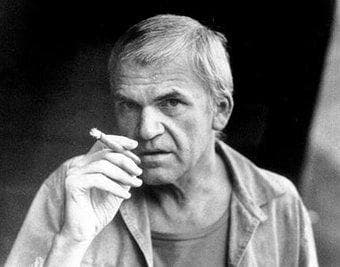
Milan Kundera is a Czech-born French writer. Kundera went into exile in France in 1975, acquiring citizenship in 1981. His Czech citizenship was revoked in 1979 and restored in 2019. He "sees himself as a French writer and insists his work should be studied as French literature and classified as such in book stores".







