“All that is gold does not glitter, Not all those who wander are lost; The old that is strong does not wither, Deep roots are not reached by the frost.”
— Gandalf's letter to Frodo, describing Aragorn.

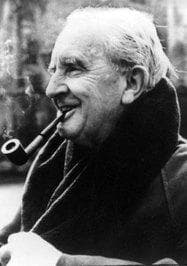
J.R.R. Tolkien (1954)
Genre
Fantasy / Young Adult
Reading Time
10-15 hours (depending on reading speed)
Key Themes
See below
Sign in to track this book
A timid hobbit inherits a powerful, evil ring and must go on a dangerous quest across Middle-earth to destroy it in the fires of Mount Doom before the Dark Lord reclaims his ultimate weapon.
The novel begins in the Shire with Bilbo Baggins's eleventy-first birthday party, celebrated with his nephew and heir, Frodo Baggins, who turns thirty-three. During his farewell speech, Bilbo puts on a magical ring and vanishes, surprising the hobbits. Gandalf the Grey, a wizard and long-time friend, talks to Bilbo about the Ring, telling him to leave it for Frodo. Bilbo reluctantly agrees, feeling an unusual possessiveness. Frodo inherits Bag End and the Ring. For seventeen years, life in the Shire is peaceful, but Gandalf, suspicious of the Ring, researches its history. He eventually confirms it is the One Ring made by the Dark Lord Sauron, a powerful, evil artifact.
Gandalf returns to Bag End and tells Frodo the Ring's true identity, explaining its power and the danger it poses. He tells Frodo to leave the Shire immediately and take the Ring to Rivendell, an Elven stronghold. Frodo, with his loyal gardener Samwise Gamgee, starts this dangerous journey. They are soon joined by Frodo's cousins, Merry Brandybuck and Pippin Took. The hobbits realize they are being hunted by Black Riders, later identified as the Nazgûl, Sauron's terrifying servants, who are looking for the Ring. Their journey through the Shire has many close calls, forcing them to learn caution and how to adapt.
The hobbits eventually reach the village of Bree, where they plan to meet Gandalf at The Prancing Pony inn. Gandalf is not there, but they meet a grim-looking ranger known as Strider (Aragorn), who has been expecting them. After Frodo accidentally puts on the Ring in the common room, Strider reveals he is a friend of Gandalf and offers to guide them. The Nazgûl attack their rooms at the inn that night, but the hobbits, warned by Strider, escape unharmed. Strider becomes their protector, guiding them through the wild and dangerous lands beyond Bree, showing his skill as a tracker and warrior.
The journey continues towards Weathertop, an old ruined watchtower. Strider warns them that the Nazgûl are still pursuing them. On Weathertop, five Black Riders ambush them. Frodo, influenced by the Ring, puts it on and sees the Nazgûl in their spectral forms. The Witch-king of Angmar, their leader, stabs Frodo with a Morgul-blade, leaving a shard in his shoulder. Strider fights off the attackers. Frodo's wound is serious and slowly turning him into a wraith. A desperate race against time begins to reach Rivendell, where Elven healing might save him. Glorfindel, an Elf-lord from Rivendell, finds them and puts Frodo on his horse, Asfaloth, sending him ahead.
Frodo barely reaches Rivendell and is healed by Lord Elrond. A council is held, with representatives from all free peoples of Middle-earth: Elrond, Gandalf, Aragorn, Boromir (from Gondor), Legolas (from Mirkwood), Gimli (from the Lonely Mountain), and hobbits Frodo, Sam, Merry, and Pippin. The Ring's history is told, and Sauron's growing threat is discussed. The council debates what to do with the Ring, as its power is too great for anyone good to use, and it cannot be hidden or used against Sauron. Frodo volunteers to take the Ring to Mordor to destroy it in the fires of Mount Doom.
The Council of Elrond decides the Ring must be destroyed in the fires of Mount Doom, where it was made. Frodo volunteers to carry the Ring, and a 'Fellowship of the Ring' forms to help and protect him. The nine companions are Frodo Baggins (Ring-bearer), Samwise Gamgee, Merry Brandybuck, Pippin Took (the hobbits), Gandalf the Grey (the wizard), Aragorn (the ranger and heir of Gondor), Legolas Greenleaf (the Elven prince), Gimli, son of Glóin (the Dwarf warrior), and Boromir (the son of the Steward of Gondor). They leave Rivendell, heading south, facing the big challenge ahead, united in their goal to stop Sauron.
The Fellowship tries to cross the Misty Mountains via the Caradhras Pass. However, a blizzard, possibly influenced by Sauron or Saruman's magic, forces them to turn back. Gandalf then suggests a dangerous alternative: going through the old Dwarf mines of Moria, a place now rumored to have unknown terrors. Despite Gimli's initial excitement and Boromir's worry, they agree. At Moria's western gate, they face a Watcher in the Water, a monster that attacks them and seals the entrance after they pass. They are now trapped within the dark, sprawling mines.
Inside Moria, the Fellowship finds the tomb of Balin, a Dwarf lord who tried to reclaim the mines, and learns that the colony was destroyed by Orcs. Orcs and a monster Cave-troll ambush them in the Chamber of Mazarbul. After a battle, they escape and are pursued through the large, dark caverns. As they cross the Bridge of Khazad-dûm, a terrifying Balrog of Morgoth, an ancient demon of fire and shadow, confronts them. Gandalf sacrifices himself to let the others escape, fighting the Balrog and falling into the abyss with it, shouting, 'Fly, you fools!'
Sad about Gandalf's loss, the remaining eight members of the Fellowship leave Moria and are guided by Legolas into the Elven realm of Lothlórien, the Golden Wood. Haldir and other Mirkwood Elves meet them, blindfolding Gimli until he agrees to be blindfolded with the others. In Lórien, they find refuge and healing, both physical and spiritual. They meet the Lord and Lady of the Galadhrim, Celeborn and Galadriel. Galadriel tests Frodo by letting him look into her Mirror, which shows visions of possible futures or pasts. She also offers him help and advice, seeing the big burden he carries.
After resting in Lórien, the Fellowship prepares to leave, given Elven cloaks, lembas bread, and boats. They travel down the River Anduin. As they approach the Falls of Rauros, a decision must be made: whether to go east towards Mordor or west towards Minas Tirith. Frodo, feeling the Ring's increasing influence and the growing tension in the group, retreats to consider his options. Boromir, overwhelmed by the Ring's power and his wish to use it for Gondor's defense, tries to take the Ring from Frodo by force. Frodo escapes by putting on the Ring, realizing he must continue the quest alone.
After Boromir's failed attempt to take the Ring, Frodo decides he must leave the Fellowship and go to Mordor alone to protect his companions from the Ring's corrupting influence. As he prepares to leave, Samwise Gamgee, having guessed Frodo's move, races after him and insists on going with him. Meanwhile, the Uruk-hai, a new kind of Orcs sent by Saruman and Sauron, attack the rest of the Fellowship at Amon Hen. Boromir bravely defends Merry and Pippin, but is badly wounded by arrows while fighting many Orcs. Merry and Pippin are captured by the Uruk-hai.
The Protagonist
From an innocent, comfortable hobbit, he becomes a self-sacrificing hero, bearing an immense burden that slowly breaks him but never fully corrupts his will.
The Supporting
He guides the Fellowship until his sacrifice, demonstrating the ultimate cost of fighting evil.
The Supporting
He grows from a humble gardener to an indispensable, courageous companion, embodying unwavering loyalty and hope.
The Supporting
He begins as a mysterious ranger, slowly revealing his noble heritage and leadership qualities, accepting his destiny as king.
The Supporting
His initial heroism is overshadowed by his succumbing to the Ring's temptation, leading to his tragic, redemptive sacrifice.
The Supporting
He represents the Elven people in the quest, developing an unexpected friendship with Gimli.
The Supporting
He overcomes generations of Elven-Dwarf animosity to forge a profound friendship with Legolas, growing in wisdom and understanding.
The Supporting
He begins as a sheltered hobbit and grows into a courageous and resourceful companion.
The Supporting
From a naive and often clumsy hobbit, he begins to mature, showing glimpses of courage and loyalty.
The Mentioned
He passes the burden of the Ring to Frodo and departs the Shire for a peaceful retirement in Rivendell.
The One Ring is the main symbol of this idea. It is not just a tool of power but an evil thing that tries to control and corrupt its wielder, no matter their initial goals. Boromir's sad fall, as he tries to take the Ring from Frodo to 'save' Gondor, clearly shows how even good intentions can be twisted by its influence. Frodo's constant inner fight against the Ring's whispers and its growing weight on his spirit shows how power can slowly change someone's will and moral sense, making even the best people vulnerable to its appeal.
“'The Ring is trying to get back to its master. It wants to be found.'”
The strong loyalty among the Fellowship members, especially between Frodo and Sam, is a key part of the story. Sam's steady devotion to Frodo, his refusal to leave him even when facing great danger, shows the strength and importance of true friendship. The bonds made within the Fellowship, like the growing friendship between Legolas and Gimli despite their peoples' old hatred, show how a shared purpose and respect can overcome old biases. These relationships provide emotional support and strength against evil.
“'I can't carry it for you, but I can carry you!'”
This idea is shown by the hobbits, especially Frodo. Despite their small size, lack of fighting skill, and love for simple comforts, they have a strong resilience, courage, and pure heart that makes them uniquely able to resist the Ring's full corruption. While powerful kings and wizards might want to use the Ring, the humble hobbits can carry it because of their basic goodness and lack of grand ambition. Their journey proves that even the smallest individuals can play the most important roles in the biggest conflicts, challenging old ideas of heroism.
“'Such a little thing to bear so great a burden.'”
The story often explores how predetermined fate and individual choice interact. Characters like Aragorn deal with their family line and the expectation to reclaim their throne, while Frodo initially feels chosen by fate to carry the Ring. However, the story stresses that while some events might be fated, the choices individuals make in those situations are most important. Frodo's voluntary acceptance of the quest, Gandalf's decision to sacrifice himself, and Boromir's choice to defend the hobbits all show the power of free will and personal responsibility in shaping history, even against seemingly overwhelming forces.
“'All that we have to decide is what to do with the time that is given us.'”
The hobbits' journey from the peaceful, safe Shire into the large and dangerous world of Middle-earth represents a loss of innocence. Their comfortable lives are broken by the Ring's discovery, forcing them to face evil, suffering, and the harsh realities beyond their familiar borders. Merry and Pippin's capture, Frodo's constant fear, and Sam's growing understanding of the world's dangers all mark this change. The call to adventure, at first scary, ultimately changes them, strengthening their resolve and opening their eyes to the bigger world and its struggles, leaving their old lives forever changed.
“'The world is indeed full of peril, and in it there are many dark places; but still there is much that is fair, and though in all lands love is now mingled with grief, it grows perhaps the greater.'”
The central MacGuffin and symbol of corrupting power.
The One Ring is the primary object that drives the entire plot. Forged by Sauron, it embodies his will and power, acting as a sentient artifact that actively seeks to return to its master. It corrupts almost all who possess or desire it, making it an irresistible temptation for powerful figures like Gandalf, Galadriel, and Boromir. As a MacGuffin, its destruction is the ultimate goal, but its true function is as a powerful symbol of absolute power's corrupting influence and the immense burden it places on its bearer, Frodo.
The foundational structure of the story, following a perilous expedition.
The entire novel is structured as a quest narrative, where the protagonists embark on a perilous journey to achieve a crucial goal: destroying the One Ring. This device allows for exploration of diverse landscapes, encounters with various cultures and creatures, and the testing and development of the characters. Each stage of the journey (Shire to Bree, Bree to Rivendell, Rivendell to Moria, etc.) presents new challenges, forcing the Fellowship to adapt and grow, while steadily building suspense and a sense of encroaching danger.
Hints of future events and dangers, building suspense.
Tolkien masterfully uses foreshadowing to build tension and a sense of impending doom. Gandalf's initial warnings about the Ring, his secretive research, and his later comments about its power all hint at the immense peril Frodo faces. The appearance of the Black Riders, their relentless pursuit, and the wound Frodo receives on Weathertop are early indicators of Sauron's growing power and the escalating stakes. Boromir's internal struggles and his fascination with the Ring also foreshadow his eventual attempt to seize it, setting up the tragic breaking of the Fellowship.
A narrative device for exposition and plot consolidation.
This council serves as a crucial plot device to bring together various characters and narrative threads. It allows for extensive exposition, where the history of the Ring, the return of Sauron, and the current state of Middle-earth are thoroughly explained. More importantly, it consolidates the disparate elements of the plot, formally establishing the quest to destroy the Ring and forming the Fellowship. It's a moment of unified purpose before the group disperses, setting the stage for the wider conflict.
Representing moral and spiritual conflict through imagery.
Throughout the book, light and darkness are used extensively as symbols. The Shire represents light, innocence, and peace, contrasted with the encroaching darkness of Mordor and the Nazgûl. Gandalf is often associated with light, while Sauron and his servants are creatures of shadow. Places like Lothlórien are described with radiant beauty and light, offering refuge, while Moria is a realm of oppressive darkness. This symbolism reinforces the moral and spiritual conflict at the heart of the story, making the stakes clear and tangible for the reader.
“All that is gold does not glitter, Not all those who wander are lost; The old that is strong does not wither, Deep roots are not reached by the frost.”
— Gandalf's letter to Frodo, describing Aragorn.
“I wish it need not have happened in my time.”
— Frodo speaking to Gandalf about the burden of the Ring.
“Even the smallest person can change the course of the future.”
— Galadriel to Frodo in Lothlórien.
“Faithless is he that says farewell when the road darkens.”
— Gimli rebuking those who doubt the quest.
“The world is indeed full of peril, and in it there are many dark places; but still there is much that is fair, and though in all lands love is now mingled with grief, it grows perhaps the greater.”
— Haldir speaking to the Fellowship in Lothlórien.
“He that breaks a thing to find out what it is has left the path of wisdom.”
— Gandalf to Saruman regarding the Ring.
“I will take the Ring, though I do not know the way.”
— Frodo volunteering to carry the Ring to Mordor.
“All we have to decide is what to do with the time that is given us.”
— Gandalf comforting Frodo in the Shire.
“Deserves it! I daresay he does. Many that live deserve death. And some that die deserve life. Can you give it to them? Then do not be too eager to deal out death in judgement.”
— Gandalf advising Frodo on mercy towards Gollum.
“The road goes ever on and on, Down from the door where it began. Now far ahead the Road has gone, And I must follow, if I can.”
— Bilbo's walking song, later sung by Frodo.
“It's a dangerous business, Frodo, going out your door. You step onto the road, and if you don't keep your feet, there's no knowing where you might be swept off to.”
— Bilbo warning Frodo about adventures.
“I would rather share one lifetime with you than face all the ages of this world alone.”
— Arwen to Aragorn, expressing her love.
“The wide world is all about you: you can fence yourselves in, but you cannot for ever fence it out.”
— Gildor Inglorion to Frodo in the Shire.
“Short cuts make long delays.”
— Pippin suggesting a quicker route through the woods.
Ready to see how well you understood this book? Take our interactive quiz with 10 questions.
Biography coming soon.







