“Everyone wants to be loved. That’s the truth.”
— Early on, the narrator reflects on a universal human desire.

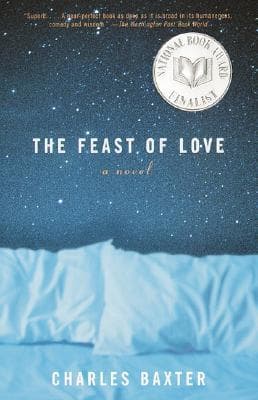
Charles Baxter (2000)
Genre
Literary Fiction / Romance
Reading Time
360 min
Key Themes
See below
Sign in to track this book
In a town where a coffee shop is the center of many lives, a philosophy professor, a coffee shop owner, and various lovers deal with the often funny and always moving complexities of modern love and human connection.
The novel begins with Bradley, the owner of a coffee shop in a Michigan town, introducing himself to the author, Charles Baxter, who is a character in the story. Bradley, in his late forties, starts telling the various love stories he has seen or been part of, presenting himself as someone who records human affection and its complexities. He explains that his coffee shop, "The Coffee Shop," is where these different stories meet. Bradley's own history of two failed marriages and a strong desire for connection influences his view as he sets up the interconnected tales of love, loss, and longing among his friends and acquaintances.
Bradley introduces Oscar and Chloe, a young couple whose passionate and seemingly constant love is a regular sight at his coffee shop. They are often seen holding hands, looking into each other's eyes, and discussing their future with an almost dreamlike certainty. Their love is so clear that it both inspires and confuses the other characters, especially Bradley, who has seen love end. Oscar works as a furniture mover, while Chloe is an artist. Their youthful hope and strong attachment become a point of comparison for other, more complicated relationships throughout the story.
Bradley tells the story of his first wife, Diana, and her affair with David, a married man. Diana, an independent woman, describes the initial excitement and strong pull of their secret relationship. David, successful but emotionally distant, offers Diana a different kind of intensity than she found with Bradley. Their affair involves passionate meetings and a sense of forbidden excitement, but it also includes the pain of deceit and the eventual understanding that it cannot last. This relationship ultimately leads to Bradley and Diana's marriage ending, leaving a lasting mark on both of them.
Bradley describes his second marriage to Kathryn, a woman he loved deeply and believed was his true partner. However, their relationship changes unexpectedly when Kathryn joins a women's softball league. During a game, Kathryn is suddenly and strongly drawn to the beauty and skill of the team's shortstop, Jenny. This attraction causes Kathryn to rethink her life and her marriage to Bradley. She eventually tells Bradley how she feels, leading to their painful separation and divorce. This event highlights how unpredictable love and desire can be, further shaping Bradley's understanding of relationships.
Professor Harry Hain, a philosophy professor at the local college, is a regular at Bradley's coffee shop. He often has long, winding discussions about love, fate, and human connection, trying to apply philosophical ideas to the messy reality of emotions. His wife, Esther, often comes with him, offering more practical views. Hain’s intellectual talks, while sometimes funny in their detachment, also provide moments of deep insight into the human condition and the enduring questions about love. He contrasts with the more experience-based stories, trying to bring order to chaos.
Despite their seemingly perfect love, Chloe keeps a painful secret from her past. She eventually tells Oscar about a traumatic event involving her father, which has left her with deep emotional scars. This revelation tests their relationship significantly. Oscar, showing his deep love and commitment, responds with unwavering support and understanding, assuring Chloe that her past does not lessen his feelings for her. This moment shows the depth of their connection and Oscar's capacity for unconditional love, proving their bond can withstand even the hardest truths.
After his affair with Diana ends, David feels lost. Through chance meetings and shared vulnerabilities, he forms an unexpected connection with Esther, Professor Hain's wife. Esther, often overshadowed by her husband's intellectual pursuits, finds a sympathetic listener in David, who is also looking for meaning and connection. Their relationship develops slowly, based on mutual understanding and a shared sense of loneliness, offering a different kind of love than the passionate intensity David felt with Diana or the intellectual bond Esther shares with Harry. This unlikely pairing shows love can emerge from unexpected places.
A major part of the story involves Bradley's long-held regret and longing for the daughter he and Diana gave up for adoption many years ago, when they were young and unprepared for parenthood. Driven by a deep need for closure and connection, Bradley decides to actively search for her. This search is full of emotional challenges and uncertainties, but it represents Bradley's own journey toward understanding love in its broadest sense—not just romantic love, but family love and the lasting bonds that connect people, even across decades and distances. His search highlights themes of loss, yearning, and the hope for reconciliation.
Throughout the novel, the individual love stories of Bradley, Diana, David, Kathryn, Oscar, Chloe, Harry, and Esther, among others, gradually intertwine. The coffee shop acts as a center where these characters regularly meet, share their lives, and influence each other's decisions and futures. Bradley, as the main narrator, is the thread that weaves these different stories into a unified whole. The characters' relationships change, shift, and sometimes even overlap, showing how love, desire, and loss are not isolated experiences but shared human conditions that connect us all in unexpected ways.
The novel does not give neat, final endings for all the characters' love stories, instead reflecting the ongoing and often unclear nature of human relationships. Some characters find new forms of love and connection, like David and Esther, while others deal with lingering questions and unresolved feelings. Bradley's search for his daughter reaches a moving, if not entirely final, point. The story emphasizes that love is not a goal but a continuous journey of discovery, adjustment, and occasional heartbreak. The final scenes suggest that while individual relationships may change or end, the human need for love and connection continues, driving new stories and possibilities.
The Protagonist/Narrator
Bradley evolves from a somewhat passive observer of love's complexities to an active participant in his own search for connection and resolution, particularly regarding his lost daughter.
The Supporting
Diana experiences the exhilaration and eventual disillusionment of an illicit affair, learning about the true costs and complexities of love and desire.
The Supporting
Kathryn undergoes a profound personal awakening, recognizing and acting upon her true sexual orientation, leading to a new path in her life.
The Supporting
Oscar's unwavering love for Chloe is tested by her past, but ultimately proven resilient, solidifying their bond.
The Supporting
Chloe confronts and shares her traumatic past, allowing for deeper intimacy and healing within her relationship with Oscar.
The Supporting
David moves from a destructive, passionate affair to a more gentle and understanding connection, demonstrating growth in his capacity for love.
The Supporting
Professor Hain largely remains consistent in his intellectual approach to love, providing a philosophical counterpoint to the more emotionally driven characters.
The Supporting
Esther moves from a somewhat secondary role in her marriage to discovering a new, more fulfilling connection with another person, asserting her own desires.
The Mentioned
Jenny acts as a catalyst for Kathryn's self-discovery.
The novel consistently shows love not as a fixed state, but as an ever-changing, unpredictable force. Bradley's own experiences with two failed marriages, and Kathryn's sudden realization of her attraction to Jenny, show how love can appear, disappear, or change unexpectedly. Professor Hain's philosophical attempts to define love often fail against its messy reality, emphasizing its inexplicable qualities. The story suggests that love defies simple categories and rational explanations, often leading to both great joy and deep sadness.
“Love is not a state, it's a process. It's not a noun, it's a verb.”
Through Bradley's narration, the seemingly separate love stories of the characters are woven together, showing how individual lives and relationships are deeply connected. The coffee shop acts as a central place where these connections are made and observed. Diana's affair with David, and David's later connection with Esther, show how paths cross and recross in unexpected ways. This theme emphasizes that no one's love story exists alone; each affects and informs the others, creating a shared human narrative of longing and connection.
“We are all connected, one way or another, in this great and terrible feast of love.”
Beneath the various romantic relationships, a basic human need for connection and belonging drives many of the characters' actions. Bradley's search for his long-lost daughter, David's quiet longing after his affair with Diana ends, and Esther's eventual connection with David, all highlight this universal desire. Even Oscar and Chloe, in their seemingly perfect union, rely on each other for deep emotional belonging. The novel suggests that while romantic love is a strong expression, the broader human need for understanding, acceptance, and a place to belong is a constant, underlying force.
“Everyone wants to be seen, to be known, to be loved.”
The novel often explores how past experiences, especially past loves and losses, continue to shape present realities and future choices. Bradley's two divorces and his lingering regret about his daughter influence his view as a narrator. Chloe's traumatic past, when revealed, deeply affects her relationship with Oscar. The echoes of Diana and David's affair resonate through their later relationships. This theme highlights that love is cumulative, and that every relationship, whether successful or failed, leaves a lasting mark on a person's ability to connect in the future.
“The past is never dead. It's not even past.”
The main story is told within another story, with Bradley narrating to Charles Baxter.
The novel employs a frame narrative, where the primary narrator, Bradley, recounts the various love stories to the author, Charles Baxter, who is a character within the book. This device creates a meta-fictional layer, inviting the reader to consider the act of storytelling itself and the construction of narrative. It also allows Bradley to offer his own interpretations and philosophical musings on the events, shaping the reader's perception and adding depth to the thematic exploration of love. The frame provides a sense of intimacy, as if the reader is directly privy to Bradley's confidences.
Stories are often told from different characters' viewpoints, offering varied insights.
The narrative frequently shifts perspectives, allowing different characters to tell their own versions of events or to offer their insights into the relationships. For example, Bradley recounts his experiences with Diana and Kathryn, but Diana also provides her own account of her affair. This technique provides a richer, more nuanced understanding of the complexities of love, demonstrating that truth is often subjective and multi-faceted. It highlights the inherent biases and individual interpretations that shape each person's experience of love and relationships, creating a more dynamic and comprehensive portrayal.
Bradley's coffee shop serves as the central meeting place for all the characters.
Bradley's coffee shop is not just a setting; it functions as a crucial plot device, acting as the central nexus where all the characters' lives intersect. It is where relationships begin, secrets are shared, and the unfolding drama of love is observed. Its casual, public nature allows for chance encounters and sustained interactions, facilitating the interconnectedness of the various storylines. The coffee shop metaphorically represents a communal space for human connection, both fleeting and profound, underscoring the novel's theme of intertwined destinies.
The novel draws parallels to Shakespeare's play, exploring the chaotic nature of love.
The novel subtly alludes to Shakespeare's 'A Midsummer Night's Dream,' particularly in its exploration of the chaotic, often irrational, and transformative power of love. Like the play, 'The Feast of Love' features multiple intertwined romantic plots, sudden shifts in affection, and characters who seem bewitched by desire. This allusion provides a classical framework for understanding the novel's contemporary exploration of love's unpredictable nature, suggesting that while settings and times change, the fundamental mysteries and absurdities of the human heart remain constant across generations.
“Everyone wants to be loved. That’s the truth.”
— Early on, the narrator reflects on a universal human desire.
“Love is a dangerous, wonderful thing.”
— A character's simple, yet profound, observation about the nature of love.
“We’re all just trying to make sense of things, aren’t we?”
— The narrator's musing on the human condition and the search for understanding.
“The past is never really past. It’s always with us, shaping who we are.”
— A character's reflection on the enduring influence of past experiences.
“Sometimes, the only way to find out what you want is to lose everything you thought you had.”
— A character's realization after experiencing significant loss and change.
“Love isn't just a feeling; it's a decision, made over and over again.”
— A character's mature perspective on the active and ongoing nature of love.
“There are always stories, and they're always about love, in one form or another.”
— The overarching theme of the novel, expressed by the narrator about human narratives.
“We fall in love with what we imagine, and then we have to learn to love what's real.”
— A poignant observation about the transition from idealized love to reality.
“Every person is a mystery, even to themselves.”
— A character's thought on the inherent complexity and unknowability of individuals.
“Happiness is a choice you make every day, even when it's hard.”
— A character's philosophy on finding joy amidst life's difficulties.
“The world is full of invisible connections, threads that tie us all together.”
— A metaphorical insight into the interconnectedness of human lives and relationships.
“Sometimes, the greatest love is the one you let go of.”
— A bittersweet reflection on the nature of love and sacrifice.
“We are all just looking for a place to belong, a place where we are seen and understood.”
— A character's expression of a fundamental human need for acceptance.
“Love makes fools of us all, and it's worth it every time.”
— A humorous yet profound take on the often irrational but rewarding nature of love.
“Life is a feast, and love is the main course.”
— A concluding thought, echoing the title and summarizing the novel's central theme.
Ready to see how well you understood this book? Take our interactive quiz with 10 questions.







