“They say the body is a house, but I have seen too many houses fall.”
— Amabelle reflects on the fragility of life and home amidst the violence.


Edwidge Danticat (1998)
Genre
Literary Fiction / Historical Fiction
Reading Time
360 min
Key Themes
See below
Sign in to track this book
After a 1937 ethnic cleansing, a Haitian maid's dream of marriage and returning home with her lover is shattered, forcing her into a desperate fight for survival against the Dominican Republic's genocidal fury.
The story begins with Amabelle Desir, a Haitian maidservant in the wealthy Pico family's Dominican household, receiving a marriage proposal from her lover, Sebastien Onius, a sugarcane cutter. They plan to marry after the cane season and return to Haiti, a dream that fills Amabelle with hope. Amabelle reflects on her orphaned childhood, taken in by Don Carlos and Papi, and raised alongside their daughter, Rosalinda. She recounts the kindness of the Pico family, especially Señora Valencia, who treats her like a daughter. Despite her comfortable life, Amabelle feels a deep connection to Sebastien and her Haitian heritage, recognizing the subtle but growing tension between Dominicans and Haitians in the borderlands, fueled by Generalissimo Trujillo's rhetoric.
Amabelle has a vivid and disturbing dream involving a river of blood and severed heads, a premonition that unsettles her. This dream coincides with an increase in anti-Haitian sentiment. Rumors spread about Generalissimo Trujillo's decree to 'cleanse' the borderlands of Haitians. Sebastien's father, Yves, arrives at the Pico estate with other Haitian workers, bringing news of growing hostility and violence against their people. The air becomes thick with fear and suspicion. Amabelle and Sebastien try to hold onto their plans, but the anticipation of their future is increasingly overshadowed by dread as the political climate worsens.
The violence erupts suddenly and brutally. Dominican soldiers, fueled by nationalist fervor, begin systematically hunting down and killing Haitians in the border regions. Amabelle sees the horror firsthand. She is separated from Sebastien during a chaotic escape. She sees countless bodies and experiences the terror of being hunted. The massacre, often called the Parsley Massacre, is known for its brutality and the chilling pronunciation test (the Spanish word 'perejil' or parsley) used to distinguish Haitians from Dominicans. Amabelle's world is torn apart as she becomes a refugee, witnessing unspeakable atrocities and desperately searching for Sebastien.
Amabelle, wounded and traumatized, flees into the wilderness. She meets other survivors, including a young woman named Man Rapadou and her son, who are also trying to reach the Haitian border. They face constant danger from Dominican soldiers and the harsh natural environment. Amabelle's journey is a difficult test of endurance, marked by hunger, thirst, and the constant threat of death. She clings to the hope of finding Sebastien, a hope that is both a driving force and a source of immense pain. The landscape itself becomes a character, offering both refuge and formidable obstacles to their survival.
Amabelle eventually reaches the Massacre River (Dajabón River), which separates the Dominican Republic from Haiti. The river, a symbol of division and death, is choked with bodies. She sees countless Haitians being slaughtered or drowned as they attempt to cross. Among the dead, she recognizes familiar faces from her village, including Yves, Sebastien's father. This devastating experience confirms her deepest fears about Sebastien's fate, though she never sees his body. The river becomes a powerful and permanent marker of the atrocities she has endured and the losses she has suffered.
Amabelle, along with Man Rapadou and her son, finally makes it across the border into Haiti. They are taken in by Man Rapadou's family. While safe from the immediate violence, Amabelle is deeply scarred by her experiences. She is consumed by grief for Sebastien and the countless others lost. The trauma appears in her inability to speak freely about what she witnessed, a common response among survivors. She struggles to reconcile her past in the Dominican Republic with her present in Haiti, living with the ghosts of her memories and the profound weight of her losses.
Years pass, and Amabelle slowly begins to rebuild a semblance of a life in Haiti. She works as a healer and midwife, using her hands to comfort and care for others, a contrast to the violence she experienced. Despite her outward strength, the memories of the massacre and her search for Sebastien never truly leave her. She occasionally returns to the border, drawn by a need for closure and a lingering hope, however faint, of finding some trace of him. Her life is a testament to survival, but also a poignant illustration of how deeply trauma can embed itself in a person's soul, shaping their future.
Amabelle eventually reunites with Sebastien's mother, Kongo, and his sister, Mimi, who also survived the massacre. They share their stories and their grief, finding solace in their shared loss. Kongo reveals details about Yves's death, confirming Amabelle's fears about his fate. This reunion is bittersweet, offering connection and shared memory, but also reinforcing the permanence of their losses. It highlights the communal aspect of grief and how survivors find strength and understanding in each other's experiences.
As Amabelle grows older, her memories become both a burden and a sacred duty. She understands the importance of remembering and ensuring that the events of 1937 are not forgotten. She often revisits the borderlands, drawn by the ghosts of the past. Her narrative shifts between her present-day reflections and the harrowing events of her youth, creating a powerful mosaic of memory and trauma. She grapples with the difficulty of articulating the unspeakable, knowing that some experiences defy simple words, yet driven by the need to honor the dead.
Decades later, as an old woman, Amabelle makes a final pilgrimage back to the Dominican Republic, specifically to the Pico estate where she grew up. She finds the house in ruins, reflecting the passage of time and history's destructive nature. She meets a grown-up Rosalinda, who is initially hesitant to acknowledge the past but eventually shares a moment of quiet understanding with Amabelle. This visit provides a form of closure, allowing Amabelle to confront the physical remnants of her past and to acknowledge the changes that have occurred, both in herself and in the landscape around her.
Amabelle dedicates her remaining years to remembering Sebastien and the countless victims of the massacre. She carries their stories with her, understanding that her survival makes her a vessel for their memory. Her life is a quiet act of defiance against forgetting, a testament to the enduring power of love and the human spirit even in the face of horror. She often reflects on the paradox of the 'farming of bones'—how the earth consumes the dead, yet their stories and spirits continue to nurture the living, shaping their understanding of history and humanity.
In her old age, Amabelle reflects on the enduring power of her love for Sebastien, which remains undimmed by time and tragedy. She understands that while the physical presence of her loved ones is gone, their essence, their 'bones,' are deeply embedded in her memory and the landscape itself. She finds a quiet peace in her remembrance, recognizing that grief is a form of love. The novel concludes with Amabelle's poignant meditation on memory, the earth, and the interconnectedness of life and death, leaving the reader with a sense of the human capacity for both suffering and resilience.
The Protagonist
Amabelle transforms from a hopeful, innocent young woman planning her future into a traumatized but resilient survivor who dedicates her life to bearing witness and remembering.
The Supporting/Love Interest
Sebastien's arc is cut short by the massacre, transforming him from a living dream into a powerful, enduring memory that shapes Amabelle's entire life.
The Supporting
She remains relatively static in her kindness towards Amabelle, but her character subtly reveals the limitations of individual goodness in the face of systemic evil.
The Antagonist
As a historical figure, Trujillo's character is static, serving as the catalyst for the novel's central conflict and tragedy.
The Supporting
Man Rapadou provides a steady presence and embodies resilience, helping Amabelle navigate the initial trauma and flight.
The Supporting
Yves serves as an early warning and a casualty, symbolizing the initial wave of victims.
The Supporting
Rosalinda's arc shows a move from childhood innocence to an adult grappling with a difficult national history, eventually finding a moment of quiet connection with Amabelle.
The Supporting
Kongo embodies the shared grief and enduring strength of the community of survivors, providing a space for collective mourning with Amabelle.
The novel explores the burden and necessity of remembering traumatic historical events, especially those often overlooked or suppressed. Amabelle's entire life is a testament to memory, as she grapples with the ghosts of the past and the responsibility of bearing witness. The narrative constantly shifts between present-day reflections and past horrors, emphasizing how history lives within individuals. This theme appears in Amabelle's recurring dreams, her physical and emotional scars, and her eventual decision to revisit the sites of her trauma, culminating in her understanding that 'the earth is a tomb and we are its farmers.'
“The earth is a tomb and we are its farmers.”
The novel explores the complexities of identity, particularly for Haitians living in the Dominican Republic. Amabelle, a Haitian orphan raised in a Dominican household, embodies this struggle. The massacre itself is an attempt to violently enforce a singular, exclusionary Dominican identity, demanding that Haitians prove their belonging through language (the 'perejil' test). Characters grapple with where they truly belong, whether in a hostile Dominican Republic or a homeland they barely know. This theme is central to Sebastien and Amabelle's desire to return to Haiti and Amabelle's lifelong search for a place of peace and acceptance.
“We were like a pair of hands, one always knowing what the other was doing.”
At its heart, the novel is an exploration of love and the devastating impact of loss. Amabelle's deep love for Sebastien is the anchor of her existence, and his presumed death in the massacre becomes the central wound she carries throughout her life. The narrative details the agony of separation, the relentless search for a loved one, and the enduring nature of grief. The love between Amabelle and Sebastien symbolizes the human capacity for connection that is brutally severed by violence, yet their spiritual bond persists, guiding Amabelle's journey and her will to survive.
“A person cannot be loved if they are not remembered.”
The novel portrays the psychological and physical trauma inflicted by genocide, while also highlighting the human spirit's extraordinary resilience. Amabelle's journey from a naive young woman to a seasoned survivor illustrates trauma's long-lasting effects, including mutism, recurring nightmares, and a pervasive sense of grief. Yet, she finds ways to cope, to heal, and to live a meaningful life, eventually becoming a healer herself. Her ability to endure, to help others, and to continually seek understanding of her past demonstrates a powerful, if painful, resilience.
“I had left my heart where my bones would not be found.”
Language is a crucial and often deadly theme in the novel. The 'perejil' (parsley) test, which exploited the linguistic differences between Haitian Creole and Dominican Spanish, became a tool for distinguishing and executing Haitians. This highlights how language, typically a means of communication, can be weaponized to enforce arbitrary divisions and justify violence. Amabelle's initial difficulty in speaking about the massacre also shows language's limitations in articulating extreme trauma, while her eventual storytelling demonstrates its power for healing and remembrance.
“It was impossible to say 'perejil' without the 'r' rolling around in your mouth like a drum.”
Amabelle recounts her story decades after the events.
The entire novel is narrated by an older Amabelle, looking back on the traumatic events of 1937 and their lasting impact. This device allows for a deep exploration of memory, grief, and the process of healing over time. It creates a sense of reflection and philosophical depth, as Amabelle interprets her past experiences through the lens of age and wisdom. The retrospective nature also builds suspense, as the reader knows the narrator survived, but not how or at what cost, making the journey through the past even more poignant.
The Massacre River symbolizes division, death, and the flow of history.
The Dajabón River, often referred to as the Massacre River, is a powerful symbol. It physically divides Haiti and the Dominican Republic, mirroring the ethnic and political divisions. During the massacre, it becomes a literal grave, choked with the bodies of the dead, symbolizing the scale of the atrocity. Later, it represents the enduring scar of history, a place Amabelle revisits as an old woman, where the past and present converge. The river's constant flow also suggests the relentless march of time and the way history carries its victims and their stories forward.
Amabelle's vivid dreams foreshadow impending tragedy and reflect her trauma.
Amabelle frequently experiences vivid and often disturbing dreams, particularly a recurring one involving a river of blood and severed heads. These dreams serve as premonitions of the impending massacre, building tension and foreshadowing the horrors to come. After the massacre, her dreams continue to reflect her trauma, manifesting her anxieties, grief, and the indelible images of violence. This device provides insight into Amabelle's subconscious, her deep sensitivity, and the psychological impact of her experiences, blurring the lines between reality and her internal world.
A linguistic test used to identify and execute Haitians.
This real-life historical detail functions as a chilling plot device, highlighting the arbitrary and brutal nature of the genocide. The inability of many Haitians to pronounce the Spanish 'r' in 'perejil' (parsley) became a death sentence. This test underscores the weaponization of language and cultural differences, transforming a simple word into a tool of ethnic cleansing. It dramatically illustrates the absurdity and cruelty of the violence, making the abstract concept of genocide terrifyingly concrete and personal for the characters.
“They say the body is a house, but I have seen too many houses fall.”
— Amabelle reflects on the fragility of life and home amidst the violence.
“Sometimes I think God is a man, and he just doesn't care about women, or children, or anyone who can't fight back.”
— Amabelle's lament, expressing her despair and questioning divine justice in the face of atrocities.
“We were not meant to be separated, not by a border, not by a language, not by the color of our skin.”
— Amabelle's profound yearning for unity and rejection of arbitrary divisions.
“The dead do not always stay dead. Sometimes they come back to haunt the living, to remind them of what they have done.”
— A reflection on the enduring impact of past violence and the memory of victims.
“When you have nothing left but your story, you hold onto it with both hands.”
— Highlighting the importance of narrative and testimony for survivors.
“A country is not a house, but it is built on the bones of its people.”
— A powerful metaphor for the foundation of nations, often built on sacrifice and violence.
“The river carries everything away, but it also remembers.”
— The river, a recurring motif, symbolizes both forgetting and the indelible mark of events.
“To forget is to die a second time.”
— Emphasizing the crucial role of remembrance in honoring the victims and preserving history.
“There are some things that cannot be undone, only endured.”
— Amabelle's somber realization about the irreversible nature of trauma and the necessity of resilience.
“Love is a dangerous thing in a dangerous time.”
— Amabelle and Sebastien's forbidden love highlights the risks of intimacy amidst political turmoil.
“The rain washes away the blood, but it does not wash away the pain.”
— A vivid image illustrating that external cleansing cannot erase internal suffering.
“Even silence has a sound when you are listening for it.”
— Reflecting on the weight of unspoken truths and the echoes of past events.
“How do you tell a story that has no beginning and no end, only a middle that keeps repeating itself?”
— Amabelle struggles with the cyclical nature of violence and the difficulty of narrating such experiences.
“The wind carries the whispers of the dead, if you listen closely enough.”
— A poetic expression of the lingering presence of those who have been lost.
Ready to see how well you understood this book? Take our interactive quiz with 10 questions.
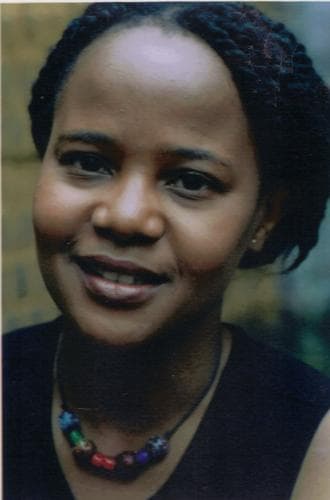
Edwidge Danticat is a Haitian-American novelist and short story writer. Her first novel, Breath, Eyes, Memory, was published in 1994 and went on to become an Oprah's Book Club selection. Danticat has since written or edited several books and has been the recipient of many awards and honors. As of the fall of 2023, she will be the Wun Tsun Tam Mellon Professor of the Humanities in the department of African American and African Diaspora Studies at Columbia University.







