“The world is a marketplace where you can buy anything you want, but you must pay the price.”
— A recurring philosophical observation about life's choices and consequences.

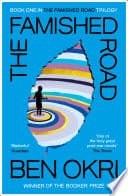
Ben Okri (2015)
Genre
Literary Fiction / Fantasy
Reading Time
14-18 hours (based on ~250 words/min)
Key Themes
See below
Sign in to track this book
A spirit-child chooses to live in the mortal world, navigating poverty and wonder with an unyielding smile.
Azaro is born into a poor family in an unnamed African country. He is an abiku, a spirit-child who is reborn often, meant to die young and return to the spirit world. His parents, Mum and Dad, are loving but struggle financially. From a young age, Azaro sees and talks with spirits, often finding it hard to tell the difference between the physical world and the spirit realm where his spirit companions call him back. He experiences the world through a heightened, often dreamlike view, making his early childhood a constant negotiation between two realities.
Dad finds work as a laborer, and the family moves to a new area near a popular, often chaotic bar run by Madame Koto, a strong and mysterious woman. This bar becomes a central place for the community, where people gather, talk, and escape their daily problems. Azaro spends much of his time there, watching the adults and the strange events that happen. The community deals with extreme poverty, hunger, and the constant corruption of local politicians, who use the villagers for votes and resources, often causing violence and division.
The political situation grows more intense as two opposing parties campaign for the upcoming elections. Their rivalry is strong and often violent, with thugs from both sides intimidating and bribing the villagers. Madame Koto, seeing a chance, skillfully handles these political currents, her bar becoming a place for campaign rallies and secret meetings. Her business grows, but her power becomes darker and supernatural, as she begins to change, becoming more monstrous and less human, her bar reflecting her unsettling change.
Driven by desperation, Dad, a man of physical and spiritual strength, decides to become a boxer. His fights are brutal, often leaving him severely injured. These boxing matches are not just physical contests but also symbolic spiritual battles, showing his family's and community's struggles against oppression and poverty. Azaro often goes with his father to these fights, witnessing his strength and suffering. Dad also goes on various spiritual quests, trying to understand reality and protect his family from the bad forces around them.
Azaro suffers from many severe illnesses and near-death experiences, each time close to returning to the spirit world. During these times, he meets many spirits, some good, some mischievous, and some terrifying. His spirit companions increase their pleas for him to join them, tempting him with promises of peace and freedom from suffering. These spiritual journeys are deep and often traumatic, blurring the lines between waking life and dreams, and strengthening his unique position between the two realms.
Among the many strange figures Azaro meets, a blind beggar often appears, offering cryptic wisdom and insights into reality and the spirit world. This beggar seems to know more than humans. Azaro also repeatedly meets a powerful and terrifying three-headed spirit, a bad entity that represents the destructive forces in the world. These encounters are important, making Azaro face the darker aspects of existence and the deep connection of all things, both seen and unseen.
Mum is the steady anchor of the family, working hard as a hawker, carrying heavy loads and enduring hardship to provide for Azaro and Dad. She faces constant challenges, from low earnings to marketplace dangers, but her love for her family is strong. She provides a grounded contrast to Azaro's spiritual wanderings and Dad's struggles, representing human strength and endurance in the face of adversity. Her practical wisdom and nurturing presence are important for Azaro's survival in the physical world.
The 'famished road' itself becomes a symbol throughout the story. It represents human suffering, the endless cycle of poverty, political corruption, and spiritual hunger that affects the community. It is a road that consumes and is never satisfied, yet it is also a road of potential, of change, and of the persistent human spirit. Azaro, walking this road, sees its many forms – the dusty paths, his parents' journeys, and the spiritual paths that mix with the physical world.
Election day arrives, bringing with it violence and chaos. The two political parties clash brutally, leading to riots, destruction, and more suffering for the villagers. Madame Koto's power reaches its peak, and her bar becomes a place of intense spiritual events, embodying the corruption and darkness that has consumed the community. Dad engages in his most challenging spiritual and physical battles yet, fighting not only human enemies but also bad spirits. Azaro, caught in the middle, must use his abilities to navigate these dangerous events.
After the election, a fragile peace returns, but the problems of poverty, injustice, and spiritual unrest remain. Madame Koto's bar, though changed, continues to have influence. Azaro and his family, though scarred, survive these trials. The story ends without a clear resolution, showing the cyclical nature of their struggles and the ongoing journey of existence. Azaro remains in the world of the living, still connected to the spirit realm, understanding that life's path is an unending famished road, full of both suffering and hope.
The Protagonist
Azaro matures from a child constantly pulled between two worlds to one who consciously chooses and embraces the complexities of human existence, finding strength in his unique perspective.
The Supporting
Dad endures relentless physical and spiritual hardship, deepening his understanding of the world's injustices and his own spiritual power, ultimately finding a profound, albeit weary, inner peace.
The Supporting
Mum consistently demonstrates unwavering strength and practical wisdom, adapting to endless challenges while remaining the emotional core of her family.
The Antagonist/Supporting
Madame Koto transforms from a powerful businesswoman into a monstrous, spiritually corrupted entity, embodying the destructive forces unleashed by greed and political strife.
The Supporting
The Blind Beggar remains a static source of ancient wisdom, his role being to guide Azaro rather than undergo personal change.
The Supporting
The spirit companions remain constant in their desire for Azaro to return, representing the unchanging pull of the non-physical realm.
The Antagonist
The Three-Headed Spirit remains a consistent manifestation of malevolence, its power waxing and waning with the collective suffering of humanity.
The Mentioned
Jericho's arc is limited to his function as an enforcer, embodying the widespread political corruption.
The novel blurs the lines between reality and the spirit realm, showing them as intertwined. Azaro's abiku nature allows him to constantly see spirits, demons, and ancestors, showing that the unseen world is deeply integrated with daily life. Events in the physical world, like political corruption or human suffering, appear as spiritual distortions, such as Madame Koto's transformation, and vice versa. This theme suggests that human experience is always a blend of tangible and intangible forces, as seen in Azaro's frequent illnesses which are both physical ailments and spiritual battles.
“So long as we are alive, so long as we feel, so long as we love, everything in us is an energy we can use.”
Despite poverty, political corruption, violence, and hardship, the characters, especially Azaro's parents, show strength and a will to survive. Dad's boxing matches symbolize the fight against overwhelming odds, while Mum's tireless hawking and nurturing provide a steady anchor. Azaro himself, by repeatedly choosing to stay in the world of the living despite the spirit world's appeal, embodies this theme. The characters' capacity for love, hope, and even joy in the face of despair shows the strength of the human spirit.
“We are the miracles that happen when we refuse to give up.”
The novel shows how political ambition and the struggle for power lead to corruption, violence, and exploitation of the poor. The two rival political parties manipulate the villagers, turning them against each other through bribes and intimidation. This corruption is not just a societal problem but takes on a spiritual dimension, influencing Madame Koto's transformation and attracting bad spirits. The 'famished road' becomes a metaphor for this hunger for power that consumes the community and leaves it suffering, as seen in the election's chaotic aftermath.
“The poor are like a famished road, always hungry, always waiting to be filled, but never satisfied.”
Through Azaro's perspective, the novel questions what is real and what is illusion. His ability to see spirits, his frequent hallucinations during illness, and the dreamlike quality of many events challenge the reader's view of reality. The story suggests that reality is subjective, layered, and influenced by individual perception and spiritual awareness. This theme is clear in how characters like Dad also experience visions and spiritual journeys, showing that 'truth' is more complex than what is immediately apparent, encouraging a broader, more mystical understanding of existence.
“There are always other roads to take, even when you think you are lost.”
A recurring motif from Yoruba mythology where a child is born to die and be reborn multiple times.
The concept of the 'abiku' is central to Azaro's character and the narrative's magical realism. It explains his constant connection to the spirit world, his frequent illnesses, and the persistent pull he feels to leave the land of the living. This device allows Okri to explore themes of choice, sacrifice, and the blurred boundaries between life and death. It also grounds the fantastical elements in a specific cultural mythology, giving them weight and meaning within the story's context, making Azaro's struggle inherently spiritual and existential.
The seamless integration of fantastical elements into an otherwise realistic setting.
Okri employs magical realism to depict Azaro's world, where spirits walk alongside humans, objects possess mystical properties, and events defy logical explanation, yet are treated as commonplace. This device allows the author to explore profound philosophical and social themes – poverty, politics, spirituality – through a lens that expands beyond conventional reality. It creates a dreamlike, often disorienting atmosphere that mirrors Azaro's perception, making the spiritual and the material equally valid and tangible aspects of existence within the narrative.
The literal and metaphorical road representing endless suffering, hunger, and the journey of life.
The 'famished road' is both a literal dusty path in the village and a powerful metaphor. It symbolizes the unending hunger of the poor, the insatiable greed of politicians, and the cyclical nature of suffering and struggle in the human condition. It represents the journey of life itself – a path that consumes, yet also offers opportunities for resilience and transformation. Azaro's constant walking on this road, observing its many facets, reinforces its significance as a central symbolic device that encapsulates the novel's core themes.
Characters and places undergo profound, often unsettling, changes that reflect inner states or external forces.
Transformation is a key device, most notably seen in Madame Koto, whose physical form and bar become increasingly monstrous as her power and corruption grow. Dad also undergoes profound transformations through his spiritual quests and boxing matches, his body bearing the marks of his battles. These transformations are not merely superficial but reflect deep spiritual and moral shifts, emphasizing the idea that inner states and external pressures can fundamentally alter beings and environments. It visually and viscerally represents the consequences of choices and societal forces.
“The world is a marketplace where you can buy anything you want, but you must pay the price.”
— A recurring philosophical observation about life's choices and consequences.
“Living was a miracle, and it was a torment. It was a blessing, and it was a curse.”
— Azaro's internal struggle with his existence as a spirit-child, experiencing both joy and suffering.
“It is not enough to be alive. You must live.”
— A profound statement emphasizing the importance of actively engaging with life, rather than merely existing.
“The poor are kings in their own dreams.”
— Reflecting on the power of imagination and dreams for those living in poverty, offering an escape or a different reality.
“There are times when the world is so beautiful that it hurts.”
— Azaro's heightened sensitivity to the beauty and pain of the world around him, often leading to a sense of overwhelming emotion.
“Every moment is a new beginning.”
— A hopeful and resilient perspective on overcoming challenges and embracing change, despite the hardships faced.
“To be born is to be in debt.”
— A concept relating to the karmic cycles and the obligations or burdens that come with being brought into the world, particularly for spirit-children.
“The future is always uncertain, but that is also its greatest strength.”
— An optimistic view on the unknown, suggesting that uncertainty allows for possibilities and transformations.
“We are all travellers on a journey, and our destination is unknown.”
— A metaphor for life as an unpredictable journey, emphasizing the shared human experience of not knowing what lies ahead.
“The world is full of ghosts, and we are all haunted by them.”
— Referring to the presence of ancestral spirits, past events, and unresolved issues that continue to influence the living.
“The greatest magic is the magic of ordinary life.”
— Highlighting the wonder and profoundness found in everyday experiences, often overlooked in the search for extraordinary phenomena.
“Silence is not empty. It is full of answers.”
— Emphasizing the importance of introspection and listening to one's inner self or the subtle messages of the world.
“Love is the only true currency.”
— A central theme suggesting that genuine connection and affection hold more value than material wealth or power.
“Our stories are what make us immortal.”
— Reflecting on the enduring power of narratives and the way they preserve memory, identity, and influence across generations.
Ready to see how well you understood this book? Take our interactive quiz with 10 questions.

Sir Ben Golden Emuobowho Okri is a Nigerian-born British poet and novelist. Okri is considered one of the foremost African authors in the post-modern and post-colonial traditions, and has been compared favourably to authors such as Salman Rushdie and Gabriel García Márquez. In 1991, Okri won the Booker Prize with his novel The Famished Road.







