“Every man has his price. The trick is to find it.”
— A cynical observation on human nature, often attributed to the Borgias' understanding of power.

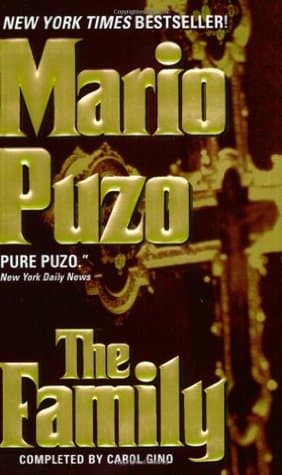
Mario Puzo (2001)
Genre
Thriller / Historical Fiction
Reading Time
10-12 hours
Key Themes
See below
Sign in to track this book
In Renaissance Rome, the ambitious Borgia family, led by Pope Alexander VI, manipulates power, faith, and family to control 15th-century Italy amidst art, war, and scandal.
The novel begins with Pope Innocent VIII's death, setting the stage for the Conclave of 1492. Cardinal Roderigo Borgia, ambitious and charming but also corrupt, orchestrates his election through bribery, promises, and political deals. He ensures key cardinals, like Ascanio Sforza, owe him favors, securing their votes. His illegitimate children—Cesare, Juan, Lucrezia, and Gioffre—are already part of his life, and his rise to Pope Alexander VI immediately elevates the entire Borgia family, angering rival Roman families like the Orsinis and Colonnas. This act secures his power and sets the stage for the family's controversial rule.
Pope Alexander VI, now in power, quickly uses his children to strengthen the Borgia family's influence. His daughter, Lucrezia, marries Giovanni Sforza, Lord of Pesaro, a distant relative of Cardinal Ascanio Sforza. This alliance is purely political, designed to strengthen Borgia ties with the powerful Sforza family and secure their place among Italian city-states. Lucrezia, though initially hopeful, soon realizes she is a pawn in her father's strategy. Her marriage is loveless, showing how family members are sacrificed for the Borgias' hunger for power.
Cesare Borgia, Roderigo's eldest and most capable son, initially dislikes the church path his father chose for him. Despite his intelligence and natural leadership, Cesare despises the Church and wants a military career. Pope Alexander, however, insists on making Cesare a Cardinal, believing it is the best way to secure the family's control over the Vatican and influence Italy. Cesare reluctantly accepts, but his resentment grows, setting the stage for his eventual rejection of his clerical vows and his change into a military commander. This shows the conflict between personal desire and family duty.
Juan Borgia, the Pope's favored son and Duke of Gandia, is a wasteful and arrogant figure, known for his recklessness despite his titles. His behavior often embarrasses the family and frustrates Cesare. One night, after dinner, Juan disappears and is later found murdered, his body in the Tiber River. The Pope is devastated, and an investigation begins, with many suspects including rival families and even Cesare himself, due to their rivalry. This event is a turning point, bringing scandal to the Borgias and hardening Cesare's resolve to follow his own path.
After Juan's death, Cesare Borgia uses the chance to leave his unwanted cardinal role. He publicly gives up his vows, initially upsetting his father, Pope Alexander VI, but eventually getting his reluctant approval. Cesare then starts a military career, supported by his father's resources and the genius of figures like Leonardo da Vinci, who designs advanced weapons for him. He quickly becomes a brilliant and ruthless commander, conquering territories in the Romagna and creating a powerful Borgia duchy. His change from reluctant clergyman to fearsome warlord marks a shift in the family's power and territorial goals.
Pope Alexander VI arranges a new, more important marriage for Lucrezia, this time to Alfonso of Aragon, Duke of Bisceglie, the illegitimate son of the King of Naples. This alliance aims to strengthen the Borgia's position against their French rivals. Lucrezia genuinely falls in love with Alfonso, finding some happiness. However, the marriage is short and troubled by political schemes. At the same time, scandalous rumors of incest between Lucrezia and her brothers, especially Cesare, spread throughout Rome and beyond, fueled by the Borgia's enemies and their perceived lack of morals. These rumors further damage the family's reputation and highlight the dark side of their power.
The political situation changes, and the alliance with Naples becomes less useful for the Borgias. Alfonso of Aragon, Lucrezia's husband, becomes an obstacle to Cesare's ambitions and his alignment with the French. Alfonso is first attacked and wounded, then later, while recovering, is strangled in his bed. Though never officially proven, the suspicion, both in the novel and historically, points to Cesare Borgia as the killer. This act further shows Cesare's ruthless practicality and his willingness to remove anyone who stands in the way of his and his family's power.
After Alfonso's death, Pope Alexander VI arranges a third and final marriage for Lucrezia, this time to Alfonso d'Este, heir to the Duchy of Ferrara. This marriage is the most important, raising Lucrezia to a position of prestige and securing a vital alliance for the Borgias in Northern Italy. Lucrezia, though scarred by her past, embraces her role as Duchess of Ferrara, finding stability and respect. She becomes an arts patron and a capable ruler, building a more legitimate legacy away from the direct politics of Rome, showing her resilience amidst her family's schemes.
Niccolò Machiavelli, a Florentine diplomat, observes Cesare Borgia's campaigns. He is impressed by Cesare's military skill, strategic mind, and ruthless efficiency in gaining power in the Romagna. Machiavelli sees in Cesare his ideal prince—a leader who is cunning, decisive, and willing to use any means to achieve and keep power. His observations and admiration for Cesare's methods later inform his work, 'The Prince,' providing a historical and philosophical view of the Borgia's actions.
Pope Alexander VI, Roderigo Borgia, dies suddenly after a banquet, likely from malaria or food poisoning. Rumors of poisoning by his enemies or accidental self-poisoning (a common misconception about the Borgias) spread. His death is a disaster for the Borgia family. Without his influence and the Papal treasury, their power crumbles. Cesare, who also falls ill at the same time, is unable to secure the next Papal election. This event marks the rapid decline of the Borgia's dominance and the unraveling of their empire, showing how fragile power built on individual charisma and ruthlessness can be.
After his father's death and his own illness, Cesare Borgia is vulnerable. The newly elected Pope Julius II, a bitter enemy of the Borgias, systematically takes apart Cesare's power and seizes his territories. Cesare is betrayed by former allies, imprisoned, and eventually escapes to Spain, where he tries to rebuild his fortune through military service. However, his luck is gone. He dies fighting in a minor skirmish, far from the grand empire he imagined. His downfall is quick and complete, showing how fast power can disappear when its main support is removed.
The novel ends with the Borgia family's political power largely gone, but their legacy, both infamous and influential, is firm. Lucrezia continues her life as Duchess of Ferrara, supporting a court known for its culture and arts, trying to distance herself from her past scandals. The Borgia name becomes linked with ambition, ruthlessness, and corruption, but also with intense political maneuvering, artistic growth, and the formation of Italian identity. The story shows how their actions, for good or ill, left a lasting mark on Renaissance Italy, shaping its politics and culture for generations.
The Protagonist/Antagonist
From a scheming Cardinal, he rises to the Papacy, consolidates his family's power, but ultimately sees his empire begin to crumble with his death.
The Protagonist/Antagonist
Forced into the Church, he breaks free to become a brilliant and feared military leader, only to see his power collapse after his father's death.
The Protagonist
From an innocent girl used as a political pawn, she matures into a resilient and respected Duchess, finding her own identity amidst her family's infamy.
The Supporting
Begins as the favored but profligate son, his life ends tragically and mysteriously, accelerating Cesare's rise.
The Supporting
Observes the Borgias, particularly Cesare, and his insights contribute to his developing political philosophy.
The Supporting
Remains a steadfast and loving mother and mistress, providing a sense of stability amidst the family's tumultuous political life.
The Supporting
A key ally in Roderigo's election, he eventually becomes a rival as Borgia power expands.
The Supporting
Enters Lucrezia's life as a source of genuine love, only to be tragically murdered, highlighting the Borgia's ruthlessness.
The novel shows how the pursuit of power, in both the Church and secular states, leads to moral compromise and corruption. Pope Alexander VI, though capable of love, uses his office for nepotism, bribery, and military conquest. Cesare Borgia's change from reluctant cardinal to ruthless warlord shows how absolute power creates brutality. The Borgias' actions, from arranged marriages to assassinations, are always driven by a desire to gain and expand influence, often at the cost of ethics or human life. This theme is key to understanding their historical infamy.
“He was a man who loved his children, but loved power more.”
A main tension in the novel is the conflict between individual desires and the demands of family loyalty, especially within the Borgia clan. Lucrezia is repeatedly married for political alliances, sacrificing her happiness for the family's gain. Cesare dislikes his father's command to become a cardinal, eventually breaking free to pursue his military ambitions, which sometimes align with and sometimes threaten the family's broader goals. Juan's indulgence and death highlight the dangers of being both a favored son and a liability. The Borgias are connected by blood but also divided by their individual drives for glory and survival.
“Blood bound them, but ambition tore them apart.”
Puzo explores the historical context of the Renaissance Papacy, where the head of the Catholic Church was also a powerful ruler. Pope Alexander VI embodies this dual role, using spiritual authority to wage war, arrange political marriages, and enrich his family. The Vatican is shown as a political battleground, with cardinals and popes acting as princes. This theme highlights the hypocrisy and practicality of the era, where religious piety often took a backseat to worldly power, and the Church itself became a tool for territorial expansion and dynastic glory.
“The Holy Father was also a king, and kings needed armies and alliances.”
The novel examines what makes effective leadership, particularly through Cesare Borgia and Niccolò Machiavelli's observations. Cesare's ruthlessness, strategic skill, and willingness to use any means to achieve his goals are presented as effective, though morally questionable, traits for a ruler. Machiavelli's admiration for Cesare's methods foreshadows his political philosophy, suggesting that a leader must be both a lion and a fox—strong and cunning—to maintain power in a volatile world. The Borgias, especially Cesare, serve as a case study for practical governance in a brutal age.
“A prince must learn how not to be good, and to use this knowledge or not to use it according to the exigencies of the case.”
Puzo reinterprets historical figures and events to humanize the Borgias.
Puzo takes liberties with historical facts, particularly regarding the inner lives and motivations of the Borgias. While adhering to major historical events, he invents dialogue, internal monologues, and specific personal interactions to make the notorious family more relatable and complex. For example, he emphasizes Roderigo's genuine love for his children and Lucrezia's attempts at agency, often softening their historical reputations. This device allows for a more emotionally engaging narrative, presenting the Borgias not just as monsters, but as products of their ambitious and brutal era, driven by recognizable human desires and fears.
The Papacy and control of Italian city-states serve as the ultimate prize.
The Papacy itself, and by extension, control over the fragmented Italian city-states, functions as a MacGuffin. It is the central object of desire that drives the entire plot and the Borgia family's actions. While not a tangible object that is literally 'sought,' the continuous pursuit of political and territorial power within Italy, with the Papacy as its ultimate symbol and tool, propels every major decision, alliance, betrayal, and conflict. The Borgias constantly strive to gain more land, influence, and titles, using their position to achieve this ever-expanding goal, until the source of that power (the Pope) is removed.
The Borgia family's infamous reputation precedes and informs their actions.
The novel uses the historical notoriety of the Borgias as a form of foreshadowing. Readers (and contemporary characters) are aware of the family's reputation for ruthlessness, incest, and poisoning. This creates a constant undercurrent of tension and expectation, making events like Juan's murder or Alfonso of Aragon's assassination feel almost inevitable. The 'Borgia name' itself acts as a device, influencing how other characters react to them and how the audience interprets their actions, reinforcing the sense of their destined, dark trajectory. This device plays on the reader's pre-existing knowledge to enhance the dramatic impact of the narrative.
“Every man has his price. The trick is to find it.”
— A cynical observation on human nature, often attributed to the Borgias' understanding of power.
“God forgive me, but I would rather be feared than loved.”
— Cesare Borgia's pragmatic view on effective rule, prioritizing fear as a more reliable tool than affection.
“The end justifies the means.”
— A recurring theme embodying the Borgia family's ruthless pursuit of their ambitions, often attributed to Machiavellian philosophy.
“There are three things necessary for the salvation of man: knowledge, will, and power.”
— A reflection on the essential elements for achieving one's goals, whether spiritual or temporal.
“A man who cannot control his passions is a man who cannot control his destiny.”
— A warning against succumbing to emotional impulses, particularly relevant in the treacherous political landscape.
“History is written by the victors.”
— A commentary on the subjective nature of historical accounts, reflecting how the Borgias shaped their own narrative.
“In politics, there are no permanent friends, only permanent interests.”
— A stark reality of political alliances and betrayals, a constant in the Borgia court.
“The greatest trick the devil ever pulled was convincing the world he didn't exist.”
— A reflection on deception and hidden influences, applicable to the subtle manipulations within the Church and state.
“To conquer a city, you must first conquer the hearts of its people.”
— A strategic insight into gaining lasting control, beyond mere military conquest.
“Ambition is a glorious cheat.”
— A recognition of ambition's seductive power and its ability to justify morally questionable actions.
“The Church is a business like any other, only with more powerful customers.”
— A cynical and pragmatic view of the Vatican's operations, stripping away its spiritual facade.
“A man without a family is a tree without roots.”
— Emphasizes the crucial importance of family ties and loyalty, a core theme of the book.
“The world is a stage, and all the men and women merely players.”
— A philosophical observation on the performative nature of life, especially in the public sphere of Renaissance Italy.
“Power is not given, it is taken.”
— A fundamental belief of the Borgias, illustrating their proactive and often violent approach to acquiring and maintaining authority.
Ready to see how well you understood this book? Take our interactive quiz with 10 questions.
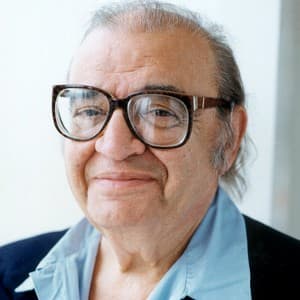
Mario Francis Puzo was an American author and screenwriter. He wrote crime novels about the Italian-American Mafia and Sicilian Mafia, most notably The Godfather (1969), which he later co-adapted into a film trilogy directed by Francis Ford Coppola. He received the Academy Award for Best Adapted Screenplay for the first film in 1972 and for Part II in 1974. Puzo also wrote the original screenplay for the 1978 Superman film and its 1980 sequel. His final novel, The Family, was released posthumously in 2001.







