“They were artists first, parents second, and their children were, for better or worse, their greatest work of art.”
— Describing Caleb and Camille's approach to raising their children, Buster and Annie.

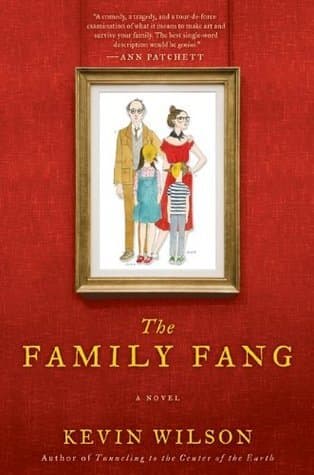
Kevin Wilson (2011)
Genre
Literary Fiction / Creativity
Reading Time
240 min
Key Themes
See below
Sign in to track this book
Two adult children, scarred by a childhood spent as unwilling participants in their performance artist parents' elaborate pranks, must confront their eccentric upbringing when their parents disappear, possibly as part of one final, audacious act.
Buster Fang, a writer, gets a concussion when a can of cream of mushroom soup hits him in the head. This bizarre injury, along with a recent breakup and a stalled writing career, makes him call his sister, Annie Fang. Annie, an actress whose career is also in decline, agrees they should return to their childhood home in rural Ohio to recover. They had avoided the home due to their unconventional upbringing by performance artists Caleb and Camille Fang. Their return marks the beginning of their reluctant re-entry into their parents' chaotic world, a world they had tried to escape.
At their parents' house, Buster and Annie find themselves surrounded by the meticulously cataloged remnants of their childhood—a vast archive of videos, photographs, and documents detailing Caleb and Camille's performance art. Many of these pieces, which their parents call 'Fang performances,' involved Buster and Annie, often unknowingly, as central figures. As they review this material, they confront the surreal and often humiliating experiences of their youth, where the line between art and life was constantly blurred. This re-examination of their past highlights how their parents' artistic pursuits shaped their development, showing how much their identities were formed by these public, unconventional interventions.
While Buster and Annie navigate their present anxieties and past traumas, Caleb and Camille are focused on their latest and potentially final performance art piece, titled 'The End.' They are secretive about the details, only hinting at its grand scale and importance as their magnum opus. The parents' dedication to their art, even in their old age, is a source of both admiration and immense frustration for Buster and Annie. The children suspect that 'The End' will involve them, reigniting their old anxieties about being used for their parents' artistic vision. This further complicates their strained family dynamic and their attempts to find solace at home.
Caleb and Camille Fang disappear after their car is found abandoned and wrecked on a rural road, with signs of a struggle. The local police, led by Sheriff Duncan, investigate, initially treating it as a possible abduction or murder. Buster and Annie are central to the investigation, forced to interact with law enforcement and the media, who are intrigued by the Fangs' eccentric reputation. However, the children, having grown up witnessing their parents' elaborate hoaxes and staged events, suspect the disappearance is not what it seems. They wonder if this is another, perhaps their most ambitious, performance art piece.
Skeptical of the police investigation and convinced their parents' disappearance is staged, Buster and Annie begin their own search for clues. They revisit the 'accident' scene, examine their parents' belongings, and review past performance art documents, searching for patterns or hints about 'The End.' Buster, with his writer's eye for detail, and Annie, with her actor's understanding of performance, piece together fragments of information. Their investigation becomes a journey into their parents' artistic methods, forcing them to confront how far Caleb and Camille would go for their art, and the blurry boundaries between truth and fiction that defined their family life.
The mysterious disappearance of the renowned, if controversial, performance artists Caleb and Camille Fang quickly gets national media attention. News outlets arrive in the quiet rural town, eager to report on the bizarre case. The Fangs' unconventional past, including their history of staging elaborate public events and pranks, fuels widespread speculation. Some believe it is a genuine tragedy, while others, familiar with their work, suspect it is their ultimate performance art piece. Buster and Annie are under intense scrutiny, their every move analyzed by reporters and the public. This media frenzy adds pressure to their already fraught search, as they try to discern the truth amid the public's hunger for a sensational story, further isolating them.
As Buster and Annie investigate, they seek out Charles, a former collaborator and close friend of Caleb and Camille from their early art days. Charles, now an art critic and curator, provides insights into the Fangs' artistic philosophy and their commitment to blurring the lines between art and life. He explains the depth of their artistic ambition and their desire to create work that provoked and challenged audiences. Charles's perspective helps Buster and Annie understand their parents' dedication to their craft, offering a different view of their eccentric upbringing and the current disappearance. His insights confirm their suspicions that 'The End' is a performance.
Following a series of cryptic clues, Buster and Annie uncover the truth behind Caleb and Camille's disappearance. They discover that 'The End' is a planned performance art piece designed to simulate their own deaths, forcing the public, and more importantly, their children, to confront questions of authenticity, grief, and the legacy of their art. The parents orchestrated the car accident and their subsequent vanishing act to create a powerful, immersive experience that would be debated and analyzed for years. Buster and Annie are initially furious and hurt by the deception, but also impressed by the audacity and artistic brilliance of the scheme, realizing its profound impact on them.
Buster and Annie eventually track down Caleb and Camille, who have been hiding and observing the fallout of their performance. The reunion is charged with a mix of anger, relief, and a strange sense of understanding. Buster and Annie confront their parents about the emotional toll their art has taken on them, expressing the resentment and confusion they have carried since childhood. Caleb and Camille, in turn, explain their artistic motivations, their belief that art should be lived and experienced, not merely observed. This confrontation, though difficult, allows for a fragile form of reconciliation, as both generations begin to acknowledge the other's perspective, albeit imperfectly, finally verbalizing years of unspoken grievances and artistic justifications.
After 'The End,' the Fang family deals with the public's reaction, which ranges from outrage to admiration, and the legal repercussions of their elaborate hoax. More importantly, Buster and Annie process the implications of their parents' final performance on their own lives and identities. While they gain a deeper, if still complicated, understanding of their parents' artistic drive, the experience leaves them with lingering questions about the nature of truth, the boundaries of art, and the true cost of creativity. The novel concludes with the family's future uncertain, but with Buster and Annie having gained a clearer, if still ambivalent, perspective on their unique heritage, and perhaps a path forward for their own lives.
The Protagonist
Buster begins as a detached, cynical observer of his parents' art, but through investigating their disappearance, he gains a more nuanced understanding of their motivations and ultimately finds a degree of peace with his unique family history.
The Protagonist
Annie starts as a defensive and self-destructive individual, but by confronting her parents' art and her own past, she begins to reclaim agency over her life and finds a path towards self-acceptance.
The Antagonist/Supporting
Caleb remains largely static in his artistic conviction, but his final performance and subsequent confrontation with his children reveal the depth of his commitment and perhaps a subtle acknowledgment of the impact on his family.
The Antagonist/Supporting
Camille, like Caleb, maintains her artistic conviction throughout, but her interactions with her children during the 'disappearance' hint at a hidden emotional depth and a complex understanding of her choices.
The Supporting
Sheriff Duncan's arc is largely flat; he remains a representative of law and order, unable to fully grasp the artistic motivations behind the Fangs' actions.
The Supporting
Charles's arc is primarily functional, serving to provide exposition and thematic depth regarding the Fangs' artistic legacy.
The novel constantly blurs the lines between art and reality, asking what constitutes 'art' and at what cost it should be pursued. Caleb and Camille's entire lives are a performance, with their children as unwilling participants, forcing Buster and Annie to question the authenticity of every interaction. Their 'disappearance' is the ultimate blurring, making the police, media, and even their children question whether it is a real crime or a staged masterpiece. This theme explores the ethical boundaries of art and its impact on the lives it touches, suggesting that art, in its most extreme forms, can become indistinguishable from life itself, with real consequences for those involved, particularly the Fang children who never had a 'normal' life.
““They didn’t make art so much as they made life into art, which meant that life was pretty much unlivable for everyone else.””
The Fang children struggle to form their own identities outside their parents' artistic legacy. Buster and Annie are defined by being 'Fang children,' and their professional and personal failures are often linked to their inability to escape this inherited identity. The parents, in turn, are obsessed with their artistic legacy, viewing their children's involvement in their performances as a natural extension of their art. The novel explores how family history, especially a unique and public one, shapes individual lives and the complex, often resentful, bond that forms when personal identity is subsumed by a collective, artistic one. The 'disappearance' forces the children to confront their parents' legacy and decide how much they want to be a part of it.
““The question, it seemed to Buster, was not whether he was a Fang, but what kind of Fang he was.””
Buster and Annie's adult struggles—Annie's acting career and self-destructive tendencies, Buster's stalled writing and relationship issues—are direct consequences of their unconventional and emotionally confusing childhood. They were raised in an environment where parental love was often intertwined with artistic manipulation, leading to trust issues and a skewed perception of normal relationships. The novel explores the long-term psychological effects of being constantly 'on stage' and having one's personal life used for public consumption. Their return home and the investigation of their parents' disappearance force them to confront these unresolved childhood traumas, highlighting how early experiences can shape an individual's capacity for happiness and stability in adulthood.
““They were children of art, and art had broken them.””
Throughout the novel, Buster and Annie search for authenticity, both in their own lives and in understanding their parents. Having grown up in a world of staged realities and calculated deceptions, they struggle to discern what is genuine. Buster's writing is an attempt to find his own truth, while Annie's acting career ironically involves embodying other people's truths. The parents' final performance, 'The End,' is the ultimate challenge to this search, forcing everyone to question the nature of truth itself. The characters grapple with whether true authenticity can exist in a world where everything, even family, can be manipulated for artistic effect, and if 'art' can ever truly be authentic when it involves such elaborate deception.
““How do you know what’s real, when your whole life has been a performance?””
A vast collection of documented performance art that serves as both a historical record and a source of trauma.
The Fang Archives consist of meticulously cataloged videos, photographs, and written accounts of Caleb and Camille's performance art, many of which feature Buster and Annie. This device serves multiple functions: it provides exposition about the Fangs' past, visually immersing the reader in their eccentric world; it acts as a catalyst for Buster and Annie's emotional reckoning, forcing them to confront their childhood traumas; and it becomes a crucial source of clues during their investigation into 'The End,' as they search for patterns and hidden messages within their parents' artistic history. The archives symbolize the indelible mark the parents' art has left on their children.
The central mystery that drives the plot and forces the children to engage with their parents' art.
The disappearance of Caleb and Camille Fang, initially presented as a potential tragedy, quickly evolves into a suspected hoax. This central plot device is the primary engine of the narrative, compelling Buster and Annie to return home and actively investigate their parents' lives and art. It functions as a meta-performance within the story, designed by Caleb and Camille to provoke a grand public and familial response. The ambiguity of the disappearance—is it real or art?—mirrors the overarching theme of blurred reality in the Fangs' lives, forcing the characters and the reader to constantly question what is true and what is staged, ultimately leading to a profound confrontation.
A bizarre, seemingly random event that initiates Buster's return home and symbolizes the absurdity of his life.
The incident where Buster is hit in the head by a can of cream of mushroom soup launched from a potato gun is a moment of absurd, almost farcical, violence. This device acts as a clear inciting incident, forcing Buster to return to his parents' home. Beyond its plot function, it symbolically reflects the chaotic and unpredictable nature of Buster's life, echoing the bizarre, often violent, and always unexpected 'art' his parents created. It's a mundane absurdity that perfectly encapsulates the kind of surreal, slightly off-kilter reality Buster has always inhabited, setting the tone for the strange events that follow and highlighting his inability to escape the absurd even in his 'normal' life.
“They were artists first, parents second, and their children were, for better or worse, their greatest work of art.”
— Describing Caleb and Camille's approach to raising their children, Buster and Annie.
“The only thing worse than being talked about is not being talked about.”
— A variation of Oscar Wilde's quote, applied to the Fang's desire for notoriety.
“It was their job to make the world a stranger place, to make people question what was real.”
— Explaining the core philosophy behind the Fang's performance art.
“Buster had always felt like an accessory to the art, a prop, a living, breathing part of their parents' grand design.”
— Buster's internal struggle with his role in the family's art.
“They had never learned how to be normal, because normal was never an option.”
— Reflecting on the Fang children's unconventional upbringing.
“Maybe the art was the only thing that made sense, the only thing that held them together.”
— Annie considering the binding force of their family's artistic pursuits.
“The real performance wasn't the event itself, but the aftermath, the ripple effect.”
— Caleb's explanation of their artistic intent and the lasting impact.
“You can't just stop being an artist. It's not a switch you can turn off.”
— Buster's realization about his inherent nature, despite trying to live a 'normal' life.
“They were always waiting for the other shoe to drop, for the next bizarre event to unfold.”
— Describing the constant state of anticipation and disruption in the Fang children's lives.
“The problem with being raised by artists, Annie thought, was that you were never quite sure when the performance ended.”
— Annie's ongoing confusion about the line between art and reality in her family.
“Sometimes the best way to disappear is to make everyone believe you're still there.”
— A thought or strategy related to the parents' disappearance.
“They didn't just make art; they lived it, breathed it, forced their children to consume it.”
— Emphasizing the immersive and all-consuming nature of the Fang's artistic lifestyle.
“What if the greatest performance of all was the one they never showed anyone?”
— A lingering question about the true nature of their parents' final act.
“Being normal felt like a costume, ill-fitting and temporary.”
— Buster's attempts to blend into conventional society after leaving home.
“They were a family of questions, never answers.”
— A concise summary of the Fang family's inherent ambiguity and their impact.
Ready to see how well you understood this book? Take our interactive quiz with 10 questions.

Biography coming soon.







