“The thing about being scared is that it doesn't make you think straight.”
— Early in the story, reflecting on the group's initial reactions to the adult apocalypse.

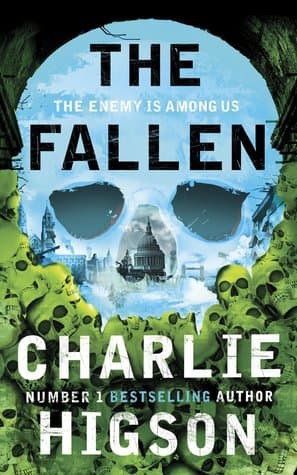
Charlie Higson (2013)
Genre
Thriller / Science Fiction / Young Adult
Reading Time
500 min
Key Themes
See below
Sign in to track this book
In a London full of flesh-eating adults, teens at the Natural History Museum search for a cure, but find the real enemy is more dangerous than the 'sickos' they fight.
The Holloway crew, led by DogNut, arrives at the Natural History Museum, which they hope is a safe place. They find it full of other child survivors, split into groups. The museum is busy, with some kids, like the scientists led by Freddie, trying to find a cure for the 'sickness' that turned adults into flesh-eating 'sickos'. DogNut's group, including Small Sam, Freak, and Courtney, are tired but quickly fit in, learning the museum's rules and how dangerous their lives are. They discover the museum has valuable things, but also the constant threat of sickos outside and power struggles among the children inside.
Freddie, the science group's leader, says they are close to finding a cure, but they need specific medical supplies from St. Thomas' Hospital. This mission is very dangerous because the hospital is known to be full of sickos. DogNut and his crew, with other volunteers, agree to go on this risky trip. The plan involves going through London's dangerous, sicko-filled streets, using their skills to get the items. This trip is tense, as the cure's success, and maybe the future of all survivors, depends on them.
The trip to St. Thomas' Hospital is hard. London's streets are ruined, full of abandoned cars and hidden sickos. The team has several close calls, showing their cleverness and teamwork in fighting the infected. They lose some members, which shows the constant danger they live in. Freak, with his good senses and speed, helps a lot with scouting and navigating. Small Sam, despite being young, helps with his sharp observations. DogNut struggles with leading his friends through such a deadly place, always making tough choices to keep them alive and complete the mission.
At St. Thomas' Hospital, the team finds a nightmare of dark halls and hidden dangers. The hospital is full of sickos, some acting strangely, which suggests the sickness is getting worse or changing. They carefully search for the medical supplies Freddie asked for, going through wards and operating rooms, often fighting. The tension is high as they rush against time and the constant threat. Despite the horrors, they find and get the important supplies, a victory that costs them a lot.
With the medical supplies, the tired and hurt team goes back to the Natural History Museum. Their return brings relief, but it does not last long. After they give the supplies to Freddie and her team, a shocking betrayal happens. Some groups in the museum, especially the 'Slugs' led by Jester, have been secretly planning to take control of the museum and the possible cure. They attack by surprise, trying to kill Freddie's group and anyone loyal to them, including DogNut's crew. The museum, once a safe place, becomes a violent fight.
The Natural History Museum becomes a battleground. DogNut, Small Sam, Freak, and Courtney fight not just sickos, but other children. The Slugs, armed and organized, try to take over key areas, including the lab where Freddie works on the cure. DogNut's leadership is tested as he tries to protect his friends and make sure the cure isn't lost. The fighting is brutal and confusing, with children fighting children. The museum's defenses are broken, not by outside threats, but by fighting inside, leading to chaos and more deaths among the survivors.
In the chaos, Freddie makes a prototype cure. But the cure is not what anyone expected. It does not instantly turn sickos back to normal or give full immunity. Instead, it seems to slow the sickness or maybe change some behaviors, but the 'cured' people are still physically changed and possibly dangerous. This discovery causes a debate among the survivors about the cure's ethics and what their enemy truly is. Jester and his Slugs, who wanted to control the cure for power, now face its unsettling reality.
Jester, disappointed by the imperfect cure and wanting complete power, makes a terrible decision. He tries to use or control the sickness, thinking he can manage it. But his reckless actions have unexpected and horrifying results. He accidentally creates a new, more dangerous type of sicko, or maybe awakens a sleeping, more intelligent form of the infected. These 'Fallen' sickos are stronger, faster, and seem to work together, posing a greater threat than the original sickos. The museum's defenses are overwhelmed by this new, evolved enemy.
The 'Fallen' sickos, released by Jester's mistake, quickly take over the Natural History Museum. The children, already weak from their internal fights, cannot stop this new, terrifying threat. Panic spreads as the museum's walls, once a symbol of safety, fall. DogNut, his crew, Freddie, and other survivors are forced into a desperate, chaotic escape. They fight their way through the museum, seeing terrible things and losing more people. Their safe place is gone, and they are back in London's dangerous streets, facing a stronger enemy than ever.
As the survivors escape, they start to understand the 'Fallen'. These are not just mindless sickos; they are adults who have adapted to the sickness over a long, painful time, keeping some intelligence and even forming a basic, hunting society. They are led by an old, powerful figure, which suggests the plague has a deeper, more hidden origin. The children realize the 'Fallen' are not just monsters, but a twisted evolution of humanity, and their true enemy is more organized and smart than they thought. The fight for survival becomes darker.
After escaping the museum, DogNut's group, now much smaller and tougher, travels through London's ruins. They look for a new, temporary safe place while trying to understand the 'Fallen' and what they can do. Freak's sharp senses become even more important as they learn to spot the new sickos and guess their moves. Small Sam's innocence slowly disappears because of the constant violence. They meet other small groups of survivors, some of whom have also seen the 'Fallen's' terrifying intelligence, confirming their worst fears. Hope for a simple cure fades, replaced by the grim understanding of a long war for survival.
The survivors eventually find, or are found by, the ancient leader of the 'Fallen'. This meeting is not just a fight but also a horrifying discovery. The leader, a terrifyingly intelligent and powerful being, talks to them, explaining where the sickness came from. It is not a random virus but a planned change, a 'purification' of humanity. The leader says the 'Fallen' are the next step in evolution, and the children are just leftovers of a dying species. This meeting destroys any remaining hope for a simple cure, forcing DogNut and his friends to face the threat to their existence.
Realizing they cannot beat the 'Fallen' in normal ways, DogNut, Freddie, and the remaining survivors create a desperate, risky plan. It involves finding a weakness in the 'Fallen's' group or their leader, or maybe a way to stop their 'evolution'. The plan needs great courage, sacrifice, and everyone's combined effort. It is a last attempt, born from despair and a strong will to survive, even if it means dying for humanity's future. The stakes are higher than ever, with humanity's very existence at risk.
The final battle happens in a ruined part of London. DogNut and his team carry out their desperate plan, facing huge odds against the intelligent and organized 'Fallen'. There are intense fights, smart moves, and moments of great sacrifice. Characters are pushed to their limits, physically and emotionally. The result is uncertain, with many losses on both sides. The battle is brutal, showing themes of survival, sacrifice, and the unclear line between human and monster. The fate of the remaining children, and maybe the world, depends on this last, desperate fight.
The final fight against the 'Fallen' ends not with a clear win, but with an unclear and grim result. While the immediate danger might be stopped, or at least lessened, the 'Fallen' are not completely gone. The survivors learn the true nature of the sickness and the powerful enemy they face. DogNut, Small Sam, and the few remaining children are scarred, but perhaps wiser. The future is still uncertain, with ongoing threats and the hard job of rebuilding. The fight for survival is not over, but a fragile hope for humanity remains, carried by the young survivors' strength.
The Protagonist
DogNut evolves from a pragmatic survivor to a leader burdened by the moral weight of his decisions, ultimately fighting for humanity's future.
The Supporting
Small Sam's innocence is gradually eroded by the harsh realities, transforming him into a more hardened but still hopeful survivor.
The Supporting
Freak hones his unique survival skills and deepens his loyalty, becoming an even more vital asset to the group.
The Supporting
Courtney's practicality and resilience are continually tested, hardening her into a formidable survivor.
The Supporting
Freddie's scientific idealism is challenged by the grim realities of her discoveries, forcing her to confront the complex ethics of her work.
The Antagonist
Jester's ambition and thirst for power lead him to make catastrophic decisions, ultimately becoming an unwitting catalyst for a greater threat.
The Antagonist
The Ancient Leader's arc is not one of personal development but of the unfolding revelation of its power and the true nature of the sickness.
The Antagonist
Their collective 'arc' is the revelation of their intelligence and coordinated threat, escalating the conflict.
The main theme is the children's constant fight to survive in a post-apocalyptic world. This struggle makes them lose their innocence, take on adult duties, and commit violent acts they never imagined. Characters like Small Sam show this loss, as his childlike wonder is replaced by a grim understanding of the world. The constant threat of sickos and human conflict shows the brutal choices needed to live, removing what is left of their youth.
“"There was no point in being a kid anymore. No one was going to look after you. You had to look after yourself. Or die."”
The book looks at the unclear difference between humanity and monstrosity, not just with the sickos, but also among the surviving children. While the 'sickos' are clearly monsters, characters like Jester show how human ambition and cruelty can be just as, or more, destructive. The 'Fallen' make this more complicated, showing an evolved sickness that keeps intelligence. This makes readers question what it means to be human and if the 'Fallen' are simply the next step in evolution. The children must face the monstrous parts of themselves to survive.
“"The real monsters weren't the sickos. The real monsters were us."”
DogNut's journey is key to this theme, as he deals with the heavy responsibility of leading his crew and making life-or-death decisions. The internal conflicts in the museum, especially with Jester, show different ways of leading – one based on protection and loyalty, the other on power and control. Freddie's scientific leadership also has its own ethical problems. The story questions what makes good and moral leadership when all society has fallen apart and children must guide themselves.
“"Every decision he made could get someone killed. Every single one."”
Despite their hopeless situation, the characters hold onto small bits of hope. Freddie's search for a cure represents scientific hope, while DogNut's loyalty to his friends offers a more personal, emotional hope. But these hopes are always challenged by harsh realities, betrayals, and the changing sickness. The book balances the heavy weight of their situation with the human spirit's refusal to give up, even when facing threats to their existence.
“"Hope was a dangerous thing, but it was all they had left."”
This theme becomes clear when the 'Fallen' appear. The sickness is not staying the same; it evolves, and the 'Fallen' are a terrifying adaptation, becoming more intelligent and organized. This forces the children to adapt, not just to the environment, but to their changing enemy. The book asks if humanity can adapt fast enough to survive this new threat, or if the 'Fallen' are the next, stronger species. It is a chilling comment on natural selection in a post-apocalyptic world.
“"They weren't just sick. They were something else. Something new."”
A fortified sanctuary reflecting the larger societal collapse and internal human conflicts.
The Natural History Museum serves as a crucial setting, initially presented as a safe haven and a symbol of humanity's past knowledge. However, it quickly becomes a microcosm of the collapsed world, mirroring the larger societal breakdown with its internal power struggles, resource scarcity, and moral compromises among the child survivors. It highlights how even in a supposed sanctuary, human nature's darker aspects, like greed and lust for power (embodied by Jester), can emerge and be as destructive as the external threat of the sickos. Its eventual fall emphasizes the fragility of any perceived safety.
The primary antagonists transform, escalating the stakes and re-defining the enemy.
The evolution of the 'sickos' into the more intelligent and coordinated 'Fallen' is a major plot device. Initially, the sickos are mindless, shambling zombies, a clear physical threat. However, their transformation into the 'Fallen' – beings capable of strategy, communication, and even leading – dramatically escalates the stakes. This device redefines the enemy from a simple biological threat to an existential one, forcing the characters to question the very nature of humanity and the future of their species. It introduces a new layer of horror and desperation, as their previous survival tactics become obsolete.
A scientific discovery that creates more ethical dilemmas than solutions.
Freddie's 'cure' is a significant plot device that subverts expectations. Instead of a clear solution, it creates more complex ethical and moral dilemmas. It doesn't fully restore the sickos but transforms them into something ambiguous, raising questions about what constitutes 'humanity' and whether a partial cure is truly a victory. This device forces the characters, and the reader, to confront the uncomfortable truth that not all problems have clean solutions, and sometimes, the answers can be as terrifying as the original problem, particularly when manipulated by characters like Jester.
The surviving children turn against each other, highlighting human nature's darker side.
Beyond the external threat of the sickos, the internal conflict among the child survivors is a powerful plot device. The rivalries and power struggles within the Natural History Museum, particularly between DogNut's crew and Jester's 'Slugs', demonstrate that humanity's greatest threat can often come from within. This device amplifies the sense of danger and despair, showing how fear, ambition, and the breakdown of societal norms can lead children to commit horrific acts against each other. It underscores the theme that the 'real monsters' are not always the obvious ones.
“The thing about being scared is that it doesn't make you think straight.”
— Early in the story, reflecting on the group's initial reactions to the adult apocalypse.
“When you're fighting for your life, there's no such thing as fair.”
— A character's realization during a confrontation with other children.
“Silence. That was the loudest thing in the world now.”
— Describing the eerie quiet after the adults have vanished or turned.
“You don't know what you've got until it's gone. And then it's too late.”
— Reflecting on the loss of parents and the old world.
“We're not just kids anymore. We have to be something else.”
— A character expressing the need for the children to adapt and take on adult roles.
“Hope is a dangerous thing. It can keep you going, or it can break you.”
— Discussing the various ways children are coping with their new reality.
“Every day was a battle, even if you weren't fighting anyone.”
— Describing the constant struggle for resources and safety.
“Sometimes the monsters are the ones who look just like you.”
— A chilling realization about the danger posed by other children.
“The rules were gone. All of them. And that was the scariest part.”
— Reflecting on the breakdown of society and order.
“You can't save everyone. You just have to try and save yourself.”
— A harsh lesson learned about the limits of heroism in a survival situation.
“The past was a different country. They didn't live there anymore.”
— Describing the complete detachment from their previous lives.
“Hunger makes you do things you never thought you would.”
— A commentary on the desperate measures taken by children to find food.
“It wasn't about being brave. It was about not having a choice.”
— A character's perspective on their actions in dangerous situations.
“We were all just trying to make sense of a world that made no sense.”
— General reflection on the children's attempts to understand the apocalypse.
Ready to see how well you understood this book? Take our interactive quiz with 10 questions.

Charlie Higson is a British author, best known for his thrilling Young Adult horror series, 'The Enemy'. He also penned the popular 'Young Bond' series, including titles like 'SilverFin' and 'Hurricane Gold'. Higson's work often features suspenseful plots and relatable teenage protagonists facing extreme situations.







