“There was a time when the world was full of magic, but it was a quiet magic, a magic that knew its place and didn't shout.”
— Early in the novel, reflecting on the perception of magic in the past.

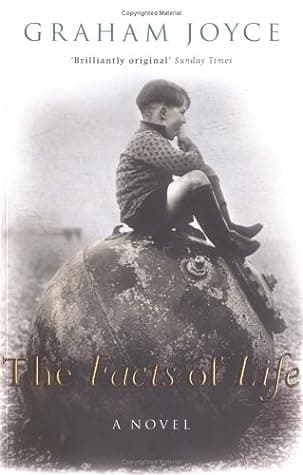
Graham Joyce (2003)
Genre
Literary Fiction / Fantasy / Historical Fiction
Reading Time
300 min
Key Themes
See below
Sign in to track this book
During WWII in Coventry, seven sisters face love, loss, and subtle magic, all seen through the eyes of a boy passed among them.
The story begins in 1940s Coventry. Young Frank, about six, is left by his mother, Cassie, at the busy home of his grandmother, Ma, and her seven daughters—his aunts. Cassie, an actress, promises to return soon, but the promise feels empty. Frank enters the chaotic, feminine world of 22 Sycamore Street. His aunts, each with a strong personality, include practical May, artistic Phyllis, spiritual Ursula, wild Lily, quiet Rose, beautiful Daisy, and youngest Iris. Ma, the matriarch, rules firmly but lovingly. Frank, an observant and often quiet child, starts to navigate this new world as the only boy among many women.
Frank quickly becomes a part of the household, though often overlooked. He sees the sisters' arguments, dreams, and secrets. May, the oldest, helps Ma run the home, while Phyllis paints and dreams of leaving Coventry. Ursula is deeply religious and mystical, often seeing omens. Lily is rebellious and dramatic, while Rose is quiet and reads often. Daisy, the most beautiful, draws many suitors, and Iris, the youngest, is finding her way. The house is busy with rationing, war work, and constant air raid threats. Frank experiences these with a child's mix of fear and wonder, finding comfort in his family's collective strength.
The war's terror comes to Coventry with the devastating Blitz. Frank and his family huddle in their shelter, hearing bombs fall as the city burns. The experience is traumatic, leaving lasting marks. Their home, though damaged, survives, but the city around them is destroyed. The shared trauma brings the family closer, showing their survival instincts and reliance on each other. Frank, though young, sees the vast destruction and loss, and his aunts' and grandmother's resilience becomes a key image for him. Afterward, the family works together to rebuild amid the rubble.
Lily, always the most impulsive sister, falls for a soldier and, against Ma's wishes, elopes. Her disappearance causes a deep upset in the home, leaving Ma heartbroken and the other sisters worried and gossiping. Frank observes the tension and sadness her absence creates. Months later, Lily returns, very pregnant and abandoned by the soldier. Her return brings relief mixed with new tension, as Ma struggles to forgive her and the sisters absorb the shock. Frank, a quiet witness to her vulnerability, sees a different side to his usually boisterous aunt as she prepares for motherhood, adding to the complex family dynamic.
Lily gives birth to a boy named David, further expanding the already crowded home at Sycamore Street. The birth brings joy and new purpose, but also more strain on family resources and Ma's patience. Frank finds himself with a baby cousin and observes the new dynamic. Lily, despite her past rebellion, settles into motherhood, though with her usual fiery spirit. The baby's presence symbolizes life continuing amid war's destruction and becomes a focus for the sisters' affections, even as it highlights the challenges of their unusual living situation. Frank, still the quiet observer, watches this new life unfold.
Phyllis, the artistic sister, continues to pursue painting, often retreating to her room or quiet corners to work. Her art becomes a way to express unspoken emotions and observations within the family. Frank is often drawn to her studio, fascinated by her colors and forms. Phyllis's artistic nature often clashes with Ma's and May's more practical concerns, but her dedication to her art contrasts with the domestic duties and war worries that consume the others. Her desire for a life beyond Coventry, driven by her art, hints at future departures and the longing for individual expression that runs through the family.
Ursula, the most spiritual sister, becomes more absorbed in her religious and mystical beliefs. She interprets dreams, sees omens in daily life, and often speaks of a higher purpose. Her statements, sometimes unsettling, sometimes comforting, are a constant presence. Frank, not fully understanding, is influenced by her unique view of the world, which often blends the ordinary with the magical. Ursula's spirituality balances the other sisters' more grounded concerns, suggesting a deeper, unseen reality at play in their lives and the world, especially during the uncertain times of war.
The war ends, bringing relief and cautious hope to Sycamore Street. The sisters begin to imagine futures beyond war's immediate needs. Daisy, always beautiful, continues to attract attention and dreams of marriage. Iris, the youngest, begins to assert her identity, moving from childhood to adolescence. Men return from war, bringing new possibilities for romance and stability, but also challenges of reintegration. Frank, growing older, observes these changes, sensing the shifts that will alter the close-knit family. The house, once a fortress against war, now feels like a starting point for individual destinies.
Daisy, the family's beauty, falls in love with a returning soldier and plans to marry. Her upcoming marriage marks a turning point; she is the first sister to truly leave home and make her own way. Her departure is bittersweet, bringing joy for Daisy and a sense of loss for the remaining sisters and Ma, who see their close unit beginning to break apart. Frank, now a young boy, experiences the changing dynamics as his aunts start to seek lives outside the collective. Daisy's departure symbolizes an era's end and the inevitable scattering of the once indivisible family.
As Frank grows from a boy into a thoughtful young man, his understanding of his aunts and Ma deepens. He starts to see the unspoken histories, hidden sorrows, and the unique 'magic' that seems to fill their lives—from Ursula's prophecies to the women's sheer resilience and emotional intensity. He realizes that his aunts, despite their quirks, are bound by an unbreakable tie and shared history. His role as an observer changes; he begins to actively interpret the 'facts of life' presented to him, understanding that the extraordinary, almost fantastical, elements of his upbringing are as real as the ordinary, shaping his identity and view of the world.
The Protagonist
Frank evolves from a silent observer to a young man who begins to understand and appreciate the complex 'magic' and resilience of his unique family.
The Supporting
Ma remains a steadfast matriarch, weathering personal and external storms while striving to keep her family united and safe.
The Supporting
May continues her role as the dependable sister, finding her strength in her steadfastness amidst the family's changes.
The Supporting
Phyllis strives to maintain her artistic identity amidst family duties, always seeking beauty and meaning.
The Supporting
Ursula deepens her spiritual connection, serving as the family's intuitive guide and interpreter of the unseen.
The Supporting
Lily transitions from a rebellious youth to a devoted, albeit still spirited, mother, learning responsibility through experience.
The Supporting
Daisy fulfills her dream of marriage, venturing beyond the family unit to build her own life.
The Supporting
Iris matures from a child into a young woman, starting to carve out her unique path within and beyond the family.
The Mentioned
Cassie remains largely static, a distant figure whose absence shapes Frank's early life.
A main theme is the family's unusual, yet fiercely loyal, bond at 22 Sycamore Street. Despite individual quirks, arguments, and different goals, the seven sisters and Ma form a strong unit, especially against outside threats like war. Frank's journey is about finding his place and understanding what it means to belong to such a unique group. This theme appears in their communal living during the Blitz, where they huddle for survival, and in their collective support for Lily when she returns pregnant, showing that family goes beyond judgment.
“They were like a single organism, each sister a vital part of the whole, breathing the same air, sharing the same blood, even when they fought.”
The novel shows the resilience of the human spirit, especially women, during hardship. The family endures the devastating Coventry Blitz, rationing, personal heartbreaks, and constant war threats. Yet, they find ways to survive and maintain their spirit and hope. Ma's steady strength, May's practicality, and even Lily's ability to recover from trouble demonstrate this theme. Their ability to rebuild their lives and city after the bombings shows their collective and individual strength.
“The city might be broken, but they were not. They had seen worse, and they would see it through.”
Graham Joyce blends the realities of wartime life with magical realism. Ursula's prophecies, the family's intuitive understanding of each other, and a sense of almost supernatural protection over their home suggest that reality is more fluid and mysterious than it seems. Frank, as an innocent observer, is especially aware of these subtle 'magical' events, which the family treats as 'facts of life'. This theme is seen in Ursula's uncanny predictions and the family's shared dreams or feelings that go beyond logical explanation.
“There were things in that house, Frank knew, that couldn't be explained by logic or reason, but were as true as the bricks and mortar around them.”
The novel explores the tension between the family's strong collective identity and each sister's individual goals. While bound together, each woman wants her own path: Phyllis for her art, Daisy for love, Lily for freedom. The war initially forces them into a collective life, but as it ends, the desire for individual lives grows, leading to departures and changes. This theme is highlighted by Daisy's marriage and Phyllis's artistic pursuits, which pull them away from the immediate family unit.
“To be a Sycamore Street woman was to be part of something vast and ancient, but each of them still longed for a name, a life, that was solely their own.”
The story is told primarily through the eyes of young Frank.
The use of Frank as the primary narrator, particularly in his early years, allows for a unique blend of innocent observation and subtle magical realism. A child's perspective often accepts the extraordinary as commonplace, making the mystical elements of the story feel natural and unquestioned. This perspective also highlights the subjective nature of memory and how early experiences shape one's understanding of the world, allowing the reader to experience the family's quirks and the war's impact through a less jaded, more impressionable lens, emphasizing wonder and raw emotion.
The integration of fantastical elements into an otherwise realistic setting.
Magical realism is a key device, blending the gritty reality of wartime Coventry with subtle, unexplained magical occurrences. Ursula's prophecies, the shared intuitions among the sisters, and a general sense of an enchanted atmosphere within the ordinary household are central. This device elevates the family's story beyond simple historical fiction, suggesting a deeper, almost mythical significance to their lives and resilience. It allows the extraordinary strength and interconnectedness of the family to manifest in tangible, yet subtle, fantastical ways, enriching the emotional and thematic depth of the narrative.
The family home acts as a central character and symbolic fortress.
The house itself is more than just a setting; it functions as a character and a powerful symbol. It is the physical and emotional heart of the family, a sanctuary during the war, and a witness to all their joys, sorrows, and transformations. Its survival during the Blitz symbolizes the family's own resilience. The house embodies the collective memory and identity of the Sycamore Street women, representing stability, continuity, and the unbreakable bonds that tie them together, even as individual members eventually move on.
The distinct personalities of the seven sisters highlight each other's traits.
The seven sisters, each with a sharply defined personality (e.g., pragmatic May, artistic Phyllis, wild Lily, spiritual Ursula), function as foil characters to one another. Their contrasting traits and reactions to events illuminate the complexities of family dynamics. For example, Lily's impulsiveness highlights May's practicality, while Ursula's mysticism contrasts with Rose's quiet introspection. This device creates a rich tapestry of human experience, showcasing diverse responses to shared circumstances and adding depth to the collective family portrait.
“There was a time when the world was full of magic, but it was a quiet magic, a magic that knew its place and didn't shout.”
— Early in the novel, reflecting on the perception of magic in the past.
“The past isn't a foreign country; it's a room in your own house, and sometimes the door just opens.”
— The protagonist, Cassie, grappling with memories and their sudden vividness.
“You can't choose your family, but you can choose how much of them you let into your head.”
— Cassie reflecting on her complex relationship with her mother and grandmother.
“Some things don't need to be understood to be true. They just are.”
— A recurring theme, often voiced by the grandmother, concerning the inexplicable.
“Grief is a house with many rooms, and you visit them all eventually.”
— Cassie's internal thoughts on coping with loss and the different stages of mourning.
“The war had a way of making everything sharper, more urgent, even the things that had nothing to do with fighting.”
— Describing the atmosphere in England during World War II and its effect on daily life.
“Children see things adults have learned to ignore, or to explain away.”
— Highlighting the difference in perception between children and adults regarding the fantastical.
“Love isn't a thing you find, it's a thing you build, day by day, sometimes with bits of broken glass.”
— Cassie's evolving understanding of love and its challenges.
“There are secrets that keep us safe, and secrets that keep us trapped.”
— Exploring the nature of secrets within the family and their consequences.
“The world doesn't care if you believe in its magic or not. It just carries on being magical.”
— Reinforcing the idea that magic exists independently of human belief.
“Sometimes the bravest thing you can do is just keep going, even when you don't know where you're going.”
— Cassie's internal monologue during a particularly challenging period.
“Stories are how we make sense of things, even the things that make no sense at all.”
— Discussing the role of storytelling in understanding life's mysteries and traumas.
“The scent of rain on dry earth, that's the smell of hope, if you ask me.”
— A sensory detail that evokes a feeling of renewal and optimism amidst hardship.
“We carry our dead with us, not as burdens, but as part of the landscape of who we are.”
— Reflecting on the enduring presence of deceased loved ones in one's life.
Ready to see how well you understood this book? Take our interactive quiz with 10 questions.

Biography coming soon.







