BookBrief
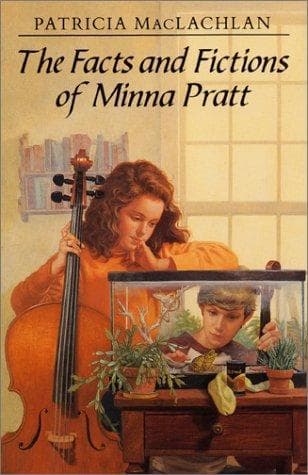
The Facts and Fictions of Minna Pratt cover
Archivist's Choice

The Facts and Fictions of Minna Pratt

Patricia MacLachlan (1988)

Genre

Children's / Young Adult

Reading Time

150 min

Key Themes

See below

Track Your Reading

Sign in to track this book

A young cellist dealing with her unusual, philosophical family finds clarity and self-acceptance through a friendship with a boy from a seemingly perfect world.

Synopsis

Minna Pratt, a young cellist, thinks about 'facts and fictions,' a concept her writer mother often explores. Minna wants a conventional life, wishing her unusual family, including her brother McGrew, were more ordinary. She also wants to achieve vibrato in her cello playing. Her world changes when Lucas Ellerby arrives, a boy whose life seems perfectly structured. Minna is drawn to Lucas's ideal family, while Lucas is interested in the lively world of Minna's home. As they become friends, Minna starts to see her family differently through Lucas's eyes, realizing their quirks are what make them special. Through experiences like McGrew's baseball struggles and Minna's search for vibrato, Minna learns to appreciate her family's unconventional nature and her own individuality. She finds that 'facts and fictions' are not opposing ideas but different ways of understanding life. This leads to progress in her music, her confidence, and her appreciation for her own life.
Reading time
150 min
Difficulty
Easy
Pacing
Moderate
Mood
Heartwarming, Reflective, Gentle, Hopeful
✓ Read this if...
You enjoy heartwarming coming-of-age stories about embracing individuality and the beauty of unconventional families.
✗ Skip this if...
You prefer fast-paced plots with high stakes or detailed fantasy worlds.

Plot Summary

Minna's World of Wonders and Woes

Minna Pratt, an eleven-year-old cellist, lives in a house full of creative activity. Her mother is a writer who asks abstract questions like 'What is beauty?' Her father is a musician who plays the French horn at odd times. Her younger brother, McGrew, struggles with baseball and is often in his own thoughts. Minna's biggest challenge is playing vibrato on her cello, a technique she believes is needed to play Mozart well. She practices diligently but feels a lack of emotion. The 'Facts and Fictions' message above her mother's typewriter often puzzles her, showing her family's unusual nature, which Minna sometimes finds difficult and embarrassing.

The Arrival of Lucas Ellerby

A new boy, Lucas Ellerby, moves to town and joins Minna's cello class. Minna is interested in Lucas, who seems to come from a perfectly ordered, 'normal' family. His socks always match, and his home life seems structured and calm, unlike hers. However, Lucas is immediately interested in the Pratt household's lively and unpredictable atmosphere. He finds their discussions, meals, and artistic pursuits interesting, enjoying the very things Minna sometimes wishes were different. This connection starts their friendship, as Lucas's view begins to subtly change Minna's ideas of normalcy.

Contrasting Worlds and Shared Music

Minna and Lucas start spending time together, often at Minna's house. Lucas becomes a regular visitor, watching the Pratts with amusement and appreciation. He enjoys their spontaneous talks and their creativity. Minna, in turn, visits Lucas's home, finding it neat and quiet, but also somewhat plain compared to her own. Despite their different homes, their shared love for the cello and music creates a strong bond. They practice together, and Lucas's presence helps Minna to see her family in a new way, appreciating their quirks instead of just putting up with them.

McGrew's Baseball Woes and Minna's Insights

Minna's younger brother, McGrew, continues to struggle with baseball. He consistently fails to catch the ball, frustrating himself and gently concerning his family. Minna sees McGrew's efforts and his eventual acceptance of his limits, recognizing that not everyone is good at everything. This experience, though small, connects with Minna's own efforts to play vibrato. She starts to understand that effort and passion matter, but so does finding joy in the process and accepting imperfections. McGrew's journey becomes a subtle parallel to her own artistic development.

The Search for Vibrato and Emotional Connection

Minna's main goal is still to play vibrato on her cello. She practices hard, trying different ways, but feels a gap between the technical skill and the emotional expression she wants. Her cello teacher, Mrs. Ingalls, says vibrato comes from within, from feeling the music deeply. Minna struggles with this, often focusing too much on the mechanics. Lucas, through his simple enjoyment of music and his appreciation for Minna's efforts, helps to subtly change her view, encouraging her to relax and let the music flow. Minna starts to understand that true musicality is not just about perfect technique.

The 'Facts and Fictions' Revelation

The phrase 'Facts and Fictions are different truths' above her mother's typewriter slowly starts to make sense to Minna. Through her talks with Lucas and her observations of her family, Minna realizes that 'facts' are the real, observable parts of life, while 'fictions' are the emotional, imaginative truths that shape experiences. Her family, with their artistic pursuits and unconventional ways, shows the 'fictions' that create their unique reality. This understanding helps Minna to appreciate her own home and the depth of her family's love, even if it does not always fit common ideas.

A Breakthrough in Music and Self-Acceptance

One day, while playing her cello, Minna finally plays a true vibrato. It does not come from forcing the technique, but from a moment of real emotional connection to the music, helped by her new appreciation for her family and her own identity. This breakthrough is not just about musical skill; it shows her personal growth and her acceptance of herself and her family's differences. The vibrato appears naturally, showing her inner balance and her ability to embrace both the 'facts' and 'fictions' of her life. It is a moment of self-discovery and artistic success.

Embracing Her Unique Family

With her vibrato achieved and her understanding of 'facts and fictions' clear, Minna's view of her family changes completely. She no longer wants a 'normal' family but values their individual quirks and the lively, creative atmosphere they have. She sees the beauty in her mother's abstract questions, her father's spontaneous music, and McGrew's way of experiencing the world. Lucas's constant appreciation for the Pratts further strengthens Minna's new understanding, helping her to see the specialness of her own home and the love that connects them, even among the activity.

Newfound Confidence and Friendship

Minna's journey ends with more self-confidence and a stronger bond with Lucas. Her ability to play vibrato, along with her acceptance of her family and herself, makes her feel stronger. She is no longer self-conscious about her home life but proud of its uniqueness. Her friendship with Lucas, built on respect and shared experiences, continues. Lucas also learns from Minna and her family, getting a richer understanding of life beyond strict order. Together, they show a blend of their different worlds, each having learned important lessons from the other.

Principal Figures

Minna Pratt

The Protagonist

Minna transforms from being self-conscious and seeking 'normalcy' to embracing her family's eccentricities and finding her own emotional connection to music.

Lucas Ellerby

The Supporting

Lucas learns to appreciate the richness and beauty of life beyond strict order and structure through his interactions with the Pratt family.

Minna's Mother

The Supporting

Her character remains consistent, serving as a catalyst for Minna's understanding of abstract concepts.

Minna's Father

The Supporting

His character remains consistent, providing a grounding artistic presence in the family.

McGrew Pratt

The Supporting

McGrew's character arc focuses on his acceptance of his limitations in baseball, demonstrating a quiet resilience.

Mrs. Ingalls

The Supporting

Her character remains consistent as a wise mentor figure.

Mr. Ellerby

The Mentioned

His character is static, serving as a foil to Minna's father.

Mrs. Ellerby

The Mentioned

Her character is static, serving as a foil to Minna's mother.

Themes & Insights

Identity and Self-Acceptance

Minna's journey is about understanding and accepting who she is, both as an individual and as part of her unique family. At first, she wants a more 'normal' life, feeling embarrassed by her family's unusual ways. Through her friendship with Lucas, who admires her family, and her own struggles with her cello, Minna learns to value her own uniqueness and her home. Her ability to play vibrato shows her acceptance of her true self and finding her own voice.

She looked at the message, 'Facts and Fictions are different truths.' She looked at her parents and McGrew, and knew that her truth was a combination of both.

Narrator about Minna

The Nature of 'Normalcy' and Family

The book explores the idea that 'normal' is different for everyone and that unusual families can be just as loving and enriching. Minna initially wants a 'normal' family like Lucas's, with matching socks and quiet dinners. However, Lucas's interest in the Pratts' active, artistic life helps Minna see the beauty and warmth in her own home. The story celebrates the idea that real family connection does not follow strict rules but thrives on acceptance, creativity, and shared experiences, no matter how unusual they may seem.

Lucas thought the Pratts were the most interesting family he'd ever met. Minna thought they were just odd.

Narrator

Artistic Expression and Emotional Connection

A main theme is about the true meaning of artistic expression, especially through music. Minna's search for vibrato is not just a technical challenge but an emotional one. She learns that true musicality comes from within, from feeling the music deeply, rather than just perfecting technique. Her success with vibrato shows her emotional growth and her ability to connect with the music on a deep level, showing that art reflects one's inner world and experiences.

'Vibrato comes from here,' Mrs. Ingalls said, tapping Minna's chest. 'From inside.'

Mrs. Ingalls

Facts vs. Fictions as Different Truths

The phrase 'Facts and Fictions are different truths' is a repeated idea and a core theme. 'Facts' are the literal, observable realities, while 'fictions' are the emotional, imaginative truths that shape human experience and creativity. Minna's mother, a writer, lives by this idea, and Minna gradually understands that her family shows both. Their unconventional life, full of art and abstract thought, represents the 'fictions' that make their truth rich and unique, showing that subjective, imaginative truths are as valid and important as objective facts.

Facts and Fictions are different truths.

Message above Minna's mother's typewriter

Plot Devices & Literary Techniques

The Phrase: 'Facts and Fictions are different truths'

A recurring motif and central philosophical anchor.

This phrase, displayed above Minna's mother's typewriter, serves as a central philosophical anchor and a recurring motif throughout the novel. It initially puzzles Minna but gradually becomes the key to her understanding of her family and herself. It symbolizes the book's exploration of subjective versus objective reality, and how emotional and imaginative 'fictions' can hold as much truth and value as concrete 'facts'. Minna's journey is largely about deciphering and internalizing this concept, ultimately leading to her self-acceptance and appreciation for her family's unique dynamics.

Minna's Cello and Vibrato

A symbolic representation of Minna's emotional and personal growth.

Minna's cello and her struggle to achieve vibrato function as a powerful symbol for her broader emotional and personal growth. The vibrato, a technical skill requiring emotional depth, mirrors Minna's journey to connect with her inner self and express her true feelings. Her inability to achieve it initially reflects her internal conflict and self-consciousness, while her eventual breakthrough symbolizes her self-acceptance, emotional maturity, and her ability to find harmony within herself and her family. The cello is not just an instrument but a metaphor for her soul's expression.

The Contrast between the Pratt and Ellerby Families

A narrative foil highlighting different definitions of 'normalcy'.

The stark contrast between Minna's artistic, chaotic Pratt family and Lucas's orderly, conventional Ellerby family serves as a crucial narrative foil. This device allows the author to explore different definitions of 'normalcy' and challenge Minna's initial perceptions. Lucas's admiration for the Pratts' unconventional life, despite his own 'perfect' home, provides an external validation that helps Minna see her family's unique qualities as strengths rather than embarrassments. This contrast is essential for Minna's journey of self-acceptance and for the book's broader theme of valuing diverse forms of family life.

McGrew's Baseball Struggles

A parallel subplot reflecting themes of effort, imperfection, and acceptance.

McGrew's ongoing struggle to catch a baseball, despite his persistent efforts, functions as a subtle parallel subplot to Minna's quest for vibrato. This device highlights themes of effort, the acceptance of imperfections, and finding value beyond conventional success. McGrew's eventual quiet acceptance of his limitations, while still enjoying the game, mirrors Minna's realization that true artistic expression and personal fulfillment are not solely about flawless technique or conforming to expectations, but about passion, effort, and self-acceptance. It underscores that different people have different talents and struggles.

Critical analysis

Notable Quotes

The facts are these: I am Minna Pratt. I am eleven years old. I play the cello. I have a mother who writes books and a father who is a scientist. I have a brother named Lucas who is eight. And I have a dog named Mozart.

Opening lines introducing Minna and her family.

Sometimes I think my mother lives in a world of words, and my father lives in a world of numbers, and I live in between, in a world of music.

Minna reflecting on her parents' professions and her own passion.

A fact is something that is true. A fiction is something that is made up. But sometimes the fictions feel truer than the facts.

Minna pondering the difference between reality and imagination.

Music is not just notes on a page. It's the spaces between the notes, the silence that holds the sound.

Minna discussing her understanding of music with her cello teacher.

My brother Lucas believes that if you wish on the first star you see, and you don't tell anyone, it will come true. I think he might be right.

Minna observing her brother's innocent belief in wishes.

Growing up is like learning to play a difficult piece of music. You practice and practice, and sometimes you get it right, and sometimes you don't.

Minna comparing her musical practice to the process of maturing.

My mother says that stories are how we make sense of the world. My father says that data is how we prove it.

Minna contrasting her parents' approaches to understanding life.

Sometimes I feel like my cello is the only one who really understands me. It doesn't talk back, it just listens.

Minna expressing her emotional connection to her instrument.

Facts can be lonely. Fictions can be company.

Minna reflecting on the comfort of imagination versus cold reality.

I think maybe we are all a little bit fact and a little bit fiction, and that's what makes us interesting.

Minna concluding her thoughts on human nature.

Mozart, my dog, doesn't care about facts or fictions. He just cares about dinner and walks and sleeping in the sun.

Minna observing her dog's simple, contented life.

The world is full of questions, and sometimes the answers are in the music.

Minna finding solace and insight through her cello playing.

My father says that in science, you have to be willing to be wrong. I think that's true for life, too.

Minna learning a lesson from her father's scientific mindset.

I used to think that growing up meant knowing all the answers. Now I think it means learning to live with the questions.

Minna sharing her evolving perspective on maturity.

Quiz

Test Your Knowledge

Ready to see how well you understood this book? Take our interactive quiz with 10 questions.

10
Questions
~5
Minutes
?
Best Score

Key Questions (FAQ)

The novel follows 11-year-old Minna Pratt as she navigates her eccentric family life while learning to play the cello. Through her friendship with Lucas Ellerby, who comes from a more orderly household, Minna discovers how to appreciate her family's quirks and embrace her own identity.

About the author