“She had always known she was adopted, but she had never known she was stolen.”
— Janie's realization about her true identity.


Caroline B. Cooney (1990)
Genre
Thriller / Children's / Mystery / Young Adult
Reading Time
180 min
Key Themes
See below
Sign in to track this book
A teenager's world shatters when she recognizes her own three-year-old face on a milk carton, uncovering a twelve-year-old kidnapping mystery that involves the only parents she's ever known.
Fifteen-year-old Janie Johnson is at lunch with her friends, Sarah-Charlotte and Reeve, when she looks at a milk carton. The picture of a missing child on the carton, identified as Jennie Spring, abducted from a New Jersey mall twelve years ago, is her younger self. The girl in the picture has the same red hair and facial features. Janie is immediately overwhelmed, feeling a physical reaction she tries to hide from her friends. The image disturbs her, creating a terrifying suspicion about her identity and her loving parents, Mr. and Mrs. Johnson. She struggles to connect the girl on the carton with the life she knows, feeling a disconnect and a growing sense of dread.
After the initial shock, Janie starts to examine her life for anything that might support or deny the milk carton's claim. She realizes she has no memories before age four, and her parents always said they didn't own a camera then, explaining the absence of baby pictures. This explanation now sounds empty. She remembers her parents being very protective and sometimes secretive, details she had previously dismissed as normal. Janie starts to feel like a stranger in her own home, constantly watching her parents for clues. The comfortable story of her life begins to fall apart, replaced by a terrifying uncertainty about who she is and who her parents really are.
Janie tells Reeve, her childhood friend and crush, about the milk carton. Initially doubtful, Reeve believes her when he sees the carton himself. He becomes her closest friend and helper in this confusing situation. Together, they begin a quiet investigation. Janie searches her house for old photographs, birth certificates, or any document that could prove her identity, but finds nothing from her earliest years. She watches her parents' behavior, noticing their evasiveness when she indirectly asks about her early childhood. The lack of solid evidence and the increasing number of oddities deepen Janie's belief that the milk carton is telling the truth.
Wanting answers, Janie searches the attic, a place she rarely visits. She finds a locked trunk and opens it with a hairpin. Inside, she finds items that change her world: a dress like the one worn by the girl on the milk carton, a small, faded photograph of a different family, and a birth certificate for 'Jennie Spring.' This discovery is a devastating blow, confirming she is Jennie Spring and that her beloved parents, Mr. and Mrs. Johnson, are her kidnappers. The reality of her situation hits her, leaving her feeling betrayed, terrified, and lost.
With the evidence from the trunk, Janie confronts her parents. Overwhelmed by her discovery, Mr. and Mrs. Johnson confess. They explain that twelve years ago, their own daughter, Hannah, died, and Mrs. Johnson, in deep grief, took Jennie Spring from a shopping mall in New Jersey, believing she was Hannah. Mr. Johnson, wanting to protect his wife and having fallen in love with 'Janie,' went along with the deception, moving them to a new town to escape their past. They describe the emotional struggle and fear they have lived with for years, expressing their love for Janie but admitting the terrible crime they committed.
Janie is devastated by her parents' confession. The love she feels for them conflicts with the knowledge of their crime. She struggles with the moral problem of whether to expose them and potentially ruin their lives, or to continue living a lie. The realization that she has two sets of parents—her loving kidnappers and her biological family, who have suffered for twelve years—is overwhelming. She feels a deep sense of responsibility and guilt, knowing that her existence is built on deceit and pain. Her world is turned upside down, and she feels completely alone in her difficult decision.
After much internal struggle and discussion with Reeve, Janie decides she must contact her biological family. Reeve gives her emotional support, helping her find the phone number for the Spring family listed on the milk carton. With trembling hands, Janie dials the number. The conversation is brief and difficult. She speaks to Mrs. Spring, her biological mother, who is at first disbelieving and then emotional. Janie struggles to explain her identity, but the connection is made, and the Spring family learns that their long-lost daughter, Jennie, has been found, starting the inevitable reunion.
The Johnsons, accepting the seriousness of the situation, agree to drive Janie to New Jersey to meet the Spring family. The car ride is full of tension, guilt, and sorrow. Janie feels a mix of emotions: apprehension about meeting strangers who are her true family, love and pity for the Johnsons, and a deep sense of displacement. She tries to prepare herself for the encounter, knowing that this meeting will change her life and the lives of both families. The journey shows her transition between her two identities and the two lives she has unknowingly led.
Upon arriving at the Spring family home, Janie meets her biological parents, Mr. and Mrs. Spring, and her younger siblings, whom she did not know about. The reunion is emotional. Janie feels an immediate sense of recognition with her biological family, especially her mother, despite the years apart. However, she also feels like an outsider, a stranger in a home that should be hers. She sees pictures of herself as a child, confirming her identity as Jennie. The Springs are overjoyed but also carry the burden of years of grief and the shocking news. The Johnsons stay in the background, seeing the painful results of their actions.
The novel ends with Janie, now Jennie, facing an impossible choice. She is loved by both families and feels a deep connection to each. She understands the pain and love of the Johnsons, who raised her, and the suffering and longing of the Springs, her biological family. She is left in an emotional middle ground, not fully belonging to either world. The book ends without a clear resolution of where Janie/Jennie will live, emphasizing the ongoing internal conflict and the complex, irreversible impact of the abduction on everyone involved. She is a girl with two pasts and an uncertain future.
The Protagonist
Janie transforms from an innocent, unaware teenager into a young woman forced to confront a horrific truth and make an agonizing decision about her identity and future.
The Supporting
Reeve evolves from a typical high school friend into a mature and devoted confidante, demonstrating loyalty and courage in supporting Janie through her crisis.
The Supporting
Her character arc involves the slow unraveling of her secret and her eventual confession, revealing the immense burden of guilt she has carried.
The Supporting
He transitions from a man living a fearful lie to one who must face the consequences of his past actions and support Janie in finding her true family.
The Supporting
Her arc culminates in the miraculous, yet bittersweet, reunion with her long-lost daughter, Jennie.
The Supporting
His arc concludes with the emotional reunion with his daughter, fulfilling a twelve-year quest for closure.
The Supporting
She remains unaware of Janie's profound personal crisis, serving as a foil to Janie's internal struggle.
The Supporting
She remains unaware of Janie's secret, highlighting the protagonist's isolation.
The Mentioned
Her death is the inciting incident for the entire plot, though she herself has no arc.
The main theme is Janie's struggle to understand who she is after finding out she was abducted. She deals with the conflict between the identity she has known (Janie Johnson) and the identity revealed (Jennie Spring). This theme explores how our sense of self is shaped by memory, family, and experience, and the confusion that happens when those foundations are broken. Janie's journey is one of forced self-discovery, where she must redefine her entire existence.
“How could she be Janie Johnson, when the girl on the milk carton was Jennie Spring?”
The novel explores the consequences of long-kept secrets and deception. The Johnsons' twelve-year lie, born from grief and fear, eventually comes out, causing great pain to everyone involved. Janie's struggle to find the truth, and her dilemma about revealing it, highlights the moral weight of honesty versus the desire to protect loved ones. The story shows that while deception can offer temporary comfort, the truth eventually appears and requires an accounting.
“A lie, even the most loving one, could not protect her forever.”
This theme examines the complex nature of family bonds. Janie loves the Johnsons, who raised her, despite their crime, but also feels a pull towards her biological family, the Springs. The book asks what truly makes a family: biological ties, shared experiences, or unconditional love. Janie's situation forces her to face the painful reality of having two families, each with a claim on her, and the deep feeling of not fully belonging to either while being connected to both.
“She had two mothers, two fathers, two pasts, and no future that made sense.”
The novel shows the destructive power of unaddressed grief. Mrs. Johnson's inability to cope with her daughter Hannah's death leads directly to Jennie Spring's abduction. This act, driven by a desperate, misguided love, causes suffering that affects both families for over a decade. The theme shows how deep sorrow, when not dealt with in a healthy way, can lead to desperate actions with far-reaching and tragic results.
“Her mother had taken her from a mall, because Hannah had died. It was that simple. And that awful.”
Janie faces a difficult moral choice: expose her beloved 'parents' for their crime, or continue to live a lie and deny her biological family closure. This theme explores the difficulty of making choices when there are no easy answers and when every option involves pain. Janie's decision to contact the Springs, despite the inevitable consequences for the Johnsons, shows her developing moral sense and her commitment to a greater truth, even at great personal cost.
“How could she turn in the people she loved most in the world? How could she not?”
The catalyst for Janie's discovery and the central symbol of her lost identity.
The milk carton serves as the primary inciting incident and a potent symbol throughout the novel. It is the physical object that shatters Janie's reality, bringing the truth of her past to her attention. Beyond its plot function, the milk carton represents the pervasive, public nature of the missing persons crisis and the often-unseen suffering behind such images. For Janie, it transforms from an everyday item into a horrifying mirror, reflecting a life she never knew and a crime she never suspected. It's a constant reminder of her dual identity.
A subtle but crucial clue that foreshadows Janie's true past.
The absence of Janie's memories before age four, and her parents' flimsy explanation for the lack of baby pictures, acts as a significant foreshadowing device. Before the milk carton, these details are easily dismissed, but afterward, they become glaring red flags. This device highlights how easily inconsistencies can be overlooked in the comfort of a familiar life, and how once a seed of doubt is planted, seemingly minor details take on profound new meaning, driving Janie's investigation and confirming her fears.
A physical repository of hidden truths and the ultimate proof of Janie's abduction.
The locked trunk in the attic is a classic plot device, functioning as a hidden treasure chest of secrets. Its discovery and contents – the identical dress, the birth certificate for Jennie Spring, and the photograph of the Spring family – provide Janie with undeniable, tangible proof of her abduction. It's the moment of no return, where conjecture turns into certainty, forcing her to confront her 'parents' and irrevocably changing the course of her life. The trunk literally contains the evidence of her stolen identity.
Allows readers to experience Janie's internal turmoil and gradual discovery.
The novel is told from Janie's first-person perspective, which immerses the reader directly into her emotional and psychological journey. This narrative choice builds suspense as readers uncover the truth alongside Janie, experiencing her shock, fear, confusion, and eventual heartbreak. It allows for a deep exploration of her internal conflict, her moral dilemmas, and her struggle with identity. The limited perspective means readers are as surprised as Janie by each revelation, making her trauma intensely personal and relatable.
“She had always known she was adopted, but she had never known she was stolen.”
— Janie's realization about her true identity.
“The face on the milk carton was her own.”
— The moment Janie recognizes herself as a missing child.
“How could her parents have lied to her all these years?”
— Janie questioning her adoptive parents' honesty.
“Sometimes the truth is more frightening than the mystery.”
— Reflecting on the dangers of uncovering her past.
“She felt like a stranger in her own life.”
— Janie's sense of alienation after her discovery.
“The past is a ghost that haunts the present.”
— Describing how Janie's missing childhood affects her now.
“Love and lies can be tangled together so tightly you can't tell them apart.”
— Janie's confusion about her adoptive parents' motives.
“Every family has secrets, but some secrets are more dangerous than others.”
— A general observation about hidden truths in families.
“She wanted to run away, but there was nowhere to run to.”
— Janie feeling trapped by her newfound knowledge.
“The hardest part was not knowing who to trust.”
— Janie's struggle with trust after the revelation.
“Memories can be stolen, but they can also be reclaimed.”
— Janie's determination to recover her lost past.
“Sometimes the people who love you the most are the ones who hurt you the worst.”
— Janie grappling with her adoptive parents' actions.
“The truth doesn't always set you free; sometimes it just makes you a prisoner of your own thoughts.”
— Janie's internal conflict after learning the truth.
“She was a puzzle with missing pieces, and she didn't know where to find them.”
— Janie feeling incomplete without her full history.
Ready to see how well you understood this book? Take our interactive quiz with 10 questions.
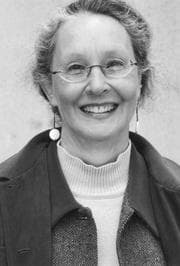
Caroline B. Cooney is a prolific author of young adult fiction, best known for her suspenseful and thought-provoking novels. Her most famous work, 'The Face on the Milk Carton,' explores themes of identity and family secrets, and has been adapted into a film. Cooney's other notable books include 'A Friend at Midnight,' 'The Voice on the Radio,' and 'Burning Up,' all characterized by their engaging plots and relatable teenage protagonists.







