“Quite frankly, if you're going to spend your life staring at a screen, you might as well be doing something useful.”
— Thursday reflecting on the mundanity of office work vs. her job as a Literary Detective.

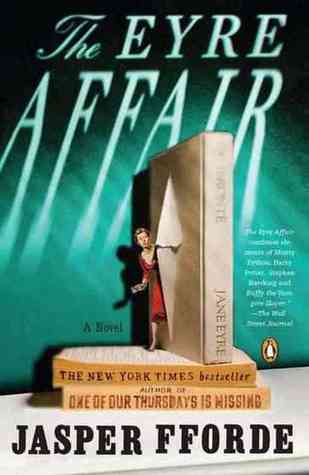
Jasper Fforde (2001)
Genre
Fantasy / Mystery / Science Fiction
Reading Time
7-8 hours
Key Themes
See below
Sign in to track this book
In an alternate 1985 where literary detectives can jump into novels, Special Operative Thursday Next must chase a master criminal through the pages of Jane Eyre to prevent the beloved character's murder and preserve literary history amidst a world obsessed with dodo cloning, time travel, and Shakespearean conspiracies.
The story begins in an alternate 1985 Great Britain, where literature drives society and the Crimean War has lasted 131 years. We meet Thursday Next, a Crimean War veteran and a Special Operative in the Literary Detectives (LiteraTecs). She is called to a crime scene where Acheron Hades, the Third Most Wanted Man in the World, has stolen an original manuscript of Charles Dickens's *Martin Chuzzlewit*. More alarming, a minor character, Sweedle, has been erased from every copy of the novel, signaling a new type of literary crime. Thursday's personal life also appears, including her difficult relationship with her time-traveling father, Colonel Next, and her dodo, Pickwick.
Thursday tracks Acheron Hades to a hidden lair. There, he shows his ability to enter books and change their stories. He reveals his plan: to kidnap Jane Eyre from Charlotte Brontë's novel, holding her for ransom and causing literary chaos. During the confrontation, Hades also says that Thursday's uncle, Mycroft Next, a brilliant inventor, is developing a 'Prose Portal' that could allow entry into fiction. Hades escapes, leaving Thursday to protect *Jane Eyre* from his plans. This encounter confirms the serious threat Hades poses to literature.
Thursday returns to her hometown of Swindon, where she deals with family quirks, including her mother's focus on her dead brother, Anton, and her grandmother's memory loss. She also reconnects with her ex-fiancé, Landen Parke-Laine, a charming but somewhat bland historian. Landen proposes marriage, adding a personal challenge to Thursday's already busy life. Meanwhile, the LiteraTecs prepare for Hades' move on *Jane Eyre*. Thursday's resolve to protect the novel and its characters grows, despite her personal distractions and Hades' threat.
Despite the LiteraTecs' efforts to protect the original manuscript of *Jane Eyre*, Acheron Hades breaks into the secure archive. Using his abilities, he kidnaps Jane Eyre directly from the novel, leaving a confused Rochester and a world in chaos. The literary community panics, as Jane Eyre's absence makes copies of the novel blank or unclear. This act of literary terrorism confirms Hades's power and the threat's new nature. Thursday now faces the task of recovering Jane Eyre and restoring the novel.
With Jane Eyre missing, the world faces literary collapse. Thursday, with her knowledge of the novel and a strong sense of duty, agrees to use her Uncle Mycroft's new Prose Portal to enter *Jane Eyre*. Under 'Operation Whisper,' she prepares for a dangerous mission into fiction, knowing that changing the story could have unexpected results. Her goal is to find Jane, catch Hades, and restore the novel's integrity. A junior operative, Bowden, joins her but is quickly overwhelmed by being inside a book.
Inside *Jane Eyre*, Thursday pretends to be a governess, Miss Hunter, to access Thornfield Hall. She quickly meets the novel's characters: the brooding Mr. Rochester, the mysterious Bertha Mason, and the kind Mrs. Fairfax. Thursday discovers that Hades has already been in the novel, changing the plot by having Bertha Mason escape her attic and framing Jane Eyre for it. Thursday also meets a version of herself within the book, the 'textual Thursday,' a minor character. The story is unstable due to Hades's interference, making Thursday's mission more complex.
Thursday confronts Hades within Thornfield Hall. He reveals his larger plan: to use the flexible nature of fiction to gain power, starting with *Jane Eyre*. He intends to rewrite the ending to his liking. During their fight, Thursday meets Jurisfiction, an organization that polices the fictional world. She learns that characters are aware, know their story limits, and some can travel 'out-of-book'. This changes Thursday's understanding of literature and her place in it, showing the implications of Hades's actions.
Hades, not content with kidnapping Jane, tries to steal the entire narrative of *Jane Eyre*, erasing it. Thursday, helped by Jurisfiction operatives and some of the novel's characters who know the threat, chases him. They prevent Hades from escaping with the complete text. After his capture, a 'literary trial' happens within the book, with characters from various novels serving as the jury. Hades is found guilty, but he escapes again, leaving Thursday to deal with the effects of his disruption.
Thursday, with Jurisfiction and her uncle Mycroft, works to undo Hades's changes to *Jane Eyre*. This involves ensuring Bertha Mason's correct fate and guiding the story back to its intended course, including Jane's eventual return to Rochester. The process is delicate, as every change has ripple effects. Outside the novel, Thursday finally decides about Landen's proposal, understanding her true feelings. She also reconciles somewhat with her time-traveling father, who helps with the literary clean-up. The novel is eventually restored.
After restoring *Jane Eyre* and stopping Hades, Thursday returns to her own world. The literary crisis is over, and the world can again enjoy Brontë's masterpiece. Thursday is changed by her journey into fiction and her exposure to Jurisfiction. She understands literature and her purpose more deeply. She accepts Landen Parke-Laine's marriage proposal, starting a new chapter in her personal life. However, Acheron Hades still poses a threat, suggesting Thursday's adventures as a literary detective will continue, and her unique abilities will be needed again.
The Protagonist
Thursday evolves from a somewhat disillusioned operative to a more self-aware individual who embraces her unique abilities and finds love, while also understanding her crucial role in safeguarding literature.
The Antagonist
Hades is consistently villainous, demonstrating increasing ambition and a refusal to be deterred, even after capture, highlighting his enduring threat.
The Supporting
Landen remains a consistent, loving presence, ultimately succeeding in winning Thursday's heart and providing her with a stable personal life.
The Supporting
Mycroft consistently supports Thursday, refining his inventions to aid her mission and proving indispensable to the LiteraTecs' success.
The Supporting
Colonel Next remains an unpredictable but ultimately supportive presence, his time-traveling antics often proving useful in unexpected ways.
The Mentioned
Jane Eyre's arc is primarily that of a victim who is rescued, her character restored to her original narrative by Thursday's actions.
The Mentioned
Rochester's character experiences temporary narrative dislocation but is ultimately restored to his original romantic arc with Jane Eyre.
The Supporting
Spike remains a steadfast boss, consistently providing support and resources for Thursday's increasingly unusual missions.
The Supporting
Pickwick remains a constant, endearing companion, a symbol of the quirky world Thursday inhabits.
The novel explores how literature affects society and individual lives, and how vulnerable it is. In Thursday's world, books are not just stories; they are living things that can be changed, stolen, or erased, leading to panic and fear. Acheron Hades's ability to manipulate stories, as seen with Sweedle vanishing from *Martin Chuzzlewit* and Jane Eyre's kidnapping, shows how easily these cultural works can be corrupted. Jurisfiction, an organization that polices the fictional world, further emphasizes that literature needs active protection.
“A book is a world, and a world within a world. There is no end to it.”
Fforde blurs the lines between fiction and reality, creating a world where characters are aware, know their story limits, and can interact with the 'real' world. Thursday's ability to enter books via the Prose Portal, and her discovery of Jurisfiction, challenges the traditional understanding of stories. The novel constantly reminds the reader that what they are reading is a construct, with characters like Rochester reacting to plot changes or the 'textual Thursday' existing as a minor character within *Jane Eyre*. This meta-narrative approach makes the reader think about storytelling and the relationship between author, character, and audience.
“Fiction is life, and life is fiction. We are all characters, Thursday. Some of us are just more aware of it than others.”
Thursday Next's journey is not just about saving *Jane Eyre*; it is also about finding her own identity and purpose. As a Crimean War veteran and a literary detective, she deals with her past and her place in a world that often seems absurd. Her 'Shifting' ability, which allows her to enter books, sets her apart and makes her confront her true nature. Her decision to join Jurisfiction and her eventual acceptance of Landen's proposal show her coming to terms with who she is and what she wants, both personally and professionally. This theme also appears in the aware characters who struggle with their predetermined roles.
“I was a detective, and my job was to find things. But sometimes, what you find is yourself.”
The novel satirizes bureaucracy and the pointlessness of long conflicts through its depiction of an endless Crimean War and various government agencies. The war has become a background noise, with little clear purpose or end, showing the absurdity of political inaction. Similarly, the SpecOps department, with its specialized units like the LiteraTecs, often operates with a mix of efficiency and silliness. The constant references to dodos as pets and the strange literary rivalries (like Baconians vs. Shakespeareans) further show a world where common sense is often overshadowed by established, illogical systems. This offers a humorous yet thoughtful critique of societal institutions.
“The Crimean War had been going on for 131 years, and nobody really knew why anymore, but it provided excellent job security.”
A device that allows physical entry into fictional narratives.
Invented by Thursday's Uncle Mycroft, the Prose Portal is the central plot device enabling the inter-textual travel that drives the narrative. It functions by converting a physical person into a textual representation, allowing them to literally step into the pages of a book. This device is crucial for Thursday's mission to rescue Jane Eyre and apprehend Acheron Hades within the novel. It not only facilitates the main conflict but also serves as the gateway to exploring the meta-fictional aspects of the story, introducing Thursday (and the reader) to the sentient world of Jurisfiction and the awareness of fictional characters.
A secret organization that polices the fictional world and maintains narrative integrity.
Jurisfiction is a covert agency within the fictional realm, responsible for upholding the 'laws' of storytelling and protecting narratives from external and internal threats. Its existence is a major revelation for Thursday, expanding the scope of the world beyond her initial understanding. Jurisfiction operatives, often minor characters from various novels, work to ensure plots follow their intended course and prevent characters from going 'off-script.' This device introduces a complex layer of meta-narrative, establishing rules and consequences for altering fiction and providing Thursday with allies and guidance in her fight against Hades.
The act of physically removing or altering characters and plots from books.
This plot device is the primary conflict driver of *The Eyre Affair*. Acheron Hades's ability to 'kidnap' characters (like Sweedle and Jane Eyre) and manipulate storylines directly threatens the stability of literature and the world. This concept goes beyond mere plagiarism or literary criticism; it's a physical, tangible crime against the very fabric of storytelling. The consequences of such acts—characters vanishing, novels becoming incoherent—demonstrate the profound impact of this device on both the fictional and 'real' worlds, emphasizing the power and fragility of literature as a cultural cornerstone.
The ability to move through different points in time, primarily used by Colonel Next.
Time travel, though not directly used by Thursday for her main mission, is a recurring background element and a significant characteristic of her father, Colonel Next. His frequent, unpredictable appearances from various points in history add a layer of temporal complexity and humor to the narrative. While sometimes a nuisance, his time-traveling abilities occasionally provide crucial, if cryptic, information or assistance to Thursday. This device contributes to the whimsical and anachronistic atmosphere of the alternate 1985, where advanced technology and historical oddities coexist seamlessly, further blurring the lines of what is considered 'normal'.
“Quite frankly, if you're going to spend your life staring at a screen, you might as well be doing something useful.”
— Thursday reflecting on the mundanity of office work vs. her job as a Literary Detective.
“There are some books that we read, and they change our lives. And there are some books that we read, and they change our lives back.”
— Thursday's internal monologue about the transformative power of literature, and its potential to revert things.
“Reality is what you can get away with.”
— A philosophical observation, hinting at the fluid nature of reality within the book's universe.
“Being a Literary Detective is a bit like being a private eye, only instead of tracking down missing persons, you track down missing plots, characters, and sometimes even entire books.”
— Thursday explaining her unique profession.
“If we don't know where we are going, we will end up somewhere else.”
— A seemingly simple but profound statement about direction and purpose.
“The past is a foreign country; they do things differently there.”
— A play on a famous quote, used to emphasize the historical and literary shifts in Thursday's world.
“It's never too late to have a happy childhood.”
— Thursday's aunt Polly delivering a surprisingly optimistic line.
“The truth, as always, is far stranger than fiction.”
— A meta-commentary on the fantastical elements of the story itself.
“Books are not about escaping reality, but about creating an alternative one.”
— Thursday's perspective on the role and power of literature.
“A good story should disturb the comfortable and comfort the disturbed.”
— A reflection on the impact and purpose of storytelling.
“The greatest weapon against the unknown is knowledge.”
— An assertion about the power of information in solving mysteries.
“Time, like a river, flows ever onward, and we are but pebbles on its banks.”
— A poetic observation on the relentless passage of time.
“Sometimes the only way to find out what's real is to push the boundaries of what isn't.”
— Thursday's approach to investigating the bizarre events unfolding around her.
“There's no such thing as a free lunch, but there are plenty of free ideas.”
— A witty remark about intellectual property and creativity.
Ready to see how well you understood this book? Take our interactive quiz with 10 questions.
Biography coming soon.







