“The world had teeth and it could bite you with them anytime it wanted.”
— A reflection on the harsh realities of the world, often felt by the characters.

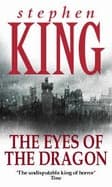
Stephen King (1959)
Genre
Thriller / Fantasy / Young Adult
Reading Time
500 min
Key Themes
See below
Sign in to track this book
Framed for his father's murder by the sinister wizard Flagg, Prince Peter must escape his towering prison to reclaim his birthright and save the kingdom of Delain from encroaching darkness.
The story introduces King Roland of Delain, a simple, good-hearted man, and his Queen Sasha. Their first son, Peter, is born, handsome, intelligent, and a natural leader, loved by the people. Years later, Queen Sasha gives birth to their second son, Thomas, a shy, awkward boy who feels overshadowed by his older brother. Thomas, however, catches the attention of the sinister royal wizard, Flagg, who begins to subtly manipulate the young prince, planting seeds of resentment against Peter and their father. This early difference in the brothers' paths sets the stage for the tragic events that will soon unfold in the kingdom.
Flagg, the ancient and evil royal wizard, begins his long-term plan by focusing on Prince Thomas. He understands Thomas's jealousy of Peter's popularity and his father's perceived favoritism. Flagg nurtures Thomas's resentment, teaching him dark secrets and offering him a twisted form of companionship and power that Peter never would. He encourages Thomas's interest in hunting and archery, subtly guiding him towards isolation and a reliance on Flagg's advice. This manipulation is a key step in Flagg's plan to control Delain, as he intends to use Thomas as his puppet on the throne.
Queen Sasha, a beloved figure in Delain, is killed by the last known dragon, Niner. The queen, pregnant with what would have been her third child, is hunting with Peter when the dragon attacks. Peter tries to save her but cannot, witnessing her horrific death. This event traumatizes Peter and further isolates Thomas, who struggles with the grief and loss. Flagg uses this tragedy to further secure his place in King Roland's court and to continue his psychological conditioning of Thomas, making him feel even more reliant on the wizard's guidance.
King Roland, now a lonely and somewhat complacent ruler, is poisoned by Flagg using a slow-acting, undetectable poison called 'The Dragon's Sand'. Flagg ensures that Peter brings his father the poisoned wine each night. On the night of Roland's death, Flagg arranges for the king's final drink to be from a wine glass Peter had just handled, leaving his fingerprints. After Roland's death, Flagg arranges a quick trial, presenting false evidence and manipulating witnesses to blame Peter. The knife used to cut the king's last meal, also handled by Peter, becomes another piece of 'proof'. Peter is found guilty of patricide.
After his conviction for King Roland's murder, Peter is sentenced to life imprisonment in the Needle, the highest tower in Delain Castle. The Needle is a strong prison, with only one window high up in the wall and a single guard, Perkins, who brings him his meals. With Peter gone, the young and easily influenced Prince Thomas is crowned King of Delain. Thomas, still under Flagg's complete influence, becomes a puppet ruler, letting Flagg effectively govern the kingdom. The people of Delain mourn Peter's fate, but fear Flagg too much to question the verdict, leaving the kingdom under the wizard's shadowy control.
Confined to the Needle, Peter at first falls into despair. However, his natural resilience and intelligence soon appear. He notices a detail about the dollhouse his mother had made for him as a child, which was delivered to his cell: one of the dolls' dresses has a loose thread. Peter begins to carefully unravel this thread, day by day, using it to create a long rope. This painstaking process, which takes years, gives him purpose and a glimmer of hope for escape. He also keeps up a secret correspondence with Perkins, the sympathetic guard, who occasionally leaves him notes and small gifts.
Under King Thomas's reign, Delain begins to suffer. Thomas, guided entirely by Flagg, makes poor decisions, neglects his royal duties, and becomes increasingly withdrawn and cruel. The people, who once loved Peter, grow to resent Thomas and fear Flagg. Tax burdens increase, and the kingdom's prosperity lessens. Ben, Peter's loyal friend, and Naomi, his betrothed, see Delain's worsening state and suspect Flagg's true intentions and Peter's innocence. The kingdom slowly falls into a state of quiet rebellion and fear, with only the memory of Peter offering a spark of hope.
After years of patient work, Peter's rope made of threads is long enough. He plans his escape, using the rope to lower himself from the Needle's window. During his descent, he is almost caught but manages to avoid discovery. Once free, he retrieves a letter he had written during his imprisonment, detailing Flagg's crimes and his own innocence. This letter, hidden in the dollhouse, is key evidence. He entrusts it to Ben and Naomi, telling them to deliver it to Thomas and the court, hoping it will expose Flagg and open Thomas's eyes to the truth.
Ben and Naomi, with help from Dennis and other loyalists, successfully deliver Peter's letter to King Thomas. The letter, combined with Thomas's own growing unease about Flagg's influence and the state of Delain, finally makes him question the wizard. Thomas confronts Flagg, who tries to charm and manipulate him one last time. However, Thomas, now seeing the truth, refuses to be swayed. Peter, having returned to the castle, joins the confrontation. The revelation of Flagg's deceit, including the poisoned wine and the framed evidence, breaks Flagg's power over Thomas and the court.
During the dramatic confrontation, Flagg's true nature as a deceitful and evil entity is exposed. He tries to use his magic to escape or attack, but Thomas, having finally broken free of his influence, intervenes. Thomas, using the hunting skills Flagg had encouraged, shoots Flagg in the eye with a crossbow bolt, causing the wizard to vanish in a puff of smoke. With Flagg defeated, Peter's innocence is proven. He is welcomed back by the people and takes his rightful place as King of Delain, while Thomas, humbled and redeemed, becomes Peter's loyal adviser and friend, working to restore the kingdom.
With Peter as King and Thomas as his trusted Hand, Delain begins to heal. Peter, wise and just, governs fairly, undoing the damage caused by Flagg's manipulations. Thomas, having learned from his mistakes, dedicates himself to serving his brother and the kingdom, using his administrative skills to bring order and prosperity. The people rejoice in the return of their true king and the banishment of the evil wizard. The kingdom thrives under their combined leadership, marking a new era of peace and justice. The memory of Flagg fades, replaced by hope for the future.
Despite Flagg's apparent demise, the narrator reminds us that evil never truly dies. The story ends with a suggestion that Flagg, a creature of great power and old malice, may not be gone forever. He is merely banished for now, waiting for another chance to create chaos in another place, another time. This ending emphasizes the timeless nature of good versus evil and leaves the reader with a sense of unease, suggesting that while Delain is safe for now, the threat of Flagg, or entities like him, always exists.
The Protagonist
Peter transforms from a beloved prince to a falsely accused prisoner, then returns as a wise and just king, guided by experience and a renewed sense of purpose.
The Antagonist/Supporting
Thomas descends from an insecure prince to a manipulated tyrant, then finds redemption by confronting Flagg and becoming Peter's loyal and effective Hand.
The Antagonist
Flagg's arc is consistent evil; he begins as a hidden manipulator and is ultimately exposed and seemingly defeated, though his ultimate demise is left ambiguous.
The Supporting
Roland begins as a benevolent but easily influenced king and tragically becomes a victim of Flagg's plot, his death triggering the main conflict.
The Supporting
Queen Sasha's arc is cut short by her death, serving as a catalyst for the story's darker turn and Flagg's increased influence.
The Supporting
Ben remains a steadfast and loyal friend, playing a crucial role in Peter's eventual liberation and the exposure of Flagg.
The Supporting
Naomi remains a constant source of love and support for Peter, actively working for his freedom and the restoration of justice in Delain.
The Supporting
Dennis transitions from a loyal but misguided guard to a key ally for Peter, driven by his sense of justice and duty to Delain.
The Mentioned
Perkins provides quiet, consistent support to Peter, enabling his long-term plan for escape.
This is the main theme of the novel, shown by Peter's goodness and Flagg's pure evil. Peter represents justice, kindness, and rightful leadership, while Flagg embodies manipulation, deceit, and the corrupting effect of power. Their struggle is not just for the throne of Delain, but for the kingdom's very soul. This theme is clear in Flagg's calculated poisoning of King Roland and framing of Peter, contrasted with Peter's patient, hopeful efforts to escape and clear his name, driven by his love for his kingdom and family.
“For evil, when it comes, comes in a shape we can recognize. But Flagg was not like that. He was a whisper, a shadow, a smile of white teeth in the dark.”
The novel explores how unchecked power and personal jealousy can lead to destruction. Flagg's desire for control over Delain drives his entire wicked plan. More subtly, Thomas's deep-seated jealousy of Peter's popularity and his father's affection makes him open to Flagg's manipulation. This jealousy, combined with the power of the throne, changes Thomas from an insecure boy into a cruel and ineffective ruler, showing how these negative emotions can be used to corrupt even those who are not inherently evil. His fall into being a puppet king is a direct result of his envy.
“Jealousy, a tiny seed, had been planted in Thomas's heart, and Flagg had watered it every day.”
Despite being unfairly imprisoned in the Needle for years, Peter never loses hope or his will to survive and fight for justice. His careful and painstaking work of unraveling the doll's thread to make a rope symbolizes his strong determination and resilience. This theme is also seen in the quiet loyalty of characters like Ben, Naomi, and Perkins, who never give up on Peter and maintain hope for Delain's true king to return. Their collective hope and Peter's personal resilience are what allow the truth to come to light and Flagg to be defeated.
“He would not give up. He would not. He would find a way, even if it took him a hundred years.”
The story itself is presented as a tale being told, highlighting the importance of truth and how stories can shape perception and reality. Peter's carefully written letter, detailing Flagg's crimes, becomes the undeniable truth that breaks Flagg's hold over Thomas and the kingdom. The narrator often reminds the reader that 'the story is true', reinforcing the idea that truth, even when suppressed, will eventually emerge. This theme shows how historical accounts and personal narratives can expose lies and restore justice, making the act of telling the story a powerful tool against deception.
“The story is true. It is a story of kings and princes, of wizards and dragons, of murder and treason and justice.”
A storytelling voice that engages the reader and comments on the narrative.
The story is presented by an omniscient, yet highly personal and opinionated narrator who frequently addresses the reader directly. This narrator often interjects with personal thoughts, predictions, and reassurances about the 'truth' of the tale. This device adds a layer of metafiction, reminding the reader that they are consuming a story, while also building suspense and guiding emotional responses. It also allows for foreshadowing and thematic commentary, such as the narrator's final warning about Flagg's potential return, breaking the fourth wall to enhance engagement and reinforce the story's moral underpinnings.
A seemingly innocent object becomes the key to escape and freedom.
The dollhouse, a gift from Peter's mother, and specifically the thread from one of the dolls' dresses, serves as a powerful symbol of hope, patience, and Peter's ingenuity. What appears to be a child's toy becomes the instrument of his salvation. The painstaking process of unraveling the thread for years to create a rope emphasizes Peter's resilience and determination. This device transforms an ordinary object into a crucial plot point, highlighting that even in the most dire circumstances, resourcefulness and persistence can lead to freedom.
The central mechanism of Flagg's plot to usurp the throne.
The 'Dragon's Sand' poison and the subsequent framing of Peter for King Roland's murder are the primary plot devices that drive the entire conflict. Flagg's meticulous planning, from ensuring Peter serves the poisoned wine to leaving his fingerprints on the final glass and knife, showcases his cunning and the insidious nature of his evil. This setup creates the initial injustice that Peter must overcome, establishing the stakes and setting his heroic journey in motion. It also highlights the vulnerability of justice to manipulation and deceit.
A hidden document that serves as the undeniable proof of Flagg's treachery.
Peter's letter, written in secret during his imprisonment and hidden within the dollhouse, is the ultimate 'smoking gun' that exposes Flagg's lies. This device represents the power of written truth and documented evidence. Its delivery to King Thomas is the critical turning point, forcing Thomas to confront the reality of Flagg's manipulation and Peter's innocence. The letter acts as a catalyst for the climax, bringing about Flagg's downfall and Peter's restoration to the throne, demonstrating that truth, once revealed, can dismantle even the most elaborate deceptions.
“The world had teeth and it could bite you with them anytime it wanted.”
— A reflection on the harsh realities of the world, often felt by the characters.
“The most important things are the hardest to say. They are the things you get ashamed of, because words diminish them.”
— Reflecting on the difficulty of expressing deep truths or feelings.
“There are no good kings or bad kings, boy. Only kings.”
— Flagg's cynical view on the nature of power and rulers.
“It was not a good place. It was a place of shadows and whispering and things that went bump in the night.”
— Describing the dark and unsettling atmosphere of the Needle.
“You can always tell a man's character by the way he treats those who can do nothing for him.”
— A commentary on true character, often applied to the actions of the royal family and Flagg.
“The trick, you see, is to make the lie so big and so simple that everyone will believe it.”
— Flagg's philosophy on effective deception and manipulation.
“Memory is a funny thing. It can make you laugh, it can make you cry, it can make you feel like you're going to die.”
— A general observation on the power and impact of memories.
“Sometimes the only way to get through a thing is to go through it.”
— A pragmatic approach to overcoming difficult challenges.
“A man's worth is not measured by the size of his wallet, but by the size of his heart.”
— A moral lesson on true value, contrasting with material wealth.
“The world is full of magic, but you have to look for it.”
— A hopeful perspective on finding wonder in the world, despite its darkness.
“Every lie has a certain weight to it, and the bigger the lie, the heavier it is.”
— Discussing the burden and consequences of deception.
“Courage is not the absence of fear, but rather the judgment that something else is more important than fear.”
— Defining true courage in the face of danger or adversity.
“It's a strange thing, but sometimes the most ordinary people are the ones who do the most extraordinary things.”
— Highlighting the potential for heroism in unexpected individuals.
“The past is never really dead. It just sleeps.”
— A reflection on how past events and choices continue to influence the present.
Ready to see how well you understood this book? Take our interactive quiz with 10 questions.

Stephen Edwin King is an American author of horror, supernatural fiction, suspense, crime, science-fiction, and fantasy novels. Described as the "King of Horror", his books have sold more than 350 million copies as of 2006, and many have been adapted into films, television series, miniseries, and comic books. King has published over 65 novels/novellas, including seven under the pen name Richard Bachman, and five non-fiction books. He has also written approximately 200 short stories, most of which have been published in book collections.







