“You are a clever boy, Nicholas, but you have much to learn about the world, and even more to learn about yourself.”
— Miss Perumal speaking to Nicholas early in the book.

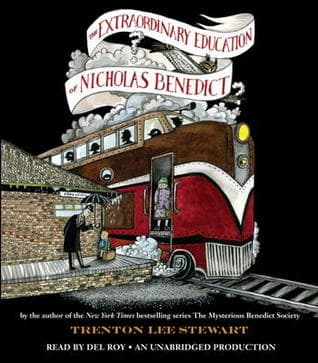
Trenton Lee Stewart (2012)
Genre
Fantasy / Children's / Mystery / Young Adult
Reading Time
15 min
Key Themes
See below
Sign in to track this book
Armed with an extraordinary mind and plagued by narcolepsy, young orphan Nicholas Benedict navigates a treacherous new orphanage filled with bullies, secrets, and a life-altering mystery that forces him to confront the greatest puzzle of all: himself.
Nicholas Benedict, a nine-year-old orphan with a large nose and narcolepsy, is sent to the Rothbury Orphanage. He has been through several institutions, often because he falls asleep at bad times and makes sharp, sometimes unwelcome, observations. When he arrives, Marten, a cruel older boy, immediately targets him. Nicholas quickly notices the strict, often unfair, rules enforced by the adult staff, especially the stern Miss Perumal and the seemingly friendly Mr. Muldoon. He wants to stay unnoticed, but his intelligence and curiosity make this hard, drawing him into conflicts with bullies and connections with potential friends.
During one of his sudden sleep episodes, Nicholas has a vivid dream that feels like a memory. He wakes up in an unfamiliar part of the orphanage and finds a hidden compartment holding a small, fancy key. This discovery immediately interests him. He learns that a previous orphan, a girl named Violet, was obsessed with finding hidden things before she disappeared. Nicholas connects the key to cryptic messages he finds around the orphanage, seemingly left by Violet, hinting at a treasure or a secret. His attempts to investigate are often stopped by Marten and his friends, who suspect Nicholas is planning something.
Nicholas finds an unexpected friend in John, a quiet and clever orphan who is good at observing and figuring things out. John, though careful at first, is impressed by Nicholas's intelligence and helps him understand the orphanage's social rules, especially how to deal with Marten and his group. Marten, driven by jealousy and a desire to remain the orphanage's top bully, becomes Nicholas's main enemy, constantly trying to ruin his efforts and steal his discoveries. Nicholas also meets S.Q., a boy who seems to know more than he shows, and Constance, a careful girl who keeps track of everything.
By carefully understanding Violet's clues and his own thoughts, Nicholas, with John's help, finds a hidden entrance to a large, dusty library under the orphanage. This library is filled with old books and more of Violet's secret messages. More importantly, it leads to a network of secret passages and rooms, showing the building's true, complex design. These passages allow Nicholas and John to move unseen throughout the orphanage, watching the staff and other children, and gathering more information about Violet's mystery and the hidden 'treasure' she looked for. They realize the orphanage holds more secrets than anyone thinks.
As Nicholas and John explore further, they start to notice odd things and suspicious actions among the orphanage staff. Miss Perumal, though strict, seems to care for the children, but Mr. Muldoon, despite appearing friendly, seems to be hiding something. They also notice the strange habits of the handyman, Mr. Bloom, and the cook, Mrs. Johnson. Nicholas realizes that the adults are not just unaware of the children's activities but might be actively involved in hiding the very secrets he is trying to uncover. His narcolepsy sometimes gives him unexpected insights, blurring the lines between dreams and reality, and revealing clues he might otherwise miss.
After many close calls with Marten and the staff, Nicholas and John finally put together Violet's last and most complex clues. They discover that the 'treasure' is not gold or jewels, but a collection of documents and items that show the true history of the Rothbury Orphanage and its founder. It becomes clear that the orphanage was designed for a specific purpose, and Violet had been trying to reveal a long-held secret. The 'treasure' shows the founder's intentions and how the orphanage changed from those ideals, possibly involving the current staff.
With his discoveries, Nicholas plans to show the truth to Miss Perumal, whom he trusts. He realizes that Mr. Muldoon is the main antagonist among the staff, manipulating the orphanage for his own benefit and hiding the founder's true vision. During a tense meeting, Nicholas, with John's support, presents the evidence he has gathered – the documents, the hidden passages, and Violet's messages. Mr. Muldoon tries to deny everything and even tries to make Nicholas look bad, but the clear proof, along with Miss Perumal's growing suspicions, leads to his removal.
With Mr. Muldoon gone, Miss Perumal takes charge and begins to make changes based on the founder's original plans, as Nicholas revealed. The orphanage becomes a more caring and educational place. Nicholas, no longer seen as just 'difficult' but as a smart and brave boy, finds acceptance and respect among his peers and the new leaders. His narcolepsy, though still present, is better understood and accommodated. He realizes that his unique mind, once a source of frustration, is his greatest strength. He has solved a complex mystery and found a place where he belongs and is valued for who he is.
Nicholas's intelligence and problem-solving skills at Rothbury are noticed. He receives an invitation to a highly selective and unusual school for gifted children, an opportunity that promises more intellectual challenges and a community of similar individuals. This invitation marks a new part of his life, a recognition of his unique abilities beyond the orphanage. It suggests that his journey of self-discovery and extraordinary education is only beginning, setting the stage for future adventures and further growth of his remarkable talents.
The Protagonist
Nicholas evolves from a solitary, misunderstood genius grappling with his condition to a confident problem-solver who embraces his unique abilities and finds a sense of belonging.
The Supporting
John grows from a cautious observer to a confident and indispensable partner, finding his own strength and purpose alongside Nicholas.
The Antagonist
Marten remains a static character, consistently acting as an obstacle to Nicholas, embodying the negative forces within the orphanage.
The Supporting
Miss Perumal transitions from an enforcer of a flawed system to a reformer who champions justice and the well-being of the orphans.
The Antagonist
Mr. Muldoon's true nature as a corrupt administrator is gradually revealed, leading to his eventual downfall.
The Mentioned
Violet's influence posthumously leads to the revelation of the orphanage's true history and the subsequent reforms.
The novel often shows how Nicholas's intelligence, observation skills, and logic are his best qualities. Despite his physical challenges and social awkwardness, his mind lets him solve complex puzzles that adults miss. This theme is clear in his ability to understand Violet's clues, figure out the orphanage's design, and outsmart both the bullies and the corrupt adults. His intellect is shown not just as a way to solve mysteries but as a source of self-worth and power, especially in a world that often dismisses or misunderstands him.
“Nicholas always felt a thrill when a puzzle finally yielded to his relentless logic. It was a feeling of triumph, of proving the world could be understood, even if it refused to make sense on its own.”
A main theme is Nicholas's search for a place where he truly belongs and is accepted for who he is, including his narcolepsy and intelligence. Throughout the book, he feels like an outsider in different orphanages. At Rothbury, he first feels alone, but through his shared quest with John, he forms a strong friendship. His eventual success in solving the mystery and improving the orphanage earns him respect and a sense of community. The invitation to the special school at the end means he is finally accepted into a world that values his unique talents, fulfilling his desire to belong.
“For the first time, Nicholas felt not like an oddity, but like someone who had found his place, even if that place was still a mystery.”
The entire story centers on finding hidden truths and revealing lies. The Rothbury Orphanage itself is a deception, hiding a complex history and current corruption. Nicholas must tell the difference between how things appear and how they really are, especially when judging characters like Mr. Muldoon, whose friendly outside hides manipulative plans. The mystery Violet left is a deliberate act to reveal a truth that others tried to bury. This theme highlights the importance of thinking critically and looking past surface impressions to find deeper realities, leading to justice and change.
“Secrets, Nicholas was learning, were not always kept for malicious reasons, but they were almost always kept for important ones.”
Nicholas faces many difficulties, both internal and external. His narcolepsy is a constant challenge, causing him embarrassment and vulnerability, yet he learns to use it in his problem-solving, sometimes even using his dreams for clues. Externally, he deals with bullies like Marten and the manipulative Mr. Muldoon. His journey is one of self-acceptance, realizing that his 'flaws' are often connected to his strengths. By accepting his unique mind and condition, he changes from a self-conscious orphan into a confident young man capable of great change.
“His narcolepsy was a peculiar burden, but sometimes, Nicholas realized, it offered him glimpses others could never see.”
Nicholas's sleep disorder not only creates obstacles but also provides unique insights and plot advancements.
Nicholas's narcolepsy is more than just a character trait; it's a crucial plot device. While it often puts him in vulnerable positions and complicates his investigations, his vivid dreams frequently contain cryptic clues or trigger forgotten memories that propel the mystery forward. His sudden sleep episodes sometimes allow him to overhear conversations or be in places he wouldn't normally, providing unexpected information. It forces him to rely on his intellect and the help of others, demonstrating how a perceived weakness can become an unexpected strength in problem-solving.
A series of intricate riddles and hidden messages left by a previous orphan drive the central mystery.
The mystery of the Rothbury Orphanage is primarily driven by the elaborate trail of clues, riddles, and secret messages left by Violet. These puzzles are designed to test the reader's and Nicholas's deductive abilities, ranging from hidden keys to coded messages embedded in the orphanage's structure. This device creates a sense of engagement and intellectual challenge, allowing Nicholas to showcase his genius and providing a clear, progressive path for the plot to follow. Each solved puzzle reveals a new layer of the orphanage's history and moves Nicholas closer to the ultimate truth.
The orphanage's concealed architecture facilitates stealth, observation, and discovery.
The discovery of a network of secret passages, hidden libraries, and concealed rooms within the Rothbury Orphanage is a key plot device. These architectural secrets allow Nicholas and John to move undetected throughout the building, observe the staff without being seen, and access information that would otherwise be inaccessible. This device creates an atmosphere of mystery and adventure, emphasizing the idea that the orphanage holds deeper truths beneath its surface. It also provides practical means for Nicholas to gather evidence and ultimately expose the corruption.
“You are a clever boy, Nicholas, but you have much to learn about the world, and even more to learn about yourself.”
— Miss Perumal speaking to Nicholas early in the book.
“The only way to truly know if something is possible is to try it.”
— Nicholas contemplating a difficult task.
“Sometimes the most obvious answer is the one we least expect.”
— As Nicholas is puzzling over a clue.
“A good memory is a valuable tool, but a good imagination is a treasure.”
— A lesson taught by one of the schoolmasters.
“Fear is a powerful motivator, but it can also be a blinding one.”
— Nicholas reflecting on the actions of an antagonist.
“The greatest secrets are often hidden in plain sight.”
— One of the recurring themes of the mystery.
“It is not enough to be clever; one must also be kind.”
— Miss Perumal's advice to Nicholas.
“Every puzzle has a solution, if you only look at it from the right angle.”
— Nicholas's approach to difficult challenges.
“The world is full of wonders, if you only open your eyes to them.”
— A moment of reflection for Nicholas.
“Even the smallest detail can unlock the biggest mystery.”
— Nicholas realizing the significance of a minor clue.
“True strength lies not in never falling, but in rising every time you fall.”
— A piece of encouragement Nicholas receives.
“Sometimes, the best way to hide something is to make it seem utterly insignificant.”
— Nicholas's understanding of a hiding strategy.
“A good friend is a treasure more valuable than any gold.”
— Nicholas reflecting on his relationships.
“Learning is a journey, not a destination.”
— A philosophical statement made by a teacher.
Ready to see how well you understood this book? Take our interactive quiz with 10 questions.

Biography coming soon.







