“The power of Christ compels you!”
— Father Merrin commands the demon during the exorcism.

William Peter Blatty (1971)
Genre
Thriller / Fantasy / Spirituality
Reading Time
9-10 hours
Key Themes
See below
Sign in to track this book
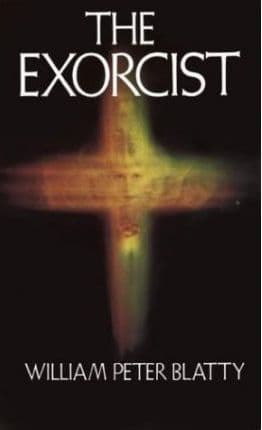
In the terrifying 40th-anniversary edition, a desperate mother and two priests battle a malevolent supernatural entity for a little girl's soul.
The novel starts in Hatra, Iraq, where Father Lankester Merrin, an old Jesuit archaeologist, is on a dig. He finds an ancient amulet showing Pazuzu, an Assyrian demon. He immediately feels a deep sense of dread. Merrin, who did an exorcism in Africa that almost killed him, recognizes the symbol as a sign of pure evil. The discovery causes a deep spiritual unease in him, a feeling that he will face this ancient evil again, perhaps in a final fight. He understands that this entity is not just an old artifact but an active, evil force getting ready to appear.
Meanwhile, in Georgetown, Washington D.C., twelve-year-old Regan MacNeil, daughter of famous actress Chris MacNeil, starts having strange symptoms. At first, they are subtle: odd noises in her bedroom, a shaking bed, and growing irritability. Her behavior gets worse, including violent outbursts, speaking in a guttural voice, using bad language, and showing abnormal strength. Medical tests, including neurological exams and psychiatric evaluations, give no diagnosis, leaving her mother, Chris, more and more desperate and scared. Regan's personality changes a lot, becoming hostile and cruel, especially towards Chris and the house staff. She starts talking about an imaginary friend named Captain Howdy.
As Regan gets worse, she goes through many invasive and painful medical procedures, including a pneumoencephalogram and an angiogram. All results are normal. Her symptoms progress to levitation, speaking in multiple voices, knowing hidden secrets, and self-mutilation. Dr. Klein, her psychiatrist, suggests that while her case has no medical explanation, some cases of hysteria or psychosis have mimicked demonic possession. He carefully recommends Chris consider an exorcism, not because he believes in the supernatural, but as a last-resort psychiatric treatment. He argues the ritual might shock Regan's mind back to normal, especially if she believes in it.
Chris MacNeil, who does not believe in God, first resists the idea of an exorcism. But, having tried everything else, she approaches Father Damien Karras. Karras is a Jesuit priest and psychiatrist struggling with his faith after his mother's death. He feels immense guilt for putting her in a bad hospital. He is skeptical of demonic possession, seeing such cases as psychological. Chris tells him about Regan's terrifying actions, including speaking Latin and French, her unnatural strength, and her knowledge of Karras's personal problems. Karras is bothered by the details but keeps his scientific skepticism, agreeing only to watch Regan.
Father Karras begins watching Regan. He sees firsthand the chilling events: the bed shaking violently, Regan's body twisting unnaturally, her speaking in various voices, and her use of deeply personal and bad insults directed at him. She reveals private details about his mother's death and his crisis of faith, which she could not possibly know. The entity inside Regan taunts him with his guilt and doubts. While Karras still looks for a rational explanation, the sheer impossibility of what he sees starts to break down his psychiatric framework, forcing him to consider the terrifying idea of real demonic possession. He records the sessions, hoping for a medical breakthrough, but finds none.
During Regan's possession, Chris MacNeil's friend and film director, Burke Dennings, is found dead at the bottom of the long, steep stone steps outside the MacNeil house. His neck is broken, and his head is turned unnaturally. The police, led by Lieutenant Kinderman, investigate, first suspecting foul play or an accident. However, the circumstances are mysterious, and Kinderman, a fan of detective fiction and Chris's work, becomes interested in the MacNeil household. Later, the demon inside Regan tells Karras, in detail, that it killed Burke Dennings by throwing him out the window. This further confirms the supernatural nature of Regan's problem.
After much observation and talking with other priests and doctors, Father Karras, despite his deep skepticism, concludes that Regan's case is beyond natural explanation. The demon's knowledge of his inner thoughts, its ability to speak dead languages, and the violent physical events convince him she is truly possessed. He formally asks the Archdiocese for an exorcism. He argues that all medical options have been tried and that the spiritual nature of the problem is clear. The Church, careful about approving such a rare and dangerous rite, agrees to send their most experienced exorcist.
In response to Karras's request, the Archdiocese sends Father Lankester Merrin, who has a history of successful exorcisms, including the difficult one in Africa. Merrin, now frail and with a heart condition, arrives at the MacNeil house. He carries his vestments and a sense of grim determination. He immediately recognizes the evil entity as Pazuzu, the same demon he met in Hatra and before in Africa. His arrival brings both hope and dread, as Karras understands the immense spiritual and physical toll such a battle will take on Merrin, given his age and health.
The exorcism begins with Merrin, helped by Karras, entering Regan's room. The demon immediately reacts with intense anger, unleashing many blasphemies, insults, and physical attacks. Regan's body twists violently, she levitates, spits, and vomits foul substances. The room's temperature drops a lot, and objects move strangely. Merrin, calm and firm, begins the Latin prayers, directly confronting the demon. Karras struggles with his own faith and fear, but supports Merrin, holding the crucifix and holy water. The demon's power is immense, and it targets Karras's guilt and doubts, trying to break his will and turn him against Merrin.
The exorcism is a long and brutal fight. The demon taunts and physically abuses both priests, focusing its psychological attacks on Karras, using his guilt over his mother's death. During a short break, Father Merrin, weakened by his heart condition and the intense spiritual struggle, has a fatal heart attack and collapses. Seeing Merrin die and angered by the demon's win, Karras, in a desperate act of self-sacrifice to save Regan, makes the demon leave Regan and enter him instead. The demon, briefly surprised, enters Karras. Karras, now possessed, throws himself out of Regan's window and falls down the stone steps, giving his life to expel the demon and save Regan.
After Karras's sacrifice, Regan is found calm and clear-headed, though she has no memory of the possession or the exorcism. She seems completely free from the demon's influence, her personality back to her sweet, innocent self. Chris MacNeil, heartbroken but relieved, decides to move out of Georgetown to escape the traumatic memories. As they get ready to leave, Father Dyer, Karras's friend, visits them. Regan, without knowing why, kisses Father Dyer on the cheek. This poignant, innocent gesture suggests a lingering, perhaps unconscious, spiritual connection or gratitude for Karras's sacrifice. The MacNeils leave, leaving the haunted house behind.
The Protagonist/Victim
From an innocent child, she becomes a victim of a malevolent entity, then is ultimately freed, returning to her former self with no memory of the ordeal.
The Protagonist/Mother
From a secular, modern woman, she is forced to confront profound evil, leading her to accept the spiritual realm in her fight to save her daughter.
The Protagonist/Exorcist
Grappling with a crisis of faith and guilt, he rediscovers his purpose and spiritual strength through self-sacrifice to save Regan.
The Supporting/Exorcist
Having previously faced the demon, he returns to confront it one last time, sacrificing his life in the process.
The Supporting/Investigator
Investigates a mysterious death, slowly realizing the supernatural implications surrounding the MacNeil family.
The Supporting/Victim
Introduced as a friend, he becomes the demon's first human victim, escalating the stakes of the possession.
The Supporting/Assistant
Witnesses the full horror of Regan's possession, enduring the trauma alongside Chris.
The Supporting/Housekeeper
A loyal household staff member who endures the terrifying events and remains steadfast in his care for the family.
The Supporting/Friend
Provides unwavering friendship and spiritual support to Karras, then offers comfort to the MacNeils after the ordeal.
The Antagonist/Demon
An ancient evil force that possesses Regan, engages in a spiritual battle with the priests, and is ultimately cast out through sacrifice.
This main theme is shown through Father Karras and Chris MacNeil. Karras, a priest and psychiatrist, first approaches Regan's case with scientific skepticism, looking for rational reasons for her symptoms. His journey involves deep doubt, dealing with his lost faith and guilt over his mother's death. Chris, an agnostic, also resists the supernatural. Both are forced to face clear evidence of the demonic, pushing them beyond their rational thinking. The novel suggests that while skepticism has its place, some forces defy purely scientific understanding. It ultimately affirms the power and need for faith when facing absolute evil.
“''I'm not saying it's the Devil, Father. I'm saying it's a case of hysteria that's been treated as a case of possession, and the treatment has worked.''”
The Exorcist looks at the raw, pure nature of evil as seen in the demon Pazuzu. This evil is not just human wickedness but a supernatural force that wants to corrupt, blaspheme, and destroy. It works through psychological torture, using the weaknesses and guilt of its victims (Karras's guilt, Chris's fear) and through physical violence. The demon's goal seems less about killing and more about defiling the innocent (Regan) and breaking the faith of the religious. The novel shows evil as an active, intelligent, and very personal force, not an abstract idea, suggesting its old and lasting presence in the world.
“''The demon has one particular quality, Father: it is a liar. The most insidious of all liars. It will speak in many tongues, and it will say many things that are not true, and then it will speak one truth, and that truth will be the one that you least want to hear.''”
The theme of sacrifice is clearly shown in Father Karras's final act. Troubled by guilt and a crisis of faith, Karras finds redemption not through thinking but through a selfless act of love and courage. He draws the demon into himself, knowing it will kill him, to save Regan. Father Merrin also shows sacrifice, taking on a dangerous exorcism despite his poor health. He eventually dies from the strain. These sacrifices show that facing absolute evil often requires the highest cost, and that true redemption can come through selflessness and protecting the innocent, even for those struggling with their own spiritual battles.
“''Why you? Because you're the one who hurts, Karras. You're the one who cares. And that makes you a target.''”
Chris MacNeil's character shows the strong, steady love and protective instinct of a mother. Her journey is completely driven by her desperate need to save her daughter. She tries all medical options, endures public scrutiny, and finally, against her own non-religious beliefs, asks the Church for an exorcism. Her willingness to do anything, to face any horror, for Regan's sake is a powerful emotional part of the novel. The demon specifically targets this bond, tormenting Chris through Regan's body and voice, trying to break her spirit. Chris's strength in the face of such unimaginable horror emphasizes the deep power of maternal love.
“''I've been to every doctor, every specialist, every psychiatrist in this city, and they all say the same thing: 'We don't know.' I'm telling you, Father, there's something wrong with my daughter, something terrible, and I don't know what to do!''”
Father Karras's character is deeply shaped by his guilt over his sick mother's death and his decision to put her in a less-than-ideal care facility. This guilt feeds his crisis of faith and makes him open to the demon's psychological attacks. The demon constantly taunts him with his perceived failures and spiritual doubts. Karras's path to atonement ends with his selfless act of drawing the demon into himself, effectively giving his life to save Regan. His death, while sad, is also an act of deep atonement, clearing his guilt and reaffirming his faith through ultimate self-sacrifice. This suggests that true atonement can be found in selfless love and courage.
“''You left your mother to die alone!''”
A physical artifact that signals the demon's presence and Merrin's past.
The ancient amulet depicting the demon Pazuzu, unearthed by Father Merrin in Hatra, serves as a crucial plot device. It acts as a tangible harbinger of evil, connecting the ancient, spiritual world with the contemporary setting. For Merrin, it's a grim reminder of a previous, harrowing encounter with the same entity, establishing him as the only priest capable of facing it again. The amulet not only foreshadows the demon's manifestation but also grounds the supernatural threat in a historical and archaeological context, suggesting a persistent, ancient evil rather than an isolated incident.
Builds tension and forces the characters to confront the supernatural.
Regan's extensive medical examinations, which consistently yield no physiological or psychological diagnosis, function as a critical plot device. By systematically ruling out all natural explanations, the narrative forces Chris MacNeil, and later Father Karras, to confront the undeniable reality of a supernatural affliction. This process meticulously builds tension and dread, as each failed medical intervention closes off a rational path, pushing the characters (and the reader) inexorably towards the terrifying conclusion of demonic possession. It validates the need for an exorcism not as a first resort, but as the only remaining option.
Psychologically torments characters and proves the demon's supernatural nature.
The demon's ability to reveal intimate, hidden, and often guilt-inducing secrets about the characters (especially Father Karras's mother's death and his crisis of faith) is a potent plot device. This supernatural knowledge serves multiple purposes: it psychologically torments the characters, proving the demon's intelligence and malevolence; it breaks down Karras's scientific skepticism by demonstrating an impossible feat of information retrieval; and it deepens the character arcs by exposing their vulnerabilities and inner turmoil. It underscores that the battle is not just physical, but a profound spiritual and psychological warfare.
A symbolic location for death, sacrifice, and the fall from grace.
The steep, stone steps outside the MacNeil house in Georgetown serve as a recurring and highly symbolic plot device. They are the site of Burke Dennings's fatal fall (or being thrown by the demon) and later, Father Karras's ultimate sacrifice. The steps represent a precipitous descent—literally and metaphorically. They symbolize the fall from grace, the descent into evil, and the ultimate, violent end of both a victim and a hero. Their visual prominence and association with death make them a memorable and chilling element, marking the physical and spiritual turning points of the narrative.
“The power of Christ compels you!”
— Father Merrin commands the demon during the exorcism.
“What an excellent day for an exorcism.”
— Father Merrin's first words upon arriving at the MacNeil house.
“I'm not the devil. I'm not the devil. I'm not the devil.”
— Regan MacNeil's desperate plea during her possession.
“The demon is a liar. He will lie to confuse us. But he will also mix lies with the truth to attack us.”
— Father Karras explains the demon's tactics to Chris MacNeil.
“Why you? Why this girl? It's not fair.”
— Father Karras questioning the demon about Regan's suffering.
“You're going to die up there.”
— The demon taunting Father Merrin during the exorcism.
“I think the point is to make us despair; to see ourselves as... animal and ugly... to reject the possibility that God could ever love us.”
— Father Karras reflecting on the demon's psychological warfare.
“St. Michael the Archangel, defend us in battle...”
— Part of the exorcism prayer recited by the priests.
“It's not Regan. It's not my daughter.”
— Chris MacNeil's realization about her possessed daughter.
“The demon is a coward. It fears the light.”
— Father Merrin explaining the nature of evil to Father Karras.
“You see, it's not just the body; it's the soul that's under attack.”
— Father Karras discussing the spiritual dimension of the possession.
“We must show no fear. Fear gives it power.”
— Father Merrin advising Father Karras during the exorcism.
“Sometimes, the only way to fight evil is to look it in the face.”
— Father Karras's internal reflection on confronting the demon.
“This is not a game. This is a war for a human soul.”
— Father Merrin emphasizing the seriousness of the exorcism.
Ready to see how well you understood this book? Take our interactive quiz with 10 questions.

Biography coming soon.







