“‘But it’s a lovely name,’ said Ruth. ‘It’s a name from a book. From a poem, even.’”
— Naomi is being teased about her name at school.

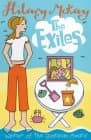
Hilary McKay (1991)
Genre
Children's / Young Adult
Reading Time
191 min
Key Themes
See below
Sign in to track this book
Four book-obsessed sisters face a summer of forced fresh air and chores at their Big Grandma's seaside home, only to discover that even without books, adventure and stories find a way to bloom.
Ruth, Naomi, Phoebe, and Rachel Conroy are four sisters who are always reading. Their parents worry about their lack of physical activity and social interaction, so they decide to send them to their maternal grandmother, Big Grandma, for the summer holidays. Big Grandma lives by the sea and is known for her practical approach to life. The parents hope that the new environment, along with Big Grandma's strict routine of fresh air and hard work, will stop the girls from constant reading and encourage them to engage with the real world.
When they arrive at Big Grandma's seaside house, the Conroy sisters immediately notice how different it is from their own home. Big Grandma's house is clean, orderly, and, to their dismay, almost entirely without books. Their grandmother, a strong woman with a sharp mind, greets them with a list of chores and a stern talk about the benefits of hard work and fresh air. The girls, used to spending their days lost in stories, now face a summer of unfamiliar physical labor and the difficult prospect of boredom without their cherished books.
The lack of books quickly becomes unbearable for the Conroy sisters. Ruth, the oldest and most clever, plans to smuggle books into the house. They combine their pocket money and, during a trip to the local town with Big Grandma, manage to buy a few books from a second-hand shop, hiding them in their clothes. This secret operation starts their hidden reading life, as they find clever ways to hide their books and read them without Big Grandma knowing, often late at night under their blankets.
Big Grandma's daily routine is strict. The girls are given various chores, from cleaning and cooking to gardening and fetching water. They find the work tiring and new, often doing their duties poorly or with complaints. Their initial dislike for Big Grandma grows, as they see her as a barrier to their happiness and their reading. They constantly long for the escape that books offer, viewing the physical labor as a punishment rather than a useful activity, which strengthens their desire to retreat into their imaginations.
One afternoon, while exploring the overgrown garden, the Conroy sisters find a dusty, unused shed. Inside, they discover many forgotten objects: old furniture, unusual tools, strange fabrics, and various curiosities. This discovery sparks their imaginations in a new way, as they start to invent stories and histories for the items they find. The shed becomes a secret place, somewhere they can escape Big Grandma's watchful eye and enjoy a different kind of storytelling, using the objects as props for their shared narratives.
As the summer goes on, the sisters start to notice small hints about Big Grandma's past. They find old photographs, letters, and souvenirs tucked away in different parts of the house. These discoveries make them curious, leading them to guess about their grandmother's younger days and the life she led before they knew her. They begin to see her not just as a strict taskmaster, but as a person with her own history, experiences, and perhaps even her own hidden stories, softening their initial firm view of her.
Using inspiration from the objects in the shed and their combined imagination, the Conroy sisters decide to write and perform a play. They carefully plan the plot, assign roles, and create costumes and props from the shed's contents. This collaborative project becomes a main focus of their summer, allowing them to use their storytelling instincts in a new, active way. Creating the play gives them a common goal and builds teamwork and creative expression that goes beyond their individual reading habits.
The sisters work secretly on their play, rehearsing when they can. Eventually, Big Grandma discovers what they are doing. Fearing her disapproval, the girls prepare for a lecture. However, to their surprise, Big Grandma shows a strong interest in their project. She offers practical advice, helps them with costumes, and even suggests improvements to the script. This unexpected support from their grandmother begins to close the gap between them, showing a softer, more understanding side to her and surprising the girls with her enthusiasm.
The day of the performance arrives. The sisters present their play to Big Grandma and a few of her elderly friends, who make up a small but appreciative audience. The performance, though perhaps not perfect, is a great success in terms of effort and creativity. The girls put their hearts into their roles, and the audience is charmed by their enthusiasm and inventiveness. This public display of their talents is a moment of success for the Conroy sisters, validating their imaginative efforts and strengthening their bond with Big Grandma and each other.
As the summer ends, the Conroy sisters think about their time with Big Grandma. They realize that while they still love reading, their experiences have broadened their perspectives. They've discovered the joy of physical activity, the satisfaction of creative collaboration, and a new appreciation for their grandmother. Big Grandma, in turn, has come to understand that storytelling and imagination are not only found in books. The summer has changed them all, creating a deeper, more complex relationship built on mutual respect and shared experiences, blending reading and living.
The Protagonist
Ruth learns to channel her leadership and storytelling abilities into active, collaborative projects, broadening her definition of 'reading' and 'imagination'.
The Protagonist
Naomi discovers a connection to nature and a deeper understanding of people, including Big Grandma, through observation and empathy.
The Protagonist
Phoebe channels her dramatic and imaginative energy into collaborative creative projects, learning to bring her stories to life in new ways.
The Protagonist
Rachel grows in confidence and finds her voice within the family, contributing her unique perspective to their shared creative endeavors.
The Supporting
Big Grandma learns that creativity and storytelling can manifest in many forms beyond traditional reading, and she softens her approach to her granddaughters.
The Mentioned
Her arc is not explored in the narrative, but her decision sets the stage for her daughters' growth.
The Mentioned
His arc is not explored, serving as a catalyst for the main plot.
This theme explores how storytelling and imagination are not limited to reading books; they can appear in many forms. Initially, the Conroy sisters see imagination only through reading. However, Big Grandma's book-free home forces them to find new ways to be creative. Finding the old shed, full of forgotten objects, helps them transform creatively. They start to invent stories for these items, and later, work together to write and perform a play. This journey shows that imagination is a human quality that can be expressed through active creation, collaborative play, and even interpreting daily life, expanding their understanding beyond printed pages.
“Perhaps stories weren't just in books after all. Perhaps they were everywhere, waiting to be found and made.”
The main conflict of the story is balancing intellectual pursuits (reading) with physical activity and engaging with the real world. The Conroy parents send their daughters to Big Grandma because they believe the girls are too focused on books and neglecting physical and social development. Big Grandma's strict routine of chores and outdoor life initially feels like punishment to the girls. However, as the summer goes on, they begin to appreciate the satisfaction of physical work, the joy of fresh air, and the social connections made through shared activities like creating their play. The novel suggests that a full life requires a good mix of both mind and body.
“There was a lot to be said for fresh air, even if it did make your cheeks red and your hair wild.”
The relationship between the Conroy sisters and Big Grandma explores how different generations can understand each other. At first, there is a big gap: the girls see Big Grandma as a strict, old-fashioned person who does not understand their love for books, while Big Grandma sees them as too sedentary and impractical. Through shared experiences, especially creating the play, both sides begin to learn from each other. The girls discover Big Grandma's hidden depths and her own appreciation for creativity, while Big Grandma realizes that imagination is not only a passive activity. This mutual learning builds respect and affection, showing how different generations can connect and enrich each other's lives by finding common ground.
“Big Grandma had a different kind of story in her, one made of hard work and quiet knowing.”
The Conroy sisters' journey highlights the strength of sibling bonds and the power of working together. Facing a challenging new environment, the sisters rely heavily on each other. Their shared love for books first unites them in their 'book smuggling' efforts. Later, finding the shed and deciding to create a play becomes a strong collaborative project. They combine their individual talents—Ruth's leadership, Naomi's empathy, Phoebe's dramatic flair, and Rachel's innocence—to bring their vision to life. This shared effort strengthens their sisterly bond, teaching them teamwork, compromise, and the joy of creating something together, proving that collective imagination can achieve more than individual pursuits.
“Four heads were definitely better than one, especially when those four heads were full of stories.”
The deliberate removal of books from the girls' environment.
The absence of books at Big Grandma's house is the primary inciting incident and a crucial plot device. It forces the Conroy sisters out of their comfort zone and challenges their established way of life. This void compels them to seek alternative forms of entertainment and expression, leading to their exploration of the garden, the discovery of the shed, and ultimately, the creation of their play. It highlights the girls' dependence on books while simultaneously pushing them to discover new aspects of their own creativity and resourcefulness, demonstrating that stories exist beyond the written word.
A forgotten outbuilding filled with intriguing, discarded items.
The old shed functions as a 'treasure chest' and a catalyst for the girls' creative transformation. Its contents — dusty objects, old clothes, forgotten tools — spark their imaginations, providing tangible prompts for storytelling and play-acting. It becomes a secret sanctuary where they can escape Big Grandma's watchful eye and indulge in a different kind of imaginative play, one that is active and collaborative rather than solitary and book-bound. The shed's discovery directly leads to the idea of the play, serving as a physical space for their creative development.
The grandmother's rules and daily chores.
Big Grandma's strict regime of chores and outdoor activities serves as an external antagonist, initially perceived as a barrier to the girls' happiness. However, it functions as a device for character development, forcing the girls to engage with the physical world and learn practical skills. The initial resentment it generates slowly gives way to a grudging appreciation and ultimately, a deeper understanding of the value of hard work and fresh air. It also provides the stark contrast against which the girls' imaginative pursuits stand out, making their eventual creative triumphs more impactful.
The collaborative theatrical production created by the sisters.
The creation and performance of the play is a central plot device that brings together all the themes and character arcs. It is the culmination of the sisters' newfound collaborative spirit and their expanded understanding of storytelling. The play allows them to channel their individual imaginative strengths into a shared, active project. Crucially, it also serves as the bridge between the sisters and Big Grandma, as her unexpected support for their endeavor fosters mutual respect and understanding, demonstrating that creativity can unite disparate generations.
“‘But it’s a lovely name,’ said Ruth. ‘It’s a name from a book. From a poem, even.’”
— Naomi is being teased about her name at school.
“‘It’s all right,’ said Naomi. ‘It’s just… I wish I lived somewhere else. Somewhere… quieter.’”
— Naomi expresses a desire for a different life, away from the chaos of her sisters.
“‘You’re a book-eater, aren’t you?’ said Ruth. ‘I used to be a book-eater too.’”
— Ruth observes Naomi's love for reading.
“‘But we’re not orphans,’ said Naomi. ‘We’ve got a mother and a father. And a dog.’”
— The girls imagine themselves as orphans, a common trope in children's literature.
“‘It’s not fair,’ said Naomi. ‘They always get to do everything.’”
— Naomi feels overshadowed by her older sisters.
“‘You can always tell a lot about people by the books they read,’ said Ruth.”
— Ruth shares her wisdom about books and people.
“‘It’s not just a story, it’s… it’s real to me,’ said Naomi.”
— Naomi defends her imaginative world to her sisters.
“‘Being an exile isn’t so bad,’ said Ruth. ‘It just means you have to make your own rules.’”
— Ruth embraces the idea of being an 'exile' from conventional expectations.
“‘Sometimes,’ said Naomi, ‘I think the best stories are the ones you make up yourself.’”
— Naomi reflects on the power of her own imagination.
“‘It’s not about being perfect,’ said Ruth. ‘It’s about being brave.’”
— Ruth encourages Naomi to be courageous.
“‘We’re not going to be like ordinary people,’ said Naomi. ‘We’re going to be extraordinary.’”
— The sisters decide to embrace their unique identities.
“‘A good book,’ said Ruth, ‘is like a door to another world.’”
— Ruth speaks of the transformative power of books.
“‘It’s a good thing to be different,’ said Naomi. ‘It means you get to see things nobody else does.’”
— Naomi finds value in her unique perspective.
“‘You don’t have to go anywhere to have an adventure,’ said Ruth. ‘You just have to open a book.’”
— Ruth emphasizes that adventure can be found in reading.
Ready to see how well you understood this book? Take our interactive quiz with 10 questions.
Biography coming soon.

Dan Gemeinhart
4.5

Kate O'Hearn
4.4

Jeanne Birdsall
4.4

Jen Wang
4.4

Wendelin Van Draanen
4.3

John Marsden
4.3

Chris Van Allsburg
4.3

Jennifer A. Nielsen
4.2