“The past is a foreign country; they do things differently there.”
— A philosophical reflection on the irreversible nature of time and change.

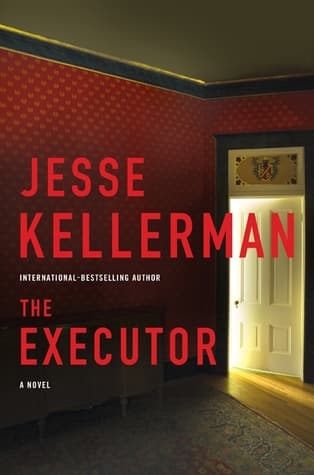
Jesse Kellerman (2010)
Genre
Thriller / Mystery / Philosophy
Reading Time
7 hours 20 min
Key Themes
See below
Sign in to track this book
A poor philosophy student's search for conversation with a rich, mysterious woman turns into a deadly inheritance game where intellectual arguments become a fight for survival.
Joseph Geist, a struggling philosophy graduate student, is evicted from his apartment with his girlfriend, Sarah. Homeless and jobless, his dissertation on Nietzsche stuck, and his funding cut, Joseph is at a turning point. His only valuable possession is a Nietzsche bust. Desperate for money, he looks through newspaper classifieds. He finds a strange ad seeking a 'Conversationalist,' which interests him. With no other options, Joseph calls the number, hoping for a simple job to solve his money problems, unaware of the deep and dangerous path he is about to take.
Joseph calls the number from the ad and gets an interview. He meets Alma Spielman, an elderly woman with a sharp mind and old-world charm, who lives in a grand, somewhat isolated house. Alma explains that she is dying and wants intellectual company, someone to have deep philosophical talks with. Despite the unusual job, Joseph, drawn by Alma's intelligence and the promise of good pay, accepts. Their conversations quickly become a stimulating escape for Joseph, a sharp contrast to his chaotic life, and he becomes more and more fascinated by Alma.
During their talks, Alma Spielman tells Joseph about her terminal illness, saying she has little time left. She then suggests a surprising arrangement: she wants Joseph to be her executor. Beyond just managing her estate, Alma asks Joseph to carry out a series of specific, morally difficult requests after her death, hinting at secrets and unfinished business. Joseph is hesitant at first, struggling with the ethics and odd nature of the demands, but Alma's persuasive mind and his own financial need eventually lead him to agree to her terms, tying him to her final wishes.
Alma Spielman dies peacefully, leaving Joseph a detailed will and a list of instructions. As promised, her will names him executor, giving him a large inheritance, but only if he successfully completes her tasks. Joseph's first instruction is to find a specific, obscure philosophical text and deliver it to an unknown person. This first task seems harmless, but the unusual circumstances around the book and the recipient make Joseph suspicious, making him realize that Alma's will is far more complex and possibly dangerous than he first thought.
As Joseph tries to complete Alma's second instruction — delivering a mysterious package to a specific place — he notices a shadowy figure watching him. This unsettling presence makes him realize he is not alone and that Alma's will involves more than just philosophical deliveries. The package itself holds a cryptic meaning, and its transfer feels less like a simple errand and more like a secret operation. Joseph's initial confusion turns into a growing sense of paranoia and danger, as he understands that Alma's legacy is pulling him into a world of secrets and potential threats.
Alarmed by the surveillance and the increasing strangeness of his tasks, Joseph decides to investigate Alma Spielman's past. He looks through old records, archives, and makes quiet inquiries, slowly putting together pieces of her life. He finds hints of a life far more complex and politically charged than the calm, intellectual woman he knew. He learns about her family's history, their possible connections to wartime events, and a hidden group of people she seemed linked to. This research deepens the mystery, suggesting that Alma's will is not just about personal wishes but about correcting historical wrongs or settling old scores.
Joseph's investigations attract unwanted attention. An intimidating person confronts him directly, warning him to stop his inquiries and abandon Alma's will. The encounter is threatening, making it clear that powerful forces are involved and that Joseph's life is in danger. This direct threat confirms his suspicions that Alma's estate is tied to something much bigger and more dangerous than he could have imagined. He now faces a moral choice: continue to honor Alma's wishes and risk his life, or abandon the will and possibly lose the promised inheritance and fail Alma.
Through clues left by Alma and his own research, Joseph uncovers the truth: Alma Spielman was a key person in a secret network dedicated to finding and bringing to justice individuals who escaped punishment for crimes committed during World War II. Her 'will' is not just personal requests, but a carefully planned final operation to settle old scores and ensure justice where official channels failed. Joseph realizes he has become an unwitting part of a complex, decades-long pursuit of justice, and the 'tasks' are crucial steps in this grand plan.
As Joseph deciphers Alma's remaining instructions, he realizes that all the seemingly different tasks are leading to one high-profile target: a seemingly respectable and influential figure who has lived without punishment since the war. This person is the ultimate goal of Alma's elaborate revenge and justice plan. The final task requires Joseph to expose this person's past, bringing their hidden crimes to light. The stakes are very high, as this figure has significant power and resources, making the final stages of Alma's will the most dangerous for Joseph.
Joseph, using his intelligence and Alma's carefully planned steps, successfully completes the final task, exposing the target's dark past to the world. The revelation causes a public scandal and brings the long-delayed justice Alma sought. However, completing the will comes with a personal cost. Joseph deals with the moral and psychological effects of his involvement, grappling with the violence and manipulation he took part in, even if for a cause he now understands. He receives his inheritance, but his life is forever changed by his time as Alma Spielman's executor, a man who became an instrument of historical reckoning.
The Protagonist
Joseph transforms from a directionless academic into a resourceful and morally conflicted agent of justice, forced to confront the harsh realities of the world beyond his philosophical treatises.
The Catalyst/Antagonist (posthumous)
Alma's arc is largely revealed posthumously, as Joseph uncovers her life's mission and the depths of her dedication to justice, revealing her as a formidable and unyielding figure.
The Supporting
Sarah's arc is static; she serves primarily as a catalyst for Joseph's initial desperation and a benchmark for his pre-Alma life.
The Antagonist
This character's arc is one of escalating threat, culminating in a direct confrontation with Joseph.
The Antagonist
This character's arc is one of eventual exposure and downfall, orchestrated by Alma and executed by Joseph.
The novel looks at the unclear line between seeking justice for past crimes and personal revenge. Alma's detailed plan, while aiming to expose war criminals, comes from a deep personal loss and a desire for payback. Joseph struggles with whether his actions, though meant to expose evil, are truly just or simply tools for Alma's long-held grudge. The story questions if the outcome justifies the methods, especially when those methods involve manipulation and danger, as seen in Alma's use of Joseph to fulfill her complex, posthumous agenda.
““Justice, Joseph, is not always delivered by the law. Sometimes, it must be earned, even extracted, by those who remember.””
The story shows how historical events, especially the crimes of World War II, still affect the present. Alma's entire life and her plan after death are shaped by her experiences and the unpunished crimes of the past. Joseph, initially separate from history, becomes deeply involved in its results, realizing that the past is not gone but a living force that demands attention. The theme highlights the lasting impact of trauma and the constant search for historical truth, showing how secrets can linger for decades.
““History is not a book to be closed, Joseph. It is a wound that continues to bleed until it is properly cauterized.””
Joseph Geist, a philosopher, is initially comfortable only with abstract ideas. The novel contrasts his academic, theoretical world with the harsh realities of Alma's practical, dangerous mission. Joseph is forced to move beyond intellectual thought and take real action, facing physical threats and moral problems his philosophy studies never prepared him for. This theme examines the limits of pure intellect when faced with real evil and the need for action, even if morally unclear, to achieve a greater purpose. His journey forces him to connect thought and deed.
““You can write about Nietzsche until your fingers bleed, Joseph, but that will not change the world. Action, however small, can.””
The story centers on Alma's skillful manipulation of Joseph. She uses his intelligence, financial desperation, and philosophical curiosity to turn him into an unwitting participant in her grand plan. Joseph initially believes he is making his own choices, but he slowly realizes how much Alma has controlled his every move, even after her death. This raises questions about free will, especially when choices are guided by strong incentives and carefully set traps. The story explores the ethics of using another person as a tool to achieve a goal.
““You thought you chose, Joseph. But some choices are merely the next step on a path already laid out for you.””
Alma's will dictates a series of tasks to be completed after her death.
This is the central plot device. Alma Spielman's will is not merely a distribution of assets but a meticulously crafted set of instructions and challenges that Joseph must complete posthumously. Each task serves a specific purpose in her larger plan for justice, acting as a stepping stone that gradually reveals the true nature of her mission. This device drives the narrative forward, providing a clear structure for Joseph's journey and creating suspense as each new instruction is unveiled. It allows Alma to remain a controlling force even after her death.
A cryptic newspaper ad draws Joseph into Alma's orbit.
The 'Conversationalist Sought' advertisement is the initial hook that pulls Joseph Geist into the story. Its unusual wording and the specific requirements immediately establish the eccentric nature of Alma Spielman and her world. This device serves to introduce the protagonist to the central conflict, acting as a seemingly innocuous gateway to a much deeper and more dangerous plot. It plays on Joseph's intellectual curiosity and desperation, ensuring he takes the bait and sets the entire narrative in motion.
References to philosophers, particularly Nietzsche, enrich the narrative.
Given Joseph's academic background, the novel frequently uses philosophical concepts, allusions, and metaphors, especially those related to Nietzsche. These are not just decorative but often mirror the moral and existential dilemmas Joseph faces. For instance, discussions of 'will to power' or 'good and evil beyond good and evil' reflect Alma's relentless pursuit and the ambiguous morality of her actions. This device adds intellectual depth, provides character insight into Joseph, and subtly foreshadows themes and plot developments, blurring the lines between abstract thought and concrete action.
Obscure books and mysterious packages serve as immediate objectives.
Throughout his tasks, Joseph is often required to locate or deliver specific, seemingly innocuous items – an obscure philosophical text, a sealed package, a coded message. These items function as MacGuffins, driving Joseph's immediate actions and creating short-term goals within Alma's larger plan. While the items themselves might not hold intrinsic plot value, their acquisition or delivery is crucial for advancing the narrative and revealing the next piece of Alma's puzzle. They serve to keep the plot moving and introduce new characters or threats.
“The past is a foreign country; they do things differently there.”
— A philosophical reflection on the irreversible nature of time and change.
“Every man has his secrets. The trick is to keep them buried deep enough.”
— A character's internal thought about the necessity of concealing one's true self or past actions.
“Justice, I've found, is rarely about right or wrong. It's about who tells the more convincing story.”
— A cynical observation on the nature of legal proceedings and truth.
“There's a fine line between genius and madness, and I've spent my life dancing on it.”
— A self-assessment by a character who operates at extreme intellectual or emotional levels.
“The most dangerous lies are the ones we tell ourselves.”
— An introspection about self-deception and its profound consequences.
“Sometimes, the only way to move forward is to burn the bridges behind you.”
— A decisive statement about breaking ties with the past to forge a new future.
“Memory is a treacherous thing. It shapes itself to fit our desires, not the facts.”
— A reflection on the unreliability of memory and its subjective nature.
“We are all prisoners of our own making, bound by the choices we've made.”
— A philosophical musing on free will, destiny, and personal responsibility.
“The greatest weapon in any conflict is understanding your opponent's fears.”
— A strategic insight into psychological warfare and manipulation.
“Redemption is not given; it is earned, often through suffering.”
— A stark perspective on the process of atonement and its cost.
“The silence between words often speaks louder than the words themselves.”
— An observation about non-verbal communication and unspoken truths.
“To truly know someone, you must witness their reaction when everything is taken from them.”
— A profound statement about character revelation under extreme duress.
“Every secret has a shelf life. Eventually, it spoils.”
— A warning about the temporary nature of concealed information and inevitable exposure.
“The world isn't fair, but sometimes, for a brief moment, it feels like it tries to be.”
— A rare optimistic, yet tempered, thought amidst the novel's often dark themes.
Ready to see how well you understood this book? Take our interactive quiz with 10 questions.







