“The news business was a high-wire act performed without a net.”
— Describing the inherent risks and pressures of broadcast journalism.

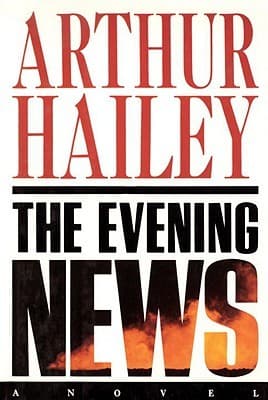
Arthur Hailey (1990)
Genre
Thriller / Mystery
Reading Time
15-20 hours
Key Themes
See below
Sign in to track this book
A television network, struggling with internal issues and external threats, races to rescue its kidnapped star anchor from a ruthless terrorist group while broadcasting the drama live.
The story begins with the kidnapping of Harry Bell, a respected anchor for the CBA television network, his wife Charlotte, and their young son David, during a safari in Kenya. The kidnappers are members of the People's Revolutionary Army (PRA), a terrorist group led by 'General' Alejandro. The PRA demands the release of their imprisoned leader, Carlos, from a U.S. prison, along with a ransom. President Kennedy's administration refuses to negotiate with terrorists, leaving CBA to manage the crisis and its own moral obligations.
At CBA headquarters in New York, the news shocks the executive team. Crawford Sloane, the President of CBA News, forms a crisis team including Dana Evans, a sharp news producer, and other key personnel. They face pressure from the U.S. government, which insists on no concessions, and the public, who demand action. Sloane understands the event's impact on his network's reputation and his employees' lives. He authorizes Dana to lead a covert operation to find and rescue the Bell family, despite the government's official stance.
Dana Evans, driven by professional integrity and personal concern for the Bell family, assembles her investigative team. She recruits experts in various fields, including a former CIA operative, a linguistics specialist, and a forensic analyst. Their initial efforts focus on deciphering the PRA's communication patterns and tracking their movements. Dana quickly realizes the PRA is a sophisticated, well-funded organization with a global reach, making their task difficult. Her team faces dead ends and the constant threat of discovery by terrorists or the U.S. government.
The PRA releases a video of Harry, Charlotte, and David Bell, confirming their captivity and restating their demands. Harry Bell, distressed, is forced to read a statement denouncing the U.S. government. This video is broadcast worldwide, causing an uproar and pressuring President Kennedy to reconsider his no-negotiation policy. CBA faces a dilemma: broadcast the propaganda, aiding the terrorists, or withhold it, potentially endangering the Bells. Sloane decides to air the video, believing the public has a right to know, but with careful editorial framing.
Dana's team analyzes every piece of information, from background noise in the video to the dialect used in the messages. Their investigation suggests the PRA operates with a network of safe houses and sympathizers across continents. A detail in the video points to a specific region in South America, a known PRA stronghold. Dana decides to take her team to Venezuela, where they believe the Bells are held, despite the dangers and lack of official government support.
In Venezuela, Dana and her team encounter a hostile environment, marked by political instability and anti-American sentiment. They contact local journalists and intelligence sources, including a Venezuelan reporter named Maria. Maria provides insights into the PRA's local operations and the political climate. The team learns that 'General' Alejandro is a charismatic but ruthless leader, deeply entrenched in the region. Dana's team uses technology and investigative journalism to narrow down the Bell family's potential locations.
After weeks of surveillance and analysis, Dana's team, with Maria's help, locates the PRA's likely hideout and the Bell family. It is a remote, fortified compound deep within the Venezuelan jungle, surrounded by dense foliage and guarded by militants. The team uses satellite imagery, intercepted communications, and local informants to confirm the location. The challenge shifts from finding the Bells to planning a rescue operation, made difficult by the PRA's defenses and the lack of official military intervention.
With the location confirmed, Crawford Sloane and Dana Evans, back in New York, plan a clandestine rescue. They know direct U.S. military intervention would be politically disastrous and likely result in the Bells' deaths. Instead, they decide to employ a small, highly trained team of mercenaries and former special forces operatives, secretly funded by CBA. The plan is audacious and risky, relying on surprise and precision to extract the family from the guarded compound without alerting the main PRA forces.
The rescue team, led by a seasoned operative, executes the plan under cover of darkness. They infiltrate the compound, facing resistance from PRA guards. A firefight occurs, with casualties on both sides. Harry Bell, weakened, tries to help his rescuers. During the chaos, 'General' Alejandro appears, determined to prevent the Bells' escape. The confrontation is intense, showing the PRA's brutal nature and the rescue team's courage.
After a struggle, Harry, Charlotte, and David Bell are extracted from the compound, though with injuries. The rescue team suffers losses, showing the high price paid for their freedom. 'General' Alejandro escapes, vowing revenge. The Bells are flown back to the U.S., reunited with their family, and receive medical attention. The incident becomes a global sensation, solidifying CBA's reputation for journalistic integrity and bravery, but also raising questions about private organizations undertaking such dangerous missions.
President Kennedy's administration is initially angry about CBA's unsanctioned operation, seeing it as undermining national security. However, public support for the Bells' rescue and CBA's actions forces the government to temper its criticism. A national debate arises regarding media organizations' role in international crises, the ethics of negotiating with terrorists, and the boundaries between private enterprise and state power. Crawford Sloane and Dana Evans face scrutiny but defend their actions as a humanitarian necessity.
After recovery, Harry Bell makes an emotional return to the CBA evening news. His broadcast is a powerful story of resilience and courage. He shares his experiences in captivity, giving a raw account of the fear, despair, and hope that sustained him and his family. His return solidifies his iconic status and reinforces public trust in CBA. The experience changes Harry, giving him a deeper perspective on the news he reports and the world he inhabits.
The Protagonist
Transforms from a detached observer of world events to a direct participant, gaining a profound personal understanding of suffering and resilience.
The Protagonist
Evolves from a skilled producer to a daring leader, proving her capabilities beyond the newsroom and solidifying her professional standing.
The Supporting
Grapples with the ethical boundaries of media involvement in international crises, ultimately prioritizing human life over strict adherence to protocol.
The Antagonist
Remains unyielding in his extremist views, reinforcing his role as an unrepentant force of terror.
The Supporting
Endures extreme hardship with unwavering strength, primarily focused on protecting her son, and emerges deeply traumatized but resilient.
The Supporting
A victim of circumstances, his survival is the central motivation for the rescue, and he emerges physically safe but emotionally scarred.
The Supporting
Maintains a steadfast political stance, eventually forced to acknowledge the public's and media's influence on national crises.
The Supporting
Aids the rescue mission, risking her life for journalistic integrity and humanitarian reasons, showcasing local heroism.
The novel explores the moral and ethical challenges a television network faces when one of its own is kidnapped. CBA struggles with broadcasting terrorist propaganda, revealing details of its independent investigation, and funding a private rescue. This theme questions media's role – are they only reporters, or do they have a deeper responsibility to act when lives are at stake? The conflict between government policy and CBA's humanitarian drive (e.g., Crawford Sloane's decision to air the PRA video with careful framing, and Dana Evans's leading the covert rescue) is central.
“"We are not just reporting the news, Dana. We are the news. And sometimes, that means we have to make it."”
The book provides a detailed, fictionalized look into a sophisticated terrorist organization, the People's Revolutionary Army (PRA). It examines their motivations, global network, and ruthless tactics. 'General' Alejandro embodies the fanaticism and ideology driving such groups. The narrative shows how terrorism uses media attention to advance its agenda and the psychological impact on victims and families. The depiction of the PRA's hideouts and communication methods shows the complex reality of combating such forces.
“"Terrorism isn't just about bombs and bullets. It's about fear. And we, the media, are their most potent weapon to spread it."”
Central to the story is the Bell family's resilience during captivity. Harry, Charlotte, and David endure torment, yet find ways to maintain hope and support each other. Outside captivity, Dana Evans and her team show courage, risking their lives in a dangerous, unsanctioned mission to rescue colleagues. This theme highlights the human capacity to endure hardship, fight for survival, and act selflessly in danger, as seen in Harry's defiance and Dana's unwavering pursuit.
“"Even in the darkest cell, there's a flicker of light if you just keep looking for it. That light is hope."”
The novel portrays the tension between the U.S. government's policy of not negotiating with terrorists and CBA's independent decision to pursue a rescue. President Kennedy's administration views CBA's actions as a dangerous precedent and an infringement on national security, while CBA argues it is a humanitarian imperative the government failed to address. This conflict raises questions about who has ultimate authority and responsibility in such crises, and whether a private entity can, or should, operate outside governmental directives, especially when lives are at stake.
“"The government has its policies. We have our people. Sometimes, those two things don't align, and then we have to choose."”
The kidnapped Bell family serves as the central object of desire and motivation.
The kidnapping of the Bell family functions as the primary MacGuffin in 'The Evening News.' While the audience and characters care deeply about the Bells, their specific identity or individual personalities are less important than their role as the catalyst for the entire plot. Their abduction drives CBA's desperate search, the government's policy debates, and the global hunt for the PRA. The MacGuffin's importance lies in its ability to ignite the narrative and motivate the characters' actions, rather than in its intrinsic value as a character in itself.
Misleading clues and false leads designed to distract the investigative team.
Throughout Dana Evans's investigation, the PRA deliberately plants red herrings – false clues, misleading communications, and decoy locations – to throw her team off track. For instance, initial intelligence might suggest the Bells are held in one African country, only for later, more subtle clues to point elsewhere. These diversions serve to heighten the suspense, emphasize the PRA's sophistication, and make Dana's ultimate success seem even more improbable. They force the team to constantly re-evaluate their assumptions and rely on meticulous analysis to discern truth from deception.
The deteriorating health and safety of the Bell family creates constant urgency.
A powerful ticking clock device is established through the deteriorating condition of the Bell family, particularly young David, and the implicit threat of their execution if the PRA's demands are not met. Each passing day in captivity brings increased risk of illness, injury, or death. This device creates relentless tension and urgency for Dana Evans and her team, pushing them to work faster and take greater risks. The ticking clock is not always explicit (e.g., a specific deadline), but rather implied by the inherent dangers of their situation, making every moment critical.
CBA, a private media company, takes on a global terrorist organization and a disapproving government.
CBA, as a private media organization, acts as an underdog hero against the formidable forces of the People's Revolutionary Army and, to some extent, the U.S. government. Lacking the resources and authority of a national military or intelligence agency, CBA must rely on ingenuity, private funding, and a small, dedicated team to achieve what official channels refuse to do. This device generates sympathy for CBA's cause and highlights the courage of individuals like Dana Evans who defy conventional power structures to do what they believe is right.
“The news business was a high-wire act performed without a net.”
— Describing the inherent risks and pressures of broadcast journalism.
“In television, if you weren't on the air, you didn't exist.”
— Highlighting the ephemeral nature of TV news and the importance of screen time.
“A good reporter knew that the truth was often stranger, and more compelling, than fiction.”
— Reflecting on the power and unexpected twists of real-world events.
“Fear was a powerful motivator, but it was also a paralyzing one.”
— Examining the dual nature of fear in high-stakes situations.
“The public had a short memory, but the camera never forgot.”
— Discussing the lasting impact of visual media compared to public perception.
“Every crisis, no matter how dire, contained the seeds of opportunity.”
— A character's philosophical outlook on challenges faced during the crisis.
“Terrorism was a theater, and the media provided the stage.”
— A critical observation on the symbiotic relationship between terrorism and media coverage.
“You couldn't be a good journalist if you weren't a little bit obsessed.”
— Describing the dedication and single-mindedness required for investigative journalism.
“The world didn't stop for anyone, especially not for a news broadcast.”
— Emphasizing the relentless pace of global events and news cycles.
“Information was power, and in their business, it was also survival.”
— Highlighting the critical role of information in the competitive news industry.
“Sometimes the biggest story was the one they almost missed.”
— A reflection on the unpredictable nature of breaking news and journalistic oversight.
“Loyalty was a rare commodity in the cutthroat world of television news.”
— Commenting on the competitive and often disloyal environment within the TV industry.
“The camera didn't just record events; it shaped them.”
— Exploring the influence of media presence on the events being reported.
“Every second counted when lives were on the line.”
— Emphasizing the urgency and high stakes in a rescue or crisis situation.
Ready to see how well you understood this book? Take our interactive quiz with 10 questions.
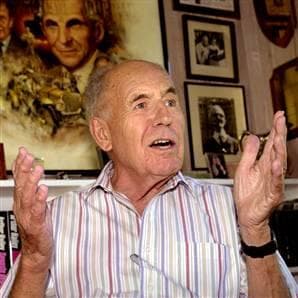
Arthur Hailey was a British-Canadian novelist renowned for his meticulously researched, fast-paced thrillers often set in specific industries. His major works, including 'Airport,' 'Hotel,' and 'Strong Medicine,' became international bestsellers, captivating readers with their detailed portrayals of complex professional environments and gripping narratives.







