“There are only two types of people in this world. Those who are Irish, and those who wish they were.”
— Holly Short reflects on Mulch Diggums's comment.

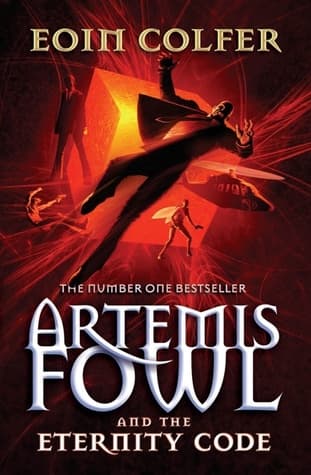
Eoin Colfer (2003)
Genre
Fantasy / Children's / Science Fiction / Young Adult
Reading Time
280 min
Key Themes
See below
Sign in to track this book
Thirteen-year-old criminal mastermind Artemis Fowl’s latest brilliant plan involves showing a dangerous, stolen fairy supercomputer to a ruthless American businessman, confident that with his bodyguard Butler, nothing could go wrong.
Thirteen-year-old Artemis Fowl, with his bodyguard, Butler, goes to Chicago to meet Jon Spiro, a ruthless American businessman with Mafia ties. Artemis plans to show Spiro his new invention, the C Cube, a supercomputer made from stolen fairy technology, and then erase Spiro's memory using a stolen fairy 'mesmer.' However, Spiro, who already has a fairy 'mesmer' from a traitorous pixie (unknown to Artemis), expects Artemis's move. During the presentation, Spiro's men disable Butler with a tranquilizer dart and shoot Artemis, though a hidden ceramic plate stops the bullet. Spiro takes the C Cube, leaving Artemis and the unconscious Butler to an uncertain fate.
After the ambush, Butler is shot many times while protecting Artemis, getting seriously hurt. Artemis, despite his own wound, calls an emergency number for the Lower Elements Police (LEP) he had found earlier. Captain Holly Short and Commander Root arrive in Chicago, using advanced fairy medical technology to stabilize Butler, though he is still in a coma and near death. The fairies are angry with Artemis for his reckless dealings with human-fairy technology, but Butler's immediate life-threatening condition takes priority, forcing an uneasy alliance.
Back in Haven City, the fairy capital, Foaly, the LEP's centaur technical expert, admits his accidental part in Spiro's plan. He confesses that a rogue pixie, also named Foaly, stole a fairy mesmer machine from him when he was distracted, which Spiro then got. This explains how Spiro knew Artemis's plan. Foaly further explains the huge danger of the C Cube: it can break the code of all fairy technology, including their cloaking shields and memory wipes. If Spiro figures out how to use it fully, the fairy world will be exposed, leading to a terrible war between humans and fairies.
With Butler still in critical condition, Artemis, Holly, and Commander Root reluctantly agree to work together. They plan to get into Spiro's heavily guarded headquarters in Chicago, where the C Cube is. The plan involves Artemis using his human cleverness and knowledge of Spiro's operations, combined with Holly's fairy abilities and technology. Root, despite not trusting Artemis, understands the urgency and the chance of a global disaster if the C Cube stays with Spiro. The team also decides to bring Mulch Diggums, the dwarf who steals things, for his tunneling skills.
Mulch Diggums, the dwarf, is brought in for his unique tunneling skills. Under cover of darkness, Mulch tunnels beneath Spiro's skyscraper, using his strong jaws and ability to eat large amounts of dirt. His job is to create a secure entry point into the building for Artemis, Holly, and Root. Despite his usual complaints and self-interest, Mulch understands how serious the situation is and does his job well, making a hidden shaft that leads directly into the lower levels of Spiro's fortified complex, bypassing many of the building's security measures.
Artemis, Holly, and Root enter Spiro's building through Mulch's tunnel. They immediately face advanced human security systems and armed guards. Artemis uses his intelligence to disable some electronic defenses, while Holly uses her fairy cloaking and agility to get past laser grids and surveillance. They find that Spiro has not only human guards but has also hired the rogue pixie, Foaly, to help him understand and weaponize the C Cube, making their mission even more dangerous. The team must move fast and quietly to avoid being seen and caught.
During their entry, Artemis and Holly meet the rogue pixie, Foaly, who betrayed the LEP and sold the mesmer to Spiro. The pixie is happily helping Spiro understand the C Cube. A tense confrontation follows, where Holly tries to talk sense into the pixie, reminding him of his loyalty to the fairy people. However, the rogue Foaly, driven by greed and a desire for power, resists. The team manages to stop him, preventing him from helping Spiro further, but this encounter alerts Spiro to their presence and makes their mission more dangerous.
Artemis, using his intelligence, gets into the C Cube's main programming. He realizes that just getting it back is not enough; its existence is too dangerous. He plans to overload and destroy the C Cube from inside, making it useless to Spiro. As Spiro and his remaining guards close in, Artemis carries out his plan, causing the C Cube to self-destruct in a spectacular way, making it completely unusable. This act not only protects the fairy world but also removes the immediate threat to human-fairy relations, though it costs the valuable technology.
With the C Cube destroyed, Artemis, Holly, Root, and Mulch make a frantic escape from Spiro's collapsing headquarters, barely avoiding capture and the building's security. Once outside and safe, the LEP uses their advanced memory-wipe technology on Jon Spiro and his main associates, erasing all their memories of Artemis, the fairies, and the C Cube. This ensures the fairy world's secret stays safe and that Spiro can no longer threaten either species, ending the immediate crisis and bringing back a fragile peace.
Back in Haven City, Butler, thanks to advanced fairy medicine, fully recovers. However, a final, painful decision must be made. To ensure the fairy world's complete secrecy, and as a condition for their help, Artemis agrees to a memory wipe, erasing all his knowledge of the fairies and their technology. This is a big sacrifice for Artemis, taking away his most exciting adventures and his unique understanding of the magical world. Holly Short, though sad, performs the wipe, leaving Artemis with no memory of his recent past with the fairies.
Unknown to Commander Root or Holly Short, Foaly, feeling some guilt and respect for Artemis, puts a secret backup in place before the memory wipe. He creates a time-lock on a special disc, holding a compressed file of Artemis's adventures with the fairies. This disc is meant to activate and restore Artemis's memories at a specific, future time, if needed. Foaly hides this disc with Mulch Diggums, making sure Artemis's genius and knowledge are not permanently lost, offering a glimmer of hope for future meetings.
After the memory wipe, Artemis Fowl returns to his human life, seemingly unaffected by the recent events. He is still a brilliant, though slightly less cynical, thirteen-year-old. He has no conscious memory of the fairies, the C Cube, or the difficult adventure. However, there is a subtle change in him, a lingering feeling of something important missing or altered. Butler, who remembers everything, watches over him, knowing the extraordinary secret Artemis has forgotten. The stage is set for Artemis to possibly rediscover his past, thanks to Foaly's clever move, leaving readers with a hopeful yet emotional ending.
The Protagonist
Artemis learns the value of sacrifice and selflessness, ultimately giving up his memories to protect the fairy world.
The Supporting
Butler's unwavering loyalty and near-fatal injury solidify his bond with Artemis and highlight his vital role.
The Supporting
Holly continues to challenge Artemis's morality, ultimately becoming a key figure in his personal growth and sacrifice.
The Supporting
Root is forced to work with Artemis out of necessity, subtly growing to acknowledge Artemis's strategic value.
The Supporting
Foaly's accidental mistake leads to the main conflict, prompting him to create a secret failsafe to preserve Artemis's memory.
The Supporting
Mulch's skills are essential to the mission, and he becomes the unwitting keeper of Artemis's memories.
The Antagonist
Spiro attempts to gain ultimate power through stolen technology but is ultimately outsmarted and stripped of his memories.
The Mentioned
The rogue pixie's betrayal initiates the main conflict and he is eventually apprehended.
Artemis Fowl's intelligence and ambition lead him to create the C Cube, a powerful device that threatens both human and fairy worlds. His first attempt to use this power for his own gain (showing it to Spiro to then erase his memory) fails badly, causing Butler's near-fatal injury and a global crisis. The story explores the responsibility that comes with great intelligence and the dangerous results when power is sought without morals. In the end, Artemis pays the highest price – his memories – to stop the threat his genius created.
“A genius is a genius, no matter what species it is.”
Loyalty is a main theme, most clearly shown by Butler, who takes many bullets to protect Artemis, almost dying. This selfless act deeply affects Artemis, challenging his usual self-serving nature. Artemis, in turn, shows loyalty by agreeing to the memory wipe, giving up his most valued experiences and his unique connection to the fairy world to keep it safe and to make up for his actions. The theme also includes the LEP, whose officers are loyal to their species and their job to protect the fairy world.
“He would die for Artemis Fowl. That was his job. He would also kill for Artemis Fowl. That was also his job.”
The C Cube, a supercomputer built from stolen fairy technology, shows this theme. It represents the great potential and danger of advanced technology. In the wrong hands (Spiro's), it can be used for global control and destruction. The story asks questions about who controls technology, for what reasons, and the ethical limits of scientific invention. Foaly's guilt over the stolen mesmer and Artemis's choice to destroy the C Cube instead of just getting it back highlight the moral responsibility that comes with creating or using powerful devices.
“This cube is a monster, Artemis. A beautiful, terrible monster.”
The prejudice between humans and fairies is always present. Commander Root and many fairies see humans, especially Artemis, with deep suspicion and distrust, seeing them as a threat to their existence. On the other hand, Artemis initially sees fairies as things to be used. However, through their forced teamwork, characters like Holly and Artemis begin to respect and even understand each other's species. The crisis forces them to look past their prejudices and work together for a common goal, showing that cooperation can overcome even strong divisions.
“You're a human, Fowl. You're all the same. Greedy, destructive, short-sighted.”
A supercomputer capable of decrypting all fairy technology.
The C Cube is the central MacGuffin and plot driver. Built by Artemis from stolen fairy technology, it has the power to decrypt every piece of fairy tech, including their cloaking shields and memory wipes. Its theft by Jon Spiro propels the entire plot, forcing Artemis and the LEP into an uneasy alliance to retrieve or destroy it. The C Cube represents the ultimate threat to the fairy world's secrecy and survival, making its destruction a paramount objective and the climax of the story.
A fairy ability/technology to erase or alter memories.
The mesmer is a crucial plot device, used by both humans and fairies. Initially, Artemis plans to use a stolen mesmer to erase Spiro's memory after showing him the C Cube. However, Spiro's prior acquisition of a mesmer from the rogue pixie Foaly allows him to anticipate Artemis's move, leading to the initial betrayal. Later, the LEP uses the mesmer to wipe Spiro's memories of the fairies. Most significantly, Artemis's voluntary memory wipe at the end serves as a major sacrifice and a poignant ending, while Foaly's time-lock on the memory disc sets up future plot possibilities.
A hidden device designed to restore Artemis's memories in the future.
This is a classic deus ex machina and a setup for future books. Foaly, feeling some remorse and respect for Artemis, secretly creates a data disc containing Artemis's memories of the fairies. This disc is programmed with a time-lock, designed to activate and restore Artemis's memories at a later, unspecified date. It prevents Artemis's sacrifice from being truly permanent and provides a narrative hook for his return to the fairy world, ensuring that his genius is not lost forever.
The dwarf's unique digestive system allowing him to tunnel through earth.
Mulch's peculiar biological ability to tunnel through vast amounts of earth and regurgitate it at will is a key plot device for infiltration. It allows the team to bypass Spiro's elaborate above-ground security systems by creating a secret entry point into his skyscraper. Without Mulch's unique skill, the initial phase of the heist would have been significantly more difficult, if not impossible, highlighting how even the most unconventional abilities can be vital in a complex mission.
“There are only two types of people in this world. Those who are Irish, and those who wish they were.”
— Holly Short reflects on Mulch Diggums's comment.
“Trust me, I'm an elf.”
— Holly Short often uses this phrase, sometimes ironically, to reassure or persuade.
“Always have a backup plan. And a backup for the backup. Just in case.”
— Artemis Fowl's general philosophy, demonstrated through his intricate planning.
“Sometimes the best way to solve a problem is to make it someone else's problem.”
— Artemis Fowl's pragmatic, often morally ambiguous, approach to challenges.
“Mulch Diggums, a dwarf of many talents, none of them legal.”
— A descriptor for Mulch, highlighting his criminal expertise.
“Humanity's greatest invention wasn't the wheel, or fire, or even the internet. It was the lie.”
— Artemis Fowl's cynical observation on human nature and deception.
“The world was a chessboard, and Artemis Fowl was a grandmaster.”
— A metaphor describing Artemis's strategic mind and control.
“You can't always choose your family, but you can choose your friends. And sometimes, your enemies.”
— A reflection on relationships and alliances, particularly pertinent to Artemis's evolving circle.
“It's all about leverage, Butler. Always about leverage.”
— Artemis Fowl explaining his approach to negotiations and power dynamics.
“Even the smartest people can make the dumbest mistakes when they're angry.”
— A general observation on the impact of emotions on intelligence.
“There's no such thing as 'too prepared' when you're dealing with the Fowl family.”
— A thought from someone observing Artemis or his associates' meticulous planning.
“A good plan violently executed now is better than a perfect plan next week.”
— A practical, action-oriented philosophy that sometimes guides the characters.
“Sometimes you have to break the rules to save the day.”
— A common theme for Holly Short, who often bends regulations for the greater good.
“Money can't buy happiness, but it can certainly rent a lot of interesting experiences.”
— Artemis Fowl's perspective on wealth and its utility.
Ready to see how well you understood this book? Take our interactive quiz with 10 questions.

Biography coming soon.







