BookBrief
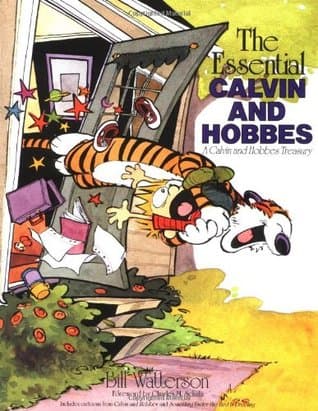
The Essential Calvin and Hobbes: A Calvin and Hobbes Treasury cover
Archivist's Choice

The Essential Calvin and Hobbes: A Calvin and Hobbes Treasury

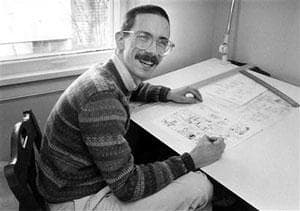
Bill Watterson (1988)

Genre

Children's

Reading Time

12 Minutes

Key Themes

See below

Track Your Reading

Sign in to track this book

A mischievous boy and his philosophical tiger go on fantasy adventures, exploring childhood imagination and the absurdities of adult life through a cardboard box time machine and a world of snowballs.

Synopsis

This treasury collects the first two "Calvin and Hobbes" comic strip collections, "Calvin and Hobbes" and "Something Under The Bed Is Drooling," along with an original 16-page full-color story. It chronicles the imaginative and often mischievous adventures of six-year-old Calvin and his best friend, a philosophical tiger named Hobbes, who comes to life only in Calvin's eyes. Readers will follow their escapades from the day Hobbes arrives, experiencing their unique blend of humor, fantasy, and poignant observations on childhood, family, and the world.
Difficulty
Easy
Pacing
Fast
Mood
Humorous, whimsical, nostalgic, insightful, lighthearted

Plot Summary

The Arrival of Hobbes

The book begins with Calvin setting a tuna trap in the woods, hoping to catch a tiger. Instead, he 'catches' Hobbes, a stuffed tiger who, to Calvin, is a talking friend. His parents, however, only see a toy. This first meeting sets up the main dynamic of the strip: Calvin's strong imagination and Hobbes's dual existence as a toy for adults and a lively friend for Calvin. They immediately bond, discussing tuna fishing and future adventures, which prepares readers for their unique friendship and the imaginative world they share.

Wagon Rides and Philosophical Debates

Many strips show Calvin and Hobbes taking risky wagon or sled rides down steep hills, often ending in big crashes. These wild journeys provide a setting for their talks about life, the universe, and everything else. They think about what existence means, the purpose of art, and how silly adult rules are, all while barely missing trees or falling into ditches. These parts highlight their curiosity and shared sense of adventure, showing how even ordinary activities become deep explorations through Calvin's imagination, often ending in funny physical comedy.

The Perils of School

Calvin's school life is a regular source of humor. He often argues with his teacher, Miss Wormwood, and other students, especially the bully Moe. Calvin's homework often turns into fantasy adventures or long excuses, and his test scores are always bad. He sees school as a place of sameness and intellectual oppression, preferring to daydream or plan mischief. These segments look at childhood rebellion against rules and how a very imaginative child is often misunderstood in a structured setting, showing his creative ways to avoid work and his teachers' frustration.

Susie Derkins: The Neighbor Girl

Calvin's interactions with his neighbor, Susie Derkins, are a mix of conflict and unstated affection. He often bothers her with pranks, insults, or make-believe monster attacks, seeing her as an annoying girl. However, there are times when a more complex relationship is hinted at, with Calvin sometimes wanting her company or even showing reluctant admiration. Susie usually responds with frustration or a wish for normal play, showing typical childhood boy-girl dynamics, filtered through Calvin's unique, often aggressive, imaginative view. Their interactions offer a contrast to Calvin's solitary imaginative world.

The Cardboard Box Transformations

Calvin's cardboard box is a regular prop that changes into many imaginary inventions. It becomes a transmogrifier, a duplicator, a time machine, and even a 'Cerebral Enhance-O-Matic.' These changes allow Calvin and Hobbes to go on various fantasy trips, from cloning Calvin (with bad results) to traveling through time or changing their looks. The box represents the endless nature of a child's imagination and how simple objects can become ways to extraordinary adventures, showing Calvin's cleverness and his ability to create whole worlds from everyday items.

The Snowman Art Gallery

In winter, Calvin uses his artistic skills on snowmen, making dark and often unsettling sculptures. Instead of regular snowmen, he creates scenes of snowmen being torn apart, melting dramatically, or having existential crises. These creations confuse his parents and neighbors but give Calvin a way to express his dark humor and creativity. The snowman art segments highlight Calvin's rebellious nature and his unique view of the world, challenging common ideas of childhood innocence and art with his morbidly funny creations.

The Grossology Club and Secret Forts

Calvin often tries to start secret clubs, like 'G.R.O.S.S.' (Get Rid Of Slimy girlS), or build detailed forts and treehouses. These efforts are usually short-lived and often involve excluding Susie or plotting against perceived enemies. The forts are his personal safe places and bases for his imaginary games, where he and Hobbes can escape the adult world. These segments emphasize Calvin's desire for independence, his need for a private space for his imagination, and his often-failed attempts to organize the world by his own rules, usually with Hobbes as his only, eager member.

The Tyranny of Bath Time

Bath time is a regular battle between Calvin and his parents. Calvin often sees bathing as an unnecessary chore, leading to detailed plans to avoid it or turning the bathtub into a dangerous ocean adventure. He resists being clean, preferring to stay in his natural childhood dirtiness. These strips humorously show the universal parent-child struggle over hygiene, with Calvin's imaginative protests and his parents' frustrated attempts to make him clean, showing the clash between childhood freedom and adult responsibility.

The Spaceman Spiff and Tracer Bullet Adventures

Calvin often takes on other identities, most notably Spaceman Spiff, an intergalactic explorer fighting alien monsters, and Tracer Bullet, a tough private detective. These imaginary situations often happen during ordinary activities, like school or chores, turning the everyday into exciting adventures. These alter egos offer an escape from what he sees as the dullness of his daily life and allow him to face his fears and frustrations as a hero. They highlight the power of his imagination to create rich, detailed inner worlds where he is always the hero, even if only in his mind.

Parental Woes and Wisdom

Calvin's parents are often shown as patient but loving figures trying to handle their son's endless energy, mischief, and unique view of the world. They deal with his bad grades, his detailed excuses, and his philosophical questions, often responding with a mix of frustration, humor, and sometimes deep understanding. Despite their difficulties, they provide a stable, if chaotic, environment for Calvin. These strips offer a relatable picture of parenthood, highlighting the joys and frustrations of raising an unusually imaginative and challenging child, often ending with them wondering about their son.

The Dinosaurs and Monsters

Calvin's world is often filled with imagined creatures, especially dinosaurs and various monsters. These beasts appear in his mind during walks in the woods, during chores, or even lurking under his bed. They represent both his fears and his endless creativity, acting as antagonists in his imaginary games or as subjects of his scientific inquiries. These segments show the lively and sometimes scary world of a child's mind, where the line between reality and fantasy is fluid, and everyday situations can become epic battles against prehistoric or monstrous foes.

The Original 16-Page Story: A Trip to the Museum

This collection includes an original 16-page full-color story where Calvin and Hobbes visit a natural history museum. The museum's exhibits, especially the dinosaur skeletons, spark Calvin's imagination, leading him and Hobbes on an imagined journey through prehistoric times. They picture the dinosaurs alive, fighting their ancient battles, and Calvin offers his unique, often incorrect, interpretations of scientific facts. This longer story shows Watterson's artistry in color and offers a deeper look into Calvin's imaginative process, illustrating how he turns a seemingly educational outing into a grand, personal adventure.

Principal Figures

Calvin

The Protagonist

Calvin remains largely unchanged throughout the strips, consistently displaying his core personality, but his adventures subtly deepen his understanding of friendship and the complexities of the adult world.

Hobbes

The Supporting

Hobbes's character remains consistent, serving as Calvin's anchor and fellow adventurer, subtly evolving their friendship through shared experiences.

Calvin's Dad

The Supporting

His character maintains a consistent role as a loving but often bewildered parent, offering a grounded adult perspective amidst Calvin's chaos.

Calvin's Mom

The Supporting

Her character remains a consistent source of maternal love and exasperation, embodying the daily struggles and small triumphs of parenting.

Susie Derkins

The Supporting

Susie remains consistently the 'normal' child in contrast to Calvin, her interactions primarily highlighting his unique personality and social difficulties.

Miss Wormwood

The Supporting

Miss Wormwood consistently embodies the role of the overwhelmed educator, her character serving to emphasize Calvin's nonconformity within a structured environment.

Moe

The Supporting

Moe remains a static character, consistently serving as the physical antagonist and a source of real-world fear for Calvin.

Themes & Insights

The Power of Imagination

The main theme is Calvin's endless imagination, which turns his ordinary suburban life into a world of adventure, danger, and philosophical thought. Hobbes, a stuffed tiger to adults but a real friend to Calvin, is the best example of this theme. The cardboard box, changing into a duplicator or time machine, further shows how imagination can create whole realities from simple objects. This theme celebrates the special way children see and interact with the world, highlighting the richness and escape a vivid inner life provides, often making reality more bearable or exciting.

It's a magical world, Hobbes, ol' buddy... Let's go exploring!

Calvin

Childhood vs. Adulthood

This theme explores the conflict between the free, imaginative world of childhood and the structured, often ordinary, reality of adulthood. Calvin constantly opposes adult rules, chores, school, and logic, preferring his own fantastical order. His parents and teacher represent the adult world, often frustrated by Calvin's refusal to conform. The strip humorously highlights the communication gap and different priorities between these two life stages, with adults often not understanding the depth of Calvin's inner world, and Calvin seeing adult responsibilities as boring and illogical. It comments on the loss of wonder and creativity that often comes with growing up.

I'm a genius, but I'm a misunderstood genius. No one appreciates my vision.

Calvin

Friendship and Loyalty

The heart of the strip is the strong and steady friendship between Calvin and Hobbes. Despite their occasional arguments and Hobbes's playful pouncing, their bond is one of complete loyalty and mutual understanding. Hobbes is Calvin's confidant, fellow adventurer, and moral guide, the only one who truly understands and supports Calvin's imaginative world. Their friendship goes beyond physical reality, showing the emotional depth and importance of having a companion who shares and supports one's unique view of the world. It shows the power of connection and the comfort of having someone who 'gets' you, even if that someone is a tiger.

If I can't be a tiger, I'll be a human. But I won't like it.

Hobbes

The Absurdity of Life

Calvin and Hobbes often have philosophical discussions that touch on the inherent absurdity and meaninglessness of existence, often with a humorous twist. They question social norms, the purpose of school, and the bigger picture of the universe, finding humor in life's contradictions and illogical aspects. Calvin's dark snowman art and his cynical observations further emphasize this theme. The strip uses their innocent yet deep questions to poke fun at human pretense and the often-serious adult world, suggesting that sometimes the most profound truths can be found in the simplest, most absurd moments.

The world is a horrible place, but it's home.

Calvin

Plot Devices & Literary Techniques

Hobbes's Dual Reality

The shifting perception of Hobbes as stuffed toy or sentient tiger

This is the primary plot device, defining the entire premise of the strip. To Calvin, Hobbes is a living, breathing, talking tiger, a full participant in his adventures. To every other character, Hobbes is merely a stuffed animal. This dual reality allows for constant humor, often contrasting Calvin's elaborate inner world with the mundane perceptions of adults. It also serves as a poignant commentary on the nature of imagination and how children perceive the world differently from adults, creating a unique narrative structure where the reader is privy to Calvin's subjective reality, making Hobbes a versatile tool for both comedy and deeper thematic exploration.

The Cardboard Box

A versatile prop for imaginative transformations

Calvin's cardboard box is a recurring prop that, through his imagination, transforms into various fantastical inventions: a transmogrifier, a duplicator, a time machine, and a 'Cerebral Enhance-O-Matic.' This device allows for a wide range of plot possibilities, enabling Calvin and Hobbes to embark on time travel, clone themselves, or alter their physical forms. It symbolizes the power of childhood imagination to create complex worlds and tools from simple objects, showcasing Calvin's ingenuity and providing a convenient mechanism for initiating many of their most memorable and often chaotic adventures, highlighting the boundless nature of creative play.

Calvin's Alter Egos

Imaginative personas for heroic escapades

Calvin frequently adopts alter egos like Spaceman Spiff (an intergalactic explorer) and Tracer Bullet (a hard-boiled private detective). These personas allow Calvin to escape the perceived drudgery or threats of his real life, transforming mundane situations (like school or chores) into thrilling, heroic adventures. This device provides a consistent framework for exploring Calvin's inner world, his fears, and his desires for control and heroism. It also serves as a comedic contrast when his fantastical inner world collides with the harsh realities of his external environment, showcasing his resilience and the power of his imagination to create a more exciting reality.

Wagon/Sled Rides

Vehicles for philosophical discussions and physical comedy

The recurring scenes of Calvin and Hobbes careening down hills in a wagon or sled serve as a unique plot device. These chaotic, often dangerous, rides are not just for physical comedy but also provide a dynamic backdrop for their philosophical discussions. The speed and unpredictability of the rides seem to stimulate their deeper thoughts on life, the universe, and their place within it. The impending crashes often punctuate their profound (or profoundly silly) musings, creating a blend of intellectual inquiry and slapstick humor. It's a metaphor for life's unpredictable journey, filled with both introspection and inevitable bumps.

Critical analysis

Notable Quotes

Quiz

Test Your Knowledge

Ready to see how well you understood this book? Take our interactive quiz with 10 questions.

10
Questions
~5
Minutes
?
Best Score

Key Questions (FAQ)

The Essential Calvin and Hobbes is a treasury that collects the early comic strips from "Calvin and Hobbes" and "Something Under The Bed Is Drooling." It features both black-and-white daily strips and color Sunday strips, along with an original 16-page story.

About the author

Bill Watterson

Bill Watterson is the celebrated creator of the iconic comic strip "Calvin and Hobbes." Known for its philosophical depth and artistic brilliance, the strip ran from 1985 to 1995 and continues to be beloved worldwide. Watterson's work is lauded for its imaginative storytelling and insightful commentary on childhood and adult life.