“The world is a vast and mysterious place, and sometimes the most important things are hidden in plain sight.”
— A general observation on the nature of secrets and the world the children inhabit.

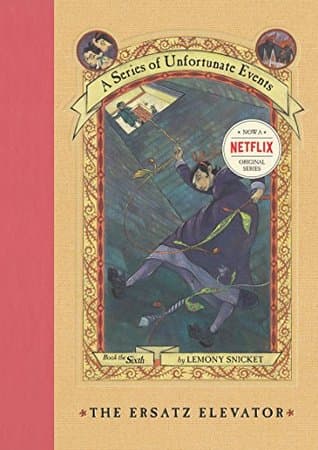
Lemony Snicket (2001)
Genre
Fantasy / Children's / Mystery / Young Adult
Reading Time
150 min
Key Themes
See below
Sign in to track this book
In the sixth book of their sad story, the Baudelaire orphans go down a dark elevator shaft, finding red herrings, secret passages, and parsley soda, all while trying to outsmart a master of disguise and figure out some mysterious initials.
After another problem at Prufrock Preparatory School, Mr. Poe drives the Baudelaire orphans—Violet, Klaus, and Sunny—to their new guardian's home: 667 Dark Avenue. The building has no light, and the elevator seems broken. A doorman explains that residents fear light and only use stairs. The Baudelaires, always clever, start to navigate the dark, wondering about their new guardian and the strange rules of this gloomy place. They hope this new home will finally protect them from Count Olaf and help them learn about their parents' secret group.
The Baudelaires reach the penthouse and meet their new guardians, Jerome and Esmé Squalor. Jerome is a kind, caring man who genuinely wants to help the children. However, Esmé Squalor, the city's sixth most important financial advisor and a fashion expert, cares only about what's 'in' and 'out.' She likes 'in' things, which include darkness, minimalism, and pinstripes. The children quickly realize that while Jerome is good-hearted, Esmé's priorities are shallow and based on fashion trends, making her a poor protector.
While looking around their new home, Violet, Klaus, and Sunny become suspicious of the 'broken' elevator. They notice Esmé uses it often, even though she says it's out of order. Klaus, using his reading knowledge, thinks the elevator shaft might be a trick. Violet, using her inventing skills, finds a way to investigate. They learn the elevator isn't broken but is an 'Ersatz Elevator'—a fake car hiding a secret passage to an unknown place. This discovery immediately makes them suspicious of Esmé and the building, suggesting a larger conspiracy.
Esmé, who loves all things 'in,' announces they must attend an 'in' auction at Veblen Hall. She plans to bid on Lot 49, which she calls 'incredibly in.' The Baudelaires reluctantly go with her, feeling uneasy. At the auction, they are shocked to see Count Olaf disguised as an 'in' auctioneer named Gunther, wearing a ridiculous pinstripe suit and a monocle. They also see his hook-handed henchman and the white-faced women. The orphans try to warn Jerome, but he dismisses their concerns, saying their fears are just imagination, which frustrates them.
While investigating the Ersatz Elevator, the Baudelaires hear muffled calls for help from the bottom of the shaft. To their surprise and relief, they find the Quagmire triplets—Duncan and Isadora—alive and trapped in a cage. The Quagmires explain that Count Olaf kidnapped them after their parents died and their home was destroyed. They reveal Olaf is interested in 'V.F.D.' and 'Quagmire Quagmires'—their notebooks with important information. This reunion is bittersweet; the children are happy to find their friends but now share a dangerous situation.
With the Quagmires trapped, the Baudelaires make a plan. Violet uses her inventing skills, Klaus his knowledge, and Sunny her sharp teeth and climbing abilities. They decide to create a distraction during the auction. Violet plans to make a grappling hook from household items, while Klaus will research how to open the cage. Sunny's role is important for tight spaces. Their goal is to free the Quagmires and get their notebooks, hoping the V.F.D. information will help them understand their parents' past and the fire that destroyed their home, all while avoiding Olaf.
To distract Esmé and 'Gunther' (Count Olaf), the Baudelaires write a cryptic note, supposedly from 'V.F.D.,' asking them to meet at the penthouse for a 'parsley soda' to discuss Lot 49. They leave the note where Esmé will find it. The plan works, and Esmé, eager for any secret, takes Olaf to the penthouse. This diversion gives the Baudelaires time to carry out their rescue mission. They hope to free the Quagmires and escape before Olaf realizes he's been tricked, knowing their lives depend on this deception.
The Baudelaires reach the Quagmires in the elevator shaft. Violet works on a grappling hook, Klaus tries to pick the lock, and Sunny attempts to chew through the bars. Just as they make progress, Esmé and Count Olaf return, having realized the trick. Esmé shows her true loyalty by helping Olaf. She kicks the Baudelaires into the shaft with the Quagmires, but before they can be secured, Olaf's hook-handed henchman appears and snatches the Quagmires out of the shaft. The Baudelaires are left behind, separated from their friends again and facing a difficult future.
Jerome Squalor, finally understanding 'Gunther's' true identity and Esmé's involvement, tries to help the Baudelaires. He is horrified by Esmé's actions and her lack of concern for the children's safety. However, Esmé openly declares her loyalty to Count Olaf, showing her villainous nature and complete lack of empathy. She brags about her role in the plan, especially her idea to sell the Quagmires to Olaf as an 'in' deal. Jerome, heartbroken and overwhelmed, cannot stop them as Olaf and Esmé escape with the Quagmire triplets.
Count Olaf and Esmé Squalor escape Veblen Hall with the Quagmires, leaving the Baudelaires without their friends and without a safe home. Jerome, upset, offers to care for the Baudelaires, but they refuse, knowing it would only endanger him. As Olaf and Esmé drive away, the Baudelaires notice a small detail: a taxi cab with 'V.F.D.' on its license plate. This puzzling clue renews their hope and gives them a new lead in their search for the truth about their parents and the mysterious organization, pointing them toward their next unfortunate adventure.
The Protagonist
Violet consistently uses her inventive genius to try and protect her siblings and uncover truths, demonstrating resilience amidst despair.
The Protagonist
Klaus continues to rely on his vast knowledge to uncover secrets and assist in escape plans, showing intellectual growth and courage.
The Protagonist
Sunny's role expands beyond her biting abilities, showing growing communication and problem-solving skills, proving her indispensable.
The Antagonist
Olaf continues his relentless pursuit of the Baudelaire fortune, showcasing his cunning and cruelty through new disguises and alliances.
The Supporting
Jerome's good intentions are ultimately overshadowed by his timidity and inability to stand up to Esmé and Olaf, leading to his eventual separation from the Baudelaires.
The Antagonist
Esmé fully reveals her villainous nature, becoming a direct and active antagonist by aligning with Count Olaf, showcasing her superficiality and cruelty.
The Supporting
Duncan, along with Isadora, is found alive but trapped, reaffirming his dedication to documenting information and his desire to help the Baudelaires.
The Supporting
Isadora, found trapped with Duncan, uses her poetic observations to aid the Baudelaires, reinforcing her role as a fellow orphan and seeker of truth.
The Supporting
Mr. Poe remains oblivious and ineffective, continuing to place the Baudelaires in dangerous situations due to his bureaucratic incompetence.
The novel criticizes superficiality through Esmé Squalor, whose life is controlled by what is 'in' and 'out.' This obsession makes her ignore real kindness and morals, causing her to betray Jerome and join Count Olaf just to 'be in.' Her focus on looks over substance directly endangers the Baudelaires and Quagmires. This shows how shallow values can lead to great evil. The dark, minimalist apartment and the 'in' auction further highlight how a society focused on trends can overlook real suffering and danger.
“"What's 'in' and what's 'out' is a matter of such importance, it can literally determine a person's fate."”
A repeated idea in the series, this book clearly contrasts kind but useless adults with clever, self-reliant children. Mr. Poe again fails to protect the Baudelaires, while Jerome Squalor's kindness is weakened by his shyness. Violet's inventions, Klaus's research, and Sunny's unique skills lead to finding the Ersatz Elevator and trying to rescue the Quagmires. The children's ability to think and act is constantly against the adults' blindness and inability to believe or help them. This emphasizes the orphans' isolation and strength.
“"The Baudelaire orphans were accustomed to adults ignoring their pleas, but it did not make them any less disheartened."”
Deception is central to the plot, mainly through Count Olaf's disguise as Gunther, the 'in' auctioneer. The 'Ersatz Elevator' itself is a physical example of deception, looking like one thing but hiding another. Esmé Squalor's initial appearance as a quirky guardian changes to her true, villainous alliance with Olaf. The Baudelaires also use deception with the 'parsley soda' note to create a distraction. This theme shows how appearances can fool people and how villains exploit trust, forcing the children to always question what is real and what is a carefully built lie.
“"It is a sad but true fact that sometimes the most dangerous people are the ones who look the most harmless."”
The reunion with Duncan and Isadora Quagmire highlights how important friendship and mutual support are when facing hardship. The Baudelaires' joy at finding their friends alive, and their immediate, desperate efforts to save them, show the strength of their bond. The Quagmires, with their own search for V.F.D., represent a shared struggle and a possible alliance against evil. Their common experiences and knowledge offer comfort and strength, proving that even in the darkest times, unity can provide a hint of hope and purpose.
“"Even in the darkest times, knowing you are not alone can be a powerful comfort."”
A fake elevator concealing a secret passage.
The Ersatz Elevator is a literal and metaphorical symbol of deception. It appears to be a broken elevator but is actually a cleverly disguised shaft leading to a hidden area. This device creates suspense and provides the means for the Quagmire triplets to be secretly imprisoned. It also serves as a critical plot point, allowing the Baudelaires to discover their friends and providing a setting for a tense rescue attempt. Its very existence highlights the secretive and deceptive nature of the villains and the building itself, forcing the children to look beyond surface appearances.
A ridiculous but effective costume used by the antagonist.
Count Olaf's disguise as 'Gunther,' the 'in' auctioneer, is a classic plot device in the series. It allows Olaf to infiltrate the Baudelaires' lives under the noses of incompetent adults like Mr. Poe and Jerome. The disguise is intentionally absurd, with pinstripes and a monocle, yet it is 'fashionable' enough to fool Esmé. This device emphasizes the theme of adult incompetence and the dangers of superficiality, as only the children see through the flimsy facade. It also creates dramatic irony, as the reader is aware of Olaf's true identity while the characters are not.
Notebooks containing vital information about V.F.D.
The Quagmire Quagmires are the commonplace books belonging to Duncan and Isadora Quagmire. These notebooks serve as a crucial plot device, containing cryptic information and notes about V.F.D. that the Quagmire parents were investigating. They are a MacGuffin, driving both Olaf's pursuit of the Quagmires and the Baudelaires' desire to rescue their friends and uncover the truth. The notebooks represent a link to the Baudelaires' past and a potential key to understanding the larger mystery of the secret organization, providing a clear goal and motivation for the children.
A social trend dictating Esmé Squalor's actions.
Esmé Squalor's obsession with what is 'in' and 'out' functions as a significant plot device. It explains her peculiar behaviors, her choice of residence, and ultimately her alliance with Count Olaf. This device satirizes the superficiality of high society and acts as a motivating factor for Esmé's villainy; she betrays Jerome and the Baudelaires simply because it is 'in' to do so. It also provides a cover for Olaf's 'Gunther' disguise and the 'in' auction, allowing him to operate openly. This obsession creates a bizarre, yet dangerous, world for the Baudelaires to navigate.
“The world is a vast and mysterious place, and sometimes the most important things are hidden in plain sight.”
— A general observation on the nature of secrets and the world the children inhabit.
“It is a sad but true fact that some people are so intent on their own plans that they will not let a little thing like another person's misery get in their way.”
— Describing the selfishness of Esmé Squalor and her associates.
“A good education is a safeguard against the worst aspects of the world.”
— Highlighting the value of the Baudelaire orphans' intelligence and learned skills.
“Just because something is important to you, does not mean it is important to everyone else.”
— Reflecting on the indifference of adults to the children's plight.
“There are some things that cannot be bought with money, and one of them is genuine kindness.”
— Contrasting the wealth of the Squalors with their lack of empathy.
“It is often the most ordinary things that contain the most extraordinary secrets.”
— Referring to the hidden elevator shaft and other seemingly mundane objects.
“The best way to keep a secret is to pretend there isn't one.”
— A general statement on the art of deception.
“Sometimes, the only way to get out of a difficult situation is to pretend you're not in one.”
— The Baudelaires often have to feign ignorance or complicity to survive.
“Fashion is a cruel mistress, and often leads people to make very poor decisions.”
— Referring to Esmé Squalor's obsession with being 'in' and its consequences.
“Even in the darkest of times, hope can be found in the most unexpected places.”
— The children's constant search for allies and clues amidst their misfortunes.
“When you are in a desperate situation, you sometimes have to do desperate things.”
— The Baudelaires' increasingly risky plans to escape Count Olaf.
“It is a curious thing, but the more you try to hide something, the more obvious it becomes.”
— The absurdity of the 'in' crowd's attempts to conceal the existence of the 66th floor.
“The greatest dangers are often those we cannot see, or choose not to see.”
— The hidden dangers within the Squalors' penthouse and the wider conspiracy.
“A disguise is only as good as the person wearing it, and the people it is meant to deceive.”
— The effectiveness (or lack thereof) of Count Olaf's disguises.
Ready to see how well you understood this book? Take our interactive quiz with 10 questions.
Biography coming soon.







