“I'm going to fill my hungry empty tummy with something yummy yummy yummy!”
— The Enormous Crocodile boasting about his plans to eat children.

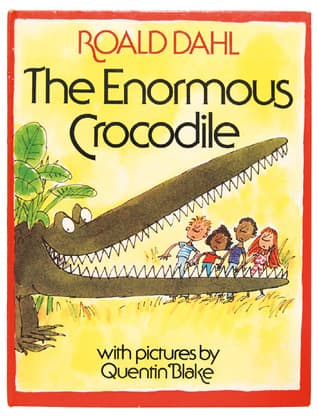
Roald Dahl (1978)
Genre
Fantasy / Children's / Young Adult
Reading Time
10 min
Key Themes
See below
Sign in to track this book
A greedy crocodile, who enjoys eating children, gets a taste of his own medicine when the jungle animals unite to outsmart his 'secret plans and clever tricks'.
The story starts with the Enormous Crocodile telling the Notsobig One, another crocodile, about his hunger. He says he will leave the river to hunt for a child, claiming they are 'much juicier' than fish. The Notsobig One warns him not to do this, reminding him that crocodiles should eat fish. However, the Enormous Crocodile, full of 'secret plans and clever tricks,' ignores the warning. He sets off, convinced he is the 'cleverest crocodile in the whole wide world,' determined to find a child despite his fellow reptile's disapproval.
As the Enormous Crocodile leaves the river, he meets Humpy-Rumpy the Hippopotamus. He announces his plan to eat a child, expecting praise. Humpy-Rumpy is disgusted, calling the crocodile 'a greedy brute' and hoping he will fail. He warns the Enormous Crocodile that he will try to stop him from harming any children. The Enormous Crocodile laughs, confident in his ability to outsmart any animal or human, and continues towards the children's playground, dismissing Humpy-Rumpy's threat.
Further along, the Enormous Crocodile meets Trunky the Elephant, who is eating leaves from a tree. The crocodile again talks about his 'secret plans and clever tricks' to catch a child for lunch. Trunky is shocked by the crocodile's cruelty. He says he will do everything he can to stop the crocodile from eating children, calling such an act 'disgusting' and 'horrible.' The Enormous Crocodile, not bothered, mocks Trunky and continues, believing his cleverness will ensure success.
The Enormous Crocodile next meets Gippy the Giraffe, who is eating leaves from a tall tree. The crocodile, still proud, shares his plan to eat a child. Gippy, rather than being shocked, expresses doubt. He tells the crocodile he is 'too ugly and too smelly' to catch a child. He also warns that humans are clever and will likely outwit him. The Enormous Crocodile, however, ignores Gippy's advice, believing his 'secret plans and clever tricks' are foolproof. He continues his journey towards the town, certain of his meal.
Finally, the Enormous Crocodile meets the Roly-Poly Bird, who is singing. The crocodile, for the fifth time, announces his intention to eat a child. The Roly-Poly Bird, horrified, asks him why he wants to eat children when there are many other things to eat. She warns him that it is a 'wicked thing to do.' The Enormous Crocodile is unmoved by her plea. He sees her as a possible snack if he cannot find a child. He continues towards the town, ignoring the bird's moral objections.
The Enormous Crocodile reaches the edge of town and sees children playing. He plans his first 'secret plan and clever trick': he finds a small coconut tree, pulls it up, and sticks it into his mouth. He stands perfectly still, pretending to be a coconut tree, hoping a child will come underneath to pick a coconut. He waits, jaws ready to snap shut. A little boy named Toto approaches, suspicious of the 'tree's' wobbly appearance. Toto is about to investigate when Humpy-Rumpy the Hippopotamus charges in and knocks the crocodile away, saving Toto.
Not giving up, the Enormous Crocodile tries another 'clever trick.' He finds a park bench and, using his strength, bends himself into the shape of a bench, hoping children will sit on him. Two little girls, Mary and Jane, approach, thinking it is a new bench. They almost sit down, but Trunky the Elephant rushes forward. He recognizes the crocodile and, using his trunk, lifts the crocodile high into the air, spinning him before throwing him far away. This foils the crocodile's plan and saves the children.
Still determined, the Enormous Crocodile tries a third trick. He finds a playground with a see-saw and stretches his long body to look exactly like one. He lies perfectly still, waiting for children to play on him. Two boys, Peter and John, run towards him, excited to play. They begin to jump onto the 'see-saw,' but Gippy the Giraffe arrives. Gippy, with his long neck, scoops up the boys and pulls them to safety, warning them that the 'see-saw' is actually the hungry crocodile. This ruins the crocodile's third attempt.
The Enormous Crocodile, getting frustrated but not giving up, tries his most elaborate trick. He goes to a fairground where a merry-go-round is. He stretches his body, wraps it around the central pole, and holds onto the wooden horses with his teeth, pretending to be a merry-go-round. Several children, including a girl named Lucy, excitedly climb aboard. Just as he is about to spin and eat them, the Roly-Poly Bird flies in and pecks him on the nose. The sudden pain makes him flinch, and the children realize the danger, quickly jumping off.
After the Roly-Poly Bird's intervention, Trunky the Elephant arrives. He is angry with the Enormous Crocodile for his constant attempts to eat children. Trunky grabs the crocodile by his tail with his powerful trunk. He swings the Enormous Crocodile around with great force, creating a dizzying blur. With a mighty heave, Trunky flings the spinning crocodile high into the sky. The Enormous Crocodile flies through the air, past the sun and the moon, and lands with a splash on a distant star, where he is instantly 'sizzled up like a sausage.' The children cheer, and the jungle animals celebrate his defeat.
The Antagonist
He begins as a confident, malicious predator and ends up as a 'sizzled' mess on a distant star, never learning his lesson but being permanently removed.
The Supporting
He serves as a consistent protector, ultimately delivering the final, decisive blow against the antagonist.
The Supporting
He consistently opposes the crocodile, playing a crucial role in the early foils of the crocodile's schemes.
The Supporting
He provides early warnings and later actively rescues children from the crocodile's third trick.
The Supporting
She attempts moral persuasion, then shifts to direct intervention, playing a key role in the crocodile's final foiled trick.
The Supporting
He provides the initial warning to the Enormous Crocodile, setting the moral tone of the animal community.
The Mentioned
He is introduced as a potential victim, emphasizing the crocodile's threat.
The Mentioned
They are introduced as potential victims, demonstrating the crocodile's deceptive nature.
The Mentioned
They are introduced as potential victims, showcasing another of the crocodile's traps.
The Mentioned
She is introduced as a potential victim in the crocodile's final, most ambitious trap.
This is the main theme, shown through the Enormous Crocodile's desire to eat children and the other jungle animals' efforts to protect them. The crocodile is pure evil and greed, driven by his hunger for human children. In contrast, Humpy-Rumpy, Trunky, Gippy, and the Roly-Poly Bird show goodness, selflessness, and protection. Their unity against the threat shows good winning over evil, ending with the crocodile's deserved defeat, which means wickedness does not pay off.
“You are a greedy brute! I hope you get squashed and squished and properly mashed!”
The story shows that bad actions have serious results. The Enormous Crocodile repeatedly tries to harm innocent children, ignoring all warnings. Each of his 'clever tricks' fails because the other animals are watchful. The story leads to an act of justice, where Trunky the Elephant not only stops the crocodile but punishes him permanently by throwing him into space. This is a clear lesson: those who do evil will face consequences, and safety and order are restored.
“And with a mighty swing, he flung the Enormous Crocodile high, high up into the sky.”
Community and cooperation are important to the plot. While the Enormous Crocodile acts alone in his wickedness, the other jungle animals, though different species, work together to protect the children. Humpy-Rumpy, Trunky, Gippy, and the Roly-Poly Bird each help stop the crocodile's plans. This shows that working together is more powerful than individual malice. Their combined efforts keep the children safe and lead to the crocodile's downfall, showing strength in unity.
“We must all stop him!”
The Enormous Crocodile uses deception, using 'secret plans and clever tricks' to disguise himself as harmless objects like a coconut tree, a park bench, a see-saw, and a merry-go-round. This theme looks at the difference between how things appear and how dangerous they really are. Children are at first fooled by these disguises, showing their innocence and vulnerability. However, the other animals are watchful and see through the crocodile's tricks. They always show his true, evil nature, reinforcing that evil can hide but cannot fool those who are truly careful.
“He looked exactly like a lovely wooden park bench.”
Animals with human-like qualities and speech.
Roald Dahl extensively uses anthropomorphism, giving the jungle animals human characteristics such as speech, moral reasoning, and complex emotions. The Enormous Crocodile boasts about his 'clever tricks,' while Humpy-Rumpy expresses disgust, Trunky vows to protect, Gippy offers warnings, and the Roly-Poly Bird pleads and intervenes. This device allows the story to explore moral themes through animal characters, making them relatable and engaging for young readers. It also enables the animals to form a coherent community that actively works to thwart the antagonist, driving the plot forward through their collective actions and dialogue.
Repeated phrases and plot structures for emphasis.
Dahl employs repetition in several ways. The Enormous Crocodile's phrase 'secret plans and clever tricks' is repeated each time he devises a new disguise, emphasizing his cunning and self-assurance. Similarly, his declaration of wanting to eat a 'plump, juicy child' is repeated, reinforcing his singular, wicked motivation. The structure of the animals warning him, then him attempting a trick, and another animal foiling it, is also repeated four times. This repetition creates a rhythmic, predictable pattern that is engaging for young readers, builds suspense, and highlights the crocodile's persistent evil and the animals' consistent heroism.
Early warnings from animals hint at the crocodile's eventual failure.
From the very beginning, each animal the Enormous Crocodile encounters warns him against his plan. The Notsobig One, Humpy-Rumpy, Trunky, Gippy, and the Roly-Poly Bird all express disapproval, doubt, or direct threats. These warnings serve as foreshadowing, hinting that the crocodile's plans will not succeed and that he will face opposition. They also establish the moral framework of the story, making it clear that the crocodile's actions are wrong and that he is an outsider in the animal community, setting the stage for his eventual downfall at the hands of those he ignored.
Exaggeration for comedic and dramatic effect.
The story uses hyperbole, particularly in the description of the Enormous Crocodile's actions and ultimate fate. His 'secret plans and clever tricks' are presented as incredibly cunning, even though they are repeatedly foiled. The most significant use is his final defeat: being swung 'faster and faster' by Trunky and flung 'high, high up into the sky' past the moon and stars, to land on the 'hottest star of all' where he is 'sizzled up like a sausage.' This extreme exaggeration adds to the comedic and fantastical elements of the story, making the ending both satisfyingly dramatic and comically absurd for children.
“I'm going to fill my hungry empty tummy with something yummy yummy yummy!”
— The Enormous Crocodile boasting about his plans to eat children.
“I'm the Enormous Crocodile, and I'm going to eat some nice juicy children!”
— The crocodile introducing his sinister intentions to other animals.
“I have secret plans and clever tricks for eating lots of little boys and girls!”
— The crocodile explaining his deceptive strategies to the other animals.
“I'm going to the children's playground, and I'm going to eat them all up!”
— The crocodile revealing one of his specific plans to the Notsobig One.
“I'm not just a big crocodile, I'm a clever and cunning crocodile!”
— The Enormous Crocodile bragging about his intelligence and schemes.
“You are a nasty greedy grumptious brute!”
— The Muggle-Wump monkey scolding the Enormous Crocodile for his evil plans.
“We must stop him before he eats any children!”
— The other animals discussing how to thwart the crocodile's plans.
“I'm going to disguise myself as a see-saw in the playground!”
— The crocodile describing one of his clever tricks to catch children.
“Children are juicy and yummy!”
— The Enormous Crocodile expressing his desire to eat children.
“You horrid hoggish croc! You'll never get away with this!”
— An animal character condemning the crocodile's evil intentions.
“I have thought of a most marvellous plan!”
— The Enormous Crocodile excitedly sharing his latest scheme.
“We'll teach him a lesson he won't forget!”
— The animal characters planning to stop the crocodile.
“I'm the cleverest crocodile in the whole river!”
— The Enormous Crocodile boasting about his intelligence.
“Serves him right, the greedy thing!”
— An animal commenting after the crocodile is defeated.
Ready to see how well you understood this book? Take our interactive quiz with 10 questions.
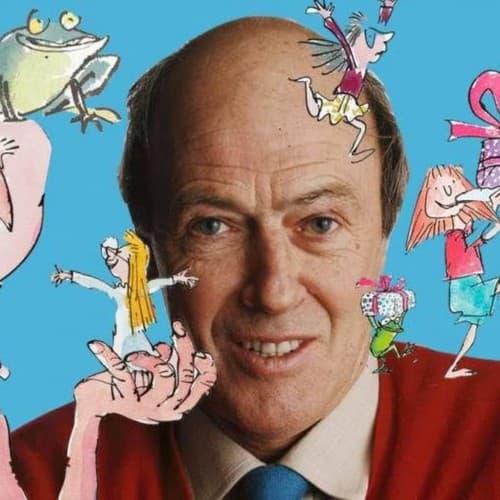
Roald Dahl was a British popular author of children's literature and short stories, a poet, and wartime fighter ace. His books have sold more than 300 million copies worldwide. Dahl has been called "one of the greatest storytellers for children of the 20th century".







