“The past is never dead. It's not even past.”
— A recurring theme about the lingering effects of past events on the present.

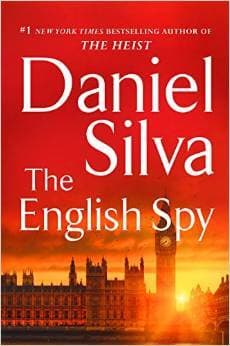
Daniel Silva (2015)
Genre
Thriller / Mystery
Reading Time
9-10 hours
Key Themes
See below
Sign in to track this book
Gabriel Allon, a renowned art restorer and assassin, is drawn into a global manhunt when an assassin targets a British diplomat, forcing Allon to confront his past while navigating international intrigue.
The novel opens with a yacht bombing in Monaco that kills Princess Yasmin al-Hamad, a former British royal, and her bodyguard. MI6 quickly becomes involved, recognizing the victim's importance and the act of terrorism. Graham Seymour, the MI6 chief, asks Gabriel Allon, an Israeli intelligence officer and art restorer, to lead the hunt. Gabriel initially declines, wanting a quieter life with his pregnant wife, Chiara. However, the attack's cruelty and his loyalty to Seymour eventually make him accept the mission.
Gabriel Allon, now involved in the investigation, identifies the main suspect: Eamon Quinn, a former IRA bombmaker turned international assassin. Quinn is hard to find, known for his careful planning, ruthlessness, and ability to disappear. Gabriel uses his network and resources from MI6 and the Israeli Office to track Quinn. Initial leads are few, as Quinn operates outside normal intelligence networks. Gabriel understands that catching Quinn will require both traditional spycraft and a deep look into the world of contract killers, a world Quinn has mastered for decades.
Knowing Quinn's skills and how hard he is to track, Gabriel Allon makes an unusual move: he recruits Christopher Keller, a former SAS operator turned assassin known as 'The English Spy.' Keller wants to hunt Quinn because Quinn killed Keller's lover, Sarah, years ago. This shared enemy creates a fragile alliance between the two, despite their different loyalties and methods. Gabriel sees Keller as someone who understands the assassin's mind in a way no intelligence agency could. Their first interactions are tense, marked by suspicion, but they unite for revenge and justice.
Christopher Keller, using Gabriel's intelligence and his own instincts, tracks Eamon Quinn to Corsica. The island, with its rugged land and independent spirit, suits Quinn's secret operations. Keller's pursuit is constant, leading to tense encounters and close calls. He moves through the island's criminal underworld, gathering information and leaving violence behind. In Corsica, Keller shows his skills as a hunter and fighter, closing in on his target. The Corsican part of the story is dangerous, as Quinn knows he is being hunted and sets traps, testing Keller and forcing him into increasingly risky situations.
Keller finally corners Quinn in a remote Corsican villa, leading to a brutal confrontation. Keller, with the element of surprise, manages to disable Quinn's security. However, Quinn, always clever, turns the situation around. He uses a pre-planned escape route, using his knowledge of explosives and traps to create a diversion. Keller is injured in the chaos, and Quinn, though wounded, gets away. The close call is a blow to Keller, making him want revenge even more, and strengthening Quinn's reputation as an almost mythical figure. Gabriel, watching, recognizes Quinn's resilience and the growing danger.
After Quinn's escape, Gabriel Allon and his team find intelligence that points to a wider conspiracy. They discover that Quinn is not just a freelance assassin but works for powerful, hidden clients. The investigation leads them to London, where they uncover links between Quinn and a network of corrupt Russian oligarchs with Kremlin ties. These oligarchs use Quinn's services for political assassinations and to destabilize Western interests. This changes the mission from a simple hunt for a killer to a complex counter-espionage operation with major geopolitical implications. Gabriel realizes he is not just chasing a bombmaker but unraveling a dangerous international plot.
Gabriel Allon, anticipating Quinn's next move and using intelligence about his finances, plans a trap in Venice. He believes Quinn will try to collect a payment or meet his handlers there. Working with Christopher Keller, they meticulously plan a stakeout, using Venice's canals and hidden alleys. Tension builds as they await Quinn, knowing one wrong move could ruin everything. Gabriel uses his team's surveillance, while Keller prepares for a direct fight, his personal vendetta driving him. The beautiful, ancient city becomes a silent arena for their deadly game.
The trap is set in Venice. Quinn, as Gabriel predicted, appears for a secret meeting. Christopher Keller, in position, begins the final confrontation. A chase starts through Venice's narrow streets and over its bridges, ending in a violent struggle. Keller, driven by years of grief and a desire for justice, finally gets his hands on Quinn. The fight is personal and intense. Gabriel and his team provide backup, ensuring Quinn has no escape, but Keller, who earned the right to face his tormentor alone, delivers the final blow.
After Quinn's capture, Gabriel Allon interrogates him. Gabriel, using his skills, extracts information from the bombmaker. Quinn, initially defiant, slowly breaks under Gabriel's pressure, revealing his Russian patrons and their operations. He confesses to being hired by Ivan Kharkov, a powerful Russian oligarch involved in state-sponsored terrorism and political manipulation. The interrogation confirms Gabriel's suspicions about the larger conspiracy, providing intelligence that will help the Office and MI6 dismantle the network and bring the orchestrators to justice, moving beyond just the assassin.
With Eamon Quinn captured and his Russian handlers exposed, justice for Princess Yasmin is within reach. Gabriel Allon ensures the intelligence from Quinn is used to dismantle the Russian network. Christopher Keller, having achieved his revenge, disappears, his debt to Gabriel paid. Gabriel, having again succeeded, considers his future. The mission has confirmed his abilities and his role in espionage, but it has also increased his desire for a peaceful life with Chiara and their unborn child. He returns to his art, but the demands of the 'Office' remain a strong pull, hinting at future conflicts.
The Protagonist
Gabriel reluctantly accepts the mission to hunt Quinn, grappling with his desire for peace versus his duty, ultimately reaffirming his identity as a protector and agent of justice.
The Antagonist
Quinn remains largely static as a ruthless killer, but his capture marks the end of his reign of terror and exposes the network he serves.
The Supporting
Keller finds a measure of closure and justice by helping Gabriel capture Quinn, fulfilling his quest for revenge.
The Supporting
Seymour faces intense pressure to solve the case, demonstrating his leadership and trust in Gabriel.
The Supporting
Chiara provides Gabriel with a personal motivation to seek peace, yet she understands and supports his mission.
The Mentioned
Her death serves as the inciting incident, driving the plot and the characters' motivations.
The Antagonist
Kharkov's identity is revealed as the mastermind, exposing the broader conspiracy Gabriel must dismantle.
The novel examines the line between seeking justice and giving in to personal vengeance. Gabriel Allon, driven by morals, recruits Christopher Keller, whose only goal is revenge for his murdered lover. The story questions if justice can be achieved through a man seeking vengeance, and if the ends justify the means. Keller's pursuit of Quinn (in Corsica and Venice) shows this theme, contrasting with Gabriel's more strategic approach, even though Gabriel also wants retribution against evil.
““Vengeance is a poison. But sometimes, Gabriel, it’s the only antidote.””
Gabriel Allon constantly deals with the personal cost of his duty. He wants a quiet life with his pregnant wife, Chiara, but is repeatedly pulled back into the dangerous world of espionage. This theme appears in his initial reluctance to accept Seymour's mission and his struggle between personal desires and his commitment to protecting the innocent. The novel shows the sacrifices people like Gabriel make, bearing the burden of dangerous work while wanting a normal life, often at the expense of their happiness.
““He had tried to walk away from the game, to leave the shadows behind, but the shadows always found him.””
The book explores different forms of evil, from Eamon Quinn's cold ruthlessness to the shadowy actions of Russian oligarchs like Ivan Kharkov. It examines how evil adapts and works in the modern world, using technology and global networks for destruction. Quinn's bombings and Kharkov's assassinations show a calculated, almost bureaucratic evil, without personal emotion but with devastating impact. The story suggests that evil is not always monstrous but often a well-organized, intelligent force.
““Quinn was not a monster. He was worse. He was a professional.””
A key theme is the formation of an unlikely alliance between Gabriel Allon, a state intelligence officer, and Christopher Keller, a freelance assassin. Despite their different methods and loyalties, they are united by a common enemy and goal. This alliance has tension and suspicion, yet it proves effective in hunting Eamon Quinn. The novel shows how, when facing serious threats, traditional boundaries can be set aside, forcing people from different moral and professional worlds to cooperate for a greater good.
““Two assassins, on opposite sides of the moral divide, bound by a common enemy.””
Christopher Keller's unpredictable nature and personal agenda.
Christopher Keller, while a powerful asset, serves as an unreliable ally. His primary motivation is personal vengeance against Eamon Quinn, which occasionally puts him at odds with Gabriel Allon's more strategic objectives. Gabriel must constantly manage Keller's impulsiveness and ensure his personal quest doesn't derail the broader mission. This device adds tension and unpredictability to the hunt, as Gabriel can never be entirely sure if Keller will follow orders or pursue his own, potentially riskier, path. It highlights the challenges of collaborating with individuals who operate outside conventional chains of command.
Eamon Quinn's legendary ability to evade capture.
Eamon Quinn functions as a 'ghost antagonist' throughout much of the novel. His reputation precedes him, and his ability to disappear without a trace makes him an almost mythical figure. This device elevates the stakes, making his capture seem nearly impossible and emphasizing the extraordinary skills required to track him. It creates a sense of dread and urgency, as the protagonists are pursuing a target who has consistently outsmarted numerous intelligence agencies for decades, making every lead and near-miss feel significant and precarious.
Christopher Keller's personal vendetta against Eamon Quinn.
The personal stake is a crucial plot device, primarily manifested through Christopher Keller's deep-seated desire for revenge against Eamon Quinn for the murder of his lover. This personal connection provides a powerful, emotional engine for the plot, driving Keller's relentless pursuit and giving the hunt for Quinn a visceral urgency that transcends mere professional duty. It allows for more intense, mano-a-mano confrontations and provides a strong, relatable motivation for Keller's extreme actions, making him more than just a hired gun.
The inciting incident that drives the entire plot.
The assassination of Princess Yasmin al-Hamad serves as the primary MacGuffin. While her death is tragic and significant, the details of her life or deeper motivations are less important than the fact of her murder. Her high-profile status and the brutality of her killing are the catalysts that force MI6 to call in Gabriel Allon and set the entire plot in motion. The hunt for her killer and the subsequent unraveling of the conspiracy are the true focus, making her assassination the essential, yet largely unseen, driving force.
“The past is never dead. It's not even past.”
— A recurring theme about the lingering effects of past events on the present.
“Every man has his price, Gabriel. It’s just a matter of finding out what it is.”
— A cynical observation about human nature and motivations, often in the context of espionage.
“We are all prisoners of our past. Some of us just have longer sentences.”
— Reflecting on the burdens and consequences of past actions and identities.
“The truth is a weapon, Uzi. It just depends on whose hand is holding it.”
— Discussing the manipulation and power of information in the world of intelligence.
“Sometimes, the greatest acts of patriotism are also the greatest acts of betrayal.”
— Exploring the moral ambiguities faced by spies and agents.
“Revenge is a dish best served cold, but sometimes it needs a little reheating.”
— A contemplation on the nature of vengeance and its enduring power.
“The greatest trick the devil ever pulled was convincing the world he didn't exist. The second greatest was convincing us that we were safe.”
— A chilling observation about hidden dangers and false senses of security.
“In our line of work, trust is a luxury we can rarely afford.”
— Highlighting the inherent paranoia and isolation of the spy's life.
“He lived in the shadows, but he was always searching for the light.”
— Describing Gabriel Allon's internal conflict and desire for redemption.
“The world is a dangerous place, not because of those who do evil, but because of those who look on and do nothing.”
— A call to action and a condemnation of apathy in the face of injustice.
“We are all just pieces on a chessboard, Gabriel. Some of us just have a little more room to move.”
— A fatalistic view of the limited agency individuals have in larger geopolitical games.
“The dead tell no tales, but they leave behind a trail of grief that speaks volumes.”
— Reflecting on the enduring impact of loss and the silent suffering it causes.
“Silence can be more deadly than any weapon.”
— Emphasizing the power of unspoken threats and hidden intentions.
“There are no clean hands in this business, only varying degrees of dirt.”
— A stark realization about the moral compromises inherent in espionage.
Ready to see how well you understood this book? Take our interactive quiz with 10 questions.

Daniel Silva is a globally acclaimed author celebrated for his thrilling espionage novels. He is best known for his Gabriel Allon series, which includes international bestsellers like "Portrait of a Spy," "The English Assassin," and "The Unlikely Spy." Silva's meticulous research and complex plots have cemented his reputation as a master of the spy thriller genre.







