“The desert, in its nakedness, was not a place of simplicity but a place of complexity, where every grain of sand held a story.”
— Reflecting on the desert's profound nature and its hidden histories.

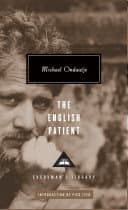
Michael Ondaatje (2011)
Genre
Literary Fiction / Historical Fiction / Romance
Reading Time
640 min
Key Themes
See below
Sign in to track this book
In an abandoned Italian villa at the close of WWII, four damaged people gather around a burned English patient, whose fragmented memories of love, betrayal, and desert exploration reveal their own scarred pasts.
In a desolate, war-torn Italian villa at the end of World War II, Hana, a young Canadian nurse, chooses to stay with her last patient rather than return to her unit. This patient, known only as 'the English patient' due to his accent, is a man whose body is almost entirely consumed by burns from a plane crash in the desert. He suffers from amnesia, his past a blank slate, and he is slowly dying. Hana, weary and traumatized by the war's constant death, finds a strange comfort in this final act of care, reading to him from a tattered copy of Herodotus's 'Histories' and tending to his wounds. She creates a quiet, isolated world within the ruins.
David Caravaggio, a Canadian intelligence operative and former professional thief, arrives at the villa. He knew Hana's father and has been searching for her. German interrogators mutilated his hands, leaving him disfigured and haunted. Caravaggio suspects the English patient is not who he seems and believes he might be the man responsible for his own capture and torture. He wants answers and perhaps revenge, observing the patient intensely, trying to piece together the fragments of his memory and identity, which he believes are hidden beneath the layers of burns and amnesia. Caravaggio's presence brings suspicion and a quest for truth into the villa's quiet.
Kirpal Singh, known as Kip, an Indian Sikh sapper in the British army, is assigned to clear the surrounding Italian countryside of unexploded bombs and mines. He is careful and disciplined, navigating the treacherous landscape with calm expertise honed by years of dangerous work. Kip eventually takes up residence in the villa's garden, establishing a routine of defusing ordnance and returning to the relative safety of the villa. His presence brings a different kind of order and danger to the group, and he forms an unexpected bond with Hana, a fragile connection against the backdrop of destruction and the patient's unfolding past. His work shows the lingering dangers of the war.
As Hana administers increasing doses of morphine for his pain, the English patient's memories begin to resurface, disjointed and dreamlike at first. He recounts his life before the war as a Hungarian cartographer and explorer, Count László Almásy, who was part of a Royal Geographical Society expedition mapping the Sahara Desert in the 1930s. His narratives, often triggered by discussions with Caravaggio or passages from Herodotus, slowly reveal details of his passionate, forbidden affair with Katharine Clifton, the wife of a fellow expedition member, Geoffrey Clifton. These recollections are fragmented, filtered through pain and the haze of drugs, yet they offer glimpses into a world of vast, empty landscapes and intense human emotion.
Almásy's memories center on his affair with Katharine Clifton. Their relationship begins with intellectual sparring and a shared love for the desert, growing into a consuming passion. He recalls their secret meetings in caves, their shared reading of Herodotus, and the deep connection they formed amidst the isolating beauty of the Sahara. This affair is both exhilarating and destructive, a force that gradually overshadows all other aspects of his life. The patient's recollections vividly portray the emotional intensity and the moral ambiguities of their love, which ultimately leads to a tragic climax in the desert.
Katharine's husband, Geoffrey Clifton, discovers the affair. In an act of revenge and despair, Geoffrey tries to kill both Katharine and Almásy by crashing his plane into their vehicle in the desert. Geoffrey dies instantly, but Katharine is severely injured, left with a broken back and internal bleeding. Almásy, though also wounded, survives the crash. This event marks the beginning of Almásy's tragic descent, as he is left with the agonizing task of saving Katharine in the vast, unforgiving desert, knowing he is partly responsible for her plight.
Almásy carries the gravely injured Katharine to the Cave of Swimmers, hoping to find shelter and keep her alive while he seeks help. He leaves her there with limited supplies and promises to return. His journey across the desert to a British outpost is arduous and desperate. At the outpost, he is met with suspicion and indifference by British officers who, due to his Hungarian nationality and German associates, refuse him a plane to rescue Katharine. They even detain him, calling him a spy. This perceived betrayal by the British fuels his bitter resentment and sense of abandonment, sealing Katharine's fate.
After being released by the British, and consumed by grief and fury over Katharine's death, Almásy makes a decision. He offers his knowledge of the desert to the Germans, guiding their forces through treacherous terrain in exchange for the use of their planes and resources to return to the Cave of Swimmers and retrieve Katharine's body. This act of collaboration with the enemy during wartime further solidifies his identity as a 'man without a country,' a figure who transcends national loyalties in pursuit of personal devotion. This is the act that Caravaggio suspects and eventually confirms, linking Almásy to the intelligence networks that led to his own capture.
Amidst the patient's unfolding past and the constant threat of unexploded bombs, Kip and Hana find comfort in each other. Their relationship develops slowly, marked by quiet intimacy and shared moments of vulnerability. Kip teaches Hana about bombs and the stars, while Hana offers him a sense of home and comfort away from the brutality of his work. Their love is a fragile bloom in a desolate landscape, a temporary escape from the psychological scars of war. They share a physical and emotional connection that offers a glimmer of hope and normalcy in their otherwise chaotic lives, a stark contrast to the patient's tragic romance.
The news of the atomic bomb being dropped on Hiroshima deeply affects Kip. For him, this act of mass destruction, done by Western powers, shatters his faith in the shared humanity he had found. He feels a deep sense of betrayal and racial alienation, realizing that despite his service and sacrifice, he remains an outsider. Overwhelmed by this revelation and the racism he perceives, Kip abruptly leaves the villa, abandoning Hana and their nascent relationship. His departure leaves Hana heartbroken and shows the lasting scars of colonialism and the war's global implications, leaving the villa's inhabitants once again diminished.
With his memories fully returned and his identity as László Almásy confirmed by Caravaggio, the English patient reaches acceptance. He is no longer an amnesiac, but a man burdened by his past and the profound loss of Katharine. Recognizing his imminent death and wanting to end his suffering, he asks Hana to give him a fatal dose of morphine. Hana, though deeply conflicted, understands his wish for peace and, out of compassion, fulfills his request. She administers the overdose, ending the life of the man who had been the enigmatic center of their shared existence in the villa.
After Almásy's death and Kip's departure, Hana is left alone with Caravaggio in the abandoned villa. She is deeply affected by the experiences, the deaths, and the loves she has witnessed. The war has stripped her of her innocence and left her with a deep understanding of loss and human connection. She contemplates her own future, the possibility of returning to Canada, and the lingering echoes of the relationships formed in the villa. Her journey from a weary nurse to a woman deeply marked by love and loss ends with quiet resilience, carrying the weight of the stories she has been a part of.
The Protagonist
From a war-weary, emotionally numb nurse, Hana slowly re-engages with life and love, ultimately finding a quiet resilience despite further loss.
The Central Figure/Flashback Protagonist
From a man without memory or identity, he slowly reconstructs his past, accepting his true self and the consequences of his choices before finding peace in death.
The Supporting Character
Caravaggio seeks to understand and confront the past, finding a measure of resolution by uncovering Almásy's story.
The Supporting Character
Kip experiences love and belonging, only to have his faith in humanity shattered by the atomic bomb, leading to his profound disillusionment and departure.
The Supporting Character (Flashback)
Her arc is entirely within Almásy's memories, depicting her journey from a restless wife to a woman consumed by a dangerous passion, leading to her tragic end.
The Mentioned Character (Flashback)
His arc is brief, culminating in a vengeful act that tragically ends his life and sets the stage for Katharine's death.
The novel explores how individuals define themselves, especially during war and displacement. Almásy rejects national identity, calling himself a 'man without a country,' his loyalty solely to Katharine and the desert. Hana struggles with her Canadian identity and her place in a war-torn world, finding a temporary belonging in the villa. Kip, as an Indian Sikh serving the British, grapples with his dual identity and feels betrayed by the West after Hiroshima, highlighting the racial and colonial aspects of belonging. Caravaggio, maimed and disillusioned, also seeks to redefine himself outside his past roles. The characters constantly question where they belong and who they truly are when stripped of conventional markers.
“I am a man who was thought to be a spy. I am a man who was thought to be a traitor. I am a man who was thought to be a lover.”
Love, in its most intense and destructive forms, is a central theme. Almásy's all-consuming, forbidden love for Katharine transcends conventional morality, leading to Geoffrey's death and Katharine's suffering. This love, though passionate, is also a form of betrayal against Geoffrey and, arguably, against societal norms. Almásy feels betrayed by the British when they deny him a plane to save Katharine, which in turn leads to his betrayal of the Allies by guiding the Germans. Kip experiences a deep sense of betrayal when the atomic bomb is dropped, shattering his trust in the West and in humanity. Even Hana's love for Kip is ultimately betrayed by the larger forces of war and racial tension, leaving her heartbroken. The novel suggests that intense love can lead to both deep connection and devastating betrayal.
“How can you be so in love with someone and not be able to tell them apart from the rest of the world?”
The physical and psychological toll of World War II is clear throughout the narrative. The bombed-out villa, the unexploded ordnance Kip defuses, and the characters' physical wounds—Almásy's burns, Caravaggio's mutilated hands—are constant reminders of the war's devastation. More subtly, the characters carry deep psychological scars: Hana's emotional exhaustion, Caravaggio's cynicism, and Kip's eventual disillusionment. The war doesn't just destroy infrastructure; it reshapes identities, breaks relationships, and leaves lasting trauma. Even the desert, a place of freedom for Almásy, becomes a site of war and death. The novel shows how the conflict permeates every aspect of existence, long after the fighting has ceased.
“We are the international bastards of the world. We don't even have a country.”
Memory is fragmented, subjective, and often unreliable, yet essential for understanding identity. The English patient's amnesia forces a gradual, painful reconstruction of his past, showing how personal history is pieced together through sensory details, emotions, and external stimuli. Herodotus's 'Histories' frames the story, blurring the lines between personal narrative and grand historical accounts, suggesting that all history is a form of storytelling. Caravaggio's quest to uncover the patient's past highlights the desire to reconcile personal suffering with historical events. The novel explores how memory is not a static record but a fluid, often reconstructed narrative that shapes who we are in the present.
“The desert is a place where you lose your name.”
The novel addresses the impact of colonialism and racial prejudice, primarily through Kip's character. As an Indian sapper serving the British, Kip embodies the complexities of colonial subjects fighting in a 'white man's war.' His careful work clearing European bombs highlights the burden placed upon non-European peoples. His relationship with Hana is tender, yet the news of Hiroshima brutally reminds him of the racial hierarchy and the West's capacity for destruction, shattering his sense of belonging and leading to his deep disillusionment. Almásy's initial rejection by the British due to his Hungarian nationality and suspected German ties also touches upon xenophobia during wartime. The novel critiques the implicit racial and national biases that are present even in shared wartime experiences.
“All of Asia has been touched by this. It is a blast that has entered our dreams.”
The story unfolds through fragmented memories and shifts in time, revealing the past gradually.
The novel employs extensive flashbacks, primarily through the English patient's morphine-induced memories, to reveal his past life and affair with Katharine. The narrative constantly shifts between the present in the Italian villa and the past in the Sahara Desert. This non-linear structure mirrors the patient's own amnesia and the subjective nature of memory, slowly piecing together his identity and the events that led to his current state. It creates suspense and allows for the gradual unveiling of character motivations and the complex web of relationships and betrayals.
A tattered copy of 'Histories' that serves as a shared text and repository of personal history.
The English patient's annotated copy of Herodotus's 'Histories' is a crucial object. It is a book he and Katharine shared and wrote in, making it a physical embodiment of their intellectual and romantic connection. Hana reads from it to him, and it often triggers his memories. The book itself becomes a palimpsest of personal history, with its margins filled with observations, poems, and pressed desert flowers. It blurs the line between ancient history and personal narrative, suggesting that all stories, whether grand historical accounts or intimate love affairs, are forms of human endeavor and memory.
A vast, symbolic landscape that represents freedom, passion, and ultimately, a place of death and transformation.
The Sahara Desert is more than just a setting; it is a powerful symbolic presence. For Almásy, it represents freedom from national boundaries, a place of pure exploration and intense, illicit love with Katharine. Its vastness and emptiness mirror the characters' internal landscapes and the isolation of their experiences. It is both a place of profound beauty and unforgiving harshness, a crucible where love flourishes and ultimately dies. The desert becomes the stage for Almásy's most defining moments, shaping his identity as a 'desert fox' and a man unbound by conventional society, ultimately claiming his love and transforming him.
The English patient's severely burned body as a metaphor for hidden identity and the scars of experience.
The English patient's hideously burned body is a central plot device. It renders him unrecognizable, physically and psychologically stripping him of his identity and forcing him into a state of amnesia. The burns act as a physical manifestation of the trauma he has endured and the secrets he holds. His body is a canvas upon which his past is literally etched, and its slow healing/deterioration parallels the gradual unveiling of his memories. It symbolizes the way trauma can obscure and transform identity, making him both an enigma and a universal figure of suffering.
“The desert, in its nakedness, was not a place of simplicity but a place of complexity, where every grain of sand held a story.”
— Reflecting on the desert's profound nature and its hidden histories.
“How can you explain the world to a man who has not seen it?”
— Caravaggio's thoughts on the limitations of conveying experience to the blinded English Patient.
“She was a woman who could make a man forget the war.”
— Describing Katharine Clifton's captivating effect on Almasy.
“A live body and a dead body can't occupy the same space. A man who is not with the times is a dead man.”
— Kip's philosophical observation on adapting to change and modernity.
“We are the true architects of our own lives, even when we are not aware of it.”
— A reflection on individual agency and destiny.
“The heart of a woman is a place of secrets.”
— Almasy's musings on the enigmatic nature of women, particularly Katharine.
“He fell in love with a voice. He fell in love with a woman.”
— Describing Almasy's initial enchantment with Katharine.
“All I desired was to walk upon the earth with a compass in my hand, measuring it.”
— Almasy's initial passion for exploration and mapping.
“The desert is a cruel mistress.”
— A common sentiment among those who experienced the harshness of the Sahara.
“Language is a tool, not a religion.”
— Kip's pragmatic view on communication and the arbitrary nature of national identities.
“He knew he was dying, but she did not.”
— A poignant observation on the differing awareness of mortality between two characters.
“The desert, when you are alone in it, can make you believe in God.”
— Reflecting on the spiritual impact of solitude in the vast desert.
“We are communal beings, born to reflect each other.”
— A thought on the interconnectedness of human lives.
“All maps are stories. It's just that they are not always true.”
— A meta-commentary on the nature of maps and narratives, hinting at the subjective nature of truth.
Ready to see how well you understood this book? Take our interactive quiz with 10 questions.
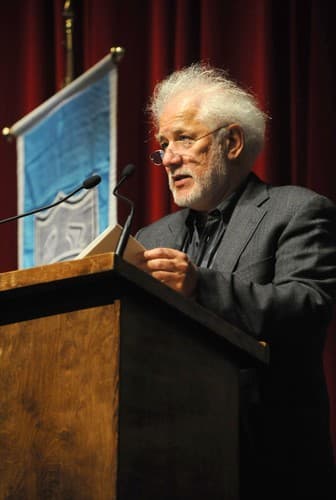
Philip Michael Ondaatje is a Sri Lankan-born Canadian poet, fiction writer, essayist, novelist, editor, and filmmaker.







