“The summer stretched out before us, a long, shimmering road to nowhere.”
— Narrator's reflection on the beginning of the fateful summer.

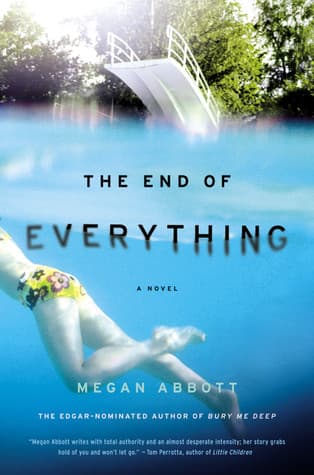
Megan Abbott (2011)
Genre
Thriller / Mystery / Young Adult
Reading Time
240 min
Key Themes
See below
Sign in to track this book
When her best friend vanishes, a thirteen-year-old girl becomes the reluctant center of a suburban mystery, forcing her to confront unsettling truths about their bond and the secrets beneath their perfect lives.
Thirteen-year-old Lizzie Hood and her best friend, Evie Verver, spend the summer of 1984 in a close relationship in their suburban neighborhood. They live next door, sharing clothes, secrets, and an intense bond that excludes others. Their days are filled with swimming, sunbathing, and elaborate rituals, often involving a perceived 'danger' or shared vulnerability. Lizzie, in particular, is deeply invested in Evie, almost to the point of obsession, finding her beautiful and mysterious. They navigate the start of adolescence together, their world a bubble of shared experience and growing awareness of their bodies and the world around them, seemingly impenetrable.
One hot afternoon, Evie Verver disappears without a trace. Lizzie remembers them being together by the pool, then Evie going inside. When Evie's mother, Mrs. Verver, realizes Evie is not home for dinner and cannot be found, a frantic search begins. The initial panic quickly escalates into a full missing person's investigation, drawing the entire suburban community into a state of heightened anxiety and suspicion. Lizzie is one of the last people to see Evie, and her world is instantly thrown into chaos, marked by an unsettling mix of grief, confusion, and a strange, new kind of attention from adults and authorities.
With Evie gone, Lizzie becomes the reluctant, yet strangely central, figure in the investigation. Detectives question her repeatedly, trying to find out Evie's state of mind, any recent arguments, or potential secrets. The Verver family, especially Mrs. Verver, clings to Lizzie, seeing her as the last link to their daughter. The community, too, watches Lizzie, projecting their fears onto her. This newfound attention, while difficult, also gives Lizzie an unexpected sense of power and importance, a role she both resents and secretly enjoys. She feels the weight of everyone's expectations, desperate to provide answers she does not have, yet also enjoying the spotlight.
Haunted by dreams and a growing sense of responsibility, Lizzie begins her own private investigation into Evie's disappearance. She starts by sifting through Evie's belongings in her bedroom, looking for clues. She discovers a hidden box containing trinkets, notes, and a diary. Through these items, Lizzie starts to realize that Evie had a secret life, one far more complex and troubling than Lizzie had ever imagined. Evie's diary reveals a growing sexuality, a fascination with older boys, and a secret relationship with a local older boy named Sean, who works at the video store and is known for being a bit of a troublemaker. This discovery deeply unsettles Lizzie, shaking her view of their shared intimacy.
As the search for Evie continues, Lizzie spends more time at the Verver house, becoming familiar with their grief and the cracks in their seemingly perfect family. Mrs. Verver becomes increasingly erratic, while Mr. Verver withdraws. Lizzie observes a strained dynamic, particularly between Evie's older brother, Jason, and the rest of the family. She also notices subtle hints of an unspoken tension or secret within the household, separate from Evie's disappearance. The Verver's idealized image begins to crumble under the pressure of their daughter's absence, revealing a family struggling with its own internal problems and unspoken resentments.
The police investigation goes through various local suspects and false leads. Sean, the older boy Evie was secretly seeing, is heavily scrutinized due to his reputation and his last-known contact with Evie. Other local men, including a reclusive neighbor and even Lizzie's own father, briefly come under suspicion as the community deals with fear and the need to assign blame. Each new lead offers a fleeting hope that is quickly dashed, leaving the community, and Lizzie, in a perpetual state of anxiety and uncertainty. Lizzie herself, armed with her new knowledge of Evie's secret life, often holds back information from the authorities, unsure of how to process it or its implications.
The more Lizzie learns about Evie's secret life — her flirtations, her diary entries about feeling trapped, her relationship with Sean — the more her idealized image of her best friend crumbles. Lizzie deals with feelings of betrayal and confusion, realizing that the girl she thought she knew intimately had an entire hidden world. She questions the true nature of their friendship, wondering if Evie ever truly returned the intensity of Lizzie's devotion. This disillusionment is painful, forcing Lizzie to confront the complexities of identity and the inherent unknowability of others, even those closest to us. Her grief becomes intertwined with a sense of personal loss, not just of Evie, but of their shared, innocent past.
Lizzie grows increasingly suspicious of Jason, Evie's older brother. She notices his strange behavior, his possessiveness over Evie's room, and a tension that seems to exist between him and his parents. Driven by her own investigation and a growing unease, Lizzie confronts Jason. During their intense conversation, Jason reveals disturbing details about the Verver family's dysfunction and his own complicated relationship with Evie. He alludes to a protective, almost obsessive, bond with his sister, and a desire to shield her from the perceived dangers of the outside world, particularly her romantic entanglements. This confrontation hints at a deeper, darker secret within the Verver household, distinct from the missing person's case.
Through her own deductions, a final confrontation with Jason, and the discovery of a hidden detail in the Verver's backyard, Lizzie pieces together the horrifying truth. It is revealed that Evie did not run away or fall victim to a stranger. Instead, her disappearance is tied to a tragic incident within her own home. Jason, in a fit of possessive rage or misguided protection, accidentally caused Evie's death during an argument related to her secret relationship with Sean. The Verver parents, in a desperate attempt to protect their remaining child and their family's reputation, covered up the death, burying Evie's body in their backyard and fabricating the story of her disappearance. Lizzie finds the shallow grave, confirming her darkest suspicions.
The revelation of Evie's death and the Ververs' cover-up leaves Lizzie shattered. She faces an impossible choice: expose the truth, shattering the Verver family and her own community, or remain silent, becoming involved in the secret. In a moment of trauma and a twisted sense of loyalty, perhaps to Evie, perhaps to the remnants of her own childhood, Lizzie chooses silence. The novel ends with Lizzie carrying the heavy burden of this knowledge, forever changed by the events of that summer. Her innocence is lost, replaced by an understanding of the darkness that can lurk beneath seemingly perfect surfaces, and the devastating power of secrets.
The Protagonist
Lizzie transforms from an innocent, dependent girl into a traumatized, knowing individual burdened by a terrible secret, losing her innocence in the process.
The Catalyst/Victim
Evie's arc is revealed posthumously, showing her transition from an idealized best friend to a complex individual with hidden desires and a tragic fate.
The Antagonist/Supporting
Jason's arc reveals his descent from a protective brother to a perpetrator, driven by a desperate attempt to control his sister's life and then cover up his actions.
The Supporting
Mrs. Verver transforms from a grieving mother into a woman burdened by the profound guilt of covering up her daughter's death, sacrificing truth for family preservation.
The Supporting
Mr. Verver's arc shows his descent into silent complicity and guilt, becoming a hollowed-out figure haunted by his family's secret.
The Supporting/Mentioned
Sean's arc is largely static; he remains a suspect and a symbol of Evie's forbidden desires, never fully understanding the true nature of her disappearance.
The Supporting
Lizzie's mother remains a stable but ultimately unaware figure, representing the adult world's limited perception of the children's hidden lives.
The novel carefully tracks Lizzie's journey from childhood innocence to a devastating understanding of adult cruelty and moral uncertainty. The idyllic summer, initially filled with games and innocent secrets, is shattered by Evie's disappearance. Lizzie's discovery of Evie's hidden life, and eventually the truth of her death, forces her to confront the dark side of human nature and the complexities of love, jealousy, and betrayal. Her final act of silence confirms her transition into a world where innocence is lost, replaced by a heavy burden of knowledge.
“That summer, the world went from soft to sharp. From blurry to terribly, blindingly clear.”
Lizzie's narration is filtered through her adolescent perspective, colored by her intense emotional attachment to Evie and the trauma of the events. Her memories of Evie and their shared past are constantly re-evaluated as she uncovers new information, showing how personal biases and emotions can distort reality. The story questions whether anyone truly knows another person, even a best friend, and how easily perceptions can be shattered when confronted with hidden truths. Lizzie frequently re-examines past conversations and events, searching for missed clues or alternative interpretations, highlighting the subjective nature of memory.
“How could I have known so little about the person I thought I knew best in the world?”
The intense, almost suffocating bond between Lizzie and Evie is a central theme. Lizzie's adoration of Evie borders on obsession, blurring the lines of individual identity. This intensity, while initially nurturing, also contains elements of possessiveness and a subconscious desire to control or embody the other. The novel explores the pressures and complexities of female relationships at a vulnerable age, where identity is still forming and boundaries can be fluid. Evie's attempts to assert her own individuality are met with Lizzie's desperate attempts to hold onto their shared world, hinting at the potentially destructive nature of such intense bonds.
“She was my mirror, my shadow, my other self. Without her, I was just half a girl.”
The seemingly perfect suburban setting of the 1980s is a stark contrast to the dark secrets and tragic events that unfold. The manicured lawns and quiet streets hide a world of dysfunction, jealousy, and violence within the Verver household. The community's initial shock and collective grief quickly give way to suspicion and gossip, revealing the fragility of their perceived safety and harmony. The theme highlights how appearances can be deceiving, and how the pressure to maintain a perfect image can lead to profound moral compromises and devastating consequences, particularly within families.
“Our street, usually so quiet, was now a stage for whispers and stares. Everyone looking for the monster hiding among us.”
The novel explores the psychological weight of carrying a terrible secret, especially for a young girl. Lizzie's decision to remain silent about Evie's true fate transforms her from an innocent bystander into a participant in the cover-up. This burden shapes her future, trapping her in a web of silence and trauma. The Verver family's collective secret also illustrates the corrosive power of lies, showing how the desire to protect reputation and family can lead to profound moral corruption and enduring guilt. The silence itself becomes a character, suffocating and omnipresent.
“The secret felt like a stone in my gut, growing heavier with every passing day.”
The story is told entirely from Lizzie's subjective, evolving perspective.
The use of first-person narration by a thirteen-year-old girl is crucial. It creates an intimate, often unreliable, and highly emotional lens through which the events are filtered. Lizzie's limited understanding, her intense emotional bond with Evie, and her shifting perceptions as she uncovers truths all contribute to the suspense and psychological depth. Her voice captures the confusion, fear, and burgeoning maturity of adolescence, allowing the reader to experience the loss of innocence alongside her and question the reliability of her observations, especially as she processes trauma.
The summer setting and water imagery symbolize youth, intimacy, and impending change/danger.
The novel is set during a sweltering summer, a season traditionally associated with freedom, youth, and burgeoning sexuality, but which here becomes oppressive and stifling. The constant presence of water – swimming pools, sprinklers, the humidity – symbolizes the fluidity of their friendship, the cleansing power of innocence, but also the suffocating nature of their bond and the eventual drowning of truth. The heat and water also evoke a sense of languid sensuality and vulnerability, foreshadowing the loss of innocence and the dark undercurrents of desire and danger that consume Evie.
A discovered diary provides crucial insights into Evie's secret life.
Evie's hidden diary serves as a classic plot device, providing Lizzie (and the reader) with direct access to Evie's private thoughts, desires, and secrets. It functions as a catalyst for Lizzie's investigation, shattering her idealized image of her best friend and revealing the complexities of Evie's inner world. The diary entries introduce new characters and motivations, propelling the plot forward and deepening the mystery, while simultaneously highlighting the theme of hidden lives and the unknowability of others. It's a tangible link to the missing girl, offering clues and misdirection.
The seemingly idyllic 1980s suburban environment contrasts sharply with the dark events.
The 1980s suburban setting is more than just a backdrop; it's a character in itself. It represents a veneer of safety, order, and conventional morality that is gradually peeled back to reveal the darker realities beneath. The emphasis on appearances, community gossip, and the desire for conformity amplifies the shock and horror of Evie's disappearance and the subsequent cover-up. This contrast between the outward perfection and the inward decay highlights the novel's themes of hidden darkness and the fragility of innocence in seemingly protected environments.
“The summer stretched out before us, a long, shimmering road to nowhere.”
— Narrator's reflection on the beginning of the fateful summer.
“We were all so beautiful then, weren't we? Before everything got ruined.”
— A nostalgic and melancholic look back at the past.
“That's the thing about secrets. They start small, like a whisper, and then they grow into a roar.”
— Reflecting on the nature and escalation of hidden truths.
“The air was thick with it, the unspoken, the things we all knew but pretended not to.”
— Describing the tension and underlying knowledge within the community.
“Sometimes, the most dangerous things are the ones you can't see coming.”
— A general observation about the nature of threats.
“We were like moths to a flame, drawn to the very thing that would burn us.”
— Describing the irresistible pull towards a destructive element.
“Grief, I learned, wasn't a straight line. It was a tangled mess, full of dead ends and false starts.”
— The narrator's experience and understanding of grief.
“Everyone had their own version of the truth, their own story they told themselves.”
— Highlighting the subjective nature of truth and perception.
“The quiet ones are always the ones you have to watch out for.”
— A cautionary observation about seemingly harmless individuals.
“It was the kind of heat that made you feel like anything could happen, good or bad.”
— Describing the oppressive summer heat and its effect on atmosphere.
“We lived in a town that was too small for its secrets.”
— A comment on the inability to keep things hidden in a close-knit community.
“The past isn't ever really past, is it? It just waits for you to catch up.”
— Reflecting on the enduring influence of past events.
“Fear has a way of twisting everything, making you see things that aren't there.”
— Describing the psychological impact of fear.
“We were just kids, trying to make sense of an adult world that made no sense at all.”
— The youthful perspective on confusing adult situations.
Ready to see how well you understood this book? Take our interactive quiz with 10 questions.

Biography coming soon.







