BookBrief
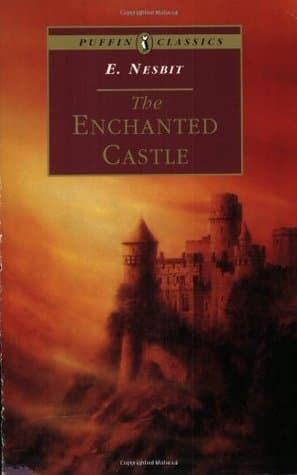
The Enchanted Castle cover
Archivist's Choice

The Enchanted Castle

E. Nesbit (1907)

Genre

Fantasy / Children's / Young Adult

Reading Time

291 min

Key Themes

See below

Track Your Reading

Sign in to track this book

Three siblings discover that a pretend princess and a magical ring can transform an ordinary castle into a realm of genuine enchantment and unexpected adventure.

Synopsis

Jerry, Jimmy, and Cathy, three siblings on holiday, discover a magnificent castle. In its garden, they find a 'sleeping princess' who turns out to be Mabel, the housekeeper's niece, merely playing a game. Mabel, familiar with the castle's secrets, leads them to a hidden room brimming with treasure, including what she claims is a magic ring. When they test the ring, its wishing power proves real, leading to a series of fantastical and often chaotic adventures. They conjure an 'Ugly-Wugly' monster, bring stone statues to life, and even attempt a trip to the moon. Throughout their magical escapades, they must contend with the unpredictable nature of their wishes, the moral implications of their power, and the challenges of 'unwishing' their creations. As summer draws to a close, they uncover the true nature of the ring and the castle's enchantment, realizing that their extraordinary experiences have taught them valuable lessons about responsibility, imagination, and the bittersweet end of childhood wonder.
Reading time
291 min
Difficulty
Easy
Pacing
Moderate
Mood
Whimsical, Adventurous, Humorous, Reflective
✓ Read this if...
You enjoy classic children's fantasy with a blend of magic and real-world consequences, reminiscent of Narnia or similar adventure stories.
✗ Skip this if...
You prefer modern, fast-paced fantasy or stories without a strong sense of early 20th-century British children's literature.

Plot Summary

The Discovery of the Castle

The story begins with Jerry, Jimmy, and Cathy on holiday in the countryside. Their parents are away, and they are staying with a governess. Bored with their usual spots, they decide to explore a new part of the parklands near their temporary home. After a long walk, they discover a grand, old castle, seemingly empty. Its large size and overgrown gardens immediately spark their imaginations, hinting at adventures inside. They carefully approach, curious about the mystery surrounding the old building, which appears to be a genuine relic from the past rather than a modern house.

The Sleeping Princess and the Magic Ring

Upon entering the castle grounds, the children find a 'sleeping princess' in the garden. This girl is Mabel, the housekeeper's niece, who is simply pretending to be royalty. Mabel, happy to have an audience, gives them a tour of the castle, which she knows well. She leads them to a secret room filled with 'treasure,' a collection of old items. Among these, they discover a remarkable ring. Mabel claims it is a magic ring, and to their surprise, when they put it on, it grants their wish for her to be beautiful. The ring transforms Mabel into a lovely vision, confirming its magical properties and setting the stage for their adventures.

The Wishing Power and Its Consequences

Excited by the ring's power, the children begin to test it. Their first wish for Mabel to be beautiful works, but her beauty is so strong that she becomes almost too perfect, like a statue, unable to move or speak. They quickly wish her back to normal. Later wishes also cause problems: Wishing for a feast produces an abundance of unappetizing food, and wishing for money results in an endless shower of gold coins that bury them. These early experiences teach them that the ring's magic is literal and often has unexpected, inconvenient, or even dangerous results, requiring careful thought before making a wish.

Encountering the Ugly-Wugly

One day, while playing with the ring, the children wish to see a 'monster.' To their surprise and initial fear, a strange creature they call the 'Ugly-Wugly' appears. It is a strange, shapeless, and rather pathetic being, more funny than scary. The Ugly-Wugly is not evil; it mostly just sits there, occasionally making odd noises. The children quickly realize it is harmless and even feel a little sorry for it. This encounter further shows the ring's unpredictable nature and the literal way their wishes are interpreted, as well as their own ability to adjust to unusual situations.

The Statue People

Inspired by the castle's many classical statues, the children wish for them to come alive. The wish works, and the marble figures—including gods, goddesses, and ancient heroes—move. However, they remain made of marble, making them stiff and awkward in their movements. They speak in formal, old phrases and are largely confused by the modern world. The children find themselves in charge of these confused, stony beings, trying to explain their situation and guide them. This episode shows the difference between ancient ideals and modern reality, and the children's growing responsibility for their magic's results.

A Trip to the Moon

Driven by their adventurous spirit, the children wish to travel to the moon. The ring grants their wish, transporting them to a desolate, airless lunar landscape. They experience the bizarre feeling of weightlessness and the chilling silence of space. The moon is not the romantic place they imagined, but a barren, unwelcoming rock. This journey, while impressive, also proves a bit frightening due to the extreme conditions. They quickly realize the dangers and limits of such a wish and are relieved when they return safely to Earth, having gained a deep appreciation for their home planet.

The Prisoner in the Tower

Exploring further, the children discover a locked room in one of the castle's towers and imagine a romantic prisoner inside. They wish for the prisoner to be freed. To their surprise, the 'prisoner' turns out to be a kind, elderly gentleman named Mr. Parminter, a scholar and the castle's actual owner, who had simply locked himself in to avoid disturbance while studying. He is initially startled by the children's appearance and their tale of magic, but quickly grows fond of them. This encounter connects their magical adventures with a touch of reality, introducing a kind adult into their world.

The Ring's True Nature and the End of Summer

Mr. Parminter, a scholar of ancient stories, eventually figures out the magic ring's true nature. He explains that it is the legendary 'Ring of Amen-Ra,' an ancient Egyptian artifact that grants wishes but with a catch: the wishes must be made with sincere belief, and their effects are often temporary or literal to the point of absurdity. He helps the children understand its power and limits. As summer ends, the children realize their time at the castle is over. They think about their adventures, the lessons learned, and the unique magic they experienced, preparing to return to their regular lives.

The Unwishing and the Final Farewell

Before leaving, the children decide to make one final, selfless wish. They wish for the Ugly-Wugly to become a real, beautiful forest creature, and for the animated statues to return peacefully to their original forms, truly alive but in their own time. The ring grants these wishes, bringing a sense of closure and responsibility to their magical escapades. They say goodbye to Mr. Parminter and Mabel, promising to visit again. As they leave the Enchanted Castle, they carry with them the lasting memories of a summer filled with genuine magic, friendship, and the deep lessons learned about power and imagination.

Principal Figures

Jerry

The Protagonist

Jerry learns the importance of careful thought and the ethical implications of wielding great power, maturing from a playful adventurer to a more responsible decision-maker.

Jimmy

The Protagonist

Jimmy learns to temper his impulsiveness with a degree of foresight, understanding that magic requires respect and responsibility, not just excitement.

Cathy

The Protagonist

Cathy's innocence and directness evolve into a quiet wisdom, as she learns to navigate the complexities of magic with an intuitive understanding.

Mabel

The Supporting

Mabel's initial superficiality as a 'princess' gives way to genuine friendship and a deeper appreciation for true magic and companionship.

Mr. Parminter

The Supporting

Mr. Parminter moves from isolated scholarship to engaging with the world through the children's adventures, rediscovering the wonder of magic through their eyes.

The Ugly-Wugly

The Mentioned

The Ugly-Wugly transforms from a literal, somewhat absurd manifestation of a wish into a beautiful, natural creature, symbolizing the children's growth in using magic for good.

Themes & Insights

The Power and Peril of Imagination

The novel shows the great power of childhood imagination, how it can turn the ordinary into the magical. The children's initial belief in Mabel as a princess and their later wishes bring fantastic creatures and situations to life. However, it also shows the dangers of unchecked imagination and literal interpretations of desires, as many wishes lead to unexpected and often inconvenient results (e.g., Mabel's overwhelming beauty, the unwanted feast, the Ugly-Wugly). The story suggests that while imagination is powerful, it needs wisdom and foresight.

It is not the magic itself, but the belief in it, that makes things happen.

Narrator (or implied through Mr. Parminter's teachings)

The Nature of Reality and Illusion

The Enchanted Castle constantly blurs the lines between what is real and what is imagined or magically created. Mabel's initial pretend princess act smoothly transitions into real magic with the ring. The castle itself appears to be an ordinary, though grand, home, yet it holds deep enchantments. The animated statues are real in their marble form but limited by their material, challenging the children's understanding of 'life.' This theme questions how we see the world and suggests that belief and perspective play a big part in shaping our reality.

Things are not always what they seem, especially in an enchanted castle.

Narrator

Responsibility and Consequences

A main theme is the children's development of responsibility as they use the magic ring. Each wish they make has direct, often unforeseen, results that they must then handle. From Mabel's overwhelming beauty to the troublesome gold coins and the summoning of the Ugly-Wugly, the children learn that power comes with a heavy burden. They must think carefully before wishing and often work together to undo the effects of their previous desires. This theme ends with their selfless final wish, showing their growth in understanding the moral implications of their actions.

It is a terrible thing to have power and not to know how to use it.

Mr. Parminter

The Transition from Childhood to Adolescence

The children's adventures in the enchanted castle can represent the move from the free imagination of early childhood to the growing awareness of adolescence. They begin with pure, thoughtless wonder, but through their experiences with the ring, they meet the complexities of the adult world—responsibility, consequences, and the limits of their desires. Their growing understanding of the ring's true nature and their eventual decision to use it for selfless purposes reflect a maturing process, where innocent play gives way to a more thoughtful and empathetic engagement with the world.

Childhood is a kingdom where nobody dies.

Narrator (reflecting on their innocent perspective)

Plot Devices & Literary Techniques

The Magic Ring

An ancient artifact that grants wishes, but often with literal and unpredictable results.

The magic ring is the primary plot device, serving as the catalyst for all the fantastical events in the story. It is an ancient Egyptian artifact, the 'Ring of Amen-Ra,' capable of granting wishes. However, its power is not straightforward; it interprets wishes literally and often with unexpected consequences, forcing the children to learn caution and responsibility. It drives the plot forward by creating new challenges and adventures with each wish, and its unpredictable nature is a constant source of both wonder and peril.

The Enchanted Castle

A seemingly ordinary, yet magically charged, setting that facilitates the children's adventures.

The castle itself functions as more than just a setting; it is an active plot device. Its mysterious atmosphere, secret rooms, and ancient artifacts (like the statues and the ring) are integral to the unfolding magic. The castle provides the secluded environment necessary for the magic to flourish without adult interference, and its history and grandeur fuel the children's imaginations. It acts as a crucible for their magical education, a place where the rules of the ordinary world are suspended.

The 'Ugly-Wugly' Monster

A creature conjured by a wish, representing the literal interpretation of magic and a lesson in empathy.

The Ugly-Wugly is a key plot device for teaching the children about the literal and often absurd nature of magic, as well as developing their sense of empathy. It is the direct result of a wish for a 'monster,' but instead of being terrifying, it is pathetic and harmless. Its presence forces the children to confront the consequences of their desires and eventually leads them to use the ring's power for a selfless act of transformation, highlighting their growth in responsibility.

Critical analysis

Notable Quotes

It is a most annoying thing that, just when you are on the point of finding out something that would be of interest to yourself, and perhaps to others, someone should interrupt you.

The children are exploring the castle and its secrets, often interrupted by adults or their own squabbles.

The great thing about adventures is that you never know what's going to happen next.

The children are in the midst of one of their magical escapades, embracing the unpredictable nature of the castle's enchantments.

You can have anything you like, if you only want it hard enough.

This is a recurring theme with the magic of the castle, particularly concerning the wishing ring and its effects.

It is always a good thing to have a secret, and particularly when it is a secret that you share with someone else.

The children often share secrets about the castle's magic, strengthening their bond.

The magic was not in the ring, but in themselves; or rather, that the ring was only a sort of key to unlock the magic that was in them.

The children begin to understand the true source of the castle's power and their own abilities.

Grown-ups are always telling you not to do things, and then they wonder why you don't grow up like them.

The children often feel constrained by adult rules and expectations, highlighting the generational gap.

It is much more interesting to imagine things than to have them happen.

The children's imaginations are incredibly vivid, often leading to their magical adventures.

Some people have all the luck, and some people have all the sense; and some people have neither.

A comment on the varying fortunes and characteristics of different individuals within the story.

The great thing about a castle is that you can always pretend it's yours.

The children's initial joy and sense of ownership over the enchanted castle.

It is much more difficult to un-wish a wish than to wish it.

The children frequently face unforeseen consequences of their wishes, making them realize the responsibility that comes with magic.

There are some things that even magic cannot mend.

A moment of realization about the limits of their magical powers, particularly concerning matters of the heart or real-world problems.

It is a very odd thing that when you have got what you want, you very often don't want it any more.

Reflecting on the nature of desires and the often fleeting satisfaction of having them fulfilled.

The world is full of wonderful things if you only know how to look for them.

The overarching theme of discovery and finding magic in unexpected places.

Quiz

Test Your Knowledge

Ready to see how well you understood this book? Take our interactive quiz with 10 questions.

10
Questions
~5
Minutes
?
Best Score

Key Questions (FAQ)

The story begins with three siblings, Jerry, Jimmy, and Cathy, who are staying at a large country house during their holidays. They venture out to explore the grounds and discover an old, seemingly abandoned castle, where they find a 'princess' asleep in the garden, setting the stage for their magical adventures.

About the author

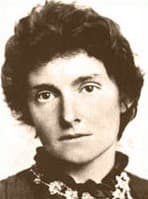
E. Nesbit

E. Nesbit was a prolific English writer and poet, best known for her classic children's fantasy novels such as 'The Story of the Amulet' and 'The Enchanted Castle.' Her innovative blend of magic and everyday life created a lasting impact on children's literature, influencing generations of authors. She was also a co-founder of the Fabian Society.