“There are no monsters, only people who have been broken.”
— Nahri reflecting on the nature of evil and humanity amidst the conflict.

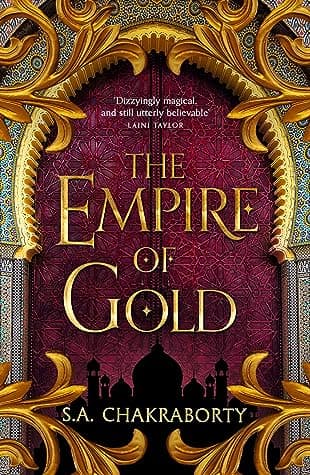
S.A. Chakraborty (2020)
Genre
Fantasy / Historical Fiction / Young Adult
Reading Time
15-20 hours
Key Themes
See below
Sign in to track this book
As a magical empire crumbles under a tyrant, a con-woman, an idealistic prince, and a resurrected warrior must confront their pasts and betray their loyalties to forge a new future for a fractured world.
After Daevabad falls to Manizheh and Dara, Nahri and Ali are in Cairo. Nahri, without her magic because of Manizheh's rituals, finds comfort in human medicine. She works with her old mentor, a Jewish physician, and enjoys her human life. Even so, she feels guilty about her friends and the people she left in Daevabad, especially Jamshid and Muntadhir. Ali struggles with losing his family and the city he couldn't protect. He wants to free Daevabad from Manizheh's rule and save his remaining family, so he secretly looks for allies and a way back to the magical world, believing he must fight for his home.
In Daevabad, Dara is troubled by his past cruel acts and losing Nahri, which has brought out his worst side. He finds it hard to balance his loyalty to Manizheh with her increasingly harsh leadership. She takes power by force, persecuting shafit and those loyal to the Al-Qahtanis. Manizheh, wanting to restore the nahid and get rid of the shafit, relies on Dara's military skill, but their alliance is strained by their different ideas and Dara's growing doubt. His memories of the old war and his part in the marid tribe massacre weigh on him, pushing him to a breaking point as he sees the suffering under Manizheh's new rule.
Wanting to get back to Daevabad, Ali goes to the hidden marid city of Qais, asking his mother's people for help. There, he learns about his marid ancestry, finding his connection to water magic is much stronger and older than he thought. He meets his marid grandmother, who first doubts him but then sees his potential. Ali learns about the history of the marid-djinn conflict and the old seals that hold strong marid magic. He starts training with marid warriors, improving his skills and understanding his great power, a power that could challenge Manizheh's forces but also risks corrupting him.
In Cairo, Nahri continues her medical studies but is worried about news from Daevabad and her visions of suffering there. She finds old texts and forgotten stories that suggest a deeper link between the shafit and the djinn, and a possible solution to the nahid's infertility. More importantly, she learns the truth about her own family: she is not only shafit but also from the old, strong Peris. This fact could be key to bringing balance. Realizing she cannot just watch her friends and innocent people suffer, Nahri decides to leave Cairo and return to Daevabad, knowing the great danger but believing she is the only one who can help.
Dara, unable to stand Manizheh's cruel acts any longer, leaves her. He seeks out the remaining djinn tribes – the Ifriqis, the divs, and other oppressed groups – who have gone into hiding or rebelled. He tries to form an uneasy alliance with them, facing his own dark history and his role in their suffering during the old wars. He must deal with the results of his past actions and earn the trust of those he once scared. This alliance, though weak, offers hope for fighting Manizheh, even as Dara battles his inner problems and the guilt of his long life.
Ali, now a strong marid warrior, returns to Daevabad with his new marid and shafit allies, ready to take back his city. Nahri, with Jamshid whom she rescued, also returns, bringing important knowledge about the nahid curse and the Peris. Their forces meet in Daevabad, joining Dara's group of rebellious djinn tribes. A big siege happens, with harsh fighting between Manizheh's forces and the combined resistance. During the chaos, old secrets are revealed, including the Peris' role in djinn history and the real cause of the infertility curse, shaking Manizheh's beliefs.
Manizheh, increasingly desperate and fixed on her goal to restore the nahid and get rid of the shafit, uses all her power. She believes she is close to reversing the infertility curse and bringing back her people's old glory. Her fight with Nahri is very intense, as Nahri tells her the truth about the Peris and the curse, trying to reason with her. Manizheh, however, is too far gone, blinded by revenge and a twisted idea of justice. She tries to use old, forbidden magic that could destroy Daevabad itself, convinced that ultimate power is the only way to reach her goals, even if it means many lives are lost.
As Manizheh's ritual threatens to destroy Daevabad, Nahri, Ali, and Dara must make a hard choice. They realize that to stop Manizheh and prevent the city's destruction, a big sacrifice is needed. Dara, wanting to make up for his past, makes the ultimate sacrifice, using his old power to counter Manizheh's destructive magic, ending his own troubled life. His sacrifice stops the city from collapsing but costs everyone greatly. The battle ends with Manizheh's defeat, but the city is damaged and its people are hurt by the war and loss.
After the war, Daevabad is in ruins, but the immediate danger is gone. Nahri, now fully accepting her Peri heritage and her role as a healer, works to rebuild the city and fix its broken society. She works hard to create a council that includes all djinn tribes and the shafit, aiming for a fair government. Ali, having accepted his marid power and his place among the djinn, helps Nahri, using his diplomatic skills and new wisdom to encourage peace. The process is long and hard, but a new time of hope and cooperation begins in Daevabad.
With Daevabad slowly getting better, Nahri and Ali strengthen their partnership, both as rulers and as a couple. Nahri, having found the real way to heal the nahid infertility by using Peri magic, starts making changes so all djinn can do well. Ali, now a respected leader and a link between the djinn and marid worlds, works to ensure justice and equality for everyone, especially the long-oppressed shafit. While problems remain, they face the future together, committed to building a Daevabad where all tribes can live peacefully. The past's effects still linger, but the city is moving towards real agreement and lasting peace under their joint leadership.
The Protagonist
Nahri transforms from a self-preserving con-woman to a selfless, powerful leader who unites the warring factions of Daevabad through knowledge and compassion.
The Protagonist
Ali evolves from a rigid, duty-bound prince to a powerful, compassionate leader who merges his faith with a broader understanding of justice and power.
The Antagonist/Redeemed Anti-Hero
Dara struggles with his inherent nature and centuries of violence, ultimately finding a measure of redemption through sacrifice for the greater good.
The Antagonist
Manizheh's unwavering pursuit of power and vengeance leads to her ultimate destruction.
The Supporting
Muntadhir's character arc involves enduring immense suffering and learning to lead with compassion, acknowledging his past mistakes.
The Supporting
Jamshid endures captivity and loss, emerging as a resilient healer and a steadfast source of compassion and support.
The Mentioned
His legacy is re-evaluated throughout the book, revealing the complexities of his rule and its lasting impact.
The Supporting
Hatset moves from guarded skepticism to becoming a crucial mentor and ally for Ali.
The Supporting
Kaveh's arc depicts a man wrestling with his loyalty and conscience, ultimately choosing to fight for a more just cause.
'The Empire of Gold' looks at redemption and sacrifice, mostly through Dara. Troubled by centuries of violence and his part in old wars and Daevabad's fall, Dara feels much guilt. His final act of self-sacrifice to stop Manizheh's destructive ritual and save the city is his last, sad redemption. The book also mentions the sacrifices Nahri and Ali make, giving up their peace to fight for a better future for Daevabad, showing that true leadership often requires big personal costs.
“Dara closed his eyes, a familiar weariness settling deep in his bones. How many times had he walked this path, choosing duty over peace, violence over rest? But this time, it was different. This time, he was choosing to end it.”
The novel explores identity, especially for Nahri and Ali. Nahri, a shafit with a hidden past, deals with her human upbringing, her djinn ancestry, and learning about her true Peri family. She tries to find her place in a world that often rejects mixed-bloods, finally accepting a complex identity that helps her connect different groups. Ali also faces his identity as a religious djinn prince who discovers and uses his strong marid heritage, making him balance his faith with his ancestral magic. Both characters find strength in accepting all parts of who they are rather than choosing one group over another.
“She was Nahri, a healer, a con artist, a shafit, a djinn, a Peri. And in all of it, she was finally, truly, herself.”
A main theme is the cycle of revenge that has hurt Daevabad for centuries, seen in Manizheh's strong desire to get revenge for the Nahid and remove the shafit. The book shows how old complaints cause current fights, leading to endless bloodshed. In contrast, Nahri and Ali offer a new way: one of agreement, understanding, and forgiveness. Their work to build an inclusive Daevabad, where all tribes and shafit have a voice, gives a hopeful idea for breaking the cycle of violence and building a future based on respect instead of old hatreds.
“Vengeance was a fire that consumed everything, leaving only ash. It was time to build something new, something that could grow.”
The novel looks at how power can corrupt and the responsibility that comes with it. Manizheh's path to tyranny shows how absolute power, fueled by anger, can lead to terrible acts and self-destruction. Her desire to bring back the nahid's old power blinds her to others' suffering and Daevabad's real needs. In contrast, Nahri and Ali learn to use power not for themselves or revenge, but for everyone's good, understanding that true leadership means service and justice, not control. The book compares harsh rule with kind leadership.
“Power was a hungry beast. It promised salvation, but often delivered only ruin.”
Ali's journey is shaped by his strong faith in Allah and Islamic principles, which are part of his identity as a djinn prince. However, his faith is tested by the terrible things he sees, his family's fall, and learning about his marid heritage, which some see as wrong. He struggles with doubt, questioning how a fair God could allow such suffering and if his old magic conflicts with his spiritual beliefs. In the end, he finds a way to combine his faith with his broader understanding of the world and his own power, showing that faith can change and grow.
“How could he reconcile the God of his prayers with the chaos he witnessed, with the power that now surged through his veins?”
Alternating viewpoints provide a comprehensive understanding of the conflict.
The novel employs a dual (and sometimes triple) perspective narrative, primarily alternating between Nahri, Ali, and Dara. This allows the reader to gain deep insights into the motivations, struggles, and internal conflicts of each major character. This device is particularly effective in 'The Empire of Gold' as it highlights the ideological clashes and personal stakes from all sides of the conflict in Daevabad, providing a nuanced view of the war and making the characters' difficult choices more impactful and understandable. It prevents any single character from being an undisputed hero or villain until the very end.
Foreshadows events and reveals deeper historical truths about Daevabad.
Throughout the book, ancient prophecies, forgotten texts, and oral lore serve as crucial plot devices. They not only foreshadow future events but also progressively reveal the hidden history of Daevabad, the true origins of the djinn tribes, the nahid curse, and Nahri's Peri heritage. These ancient tales and prophecies guide the characters' actions, provide solutions to seemingly insurmountable problems, and ultimately explain the deep-seated conflicts that have plagued the magical world for centuries. Nahri's deciphering of these texts is key to understanding the path to healing Daevabad.
A central mystery and driving force behind Manizheh's actions.
The infertility plaguing the nahid tribe is a critical plot device. It acts as Manizheh's primary motivation for her rebellion and her fanatical pursuit of ancient magic, believing it's the only way to save her people from extinction. The mystery of its origin and Nahri's eventual discovery of its true nature (linked to the Peris and the ancient sealing of magic) provides a vital turning point in the narrative. Solving this 'curse' is not just a medical problem but a magical and political one, requiring Nahri's unique heritage and knowledge to unravel and ultimately heal Daevabad.
A secret world that reveals Ali's true power and a new source of alliance.
The hidden marid city of Qais and the revelation of Ali's profound connection to elemental water magic serve as a significant plot device. Qais provides a sanctuary and training ground for Ali, allowing him to discover and master a powerful, ancient form of magic distinct from djinn fire. This new power not only makes Ali a formidable force in the fight for Daevabad but also introduces a new, previously neutral or hostile, faction into the conflict. The marid's history and their powerful magic become crucial in balancing the scales against Manizheh's forces and understanding the full scope of the magical world.
“There are no monsters, only people who have been broken.”
— Nahri reflecting on the nature of evil and humanity amidst the conflict.
“Power is a dangerous thing, even in the hands of the righteous.”
— Muntadhir's internal struggle with his inherited power and responsibilities.
“History is written by the victors, but the truth remains, waiting to be uncovered.”
— Ali's pursuit of historical truths and the real stories behind the official narratives.
“Sometimes, the greatest strength lies in knowing when to yield.”
— Nahri learning the complexities of diplomacy and compromise.
“Love, like magic, can be both a blessing and a curse.”
— A general observation on the powerful and often contradictory nature of love.
“The past is never truly gone; it merely waits for its moment to return.”
— The lingering effects of ancient grudges and past events on the present.
“Even the mightiest empires crumble from within, not from without.”
— Observations on the internal political strife and betrayals within Daevabad.
“Hope is a fragile thing, but it is all we have left.”
— Characters clinging to hope in moments of despair and overwhelming odds.
“To truly lead, one must first learn to serve.”
— Ali's journey of self-discovery and understanding true leadership.
“The greatest battles are often fought not with swords, but with words.”
— The importance of rhetoric, diplomacy, and persuasion in political conflicts.
“Family is a bond that can either uplift you or drag you down to the deepest depths.”
— The complex and often destructive dynamics within the royal family.
“There is no freedom without sacrifice, no peace without struggle.”
— The harsh realities faced by those fighting for a better future.
“Sometimes, the only way to save what you love is to let it go.”
— A difficult decision made by a character to protect others from harm.
“The true measure of a person is not in their power, but in their choices.”
— Reflections on the moral dilemmas and decisions faced by the main characters.
Ready to see how well you understood this book? Take our interactive quiz with 10 questions.

Biography coming soon.







