“You were on Earth for forty-eight years. You weren't a good person.”
— The protagonist is told about his life after death.

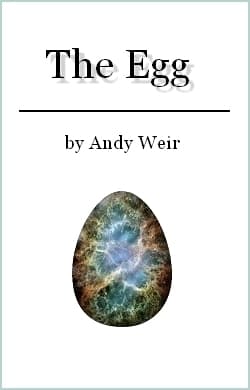
Andy Weir (2009)
Genre
Fantasy / Spirituality / Science Fiction / Philosophy
Reading Time
5 min
Key Themes
See below
Sign in to track this book
You are every human who has ever lived, and will ever live, experiencing the universe in an endless cycle of self-discovery before you are ready to become God.
The story starts with the main character realizing he died in a car accident. He was driving too fast, lost control, and hit a tree. He then finds himself in a non-physical space. He meets 'God,' who has a calm and familiar voice. The character is confused and tries to remember his death and his life, especially his wife and children. God gently shifts his focus, explaining that his perception of time and space is now different. The character struggles to understand his new reality, particularly not having a physical body and the immediate presence of a divine entity.
God tells the character he will be reincarnated. The character wants to return to his previous life, but God explains this is not possible. Instead, he will be reborn as a Chinese peasant girl in 540 A.D. The character is upset, questioning the purpose of such a life and his past achievements. God then says he has lived many lives before, sometimes as a man, sometimes as a woman, in different times and cultures. Each life is a learning experience, a step in a larger journey of understanding.
The main discovery is when God explains that the character is not just one soul among many. He is the only consciousness in the entire universe. Every human who has ever lived or will live — every 'person' the character has known, loved, hated, or simply seen — is another version of himself. He was Hitler, and he was the victim. He was Jesus, and he was Buddha. This idea of panpsychism surprises the character, making him realize how connected all existence is. His past lives were not just different people; they were different experiences of *himself*.
God uses the metaphor of an egg to describe the universe. The character is an embryo in this 'egg,' developing and learning. Each life he lives is a lesson, and human history is his personal journey of self-discovery. The goal is for him to mature, to understand every part of human experience, every joy and sorrow, every success and failure, from every possible view. Only when he has lived every human life, truly understanding what it means to be 'human' completely, will he be ready for the next stage of his existence.
The final discovery is that the character's ultimate purpose is to become God. Once he has lived every human life, experienced every view, and learned everything about humanity, he will be ready to be born as God. God explains that this is how God was created — through the same process. The entire universe, with its stars, galaxies, and life, was created by the character, and he will create it again when he fully matures. The cycle is infinite, and the character is both the student and the eventual master, destined to create his own universe and start the process again with another 'self'.
The Protagonist
From an ordinary, self-focused human, he discovers he is the singular consciousness experiencing all of humanity, destined to become God.
The Supporting
Serves as the ultimate guide and eventual state for the protagonist, revealing the cyclical nature of divine creation.
The main theme is the character's journey to understand his true identity. At first, he sees himself as one human with a specific life, wife, and children. But God slowly reveals he is the only consciousness living in every human throughout history. This expands his identity from an individual to the collective, ending with the realization that he is a developing God. The universe becomes a way for him to find himself, where every experience, good or bad, helps him understand who he is.
“"You are every human being who has ever lived, or ever will live."”
Reincarnation is shown not as a way for individual souls to improve, but as a system for one consciousness to experience every possible human life. The character has lived many lives and will be reborn as a Chinese peasant girl. This cycle ensures that every perspective, emotion, and situation is understood. The purpose is not just to 'learn lessons' morally, but to gather a complete understanding of the human condition, preparing the 'egg' for its eventual birth.
“"You’re just living a different life. You’ve done it many times before. In fact, you’ve lived every human life."”
A deep sense of connection is established by the idea that all people are parts of the same consciousness. The character realizes that everyone he loved, hated, or wronged was, in fact, himself. This idea naturally promotes ultimate empathy, as harming another is harming oneself, and loving another is loving oneself. The universe works as a big empathy machine, making the character experience every possible life, ensuring a full understanding before he can become divine.
“"Every time you hurt someone, you were hurting yourself. Every act of kindness you’ve done, you’ve done to yourself. Every happy and sad moment ever experienced by any human was, or will be, experienced by you."”
The story offers a unique idea where God is not an outside creator but the final result of one consciousness's journey through all existence. The universe is an 'egg' holding this growing consciousness. The character's goal is to become God and, in turn, create his own universe with his own 'yolk.' This suggests a cyclical, self-renewing model of divinity, where creation is an ongoing process born from complete experience and understanding, rather than a single, initial act.
“"You’re going to be a god. And when you’re done, you’ll start your own universe. With your own yolk."”
The story is told from the perspective of the recently deceased protagonist.
The entire narrative is experienced through the thoughts and reactions of the unnamed protagonist, immediately after his death. This allows the reader to directly share his confusion, skepticism, and eventual awe as God's revelations unfold. The post-mortem setting creates an immediate sense of mystery and detachment from the physical world, making the philosophical concepts more accessible and impactful, as the protagonist (and thus the reader) has no prior framework for this new reality.
The plot progresses through a question-and-answer format between the protagonist and God.
The story's exposition and thematic development are primarily driven by the dialogue between the protagonist and God. The protagonist asks questions, expresses doubts, and makes assumptions, which God then patiently clarifies and corrects. This Socratic method allows complex philosophical ideas about identity, reincarnation, and divinity to be introduced gradually and explored through direct interaction, making the explanations digestible and engaging rather than simply stated as dogma.
The universe is likened to an egg, and humanity's existence to an embryo's development.
God uses the metaphor of an 'egg' to explain the universe and the protagonist's journey. The protagonist is the 'yolk' or embryo, and all of human history is the incubation period. This powerful visual metaphor simplifies the complex idea of a singular consciousness experiencing all lives for the purpose of growth. It suggests a contained, nurturing environment designed for development, with a clear end goal: the 'birth' of a fully realized God, ready to create their own universe.
The protagonist's sudden realization of his true, universal identity.
The story culminates in a series of anagnorisis moments for the protagonist. Initially, he recognizes his own death. Then, he recognizes the reality of reincarnation. The most significant anagnorisis, however, is the shocking revelation that he is the sole consciousness of the universe, having lived every human life. This discovery completely redefines his understanding of self, others, and the purpose of existence, leading to a profound shift in perspective and setting up the ultimate goal of becoming God.
“You were on Earth for forty-eight years. You weren't a good person.”
— The protagonist is told about his life after death.
“You are every human being who has ever lived.”
— The reveal about the nature of existence.
“Every time you victimized someone, you were victimizing yourself.”
— Explaining the consequences of actions in the interconnected reality.
“Every time you helped someone, you were helping yourself.”
— The positive counterpart to the lesson on victimization.
“You've been in a human for the last forty-eight years, so you haven't stretched out yet and felt the rest of your immense consciousness.”
— Describing the limited perspective of a single lifetime.
“I'm God? No. I'm you. I'm every human being who has ever lived.”
— Clarifying the relationship between the guide and the protagonist.
“The universe is so vast and empty, and you are so small and insignificant.”
— Reflecting on the scale of existence.
“You are the universe experiencing itself subjectively.”
— A philosophical summary of the story's premise.
“You are the most important thing in the universe. And so is everyone else.”
— The paradox of individual significance.
“You are the egg. And you are the chicken.”
— Metaphor for the cyclical nature of existence.
“There is no such thing as a self-made man.”
— Underscoring the interconnectedness of all human experience.
“You are not a body. You are a mind.”
— Distinguishing between physical form and consciousness.
“The meaning of life is to learn and experience.”
— Stating the purpose of the cyclical existence.
“You are the love of your life. And you are the heartbreak.”
— Illustrating the internal nature of all relationships.
Ready to see how well you understood this book? Take our interactive quiz with 10 questions.
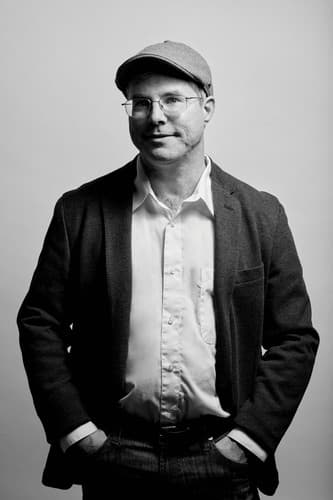
Andrew Taylor Weir is an American novelist. His 2011 novel The Martian was adapted into the 2015 film of the same name directed by Ridley Scott. He received the John W. Campbell Award for Best New Writer in 2016 and his 2021 novel Project Hail Mary was a finalist for the 2022 Hugo Award for Best Novel.







