BookBrief
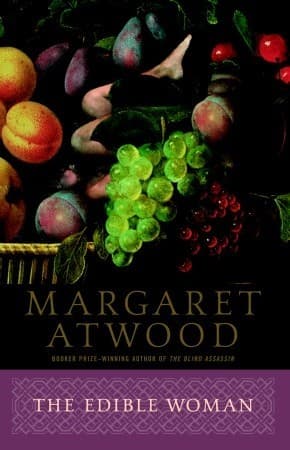
The Edible Woman cover
Archivist's Choice

The Edible Woman

Margaret Atwood (1969)

Genre

Literary Fiction

Reading Time

6-7 hours

Key Themes

See below

Track Your Reading

Sign in to track this book

As Marian gets ready for a seemingly normal marriage, her body rebels, turning her fiancé and the wedding plans into a growing, unbearable nightmare of societal pressure.

Synopsis

Marian MacAlpin, who works at a market research firm, is engaged to Peter, who seems perfect and serious. She wants a normal, conventional life, but as her engagement continues, she feels increasingly disconnected from herself and her surroundings. This starts as a strong dislike for certain foods, especially meat, and later for almost all food. Her body seems to reject the societal expectations put on her, especially the role of a wife. She finds herself drawn to Duncan, an unconventional, artistic student who is the opposite of Peter. As her relationship with Peter worsens and her food aversions get stronger, Marian feels more and more invisible and consumed, both literally and figuratively, by others' expectations. The story peaks at a party where, after Peter says he intends to 'consume' her, Marian bakes a cake shaped like a woman. She offers it to Peter, symbolizing her refusal to be eaten and her taking back her own identity. This act marks her break from Peter and her move into a more authentic, though uncertain, future, where she starts eating normally again.
Reading time
6-7 hours
Difficulty
Medium
Pacing
Moderate
Mood
Satirical, Introspective, Disquieting, Absurdist
✓ Read this if...
You enjoy feminist literary fiction with a surreal edge, exploring themes of identity, societal pressure, and gender roles through a unique narrative voice.
✗ Skip this if...
You prefer fast-paced plots or straightforward, literal storytelling without much symbolism or psychological depth.

Plot Summary

The Engagement and the Pink Dress

Marian MacAlpin, who works in market research, gets engaged to her lawyer boyfriend, Peter. The engagement is shown as a logical, almost unavoidable step, not a passionate choice. Marian's friends, Clara and Ainsley, react differently to the news. Clara, who is very pregnant, offers a somewhat cynical view of home life. Marian finds herself increasingly focused on the details of their upcoming wedding, especially finding a suitable wedding dress. She eventually chooses a pink, frilly dress, which she later connects with feeling trapped and treated like an object, a symbol of the prescribed feminine role she is expected to take on.

The Office and Joe's Intrusion

At her market research job, Marian works with her three male colleagues, Duncan, Trevor, and Joe. Duncan is an aspiring poet and a somewhat odd intellectual. Trevor is a more traditional, aggressive man. Joe is the senior researcher, a seemingly stable and married man. Marian initially finds Joe somewhat annoying and overly confident. However, their work interactions start to become more personal. Joe, despite being married, begins to show interest in Marian, often making suggestive comments or pulling her into conversations that mix work and personal life. Marian feels growing discomfort with his advances, which she struggles to express or reject directly.

The First Food Aversions

As the wedding gets closer, Marian's unease increases, showing up as a strange and growing dislike for food. At first, she cannot eat meat, especially red meat, feeling a strong disgust for its texture and its connection to something once alive. This aversion then spreads to other food categories, including eggs, vegetables, and eventually, almost all processed foods. She tries to explain these new dietary restrictions, but they clearly come from a deeper psychological stress related to her upcoming marriage and the societal expectations placed on her. This inability to eat becomes a main symbol for her decreasing control over her own life and identity.

The Laundromat and Duncan

Marian has a chance meeting with Duncan, her eccentric colleague, at a laundromat. Duncan, who lives with two equally unusual roommates, is a graduate student interested in literary theory and an aspiring poet. Their conversation starts light but quickly becomes more intimate and personal. Marian feels drawn to Duncan's unconventional nature and his apparent lack of interest in traditional masculine roles. This meeting starts a secret relationship, where Marian seeks escape from the pressures of her engagement. Duncan, with his detached and intellectual approach to life, offers a strong contrast to Peter's conventional masculinity, appealing to Marian's desire for a different kind of connection.

Clara's Pregnancy and Birth

Marian spends time with her friend Clara, who is in the late stages of a difficult pregnancy. Clara's physical discomfort and emotional struggles during this time are clearly shown, further highlighting Marian's growing worries about the expectations placed on women. Marian sees Clara's labor and the birth of her baby, an experience that is far from perfect. Clara's postpartum depression and her struggle to adjust to motherhood offer a stark and unsettling parallel to Marian's own internal struggles with her upcoming marriage and the perceived loss of self that comes with it. Clara's experiences strengthen Marian's fears about how traditional female roles consume a person.

The Christmas Party and Peter's Revelation

At a Christmas party, Marian's food aversions are at their worst, making her feel increasingly alienated and misunderstood. Peter, unaware of how deeply distressed she is, expresses his frustration with her behavior. The party ends with a humiliating incident where Peter, after drinking too much, makes a crude joke about Marian's eating habits, implying she is trying to 'waste away' to avoid him. This public shaming, combined with his general insensitivity, pushes Marian to break off the engagement. The incident shows the basic disconnect between them and how much Marian feels consumed and misunderstood by Peter.

The Break-up and Duncan's Retreat

After the Christmas party incident, Marian officially breaks off her engagement to Peter. The breakup, while freeing in some ways, leaves her feeling lost. She turns to Duncan for comfort and connection, hoping to find solace in their unconventional relationship. However, Duncan, true to his detached nature, proves to be emotionally unavailable and unwilling to offer the support Marian needs. He retreats into his intellectual world, leaving Marian feeling just as isolated as before. Her attempts to find an alternative to the traditional male-female dynamic meet with similar disappointment, showing her struggle to find real connection.

The Edible Woman Cake

In a key moment of the novel, Marian bakes a large, detailed cake shaped like a woman, decorating it to look like herself, complete with a pink dress, mirroring the one she almost wore for her wedding. This act is the peak of her journey of self-discovery and rebellion. The cake represents her own consumed and objectified self, a physical sign of her feeling that she has been metaphorically eaten alive by societal expectations and male desires. She presents the cake to Peter, offering him the chance to 'eat' her, a symbolic reversal of the power dynamic.

Peter's Reaction and Marian's Release

Marian confronts Peter with the edible woman cake. Peter, horrified and confused by the gesture, cannot bring himself to eat it. His refusal to consume the cake, which represents Marian's 'edible' self, means he cannot truly understand or grasp the extent of her suffering and objectification. This rejection, however, frees Marian. By offering herself to be consumed and then being refused, she takes back her control. Immediately after this encounter, Marian finds herself able to eat again, starting with a piece of the cake itself. Her food aversions disappear, signaling her psychological recovery and renewed sense of self.

The Aftermath and New Beginnings

With her appetite back and her engagement broken, Marian starts a new path. She feels free and clear, recognizing how much she had allowed herself to be defined and consumed by others' expectations. While the future is uncertain, there is a sense of hope and self-control. The novel ends with Marian having shed the metaphorical skin of the 'edible woman,' ready to explore her own desires and define her own identity, free from the pressures of conformity and the consuming demands of traditional relationships. Her journey ends with a quiet but powerful act of self-reclamation.

Principal Figures

Marian MacAlpin

The Protagonist

Marian transforms from a passive, conforming individual to one who actively rejects societal pressures and reclaims her sense of self and agency.

Peter

The Antagonist/Supporting

Peter remains largely static, unable to comprehend or adapt to Marian's changing needs, ultimately leading to the dissolution of their engagement.

Duncan

The Supporting

Duncan remains consistently detached and self-absorbed, serving as a foil to Peter and a temporary, yet ultimately unfulfilling, refuge for Marian.

Clara

The Supporting

Clara's arc focuses on her struggle with the realities of motherhood, providing a cautionary tale for Marian's own journey.

Ainsley

The Supporting

Ainsley consistently advocates for female independence and challenges traditional norms, providing a counter-narrative to Marian's initial path.

Joe

The Supporting/Mentioned

Joe remains a static representation of male objectification, contributing to Marian's overall sense of feeling 'eaten' by men.

Millie

The Supporting

Millie remains a static background character, serving to illustrate the social dynamics of the office and providing a contrast to Marian's internal struggles.

Themes & Insights

The Consumption of Women

This main theme explores how society, and men specifically, 'consume' women, taking away their individuality and control. Marian's increasing food aversions directly show her feeling metaphorically eaten alive by the expectations of her engagement and the roles given to her. The ending, where she bakes and offers an 'edible woman' cake, directly symbolizes this theme, making Peter face the reality of how he and society have consumed her identity. This theme also shows up in Joe's aggressive advances and Peter's insensitivity.

I was being eaten. I was being consumed. It wasn't by teeth, but by a kind of psychological absorption.

Marian MacAlpin (internal monologue)

Identity and Self-Loss

The novel looks at Marian's struggle to keep her sense of self as she nears marriage. Her engagement to Peter, while seemingly desirable, makes her feel like she is losing her unique identity and being shaped into a generic 'wife.' Her food aversions are a desperate, unconscious attempt to control her body and, by extension, herself, when she feels she has no control over her future. The loss of her ability to eat reflects the breakdown of her integrated self. Getting her appetite back at the end means she has put her identity back together.

I was losing track of what was real. I was losing track of myself.

Marian MacAlpin (internal monologue)

Societal Expectations and Gender Roles

Atwood criticizes the strict gender roles placed on women in the mid-20th century. Marian's journey shows the pressure to fit an idealized image of femininity—to be a gentle, caring wife and mother. Clara's difficult pregnancy and postpartum experience, and Ainsley's strong rejection of traditional roles, offer different views on these expectations. The pink wedding dress, chosen by Marian, becomes a symbol of this forced femininity, which she eventually rejects in her act of rebellion. The novel reveals the psychological harm these expectations cause women.

I felt as if I was being stuffed into a mold, and I didn't fit.

Marian MacAlpin (internal monologue)

The Body as a Site of Rebellion

Marian's body becomes the main place for her internal rebellion. Unable to express her distress verbally or consciously, her subconscious shows her worries through her growing food aversions. Her refusal to eat is a powerful, though involuntary, act of defiance against the forces that try to consume her. This physical sign of psychological distress highlights the deep connection between mind and body, and how the body can protest when other ways of expression are suppressed. Her eventual ability to eat again signals her psychological recovery and taking back her physical self.

The food was turning into a symbol. It was turning into a weapon.

Narrator (describing Marian's aversions)

Plot Devices & Literary Techniques

Food Aversion as Metaphor

Marian's inability to eat symbolizes her psychological distress and feeling of being consumed.

Marian's escalating inability to eat certain foods, starting with meat and expanding to almost all categories, is a central metaphorical device. It directly reflects her subconscious rejection of the life she is being pushed into and her feeling of being 'eaten' or consumed by societal expectations and her relationships with men. The specific foods she can't eat (e.g., meat, once-living things) further emphasize her revulsion towards the idea of consumption and the loss of life/self. Her recovery of appetite at the end signifies her psychological healing and reclamation of self.

The Edible Woman Cake

A literal representation of Marian's feeling of being objectified and consumed.

The cake, baked in the shape of a woman (specifically, Marian herself in her pink dress), is the novel's most iconic and potent plot device. It serves as a direct, physical manifestation of Marian's internal struggle. By creating and then offering this 'edible woman' to Peter, Marian forces a confrontation with the very concept of being consumed. Peter's inability to eat it, and Marian's subsequent ability to eat a piece herself, symbolizes her breaking free from the role of the 'edible woman' and reclaiming her own agency and appetite for life.

The Pink Dress

A symbol of conventional femininity and the restrictive roles imposed on women.

The pink, frilly wedding dress that Marian initially chooses, and later uses to decorate the edible woman cake, functions as a powerful symbol. It represents the idealized, almost doll-like image of womanhood that society expects her to embody as a bride and wife. Marian feels uncomfortable and constricted in the dress, mirroring her discomfort with the role it signifies. Its reappearance on the edible woman cake reinforces the idea that this feminine ideal is something to be consumed and discarded, rather than a genuine expression of self.

Contrasting Male Characters

Peter and Duncan represent two different, yet equally problematic, forms of male-female relationships.

The contrasting personalities of Peter and Duncan serve as a plot device to explore the limited options available to Marian. Peter represents conventional, patriarchal masculinity, stable but emotionally obtuse and consuming. Duncan, on the other hand, represents an intellectual, unconventional, but ultimately detached and emotionally unavailable alternative. Neither man truly sees or supports Marian as an individual, highlighting the pervasive nature of male-centric perspectives and the difficulty Marian faces in finding a fulfilling, egalitarian relationship. They are two sides of the same coin of female consumption.

Critical analysis

Notable Quotes

I was a success, I was a failure; I was a good person, I was a bad person. I was a human being, I was a woman. I was an individual, I was a stereotype. I was a person, I was a thing.

Marian reflects on her identity crisis and societal expectations.

The trouble with you, Marian, is that you’re not living up to your potential. You’re too passive.

Peter criticizes Marian, highlighting a common theme of female passivity.

I started with the feet. They were the easiest, being small, and besides, I was hungry.

Marian begins to literally not be able to eat certain foods, starting with parts of a cake shaped like a woman.

I was being eaten, or eating myself, or both. I was a consumer, I was consumed.

Marian's internal struggle with her identity and the act of eating.

It was as though I was watching myself in a movie, but I was also the actress, and the camera, and the director.

Marian's feeling of detachment and observation of her own life.

I felt as if I were a container, and at the same time the contents of the container.

Marian describes her sense of self as both object and subject.

A man is what he does, a woman is what is done to her.

A reflection on traditional gender roles and agency.

I couldn't eat the steak. It was too much like a piece of dead animal.

Marian's aversion to meat as her eating disorder progresses.

I was looking at myself through his eyes, and he was seeing a doll, a child, an empty vessel.

Marian's perception of how Peter views her.

It was true that I didn't feel anything for him any more. I felt nothing at all.

Marian's emotional detachment from Peter.

I had become a consumer, and a product, and a package.

Marian's feeling of being reduced to commercial terms in society.

I hated the way she looked at me, as if I were a specimen, an exhibit.

Marian's discomfort with Ainsley's analytical gaze.

The cake was a woman, a woman made of cake, and I was going to eat her.

Marian's symbolic act of consuming the cake-woman, representing her reclaiming herself.

I felt very much like a loaf of bread, fresh from the oven, with a crisp brown crust and a soft white interior.

Marian's feeling of being desirable and consumable, particularly in the early stages of her relationship.

Quiz

Test Your Knowledge

Ready to see how well you understood this book? Take our interactive quiz with 10 questions.

10
Questions
~5
Minutes
?
Best Score

Key Questions (FAQ)

The novel follows Marian MacAlpin, a young woman working in market research, who begins to experience a disassociation from food as her engagement to the seemingly conventional Peter deepens. This culinary rebellion mirrors her growing unease with societal expectations of women and the 'ordinary' life she is expected to embrace.

About the author

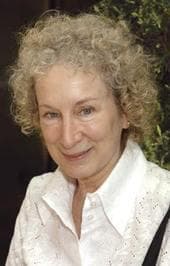
Margaret Atwood

Margaret Eleanor Atwood is a Canadian poet, novelist, literary critic, essayist, teacher, environmental activist, and inventor. Since 1961, she has published eighteen books of poetry, eighteen novels, eleven books of non-fiction, nine collections of short fiction, eight children's books, two graphic novels, and a number of small press editions of both poetry and fiction. Atwood has won numerous awards and honors for her writing, including two Booker Prizes, the Arthur C. Clarke Award, the Governor General's Award, the Franz Kafka Prize, Princess of Asturias Awards, and the National Book Critics and PEN Center USA Lifetime Achievement Awards. A number of her works have been adapted for film and television.