“Memory isn't a record, it's a reconstruction. And every time you reconstruct, you change it.”
— Dr. Weber, a neurologist, discusses the nature of memory with Mark.


Richard Powers (2014)
Genre
Literary Fiction / Psychology / Mystery
Reading Time
960 min
Key Themes
See below
Sign in to track this book
After an accident makes him believe his sister is an impostor, a man's search for answers unravels his mind and the lives of those around him, as migrating cranes reflect their world's delicate balance.
On a desolate road in Kearney, Nebraska, Mark Schluter, a house-sitter, crashes his truck in a near-fatal accident. The crash details are mysterious, with no immediate witnesses. He suffers a severe head injury and falls into a coma. His older sister, Karin Schluter, who had left Kearney years ago for a different life, is called back to care for him. She arrives with mixed feelings, facing her brother's condition and the unchanging nature of the town she tried to escape.
After weeks in a coma, Mark wakes up. However, his recovery includes a disturbing delusion: he recognizes everyone else, but believes Karin is an identical impostor, not his real sister. He thinks the 'real' Karin is elsewhere, and this woman is a perfect fake. This condition, later identified as Capgras Syndrome, shatters Karin, who struggles with her brother's rejection and his strange belief. The medical staff are puzzled, and Karin feels increasingly alone and distressed by Mark's conviction.
Desperate for answers, Karin contacts Dr. Gerald Weber, a renowned cognitive neurologist and author known for his work on consciousness and identity. Weber, dealing with his own professional and personal problems, including a recent scandal and disillusionment, is interested in Mark's case. He sees it as a chance to study the brain's workings and the self. He agrees to come to Kearney to examine Mark, hoping to understand Capgras Syndrome and the mind's deeper mysteries.
Dr. Weber begins his extensive examination of Mark. He conducts tests, scans, and interviews, trying to find the neurological damage causing Mark's Capgras delusion. He explains to Karin that the syndrome often involves a disconnect between visual recognition and emotional processing centers, leading to a lack of emotional connection when seeing a loved one, despite clear visual identification. Weber is fascinated by how Mark's brain creates the impostor narrative to explain the missing emotional link, exploring the philosophical aspects of identity and perception.
During his recovery and ongoing delusion, Mark finds a mysterious, unsigned note in his belongings, left after the accident. The note suggests someone was present at the crash and implies it was not accidental. This discovery gives Mark a new purpose: to find out what happened that winter night. He becomes determined to find the anonymous witness, believing they hold the key to understanding his accident and his fractured reality.
Karin feels increasingly burdened by Mark's care and the emotional strain of his rejection. Her return to Kearney forces her to confront unresolved issues from her past, including her relationship with her brother, her parents, and the small-town life she left. She feels a deep sense of responsibility mixed with resentment. Her interactions with Dr. Weber also become complex; she is drawn to his intellect and vulnerability, even as she questions his sometimes detached scientific approach to her brother's suffering. She struggles to reconcile her brother's current state with the Mark she once knew.
As Dr. Weber examines Mark's case, the implications of Capgras Syndrome challenge his own understanding of identity, consciousness, and reality. The idea that someone can be visually identical but emotionally a stranger, and the brain's ability to create an alternate reality, unsettles him. Along with his existing professional disgrace and personal struggles, his scientific objectivity begins to waver. He questions his own perception and identity, experiencing a subtle but significant crisis of self as he grapples with human experience.
Driven by the note, Mark, with surprising determination despite his Capgras delusion, begins his own investigation into the accident. He revisits the crash site, questions people in town, and tries to piece together the events of that night. His search for the truth about the accident becomes linked to his search for the 'real' Karin and his understanding of his own identity. He struggles to tell the difference between his distorted perceptions and objective reality, making his investigation both challenging and meaningful. He is relentless in his quest for answers, believing they hold the key to his recovery.
Throughout the story, the annual migration of sandhill cranes through the Platte River Valley in Nebraska serves as a natural backdrop and a recurring symbol. The vast flocks of cranes, their ancient calls, and their predictable return represent continuity, natural order, and life's cycles. Their presence contrasts sharply with the human struggles for identity, meaning, and connection. The cranes' journey and unified movement offer a counterpoint to the fragmented human experiences of Mark, Karin, and Weber, highlighting themes of belonging and the search for home.
Through Mark's investigation and the gradual uncovering of details, the true circumstances of his accident are revealed. It turns out Mark was not alone on the road that night, and the note was left by a young girl, Sarah, who witnessed part of the event. The accident was more complex than initially understood, involving a deer and Mark's distraction, but the presence of another person and a subsequent cover-up add moral ambiguity. The truth about the accident brings new understanding to Mark's condition and the characters' intertwined destinies.
With the accident's truth revealed, and through Dr. Weber's ongoing presence, Karin and Mark begin a slow, painful process of reconciliation. While Mark's Capgras delusion does not disappear, the shared experience and understanding of the causes allow a different connection to form. Karin learns to navigate her brother's condition with more compassion, and Mark, in his way, begins to accept the 'impostor' as a version of his sister. Their relationship changes, moving beyond expecting a cure to accepting their new reality, finding a fragile peace in their altered bond.
Dr. Weber, deeply affected by his time in Kearney and his work with Mark, undergoes a significant personal change. His detached scientific perspective gives way to a more empathetic understanding of human consciousness and identity. The experience with Mark, combined with his interactions with Karin and the natural world of the crane migration, reawakens his wonder and purpose. He finds a renewed passion for his work, now with a deeper appreciation for subjective human experience, moving beyond pure scientific reductionism to embrace the mind's mystery.
Ultimately, the characters come to terms with their pasts and the forces that shaped their present selves. Mark lives with his altered perception, finding a new way to exist within his mind. Karin finds a renewed connection to her brother and her roots, accepting her family's complexities and her own identity. Dr. Weber, having faced his own struggles, emerges with a broader understanding of consciousness and a deeper connection to the human condition. The novel ends with acceptance and the recognition that identity is fluid, constantly remade by experience and perception, like the crane calls filling the valley.
The Protagonist
Mark's arc is one of confronting a fractured identity and learning to live with a profoundly altered perception of reality, ultimately finding a new way to connect with his sister despite his delusion.
The Protagonist/Supporting
Karin's arc involves confronting her past, accepting her brother's altered state, and redefining her understanding of family and love, ultimately finding a deeper connection to her roots and herself.
The Protagonist/Supporting
Weber's arc is one of intellectual and emotional reawakening, moving from cynical detachment to a more empathetic and holistic understanding of consciousness and humanity, finding renewed purpose.
The Supporting
Sarah's arc is brief but significant, involving her struggle with a secret and her eventual contribution to the truth, leading to a degree of personal relief.
The Supporting/Mentioned
Remains largely static, representing a grounding force in the family amidst the chaos.
The Supporting/Mentioned
Remains largely static, providing quiet support and stability.
The Symbolic/Collective
Their 'arc' is cyclical, representing the unchanging natural world against human transience and struggle.
The novel explores the fragile and constructed nature of identity. Mark's Capgras Syndrome challenges the idea of a stable self, making him and those around him question what makes a person 'real.' Dr. Weber's existential crisis also shows how external recognition and internal coherence contribute to one's sense of self. The book suggests that identity is not fixed but constantly 'echoed' and remade through perception, memory, and emotional connection, as seen in Mark's inability to emotionally recognize Karin despite her physical presence.
“What if the self was not a thing, but a process? A verb, not a noun?”
Richard Powers examines the scientific and philosophical mysteries of consciousness. Through Dr. Weber's neurological expertise and Mark's condition, the book looks at how the brain creates our subjective reality. It explores the interplay between perception, emotion, and memory, and how disruptions can alter one's experience of the world. The novel questions if consciousness is just a product of neural activity or something more elusive, prompting readers to consider brain injury's impact on being. Weber's shift from a reductionist view to a more holistic understanding shows this theme.
“Consciousness was the last great mystery, the one we carried inside us without ever knowing what it was.”
Both Mark and Dr. Weber seek truth, though different kinds. Mark's pursuit of the truth about his accident is a literal search for facts, driven by the mysterious note. Dr. Weber seeks a deeper, scientific truth about consciousness and meaning, especially after his professional and personal failures. Karin also seeks meaning in her brother's condition and her life choices. The novel suggests that truth is often elusive, multifaceted, and can change one's perception of reality, leading to a more complex understanding rather than a simple answer.
“The truth was not a single thing, but a thousand intersecting lines.”
The theme of connection and disconnection runs through every major relationship in the novel. Mark's Capgras Syndrome is the ultimate disconnection, as he cannot emotionally connect with his sister. Karin feels disconnected from her past and her hometown. Dr. Weber is initially disconnected from genuine human emotion, prioritizing scientific objectivity. The story explores the human need for connection, the pain of its absence, and the difficult process of forming new connections even when traditional ones are broken. The communal aspect of the crane migration also contrasts human isolation.
“He knew her, but he didn't feel her. The bridge was out.”
The Platte River Valley and the annual sandhill crane migration serve as a backdrop, contrasting human struggles with the enduring rhythms of the natural world. The cranes symbolize ancient wisdom, instinctual belonging, and life's vastness beyond human understanding. The novel subtly questions humanity's separation from nature, suggesting that a deeper connection to the environment can offer perspective and a sense of place. The migration's scale and wonder highlight the fragility and impermanence of individual human lives against geological time and natural processes.
“These birds had been here for ten million years, a river of life that flowed regardless of what happened in the brief, flickering consciousness of humankind.”
A neurological delusion where a person believes a loved one has been replaced by an identical impostor.
Capgras Syndrome is the central medical and psychological plot device. It drives the core conflict between Mark and Karin, creating a seemingly insurmountable barrier to their relationship. It serves as the primary mystery for Dr. Weber to investigate, allowing for deep dives into neuroscience and the philosophy of identity. The syndrome isn't just a medical condition; it's a metaphor for disconnection and the constructed nature of reality, forcing characters and readers to question the very definition of 'self' and 'other'.
A cryptic message left at the accident scene hinting at an unknown witness.
The anonymous note is a classic mystery plot device. It provides Mark with a tangible goal and propels his independent investigation into his accident. Without the note, Mark might have remained passively in his Capgras delusion. It introduces an element of external mystery that parallels and intertwines with the internal mystery of his brain injury. The note creates suspense and keeps the reader engaged in uncovering the external truth of the accident, which ultimately sheds light on Mark's internal state.
The annual mass migration of cranes through Nebraska.
The crane migration functions as both a setting and a powerful symbolic device. It provides a sense of place and atmosphere, grounding the story in the specific natural environment of Kearney, Nebraska. Symbolically, the cranes represent ancient rhythms, the enduring power of nature, and a contrast to the fragmented human experience. Their predictable return and collective movement offer a profound counterpoint to the characters' individual struggles with identity, memory, and connection, suggesting a larger, more harmonious order beyond human chaos.
Mark's Capgras-induced delusion makes his perception of Karin and reality unreliable.
While not a single narrator, Mark's perspective, colored by his Capgras Syndrome, makes him an unreliable 'observer' within the narrative. His unwavering belief that Karin is an impostor forces the reader to constantly question what is real and what is delusion. This device creates tension and empathy, placing the reader in a similar position to Karin and Weber, trying to navigate a reality that is fundamentally skewed for one of the main characters. It highlights the subjective nature of truth and the profound impact of brain function on perception.
“Memory isn't a record, it's a reconstruction. And every time you reconstruct, you change it.”
— Dr. Weber, a neurologist, discusses the nature of memory with Mark.
“The mind is not a single thing, but a federation of competing interests.”
— Dr. Weber explains the complexity of the brain and consciousness.
“He knew his name, but he didn't know *himself*. The self was a story, and the story had gone missing.”
— Reflecting on Mark's condition, Capgras syndrome, and his loss of self-recognition.
“We are all echo makers, repeating the stories that define us, whether they're true or not.”
— A thematic reflection on how humans construct and perpetuate narratives.
“The brain, the most complex object in the known universe, had a glitch. And that glitch was everything.”
— Considering the profound impact of Mark's seemingly small neurological disorder.
“To be recognized is to exist. To be misrecognized is to be erased.”
— Karin struggles with Mark's inability to recognize her, feeling her own identity dissolve.
“The past was not a fixed thing, but a malleable substance, shaped by the present's needs.”
— Exploring how Mark's perception of his past changes with his Capgras syndrome.
“What if the miracle was not in the cure, but in the understanding of the disease?”
— Dr. Weber contemplates the value of scientific inquiry beyond just finding remedies.
“Every person we love is a world we inhabit. And when they change, our world changes with them.”
— Karin's perspective on her relationship with Mark after his accident.
“The world was full of duplicates, and the trick was knowing which one was real.”
— Mark's struggle with Capgras syndrome, seeing his loved ones as impostors.
“We build our lives on a foundation of stories, and when those stories crumble, we fall with them.”
— A general observation on the human reliance on personal narratives and their fragility.
“The human brain is a magnificent error machine, constantly correcting, constantly misinterpreting.”
— Dr. Weber's view on the brain's inherent fallibility and resilience.
“Sometimes the greatest mystery isn't who did it, but who *we* are after it's done.”
— A reflection on the deeper psychological impact of the accident and the mystery surrounding it.
Ready to see how well you understood this book? Take our interactive quiz with 10 questions.
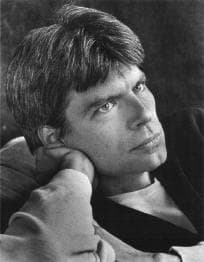
Richard Powers is an American novelist whose works explore the effects of modern science and technology. His novel The Echo Maker won the 2006 National Book Award for Fiction. He has also won many other awards over the course of his career, including a MacArthur Fellowship. As of 2023, Powers has published thirteen novels and has taught at the University of Illinois and Stanford University. He won the 2019 Pulitzer Prize for Fiction for The Overstory.







