“That's what I do. I take the most interesting women and make them mine.”
— David Kepesh reflecting on his life as a literature professor and his relationships.


Philip Roth (2001)
Genre
Literary Fiction
Reading Time
150 min
Key Themes
See below
Sign in to track this book
An aging intellectual, who sees himself as a master of sexual freedom, finds his world of detached pleasure broken by an obsessive love for a young student, making him face the intense reality of passion and death.
David Kepesh, a sixty-two-year-old literary critic and professor, talks about his long-standing habit of having affairs with his female students, always keeping an intellectual distance. He meets Consuela Castillo, a twenty-four-year-old Cuban-American student, in his 'The Sexual Imagination' class. Consuela is very beautiful, quiet, and smart, immediately drawing Kepesh in. Despite his usual rules, he feels deeply attracted to her. Their relationship begins with sex at his apartment, a change from his typical, more casual encounters. Kepesh is fascinated by her beauty and her calm nature, sensing this affair will be different.
As the affair with Consuela gets more serious, Kepesh becomes increasingly obsessed and emotionally open, states he usually avoids. He is captivated by her physical beauty, especially her breasts, which he describes in great detail. He introduces her to his son, Kenny, a doctor, who worries about the age difference and Kepesh's emotional involvement. Kepesh ignores Kenny's concerns, believing his experience gives him control. However, he starts to feel intense jealousy and possessiveness, emotions he considers beneath him. He struggles to match his intellectual view of sex and freedom with the raw, strong emotion he feels for Consuela.
Kepesh arranges a dinner with his old friend, George O'Hearn, a poet, and Consuela. George, known for being direct, immediately shows discomfort with the age gap and the power dynamics of their relationship. He questions Kepesh's motives and Consuela's true feelings, suggesting Kepesh is taking advantage of her youth. George's criticisms, though harsh, touch on some of Kepesh's own unspoken worries. Consuela stays mostly quiet during dinner, her reserved manner seen differently by the two men. The evening highlights the social judgment around their relationship and makes Kepesh face his own reasons.
After two years, Consuela unexpectedly ends the relationship. She gives little explanation, only saying she needs to move on and live her own life. Her leaving devastates Kepesh, breaking his composure and intellectual distance. He feels deep grief, jealousy, and betrayal. He tries to contact her, sends letters, and even considers going to her family's home, but she remains unreachable. This sudden loss throws Kepesh into a period of deep emotional trouble, making him face the limits of his control and the intensity of his feelings for her, which he had always tried to explain away.
Years pass, and Kepesh continues to think about Consuela. He occasionally sees her from a distance or hears things about her, but never makes direct contact. He continues his academic career, but his inner life is dominated by the memory of their affair. He reflects on his past relationships and his life philosophy, realizing how much Consuela changed his carefully built world. He has other sexual encounters, but none have the same intensity or emotional depth as his relationship with Consuela. He often talks to George O'Hearn about his lasting pain, but George offers little comfort, instead emphasizing how quickly life and beauty pass.
Eight years after they separated, Kepesh gets a phone call from Consuela. Her voice is weak and hesitant, and she says she is very sick. She has a cancerous tumor in her breast, which has disfigured her. She explains she is getting treatment but feels alone and afraid, and that she thought of him. This news shocks Kepesh, immediately bringing back his deep feelings for her, mixed with pity and a sense of helplessness. He offers to help her in any way he can, and she agrees to meet him, marking a moving and unexpected reunion.
Kepesh visits Consuela in the hospital. He sees the devastating physical changes from her illness and treatment. Her once perfect breast is disfigured, a sharp contrast to what he once obsessed over. Despite her changed appearance, Kepesh still feels a strong connection to her, now mixed with sorrow and a deep awareness of her vulnerability and coming death. He tries to offer comfort and support, but their conversation is filled with the grim reality of her condition. This visit makes Kepesh face how temporary beauty is and the harsh truth of the 'dying animal' inside all of us.
During his visits, Consuela makes a unique and difficult request: she asks Kepesh to photograph her disfigured body. She wants these photographs as a record, a sign of what she has become, and perhaps a way to regain some control over her changed form. Kepesh is deeply disturbed by the request, finding it both morbid and very intimate. He struggles with the idea of capturing such raw vulnerability and suffering, especially of a body he once admired for its perfection. This request makes him face his own worries about decay, death, and the ultimate loss of beauty.
Despite his deep discomfort, Kepesh agrees to photograph Consuela. The act is painful for him as he carefully captures the disfigurement of her breast, a symbol of her fading life and his own approaching death. Each camera click is a painful acknowledgment of her suffering and the irreversible changes caused by her illness. The process shows the depth of his lasting connection to her, going beyond the purely sexual to become an act of deep witness and compassion. These images become a clear, lasting record of her decline, and by extension, a reflection on the universal human condition of decay.
Consuela's health continues to get worse. Kepesh stays by her side, offering what comfort he can, but he is very aware of her coming death. He thinks deeply about their relationship, about love, desire, and the certainty of loss. He realizes that his initial attraction to her was based on her youth and beauty, but his lasting connection is rooted in something much deeper. Her illness makes him face his own death, the 'dying animal' within himself, and the limits of his intellectual defenses against the raw pain of human existence. He feels a deep sense of helplessness and grief.
Consuela eventually dies from her illness. Her death leaves Kepesh with an overwhelming sense of grief and a lasting mark on him. The experience has permanently changed his view on life, love, and death. His intellectual distance and carefully built philosophy of sexual freedom are shattered by the raw reality of loss. He continues to think about her, about the photographs, and about the deep effect she had on his life. He is left to deal with the painful truths revealed by her illness and death, forever changed by the woman who broke through his defenses and made him face his own vulnerability.
The Protagonist
Kepesh transforms from a detached intellectual who believes he controls his desires into a man overwhelmed by passion, grief, and the stark reality of mortality, losing his sense of control.
The Catalyst/Love Interest
Consuela evolves from an object of desire into a symbol of human vulnerability and resilience in the face of terminal illness, ultimately forcing Kepesh to confront deeper truths.
The Supporting
George remains a consistent, cynical voice of reason and reality, observing Kepesh's struggles without significant personal change.
The Supporting
Kenny's character remains largely static, serving as a concerned observer and a voice of conventional morality for his father.
The Mentioned
Not a developed arc, but her character defines Kepesh's previous emotional boundaries.
The novel explores the link between sexual desire (eros) and the awareness of death (mortality). Kepesh's first obsession with Consuela's youthful beauty is a desperate attempt to defy his own aging and the certainty of decay. Her later illness and disfigurement force him to face this link directly, as her physical decline mirrors his own approaching death. The clear descriptions of her healthy body, followed by the stark reality of her cancerous breast, are a strong metaphor for the 'dying animal' inside all humans, where the peak of physical desire is always shadowed by the certainty of death. This theme is seen in George O'Hearn's cynical statements about how quickly beauty and life pass.
“No matter how much you know, no matter how much you think, no matter how much you plot and you connive and you plan, you're not superior to sex.”
Kepesh, as an intellectual, thinks he can explain and control his emotions, especially about sex. He prides himself on keeping a detached, aesthetic distance in his affairs. However, his relationship with Consuela breaks this idea. He is consumed by jealousy, possessiveness, and grief, feelings he previously considered beneath him. The novel shows how basic human emotions, especially love and loss, can overpower even the most complex intellectual defenses. His carefully built philosophy of sexual freedom falls apart when faced with genuine, strong attachment and the ultimate loss of Consuela.
“I was not superior to sex. I was just superior to the women I'd been sleeping with.”
The novel shows a clear contrast between the idealized beauty of youth and the unavoidable decay brought by age and illness. Consuela's initial striking beauty is described in detail by Kepesh, representing his desire for perfection and vitality. Her later fight with breast cancer and the resulting disfigurement are a harsh reminder of how temporary physical beauty is. This theme concludes with Consuela's request for Kepesh to photograph her altered body, an act that makes both characters, and the reader, face the raw, uncomfortable reality of decay and the fragility of the human form. This change is central to Kepesh's realization.
“The perfect breast I'd worshiped was gone, replaced by a crater, a scar, a wound.”
Despite his many sexual encounters and intellectual pursuits, Kepesh feels deep loneliness, especially after Consuela leaves him. His initial detachment is a way to protect himself from this loneliness, but it also stops real connection. Consuela, despite her quiet nature, manages to break through his defenses, leading to a deep, though painful, connection. Her later illness and request for his presence highlight a deep human need for companionship and understanding when facing suffering. The novel explores the paradox of seeking connection through sex while often keeping emotional distance, and the ultimate human longing to be truly seen and accompanied, even when facing death.
“I was not alone. I was with her. And she was dying.”
The story is told entirely from David Kepesh's subjective and often self-justifying perspective.
The novel is narrated in the first person by David Kepesh, giving the reader direct access to his thoughts, philosophical musings, and emotional turmoil. This confessional style allows for deep psychological insight into Kepesh's character, his intellectualizations, and his struggles to reconcile his theories about sex and freedom with his raw, visceral emotions. However, it also means the reader sees events solely through his subjective lens, leading to an unreliable narration where Kepesh often rationalizes his actions and struggles to fully understand Consuela's perspective. This device immerses the reader in his complex internal world.
Her breasts symbolize youthful beauty, sexual desire, and later, the ravages of illness and mortality.
Consuela's breasts serve as a powerful and evolving symbol throughout the novel. Initially, they represent youthful perfection, beauty, and the object of Kepesh's intense sexual desire and aesthetic admiration. His detailed, almost reverential descriptions underscore his obsession with her physical form. Later, when she develops breast cancer and undergoes a mastectomy, her disfigured breast becomes a stark symbol of decay, illness, and the brutal reality of mortality. The transformation of this symbol from an object of desire to a mark of suffering profoundly impacts Kepesh, forcing him to confront the transient nature of beauty and the 'dying animal' within all humans.
A tangible record of decay and an act of profound witness and acceptance.
Consuela's request for Kepesh to photograph her disfigured body is a pivotal plot device. The photographs are not merely a record of her illness but represent a powerful act of agency on her part, a demand for her altered reality to be seen and acknowledged. For Kepesh, taking the photographs is an agonizing process that forces him to confront the raw, uncomfortable truth of decay and the ultimate loss of beauty. They become a tangible, indelible memento of her suffering and his own painful witness, symbolizing the acceptance of mortality and the enduring, albeit tragic, nature of their connection, transcending mere physical attraction.
George's cynical realism contrasts with Kepesh's intellectual romanticism, highlighting different perspectives on life and love.
George O'Hearn functions as a crucial foil to David Kepesh. Where Kepesh intellectualizes and attempts to control his emotions, George offers blunt, often cynical, and pessimistic observations about life, sex, and aging. He cuts through Kepesh's self-deceptions and romantic ideals with a stark realism, articulating the very anxieties Kepesh tries to suppress. George's pronouncements about the fleeting nature of youth and beauty, and the inevitability of decay, serve to foreshadow the novel's central themes and challenge Kepesh's carefully constructed worldview. His presence provides an external, critical perspective on Kepesh's actions and internal struggles.
“That's what I do. I take the most interesting women and make them mine.”
— David Kepesh reflecting on his life as a literature professor and his relationships.
“The price of being a man is to be a failure. The price of being a woman is to be a success.”
— Kepesh's cynical view on gender roles and societal expectations.
“Beauty is a form of genius – is, in fact, the highest form of genius, as it needs no explanation.”
— Kepesh's musings on the power and inexplicable nature of beauty, particularly in Consuela Castillo.
“Every man has three lives: the public, the private, and the secret.”
— Kepesh reflecting on the different facets of a person's existence.
“When you're young, you think your life is going to be this long, beautiful story. And then you get older, and you realize it's just a series of episodes.”
— Kepesh's contemplation of life's trajectory and the disillusionment of aging.
“I was a man of words, and she was a woman of flesh. And the flesh, as always, won.”
— Kepesh's acknowledgment of the primal power of physical attraction over intellectual pursuits.
“We are dying animals. We're all going to die. That's the only certainty.”
— Kepesh's stark confrontation with mortality, a central theme of the novel.
“The greatest pleasure in life is doing what people say you cannot do.”
— Kepesh's defiant attitude towards societal expectations and personal challenges.
“To be a man is to be a sexual creature. To be an intellectual is to pretend you're not.”
— Kepesh's internal conflict between his intellectual identity and his strong sexual drives.
“There are no second acts in American lives, F. Scott Fitzgerald famously wrote. But there are second acts in American deaths.”
— Kepesh's dark humor and reflection on how people's legacies are redefined after their passing.
“You don't get over things. You just get used to them.”
— Kepesh's pragmatic and somewhat bleak view on processing loss and change.
“What a man is, what a man isn't, how a man functions, what a man desires—it all comes down to the same thing.”
— Kepesh's reductionist view of male identity, centered on fundamental desires.
“The past is a foreign country; they do things differently there.”
— Kepesh's reflection on the irrecoverable nature of past experiences and relationships.
“It's not that I don't believe in love. I just don't believe in happy endings.”
— Kepesh's jaded perspective on romance and the often-unfulfilled promise of love.
“The secret to life is to die before you die.”
— Kepesh's cryptic contemplation of confronting one's mortality and living fully.
Ready to see how well you understood this book? Take our interactive quiz with 10 questions.
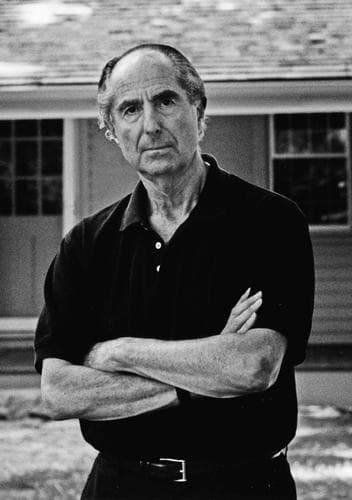
Philip Milton Roth was an American novelist and short story writer. Roth's fiction—often set in his birthplace of Newark, New Jersey—is known for its intensely autobiographical character, for philosophically and formally blurring the distinction between reality and fiction, for its "sensual, ingenious style" and for its provocative explorations of American identity. He first gained attention with the 1959 short story collection Goodbye, Columbus, which won the U.S. National Book Award for Fiction. Ten years later, he published the bestseller Portnoy's Complaint. Nathan Zuckerman, Roth's literary alter ego, narrates several of his books. A fictionalized Philip Roth narrates some of his others, such as the alternate history The Plot Against America.







