“I do not want to be a duchess if it means I have to be a simpering, brainless ninny.”
— Daphne expressing her frustration with societal expectations for women.

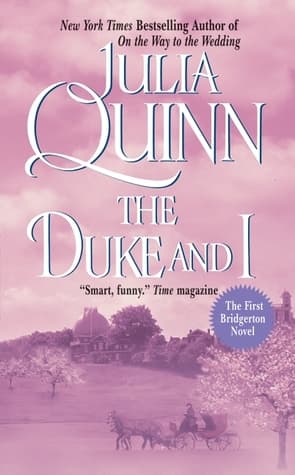
Julia Quinn (2000)
Genre
Historical Fiction / Romance
Reading Time
8-10 hours
Key Themes
See below
Sign in to track this book
A clever fake courtship, meant to fend off London's eager mothers, sparks an undeniable, real passion between a commitment-phobic duke and a smart, overlooked debutante.
Daphne Bridgerton, after two social seasons, feels increasingly frustrated by her lack of suitable suitors. Eligible bachelors see her more as a friend, and her older brothers overshadow her. Meanwhile, Simon Basset, the new Duke of Hastings, has returned to London and is immediately surrounded by ambitious mothers and their daughters, all hoping to marry him. At a ball, Daphne, seeing Simon's problem and her own, suggests a plan: they will pretend to be courting. This arrangement will make Daphne seem desirable to other men, and make Simon appear unavailable, keeping persistent matchmakers away. Simon, at first unsure, agrees, finding the plan both entertaining and useful.
The fake courtship between Daphne and Simon quickly takes hold in London society, pleasing Lady Whistledown and annoying several mothers. They are seen dancing, talking closely, and spending time together at various social events. This public show of affection successfully deters Simon's pursuers, as he is now thought to be 'taken.' For Daphne, the plan also works; her perceived desirability by a duke suddenly makes other gentlemen interested in her, including the persistent Lord Berbrooke. The Bridgerton family, especially Daphne's mother Violet, is delighted, believing a real attachment is forming, unaware of their true arrangement.
Lord Berbrooke, a rude and unpleasant man, begins to pursue Daphne with unwanted intensity, believing her available due to her apparent 'courtship' with Simon. He corners her in a garden during a ball and tries to force himself on her. Daphne, upset, tries to fight him off. Simon, seeing the scene, quickly steps in, punching Berbrooke and making sure Daphne is safe. This incident, while showing Simon's protective nature, also causes a small scandal. Later, the Bridgerton brothers, led by Anthony, uncover Berbrooke's past bad behavior, including a ruined former governess, and successfully force him to leave London, freeing Daphne from his unwelcome attention.
As Daphne and Simon spend more time together, their initial agreement to merely pretend begins to weaken. They share witty conversations, intimate talks, and moments of real connection. Daphne finds herself increasingly drawn to Simon's charm, intelligence, and unexpected kindness, realizing her feelings for him are becoming real. Simon, despite his strong decision against marriage, also finds himself enjoying Daphne's company more than he expected. He admires her spirit, wit, and compassion, and struggles to maintain the boundaries of their made-up relationship, feeling a growing, undeniable attraction to her. The lines between pretense and reality blur with each shared look and touch.
At an elegant ball, the tension between Daphne and Simon reaches a peak. After a dance, they find themselves in a private conservatory. The air is thick with unspoken emotions. Daphne, overwhelmed by her feelings and confused by Simon's mixed signals, confronts him, asking about their relationship. In a moment of strong passion, Simon kisses her deeply. The kiss is far from fake; it is passionate and real, surprising them both with its intensity and the undeniable feelings it awakens. This important moment breaks the illusion of their fake courtship, making them acknowledge the strong attraction and emotional bond that has grown between them.
Right after their passionate kiss in the conservatory, Daphne and Simon are discovered by Daphne's eldest brother, Anthony Bridgerton, who is furious at seeing such an intimate act. As the head of the Bridgerton family, Anthony feels Simon has damaged Daphne's reputation and demands satisfaction. He challenges Simon to a duel at dawn. The next morning, as they prepare to duel, Daphne steps in, stopping the fight and demanding that Simon marry her to protect her honor. Faced with either a duel to the death or marriage to Daphne, Simon reluctantly agrees to marry her, still struggling with his personal promise against having children.
Daphne and Simon marry in a quiet ceremony, quickly leaving for Clyvedon, Simon's family estate, for their honeymoon. At first, their physical intimacy is passionate and fulfilling, and Daphne believes Simon is falling in love with her. However, Simon remains emotionally guarded, consistently refusing to discuss children. He makes it clear that he cannot and will not have heirs, due to a deep promise he made to his abusive father on his deathbed: to end the Hastings line. Daphne, confused and hurt by his evasiveness and his refusal to consummate their marriage in a way that could lead to children, feels increasingly alone and unloved, despite their physical connection.
One night, Daphne realizes that Simon has been deliberately withdrawing before ejaculation to prevent conception, a method she had not known about. This discovery devastates her, as she feels betrayed and used. She confronts Simon, accusing him of deception and cruelty, understanding the full extent of his vow against having children. Simon, forced to explain, reveals the true, painful depth of his childhood trauma and his hatred for his father, and how his vow is a direct result of that abuse. The confrontation is explosive, leaving their new marriage in ruins, with Daphne feeling deeply hurt by Simon's lack of trust and his ultimate rejection of their potential future together.
After their heated argument, Daphne and Simon enter a period of deep distance. They share the same house but barely speak, each hurt by the other. Daphne feels heartbroken by Simon's unwillingness to compromise and his perceived rejection of her desire for a family. Simon, meanwhile, struggles with his deep-seated vows and the pain of his past, realizing the harm he has caused Daphne. Eventually, during a country house party, Simon, seeing Daphne's true sadness and recognizing his own love for her, offers a heartfelt apology, admitting his fear and his love, and confessing that his vow was based on childish anger, not true belief, promising to try for a family.
Following Simon's apology and his commitment to overcoming his past trauma, Daphne and Simon begin to heal their damaged marriage. They talk openly about their fears and desires, building a foundation of trust and understanding. Simon slowly starts to face the lingering pain of his childhood, realizing that his vow was a self-destructive act fueled by his father's cruelty, not a true reflection of his own desires. Their love deepens, and they actively begin trying for a family. The story ends with the promise of a future filled with children and happiness, with Daphne eventually giving birth to their first child, a daughter, and later, many more, fulfilling their shared dream.
The Protagonist
Daphne evolves from a somewhat naive debutante desperate for marriage to a strong, assertive woman who fights for her desires and helps Simon confront his past.
The Protagonist
Simon transforms from a man rigidly bound by a childhood vow of vengeance to one who embraces love, forgiveness, and the possibility of a family, overcoming his deep-seated trauma.
The Supporting
Violet remains a consistent source of maternal love and wisdom, offering guidance and support to Daphne throughout her romantic journey.
The Supporting
Anthony's protective nature is a consistent force, driving the initial conflict between Simon and the Bridgertons, before he accepts Simon as family.
The Supporting
Lady Danbury consistently acts as a wise, if sometimes stern, mentor to Simon, guiding him towards confronting his fears and embracing a fulfilling life.
The Mentioned
Lady Whistledown remains an unseen, omniscient observer, her reports driving much of the social commentary and plot progression.
The novel explores the difference between how things appear in society and the real truth. Daphne and Simon's entire courtship is a carefully built facade meant to control public opinion. While initially successful in deterring suitors for Simon and attracting them for Daphne, the pretense eventually blends with real emotion. This theme shows how society's judgment can be easily swayed by appearances, but true feelings and intentions always come out, as seen when Daphne and Simon's 'fake' kiss leads to real consequences and feelings.
““You may not have the best of reputations, but I trust you with my life. And that, dear brother, is more than I can say for most men in this room.””
Simon's character is deeply shaped by the severe emotional and verbal abuse he experienced from his father. His promise to never marry or have children comes directly from this trauma, a desperate attempt to break away from a painful past. The novel looks at the lasting impact of childhood trauma on adult relationships and choices. Simon's journey involves facing this past, realizing his vow was self-destructive, and ultimately learning to forgive, not necessarily his father, but himself, allowing himself to embrace love and a future he once rejected. Daphne's love helps him heal.
““I made a vow. To my father, on his deathbed. I swore I would never marry. I swore I would never have children. I swore I would end the Hastings line.””
Both Daphne and Simon are limited by the strict social expectations of Regency England. Daphne faces great pressure to marry and secure her future, while Simon, as a duke, is expected to marry and have an heir. Their initial fake courtship is a direct response to these pressures, an attempt to navigate society on their own terms. However, as their personal desires for love and connection grow, they find themselves clashing with these very expectations. The novel explores the tension between following social norms and seeking individual happiness, especially regarding marriage and family.
““One does not simply walk away from a duke.””
The book explores different aspects of love and intimacy, from the first spark of attraction to the complexities of a marriage. It looks at physical intimacy, emotional connection, and the importance of talking to each other. Daphne and Simon's journey shows that love is not just about grand gestures but also about understanding, trust, and vulnerability. Their struggles with Simon's secret and Daphne's misunderstanding reveal that true intimacy requires honest communication and the willingness to face difficult truths, ultimately leading to a deeper, more profound love built on mutual respect and shared dreams.
““I love you,” he whispered. “I love you more than I have ever loved anything. I love you more than I love myself.””
A classic romance trope where two characters pretend to be in a relationship, only to fall in love for real.
This central plot device drives the entire narrative. Daphne and Simon's agreement to feign a courtship is the catalyst for their initial interactions and the development of their relationship. It allows them to spend extensive time together, leading to intimate conversations and a gradual blurring of the lines between pretense and genuine feeling. This trope provides built-in conflict and irony, as they constantly remind themselves and each other of the 'fake' nature of their bond, even as their hearts betray them. It also cleverly addresses their individual societal problems, making their initial alliance logical.
An anonymous gossip column that provides narrative exposition and social commentary.
Lady Whistledown's papers serve multiple functions: they introduce chapters, provide social context, reflect public opinion, and often foreshadow events or comment on character actions. Her witty and sometimes scathing observations act as a Greek chorus, guiding the reader through the social intricacies of the Ton. She is an unseen character who influences the plot by shaping reputations and public perception, often highlighting the hypocrisy and absurdities of high society. Her reports are crucial in demonstrating the effectiveness of Daphne and Simon's fake courtship and the reactions it elicits.
Simon's past abuse by his father and his subsequent vow against having children as a major source of internal conflict.
Simon's childhood trauma and the vow he made to his dying father are the primary internal conflict for his character and the central obstacle to his happiness with Daphne. This device provides a deep psychological motivation for his actions and his resistance to marriage and family. It adds a layer of complexity and pathos to his character, explaining his guarded nature and his struggle to embrace love. The resolution of this trauma, through Daphne's love and his own introspection, is key to the story's emotional climax and the couple's ultimate reconciliation.
A common romance device where key information is withheld or misinterpreted, creating conflict.
This device is particularly evident in the latter half of the book after Daphne and Simon's marriage. Simon's deliberate withholding of his method of birth control and Daphne's subsequent misunderstanding of conception create a significant emotional rift. This lack of open communication, stemming from Simon's fear and Daphne's inexperience, leads to a painful betrayal and estrangement. It highlights the importance of honesty and open dialogue in a marriage, and its resolution is crucial for the couple to move past their initial difficulties and build a foundation of trust.
“I do not want to be a duchess if it means I have to be a simpering, brainless ninny.”
— Daphne expressing her frustration with societal expectations for women.
“You are, without a doubt, the most exasperating, infuriating, and utterly captivating woman I have ever met.”
— Simon's internal thoughts about Daphne early in their fake courtship.
“One does not simply 'decide' to fall in love. It happens, or it doesn't.”
— Daphne discussing the nature of love with her mother.
“I may not have been born a duke, but I was born a gentleman. And a gentleman does not break his word.”
— Simon emphasizing his commitment to the fake courtship.
“Sometimes, the only way to get what you want is to pretend you don't want it at all.”
— Lady Danbury offering shrewd advice to Daphne.
“There is nothing more irritating than a man who thinks he knows what's best for you.”
— Daphne's internal thoughts about Simon's protectiveness.
“A man should never underestimate the power of a woman's determination, especially when she's trying to get her own way.”
— Simon reflecting on Daphne's strong will.
“It is a truth universally acknowledged, that a single man in possession of a good fortune, must be in want of a wife. Or, at least, his mother is.”
— A humorous nod to Jane Austen, setting the scene for social pressures.
“I do not wish to marry. I wish to be left alone.”
— Simon's initial, strong desire to avoid marriage and family.
“Perhaps the greatest adventure of all is to truly know another person, flaws and all.”
— A deeper reflection on the nature of love and intimacy.
“He might be a duke, but he was still a man, and men, Daphne had discovered, were rather predictable creatures when it came to their affections.”
— Daphne's growing understanding of male psychology.
“Love, she was learning, wasn't always a grand declaration. Sometimes it was a quiet understanding, a shared glance, a hand held in the dark.”
— Daphne's evolving understanding of what love truly entails.
“Happiness, she realized, was not something one found, but something one created.”
— Daphne's personal epiphany about agency in her own joy.
“He had never known that a woman's laughter could be so utterly intoxicating, so completely irresistible.”
— Simon's growing realization of his feelings for Daphne.
Ready to see how well you understood this book? Take our interactive quiz with 10 questions.

Biography coming soon.