Biography coming soon.
Archivist's Choice
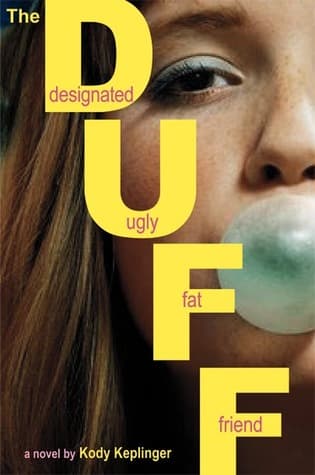
The DUFF: Designated Ugly Fat Friend
Kody Keplinger (2010)
Genre
Young Adult / Romance
Reading Time
12 Minutes
Key Themes
See below
Track Your Reading
Sign in to track this book
A cynical teen, labeled the 'ugly fat friend,' unexpectedly falls for the school's most known player after a humiliating nickname starts a volatile, secret relationship.
Synopsis
Seventeen-year-old Bianca Piper, cynical and fiercely loyal, finds her world upended when notorious school hottie Wesley Rush labels her 'the DUFF' (Designated Ugly Fat Friend). Despite her initial hatred and a thrown Coke, a desperate need for distraction from home issues leads her into a secret, no-strings-attached enemies-with-benefits arrangement with Wesley. What starts as a purely physical escape quickly complicates as Bianca discovers a surprising depth to Wesley and their shared vulnerabilities. As their lives intertwine, Bianca is horrified to realize she's falling for the last person she ever expected, challenging her perceptions of herself, her friends, and the true meaning of attraction.
Difficulty
Easy
Pacing
Moderate
Mood
Witty, honest, angsty, romantic, a bit rebellious
Plot Summary
The Duff Revelation
Seventeen-year-old Bianca Piper is at a party with her best friends, Casey and Jessica, when she meets Wesley Rush, the school's most known womanizer. Wesley tells Bianca she is the 'DUFF' (Designated Ugly Fat Friend) of her group, the friend people use to get to her prettier friends. Bianca, angry at his rudeness and how true it was, throws her drink in his face. This first, embarrassing meeting starts their complicated relationship, showing Bianca's deep insecurities and her immediate dislike for Wesley.
Family Turmoil
Bianca's home life, usually stable, becomes difficult. She learns her parents are divorcing, which upsets her deeply. Her mother is distant, and her father, a struggling author, is emotionally unavailable. This sudden change leaves Bianca feeling lost and wanting an escape from her reality. The stress at home makes her vulnerable and more likely to seek distractions, leading her to make choices she wouldn't normally consider, including an unexpected connection with Wesley Rush.
The First Kiss and the Proposition
Feeling overwhelmed by her parents' divorce, Bianca looks for comfort and distraction. She finds herself talking to Wesley Rush, who listens. In a moment of weakness and a desperate need to feel something other than pain, Bianca kisses him. She is surprised to enjoy it. Wesley suggests a 'no-strings-attached' physical relationship, saying it's only for physical pleasure and a way to forget their problems. Bianca, still affected by her home situation, agrees, seeing it as a temporary escape.
The Secret Arrangement
Bianca and Wesley start their secret arrangement. They meet in private places, usually at Wesley's house when his family is gone, pretending their encounters are only physical and without emotion. Bianca struggles with enjoying the physical intimacy while trying to convince herself she still hates Wesley. This time is marked by their clever conversations, unexpected moments of shared vulnerability, and Bianca's growing confusion about her feelings for the boy she once disliked. The secrecy adds excitement to their meetings.
Jealousy and Misunderstandings
Despite their agreement, Bianca feels jealous when she sees Wesley dating other girls. It becomes harder for her to stay emotionally distant as she realizes her feelings for him are more than just physical attraction. Wesley, for his part, seems genuinely interested in her well-being, giving her advice and comfort about her family problems. These moments of unexpected care confuse Bianca further, making her question their relationship and her own emotional limits.
The Homecoming Dance
Bianca agrees to go to the Homecoming dance with Toby, a kind and seemingly perfect guy. However, all evening, her attention is on Wesley, who is also at the dance. She watches him with other girls, feeling a pang of jealousy and realizing her feelings for him are stronger than she wants to admit. The dance becomes a moment where Bianca's inner conflict grows, showing the difference between who she thinks she should be with and who she truly wants.
The Confrontation and Aftermath
The secret of Bianca and Wesley's arrangement is revealed, leading to a fight with her best friends, Casey and Jessica. They feel betrayed and hurt that Bianca kept such a big part of her life from them, especially since they both disliked Wesley. The revelation causes a break in their friendships, leaving Bianca feeling alone and misunderstood. This public exposure forces Bianca to face her choices and their impact on those closest to her.
Wesley's Vulnerability
As their relationship continues, Bianca starts to see a different side of Wesley. She learns about his difficult family life, especially his strained relationship with his father and his worries for his younger sister. These revelations change her first idea of him as a careless womanizer, showing a more complex and sensitive person. Understanding his own struggles helps Bianca feel for him and realize that he also uses their arrangement to cope, creating a deeper, unexpected emotional bond between them.
The Breaking Point
Overwhelmed by her growing feelings for Wesley and the chaos in her life, Bianca tries to end their arrangement. She realizes the 'no-strings-attached' idea is breaking down, and she is falling in love with him, a situation she never expected and first resisted. The emotional toll of their secret relationship, along with the ongoing problems with her friends and family, pushes her to a breaking point, making her believe that ending things is the only way to protect herself from more heartbreak.
Reconciliation and New Beginnings
After some time apart and emotional difficulty, Bianca and Wesley finally face their true feelings for each other. They admit their relationship has grown far beyond a casual arrangement and that they truly care for each other. Bianca makes up with her friends, explaining her struggles and why she kept secrets. With her home life slowly getting better, Bianca and Wesley decide to start a real, committed relationship, embracing the unexpected love that came from their unusual beginning, ready to face its complexities together.
Principal Figures
Bianca Piper
The Protagonist
Bianca transforms from a self-conscious and emotionally guarded individual into someone who embraces her true self and allows herself to be vulnerable in love.
Wesley Rush
The Love Interest / Supporting
Wesley evolves from a superficial playboy into a more emotionally mature and responsible individual capable of a genuine, committed relationship.
Casey
The Supporting
Casey moves from feeling betrayed to understanding and forgiving Bianca, reaffirming their friendship.
Jessica
The Supporting
Jessica's initial anger gives way to understanding and forgiveness, solidifying her bond with Bianca.
Toby Tucker
The Supporting
Toby serves as a catalyst for Bianca's realization of her true feelings for Wesley, rather than undergoing a personal arc.
Mr. Piper
The Supporting
Mr. Piper's arc is secondary, showing a gradual, albeit slow, attempt to reconnect with Bianca amidst his personal struggles.
Mrs. Piper
The Supporting
Mrs. Piper's arc is largely in the background, focusing on her coping with the divorce, which indirectly influences Bianca's story.
Madison
The Minor Antagonist
Madison remains a static character, serving primarily as an obstacle and a source of conflict for Bianca.
Themes & Insights
Self-Acceptance and Body Image
The novel explores Bianca's struggle with how she sees herself and her body, especially after being called the 'DUFF.' This theme looks at the harmful effects of beauty standards and the journey to accepting one's appearance and worth beyond outside approval. Bianca's thoughts often address her insecurities, but her relationship with Wesley, who sees beyond her physical flaws, helps her begin to accept herself.
““I wasn’t the prettiest. I wasn’t the thinnest. I wasn’t the most popular. But I was the DUFF. And I was okay with that.””
The Complexity of Relationships
The book questions simple ideas of love and friendship by showing the messy, often contradictory nature of human connections. Bianca and Wesley's relationship is hard to define, changing from dislike to a secret physical arrangement, and then to real love. Similarly, Bianca's friendships with Casey and Jessica are tested by secrets and misunderstandings, showing how important honesty, forgiveness, and open talk are for strong bonds.
““Love wasn’t a thing to be played with. It wasn’t a game. It was a goddamn war.””
Escapism and Coping Mechanisms
Both Bianca and Wesley use their secret physical relationship to escape their personal problems. Bianca is dealing with her parents' divorce, while Wesley has a difficult home life. This theme examines how people cope with stress and emotional pain, sometimes in unhealthy or unusual ways. Their first arrangement is a distraction, but it eventually leads them to confront their issues and find a real connection.
““We were just two messed up kids looking for a way to forget how messed up our lives were.””
Challenging Stereotypes
The novel works to break down stereotypes, especially those about the 'man-slut' and the 'DUFF.' Wesley Rush, first shown as a simple playboy, is revealed to be a complex person with hidden weaknesses and a caring side. Bianca, the 'DUFF,' is more than just a less attractive friend; she is witty, smart, and has deep emotions. The story encourages readers to look past labels and find out who people really are.
““Maybe the DUFF wasn't such a bad thing to be. Maybe it meant you were real. Maybe it meant you were approachable. Maybe it meant you were human.””
Family Dysfunction and Its Impact
The theme of family problems is key to Bianca's reasons and emotional state. Her parents' divorce creates a void and a need for distraction, directly affecting her decision to be with Wesley. Similarly, Wesley's own troubled family background explains his behavior and emotional distance. This theme shows how family environments deeply shape a teenager's identity, choices, and search for belonging and stability.
““My parents were divorcing. My life was falling apart. And I was kissing the guy I hated.””
Plot Devices & Literary Techniques
The 'DUFF' Label
A derogatory nickname that acts as a catalyst for the plot and a symbol of insecurity.
The term 'DUFF' (Designated Ugly Fat Friend) is the central plot device that ignites the conflict between Bianca and Wesley. It serves as a painful reminder of Bianca's insecurities and prompts her initial anger. However, it also becomes a symbol of her journey towards self-acceptance. The label, initially an insult, forces Bianca to confront her self-perception and ultimately redefine what it means to be a 'DUFF,' transforming it from a derogatory term into a unique aspect of her identity.
Enemies-to-Lovers Trope
A classic romance trope that builds tension and explores unexpected attraction.
This widely used narrative device forms the core of Bianca and Wesley's relationship. Their initial animosity and strong dislike for each other create a dynamic tension that makes their eventual romance more compelling and surprising. The trope allows for witty banter, unexpected moments of vulnerability, and a gradual revelation of deeper feelings, challenging the characters' preconceived notions about each other and making their eventual connection feel earned and impactful.
Secret Relationship
A clandestine affair that adds suspense, emotional complexity, and external conflict.
The secrecy surrounding Bianca and Wesley's physical relationship serves multiple functions. It creates suspense, as they constantly risk exposure, and highlights their desire for escapism from their respective problems. The secrecy also isolates Bianca from her friends, leading to conflict and forcing her to confront the consequences of her choices. This device amplifies the emotional stakes and the internal struggles of both characters as they navigate their forbidden connection.
First-Person Narrative (Bianca's POV)
Allows deep insight into Bianca's insecurities and evolving emotions.
Told entirely from Bianca's perspective, the first-person narrative provides intimate access to her thoughts, insecurities, and evolving feelings. This allows readers to deeply empathize with her struggles with body image, family drama, and her unexpected attraction to Wesley. Her cynical, witty voice shapes the tone of the novel and makes her journey of self-discovery and emotional growth feel personal and authentic, fostering a strong connection between the reader and the protagonist.
Critical analysis
Notable Quotes
Quiz
Test Your Knowledge
Ready to see how well you understood this book? Take our interactive quiz with 10 questions.
10
Questions
~5
Minutes
?
Best Score
Key Questions (FAQ)
DUFF stands for Designated Ugly Fat Friend. It's a label given to the least attractive person in a group of friends, who is then used to help the others meet people.