“The wind was a hungry beast, gnawing at the corners of the houses, searching for a way in.”
— Early description of the harsh weather and environment of Sunderland.

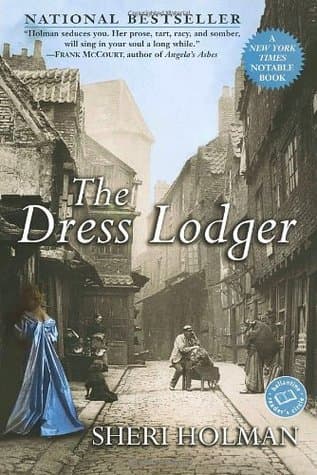
Sheri Holman (1999)
Genre
Historical Fiction / Mystery
Reading Time
350 min
Key Themes
See below
Sign in to track this book
In cholera-ridden 1831 Sunderland, a desperate teen mother pawns her body in a rented gown to save her infant, only to become entangled with a disgraced doctor and the city's dark secrets.
In 1831 Sunderland, England, a cholera epidemic holds the city. Fifteen-year-old Gustine works by day as a potter's assistant. By night, she becomes a 'dress lodger,' renting an elegant blue dress to sell herself on the streets. Her only goal is to earn enough money to feed and protect her infant son, Mungo, who has scrofula. The city is a place of desperation, fear, and widespread death, with the poor especially at risk. Gustine is always on edge, not only because of her work's dangers but also the constant threat of disease and the shame of her situation. She lives in a squalid lodging house, fighting hunger and the smell of illness and despair.
Dr. Henry Chiver is a disgraced anatomist, haunted by a past scandal involving grave robbing for science. Now a surgeon in Sunderland, he wants to understand and fight the cholera epidemic. Believing traditional medical theories are wrong, Chiver secretly buys fresh cadavers, often from local grave robbers called 'resurrectionists,' to dissect and study the disease's effects. He wants to find a cure and fix his reputation, even if it means acting outside the law and public acceptance. His assistant, Mr. Bales, helps him with these secret activities, though often with moral doubts.
One night, walking through the empty streets, Gustine finds a horrific scene: a dismembered body, clearly murdered, with its organs carefully removed. The discovery shocks the already terrified community. The police, led by Inspector Swift, start an investigation. They first suspect body snatchers or even the medical community, given the mutilation. Gustine, afraid of being blamed because she was there and because of her illegal work, tries to avoid attention. But the incident deeply disturbs her and shows her more of her world's harsh realities.
Gustine first meets Dr. Chiver when he treats a street urchin she knows, or perhaps when she herself seeks medical help for a small illness. Their paths cross in Sunderland's grim setting. Chiver notices Gustine's unusual beauty and endurance. He senses a depth in her that goes beyond her circumstances. Gustine, in turn, is drawn to Chiver's quiet intensity and the hope he offers, despite his strange reputation. Their first meetings are hesitant, marked by the large social gap between them, yet a unique connection begins to form, linking their futures.
Dr. Chiver continues to rely on the resurrectionists, especially a man named Boddy, to give him fresh cadavers for his cholera research. This illegal trade puts him at constant risk of exposure and further public blame. He knows his methods are morally unclear and legally risky, but his need to find a cure outweighs his fear of social ruin. He believes his actions serve a greater good, even as he struggles with the ethics of dissecting the recently dead, especially those from the city's poorest areas.
Mungo's scrofula gets much worse, causing Gustine great distress. His fragile health causes constant worry, and she becomes more desperate to save him. The little money she earns as a dress lodger is barely enough for food, let alone proper medical care. This desperation pushes her to take bigger risks and consider more extreme ways to ensure Mungo's survival. Her love for her son drives all her actions, making her vulnerable but also fiercely determined against overwhelming odds.
More dismembered bodies are found, all showing the same chilling pattern: specific internal organs carefully removed. Inspector Swift and the police are confused, as the murders do not seem random. The precision of the cuts points to someone with anatomical knowledge, leading suspicion to fall on the medical community, especially those in surgery or anatomical study. Fear among the people grows, and rumors of a 'monster' preying on the city's vulnerable spread, making public distrust of doctors and medicine worse.
Overwhelmed by Mungo's worsening condition, Gustine sets aside her pride and asks Dr. Chiver for help. She brings Mungo to him, pleading for his medical knowledge. Chiver, despite his cold manner, is moved by Gustine's strong devotion and Mungo's suffering. He agrees to examine the child and offers what medical help he can, forming a deeper, more personal link between them. This interaction goes beyond their first professional and social boundaries. Chiver sees Gustine not just as a 'dress lodger' but as a mother fighting for her child's life, and Gustine sees Chiver as a possible savior.
The investigation eventually uncovers the shocking truth behind the murders. The killer is Mr. Bales, Dr. Chiver's seemingly quiet assistant. Driven by a twisted view of Chiver's anatomical work and a desire to 'help' in his research, Bales has been murdering people, specifically targeting the most vulnerable, to give Chiver fresh, 'perfect' specimens for his cholera dissections. He believes he is helping Chiver's scientific efforts, unaware of the moral line he has crossed. The revelation devastates both Gustine and Chiver, forcing them to face the horrific results of Chiver's unusual methods and the dark side of human desperation.
Gustine, realizing the horrifying truth, confronts Mr. Bales. The confrontation is violent and terrifying, as Bales, lost in his delusion, tries to silence her. Dr. Chiver arrives, having also put together the horrifying puzzle, and steps in, leading to a dramatic struggle. Bales is eventually controlled and captured by the authorities, ending his terror. The climax is a brutal confrontation that brings justice to the victims and forces Gustine and Chiver to deal with the moral complexities of their choices and the tragic events that have happened.
After Bales' capture, Sunderland slowly begins to recover from the fear and horror of the murders, though the cholera epidemic continues. Dr. Chiver, deeply affected by Bales' actions and the moral implications of his own work, must now balance his scientific ambition with the human cost. Gustine, having faced terrible horrors, must now find a way to build a new life for herself and Mungo. The city remains a place of hardship, but the killer's exposure brings some closure, allowing for a fragile hope to appear amidst the lingering despair.
Gustine, having endured so much, makes a choice about her future. She is no longer just a 'dress lodger' but a survivor who has seen humanity's darkest parts. Her relationship with Dr. Chiver, born from shared desperation and understanding, reaches a turning point. While their bond is clear, their future connection is uncertain, shaped by their traumas and their places in society. Gustine's decision shows her endurance and her strong commitment to Mungo's well-being, even as she considers a different kind of life.
The Protagonist
Gustine transforms from a desperate survivor into a woman who understands the complex moral landscape of her world and makes choices for her future based on strength and love.
The Supporting/Protagonist
Chiver confronts the moral abyss his ambition has created, learning that scientific pursuit must be tempered with ethical responsibility and human compassion.
The Supporting
Mungo's survival and improved health represent hope and Gustine's success in protecting her future.
The Antagonist
Bales's hidden depravity is exposed, leading to his capture and the unraveling of his murderous delusion.
The Supporting
Swift diligently pursues the truth, eventually piecing together the evidence to identify the killer.
The Supporting
Boddy remains a constant, dark presence, representing the illicit underbelly of the city.
The Supporting
Mrs. Poole remains a static figure, representing the harsh economic realities Gustine faces.
The Mentioned
The dress serves as a constant symbol of Gustine's desperate circumstances and her resilience.
The novel shows the struggle for survival in 1830s Sunderland, a city with cholera and poverty. Gustine's every action, from working as a potter's assistant to her illegal job as a dress lodger, comes from the need to feed and protect her infant son, Mungo. Desperation also affects Dr. Chiver, whose illegal grave robbing comes from a desire to find a cholera cure. This theme appears in the squalid living conditions, the constant threat of disease and hunger, and characters' willingness to cross moral and legal lines to stay alive or reach goals. The discovery of dismembered bodies highlights the brutal extremes people go to, whether for survival or twisted ambition.
“In a city of the dead, only the desperate truly lived.”
The novel explores ethical problems in science, especially before modern medical ethics. Dr. Chiver's search for a cholera cure leads him to illegal acts like buying cadavers from resurrectionists. This raises questions about whether the end justifies the means and the moral cost of knowledge. Mr. Bales' horrific actions, murdering to provide 'perfect' specimens, show the extreme and unintended results when scientific ambition is unchecked and misunderstood. The public's distrust of doctors and medicine, fueled by these practices and the terror of cholera, further complicates the story, suggesting that progress often comes with a human and ethical price.
“Knowledge, bought with blood, was still knowledge.”
This theme is central to Gustine's character and Sunderland's society. Gustine's 'blue dress' lets her appear elegant and alluring, hiding her true identity as a poor mother. This contrast shows how people perform to survive and the illusions they create to deal with harsh realities. Similarly, Dr. Chiver keeps a respectable appearance as a surgeon while secretly doing morally questionable anatomical research. Mr. Bales' quiet exterior hides a monstrous killer. The novel constantly reminds the reader that what seems to be on the surface, whether a beautiful dress or a professional manner, often hides a darker or more desperate truth.
“The blue dress was a lie, but it was a necessary one.”
At the novel's heart is Gustine's love for her son, Mungo. This love makes her make great sacrifices, including selling her body, to ensure his survival and well-being. Her willingness to endure hardship, risk her safety, and face social blame for Mungo shows the powerful, unconditional nature of maternal love. Even Dr. Chiver's actions, though driven by science, include sacrifice, as he risks his reputation and freedom for what he believes is a greater good. The theme explores how love can make people do extraordinary, sometimes desperate, acts of selflessness.
“Every penny was a breath for Mungo, every touch a prayer.”
The clear divisions of 19th-century British society are a constant theme. The novel shows the lives of the poor, like Gustine, who live in squalor and face constant threat of disease and exploitation, contrasted with the relative privilege of people like Dr. Chiver, who, despite his own struggles, has access to education and resources. The poor are the main victims of both the cholera epidemic and the serial killer, showing their vulnerability and lack of power. The justice system, through Inspector Swift, often struggles to protect the lower classes, who are also often viewed with suspicion. This theme shows the injustices in the social hierarchy and the devastating impact of poverty.
“Cholera had no respect for station, but it found its easiest prey among those with none.”
A pervasive backdrop that drives character actions and creates a sense of dread.
The cholera epidemic of 1831 serves as more than just a setting; it is a central plot device that functions as a constant, looming threat and a catalyst for much of the story's action. It creates an atmosphere of fear, desperation, and social breakdown, impacting every character's life. The epidemic fuels Dr. Chiver's obsessive research, pushes Gustine to extreme measures for survival, and contributes to the general chaos that allows a serial killer to operate. It also highlights the medical ignorance and societal vulnerability of the era, making the city itself a character shaped by disease.
A symbolic object representing Gustine's dual life and the theme of appearance vs. reality.
The blue dress is a powerful symbolic plot device. It is the rented gown Gustine wears while working as a 'dress lodger,' transforming her from a poverty-stricken girl into a figure of allure. The dress represents her means of survival, her degradation, and the stark contrast between her outward appearance and her inner reality. It allows her to navigate different social strata, albeit illicitly, and highlights the performative aspect of her profession. The dress is a constant visual reminder of her sacrifices and the desperate measures she takes to protect her son.
A macabre mystery that drives the narrative and exposes the dark side of medical ambition.
The discovery of the dismembered bodies, with their organs meticulously removed, serves as the central mystery and a key plot device. It introduces a horrifying element of crime into the already grim setting, immediately raising the stakes. The nature of the mutilations points towards someone with anatomical knowledge, drawing suspicion to the medical community and particularly to Dr. Chiver. This device not only propels the police investigation but also forces characters to confront the dark ethical implications of their actions and the terrifying consequences of unchecked scientific zeal, ultimately revealing the true antagonist.
An illicit practice that facilitates Dr. Chiver's research and highlights moral ambiguity.
Grave robbing, carried out by 'resurrectionists' like Mr. Boddy, is a crucial plot device that enables Dr. Chiver's illicit anatomical research. This practice underscores the moral ambiguity of medical advancement in the 19th century, where the demand for cadavers for dissection often outweighed ethical considerations. It places Chiver in legal and social jeopardy, while also highlighting the desperation of those involved in the trade. The presence of grave robbers connects the legitimate medical world with the criminal underworld, blurring the lines between science and depravity, and indirectly setting the stage for the murders.
“The wind was a hungry beast, gnawing at the corners of the houses, searching for a way in.”
— Early description of the harsh weather and environment of Sunderland.
“What is a body but a vessel for the soul, and what is the soul but a fleeting breath?”
— Agnes reflecting on the nature of life and death, particularly in her profession.
“Sunderland was a town built on coal and ships, and the stench of both clung to everything.”
— A vivid sensory detail establishing the industrial setting.
“Fear was a constant companion, a shadow that never quite left her side.”
— Describing Agnes's pervasive sense of unease and danger.
“The rich had their doctors, and the poor had their prayers.”
— Highlighting the stark class divide in access to healthcare and hope.
“Every secret was a burden, and hers was growing heavier with each passing day.”
— Agnes's internal struggle with her hidden identity and past.
“The darkness held more than just shadows; it held the whispers of forgotten things.”
— A metaphorical description of the hidden histories and dangers within the city.
“Hope was a dangerous thing, a flickering candle in a world determined to blow it out.”
— Agnes's cynical view on hope amidst her grim circumstances.
“He saw not a woman, but a collection of parts, a puzzle to be solved.”
— Dr. Chiver's detached, scientific perspective on Agnes's body.
“The dead told no tales, but their bodies often did.”
— A reflection on the forensic aspects of the story and the secrets bodies hold.
“To survive was to adapt, to shed one skin for another, again and again.”
— Agnes's philosophy of survival and reinvention.
“The past was a relentless pursuer, always a step behind, always catching up.”
— Agnes's inability to escape her origins and past actions.
“In the labyrinth of the human body, even the most skilled surgeon could get lost.”
— Dr. Chiver's realization of the complexity and mystery of anatomy.
“Beauty was a fragile thing, easily marred, easily lost in the grime of Sunderland.”
— A commentary on the harsh realities that diminish delicate things.
“The truth was a scalpel, sharp and unforgiving, cutting through the layers of deceit.”
— A metaphorical description of the painful revelation of truth.
Ready to see how well you understood this book? Take our interactive quiz with 10 questions.

Biography coming soon.







