“The Void was a place of dreams, of pure thought, where the very fabric of reality could be rewritten by the power of the mind.”
— Describing the nature of the Dreaming Void itself.

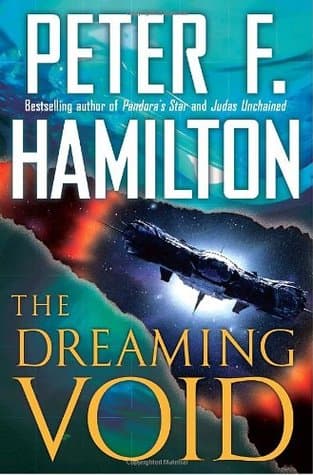
Peter F. Hamilton (2007)
Genre
Fantasy / Science Fiction
Reading Time
15-20 hours
Key Themes
See below
Sign in to track this book
A mysterious, expanding void threatens the galaxy. Humanity's shared dreams of a paradise within it spark a desperate race: either embark on a catastrophic pilgrimage or prevent the universe's ultimate consumption.
In 3589, the galaxy lives under the shadow of the Void, an expanding microuniverse. Astrophysicist Inigo, studying the Void, begins to have vivid, shared dreams of a human civilization inside it, where thoughts create reality. These dreams, spread by the gaiafield neural network, quickly move across the Commonwealth. They start the Living Dream religion, which sees the Void as a possible paradise and a destination for humanity. Inigo becomes its prophet, his dreams forming the core beliefs of this growing faith. His visions show a world free from physical limits, captivating billions and setting the stage for a galaxy-wide religious movement focused on entering the Void.
After his initial dreams, Inigo disappears. In his absence, new dreams begin to spread through the gaiafield, sent by an unknown 'Second Dreamer.' Unlike Inigo's earlier, more observational dreams, these new visions are direct, calling for a mass Pilgrimage into the Void. This strengthens the Living Dream movement, pushing followers to prepare for an unprecedented journey. However, the idea of billions trying to cross the Void's event horizon worries galactic powers. They fear it could trigger a catastrophic, accelerated expansion of the Void, potentially consuming the entire galaxy. The search for both Inigo and the Second Dreamer becomes crucial.
Ozzie, a former starship pilot and now a key figure in the Advanced Neural Association (ANA), is tasked with finding Inigo and stopping the Pilgrimage. The ANA, a powerful organization focused on understanding and controlling the gaiafield, recognizes the great danger of the Void's potential expansion. Ozzie and his team use advanced neural tracking and intelligence gathering, moving through the complex political landscape of the Commonwealth. Their mission is urgent: find Inigo, understand the source of the Second Dreamer's broadcasts, and stop the mass exodus into the Void, which they believe could lead to galactic destruction.
Chief Investigator Paula Myo, known for her relentless pursuit of justice, becomes involved in the crisis. Her investigation first focuses on Inigo's disappearance and the origins of the Second Dreamer. As she digs deeper, Myo uncovers a complex web of political schemes, corporate interests, and ancient alien conspiracies. These groups aim to either help or hinder the Pilgrimage for their own reasons. She finds that powerful factions are manipulating the Living Dream and the gaiafield, pushing the galaxy toward disaster. Her mission becomes not just finding individuals, but unraveling a vast, hidden agenda.
Deep within the Void, in the world of Makkathran, a young man named Edeard lives an ordinary life that is not what it seems. Unknown to him, his experiences are broadcast as Inigo's (and later the Second Dreamer's) dreams. Makkathran is a society where 'mind-powers'—psionics—are slowly appearing among its people. Edeard, in particular, has a budding ability to shape reality with his thoughts, though he is still learning to control it. His daily life, struggles, and growing powers form the core of the dreams, showing the 'paradise' that captivates Living Dream followers. His journey within Makkathran is key to understanding the Void itself.
The Raiel, an ancient and advanced alien race, are deeply concerned about the coming Pilgrimage. They have vast knowledge of the cosmos and have watched the Void for millennia, understanding its power and the catastrophic results of disturbing it. They warn the Commonwealth and other galactic powers that crossing the Void's event horizon could trigger a 'devourment phase,' an accelerated expansion that would consume countless star systems. The Raiel are not just observers; they have their own long struggle against an ancient, destructive entity connected to the Void. This makes their warnings more urgent and their actions strategic in trying to prevent galactic disaster.
The Edenists, a human group living in sentient, organic habitats, become a battleground in the struggle over the Pilgrimage. Their advanced technology and connection to the gaiafield make them valuable assets, but also targets. Forces wanting to speed up the Pilgrimage, seeing Edenist habitats as ideal staging points or even sacrifices to fuel the Void's expansion, launch devastating attacks. These attacks destabilize the Commonwealth and further the agenda of those manipulating the Living Dream. The Edenists' fight for survival shows the brutal stakes involved and the willingness of some factions to commit horrific acts to achieve their goals regarding the Void.
Ozzie and his team continue their search for Inigo, following clues and navigating dangerous political and criminal underworlds. They meet various groups: some protecting Inigo, others wanting to use him, and still others trying to kill him to prevent or control the Pilgrimage. The chase takes them across many star systems, leading to dangerous encounters and narrow escapes. Ozzie begins to suspect that Inigo is not just a passive dreamer but is actively involved, perhaps even imprisoned or manipulated, by forces far more powerful than they first thought. This makes his retrieval a race against time and a battle against hidden enemies.
Paula Myo's investigation leads her to discover the Guardians, ancient, powerful entities. These beings have subtly influenced galactic affairs for millennia, acting as unseen keepers of order and shapers of destiny. Myo learns that the Guardians have an interest in the Void and the Pilgrimage, though their motives remain mysterious. They are not entirely benevolent, and their methods can be ruthless as they guide or suppress the Pilgrimage according to their own long-term goals. This discovery adds another layer to the complex conspiracy, showing that humanity is merely a pawn in a much larger, ancient game.
Despite serious warnings from the Raiel and efforts by the ANA and Commonwealth authorities, billions of Living Dream followers begin to gather, preparing for the Pilgrimage. Massive fleets of starships, both new and converted, are assembled at the edge of the galactic core. They are driven by strong belief and the compelling visions of the Second Dreamer. The sheer scale of the undertaking is unprecedented, showing the deep influence of the Living Dream. The preparations create huge logistical challenges and political tensions, as the galaxy prepares for an event that could either start a new era for humanity or trigger an apocalyptic catastrophe for all sentient life.
The Protagonist/Prophet
From accidental prophet, Inigo becomes a central, sought-after figure, whose fate is intertwined with the destiny of the galaxy.
The Supporting/Investigator
Ozzie evolves from a focused operative to a key player in understanding the galaxy-spanning conspiracy around the Void.
The Supporting/Investigator
Myo's investigation expands from a missing person case to unraveling millennia-old galactic power dynamics.
The Protagonist (within the Void)
Edeard grows from an ordinary individual to a powerful psionic, influencing the destiny of his world and, unknowingly, the galaxy outside the Void.
The Antagonist/Catalyst
Remains largely a mysterious force, acting as a critical plot driver by initiating the Pilgrimage.
The Supporting/Ancient Race
The Raiel reveal more of their ancient history and their ongoing struggle against a galactic threat as the Pilgrimage approaches.
The Antagonist/Ancient Entities
Their existence and influence are slowly revealed, shifting the perception of who truly controls galactic destiny.
The Supporting/Antagonist
Marius's machinations demonstrate the intertwining of corporate power with galactic-scale events.
The novel's main conflict is between the strong faith of the Living Dream, which sees the Void as a divine paradise, and the scientific understanding and warnings from groups like the Raiel and the ANA, who see it as a threat. Inigo's and the Second Dreamer's dreams offer strong 'evidence' for the faithful, while scientific data points to disaster. This theme is explored through the large societal divide and the desperate race to either help or stop the Pilgrimage, with billions willing to risk everything based on belief.
““Faith is a powerful thing, Ozzie. It can make people do things logic would never allow.””
The Void itself, and the dreams from it, question what reality is. Inside the Void, thoughts become actions, and dreams become real. This raises questions about what is 'real' and how perception shapes existence. Inigo's and Edeard's experiences, where an inner world is broadcast and seen as an outer truth, highlight this theme. The gaiafield further blurs lines, making shared consciousness and dream states feel as real as physical experience. This forces characters and readers to question the limits of their own reality.
““Within the Void, the boundary between thought and matter is... fluid.””
The novel shows that galactic events are not only driven by current human or alien actions. They are also influenced by ancient, powerful entities like the Raiel and the Guardians. These beings have their own ancient plans, conflicts, and understandings of the universe, often using younger civilizations as pawns. This theme appears through Paula Myo's investigations, which uncover layers of manipulation and control older than recorded history. It shows that the current crisis is just one chapter in a much larger, ongoing cosmic story.
““We are not the first, nor will we be the last, to dance to the tunes of ancient players.””
The dilemma of whether and how much to intervene in the Pilgrimage is central. The ANA and Commonwealth authorities struggle with the ethics of stopping billions from seeking what they believe is salvation, even if it risks galactic destruction. This explores the conflict between individual free will and collective safety. The Guardians and Raiel also face this, deciding when and how to subtly influence or directly interfere with sentient races, weighing the results of their actions against potential disaster or desired evolution.
““To stop them would be tyranny. To let them go might be suicide.””
A neural entanglement network connecting most humans.
The gaiafield is a pervasive neural network that connects the minds of billions of humans across the Commonwealth. It allows for instant communication, shared experiences, and, crucially for the plot, the widespread broadcast of Inigo's and the Second Dreamer's visions. This device is essential for the rapid propagation of the Living Dream religion, turning private dreams into a mass phenomenon. It also serves as a tool for investigation and manipulation, as factions vie for control over its influence and information flow.
A mysterious, expanding microuniverse at the galactic core.
The Void is a self-contained microuniverse at the heart of the galaxy, steadily expanding and consuming everything in its path. It is the central mystery and driving force of the narrative. Its nature – whether it's a paradise, a threat, or both – is the core conflict. The Void acts as a catalyst for the Living Dream, a source of fear for the Commonwealth, and a point of ancient conflict for the Raiel. Its physical properties and interior world (Makkathran) define the stakes and potential outcomes of the entire story.
Visions from within the Void that inspire a galactic religion.
The dreams experienced by Inigo and later the Second Dreamer are the primary plot device that initiates and drives the entire narrative. These vivid, shared visions of life within the Void (specifically, Edeard's world of Makkathran) convince billions to join the Living Dream and embark on the Pilgrimage. The content of the dreams provides crucial information about the Void's interior, while their source and intent are central mysteries that Ozzie and Myo investigate. They are both a source of hope and a harbinger of potential disaster.
Emerging psychic abilities within the Void's human inhabitants.
Within the Void's interior, specifically on Makkathran, certain individuals like Edeard are beginning to manifest 'mind-powers' or psionic abilities. These powers allow them to manipulate their environment and other beings through sheer thought. This device establishes the 'paradise' aspect of the Void's interior, where thoughts can become reality, which is so appealing to the Living Dream followers. It also provides the internal conflict and character development for Edeard, as he learns to control and use these powerful, reality-bending abilities.
“The Void was a place of dreams, of pure thought, where the very fabric of reality could be rewritten by the power of the mind.”
— Describing the nature of the Dreaming Void itself.
“Humanity had always been a species of explorers, of dreamers. The Void was simply the ultimate frontier.”
— A reflection on humanity's inherent drive for exploration.
“Love was not a weakness, but a strength. It was the one thing that could truly bind a fragmented soul.”
— A character's internal thought about the power of love.
“Power, true power, lay not in the ability to destroy, but in the capacity to create, to inspire, to uplift.”
— A philosophical musing on the nature of power.
“The past was a labyrinth, full of wrong turns and dead ends, but it also held the keys to understanding the present.”
— A character reflecting on the importance of history.
“Fear was a natural response to the unknown, but it was also a choice. One could either succumb to it or overcome it.”
— A character confronting their own fear.
“The universe was vast and uncaring, yet within its immensity, tiny sparks of life fought to burn bright.”
— A grand perspective on the scale of the universe and life.
“Faith was a tricky thing. It could move mountains, or it could blind you to the truth.”
— A character contemplating the duality of faith.
“Even in the darkest of times, hope was a flicker that refused to be extinguished.”
— An expression of enduring optimism amidst adversity.
“Knowledge was not just about facts, but about the connections between them, the tapestry they wove.”
— A character's thoughts on the nature of true knowledge.
“The greatest battles were often fought not on a battlefield, but within the confines of one's own mind.”
— A reflection on internal struggles.
“Sometimes, the only way to find your true self was to get utterly lost first.”
— A character's journey of self-discovery.
“The future was not set in stone; it was a river, constantly flowing, constantly changing, shaped by every choice.”
— A discussion about free will and destiny.
“Empathy was the bridge that connected all sentient beings, the silent language of shared experience.”
— A character considering the importance of understanding others.
Ready to see how well you understood this book? Take our interactive quiz with 10 questions.
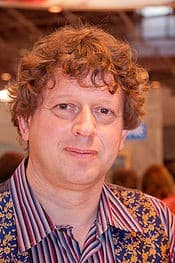
Biography coming soon.







