“There are things you can't outrun, no matter how fast you are.”
— Yael reflects on the inescapable nature of her past and destiny.

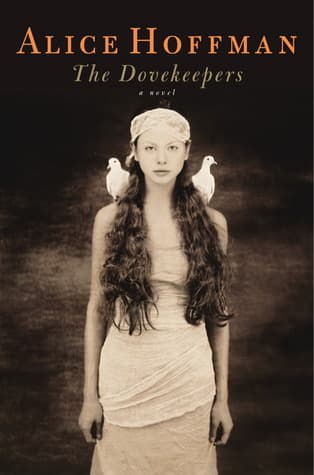
Alice Hoffman (2011)
Genre
Historical Fiction
Reading Time
600 min
Key Themes
See below
Sign in to track this book
During the Roman siege of Masada, four independent women, working as dovekeepers, navigate love, loss, and survival while confronting their hidden pasts.
Yael, estranged from her father, Ben Ya'ir, because of her mother's death in childbirth, arrives at Masada after a difficult journey. She eventually works in the dovecotes. Revka, a baker's wife, arrives with her two grandsons, Ari and Ari, who are mute after witnessing their mother's murder by Roman soldiers. She seeks refuge and a new purpose. Aziza, raised as a boy by her warrior father, Eleazar ben Ya'ir, after her mother's death, comes to Masada as a skilled fighter. She is independent and committed to the cause. Shirah, a healer from Alexandria, arrives with her daughter, the silent Nia, seeking safety and a place where her abilities are accepted. Each woman is given a role, and their paths begin to connect.
Yael, Revka, Aziza, and Shirah all work in the dovecotes, caring for the thousands of doves that provide food and a sense of routine for the besieged community. This shared task brings them together, despite initial differences. They learn to rely on each other, forming an unexpected bond as they navigate daily life on Masada. The dovecotes become a sanctuary where secrets are slowly revealed, and where the women find comfort in nurturing life as danger approaches. Shirah's knowledge of herbs and healing is often needed, and Revka's practical skills are valuable.
Yael, wanting connection, is drawn to Ben Simon, a married soldier and carpenter. Their attraction quickly becomes a passionate, secret affair. They meet in secret, stealing moments together despite the risks and community rules. Yael values these stolen moments, finding a sense of belonging and love she has never known. However, Shirah discovers the affair. With her intuitive understanding of people, Shirah senses the deep emotional entanglement and the potential for heartbreak and scandal within Masada's close community. This discovery adds tension to Yael's already complex life.
Aziza, raised as a boy and skilled in combat, struggles with her identity and her place among the women. She feels most comfortable on the battlefield, not in domestic settings. She forms a close bond with Amram, a fellow warrior, and their relationship becomes a passionate love affair. Aziza’s independence and Amram’s support help her embrace her true self, as a warrior and a woman capable of deep love. Their love offers a brief escape from the siege's harsh realities, showing the strength of human connection even in desperate times. Their bond is a source of strength for both.
Shirah, with her knowledge of herbs, ancient remedies, and a touch of magic, becomes the main healer for the Masada community. She cares for the sick and wounded, offering comfort. Beyond her medical skills, Shirah also has strong intuition and can interpret dreams and glimpse the future. Her visions, often unsettling, provide insight into Masada’s fate. She shares some of these visions with the other dovekeepers, who, though sometimes skeptical, come to rely on her wisdom. Her presence offers a unique mix of practical healing and spiritual insight, making her an essential, if mysterious, figure.
Revka carries the deep grief of witnessing her daughter's murder by Roman soldiers, a trauma that has silenced her two young grandsons. On Masada, she dedicates herself to their care, finding new purpose in protecting and nurturing them. She struggles with her memories, often reliving the horrific event, but her love for her grandsons motivates her to survive. She also connects with the other dovekeepers, finding community and understanding that helps her begin to heal, even as the siege tightens. Her quiet strength anchors the group.
As the Roman army builds its ramp, the siege on Masada intensifies. Resources become scarce, and the constant threat of attack wears down the defenders' morale. The community begins to fray under the pressure. The women in the dovecotes see the growing despair, but also the unwavering determination of some. Battle sounds come closer, and the reality of their precarious situation is clear. Roman forces, led by Flavius Silva, are relentless, slowly closing in on the fortress. Hope dwindles as days turn into weeks, and survival seems increasingly unlikely.
Yael discovers she is pregnant with Ben Simon's child. This brings both joy and fear, as conditions on Masada are dire. Despite the risks, she is determined to protect her unborn child. With help from Shirah and the other dovekeepers, Yael endures a difficult pregnancy. She gives birth to a daughter, Naomi. Naomi's birth, a symbol of new life amid death, brings a brief moment of hope to the besieged community. However, the child's existence also raises questions about her paternity and complicates Yael's already dangerous situation, especially with the Roman breach approaching.
The Roman ramp is completed, and their forces breach Masada's walls. Recognizing inevitable defeat and unwilling to surrender, Eleazar ben Ya'ir, Masada's leader, gives a powerful speech to his people. He urges them to choose death over Roman captivity. His words resonate with the weary inhabitants, who understand the horrific fate awaiting them if captured. The decision weighs heavily on everyone, but the resolve to maintain dignity and freedom, even in death, is strong among many defenders, including the dovekeepers.
Faced with Eleazar ben Ya'ir's call for collective suicide, the dovekeepers consider their choices. Yael, holding her infant daughter Naomi, is torn between despair and the fierce instinct to protect her child. Revka, with her two silent grandsons, seeks a way to preserve their innocence. Aziza and Amram make their own solemn decision. Shirah, with Nia, consults her visions and wisdom. Ultimately, a few, including Yael and Naomi, and Revka and her grandsons, hide, choosing to live and witness the tragedy. They are discovered by the Romans after the mass suicide, becoming the only survivors mentioned by Josephus, carrying the heavy burden of memory and loss.
The Protagonist
Yael transforms from a guilt-ridden, insecure girl into a resilient mother who finds the strength to survive and protect her child.
The Protagonist
Revka moves from deep despair to finding a renewed purpose in caring for her grandsons, embodying quiet strength and resilience.
The Protagonist
Aziza's arc involves reconciling her warrior upbringing with her female identity, ultimately finding love and acceptance for who she is.
The Protagonist
Shirah uses her unique gifts to guide and heal, ultimately accepting her role as a keeper of ancient knowledge and a witness to history.
The Supporting
Eleazar maintains his rigid ideals until the end, choosing death over surrender, solidifying his legacy as a fierce but ultimately tragic leader.
The Supporting
Ben Simon provides Yael with a brief but profound experience of love and fatherhood, his impact enduring through their child.
The Supporting
Amram provides Aziza with unconditional love and acceptance, allowing her to fully embrace her identity.
The Supporting
Nia remains a silent, symbolic figure of innocence and the future, her survival representing a fragile hope.
The Antagonist
Flavius Silva successfully completes his military objective, representing the unstoppable force that leads to Masada's fall.
This theme explores the will to survive against impossible odds. The women of Masada, stripped of their former lives, find new strength in the face of starvation, siege, and constant death. Revka's unwavering care for her mute grandsons, Yael's determination to protect her unborn child, and the collective effort to keep the dovecotes running all highlight this theme. Even in their final, harrowing choice, the act of a few hiding to bear witness is an ultimate act of survival, ensuring their story is not entirely lost. The dovekeepers, caring for life amid death, embody resilience.
““We were the dovekeepers, and we were the only ones left to carry the story.””
Amidst the siege, the characters seek and find various forms of love and connection, which become vital. Yael's passionate affair with Ben Simon, Aziza's deep bond with Amram, and the evolving sisterhood among the four dovekeepers all show the human need for intimacy and belonging, even in desperate circumstances. These relationships offer comfort, strength, and moments of joy that contrast with the surrounding despair. The love between the women, forged through shared hardship in the dovecotes, creates a powerful, though temporary, sanctuary.
““Love was not a thing to be wasted, not in a place where it was so scarce.””
Each woman on Masada must confront and redefine her identity. Yael sheds her guilt-ridden past to become a mother. Aziza, raised as a boy, grapples with her femininity and finds love that allows her to embrace her true self. Shirah embraces her role as a healer. Revka, initially defined by her loss, finds new purpose in protecting her grandsons. The extreme conditions remove societal expectations, allowing the women to discover their inner strengths and authentic selves in surprising ways. Their journey on Masada is as much an internal one of self-discovery as it is an external battle for survival.
““We learned who we were, not by the roles we had been given, but by the choices we made.””
The novel emphasizes memory and storytelling as ways to preserve history and honor the lost. The entire narrative is framed by Yael's role as a survivor, tasked with remembering and recounting Masada's events. The trauma of Revka's grandsons, silent witnesses, highlights memory's profound impact. Shirah's visions and her daughter Nia's quiet observation also contribute to this theme, suggesting that stories are carried not just through words but through experience and silence. The final act of survival is driven by the desire to ensure that the story of Masada and its people is not forgotten.
““We were the last, and we would remember. We would tell the story.””
Masada's inhabitants are deeply religious, believing in God's will and predetermined destiny, yet they constantly make choices reflecting free will. Eleazar ben Ya'ir's call for collective suicide is presented as a choice for freedom and dignity, even if it defies traditional religious tenets against self-murder. Shirah's visions hint at destiny, but the women still choose their paths. This tension between divine plan and human agency is central to the characters' struggles and decisions, particularly in the face of an inevitable and tragic end. The question of whether their fate is ordained or chosen adds depth to their suffering and resilience.
““Was it God’s will or our own desperate choice that brought us to this end?””
The story is told through the alternating first-person narratives of the four main dovekeepers.
This device allows the reader to experience the events of Masada through the distinct emotional and psychological lenses of Yael, Revka, Aziza, and Shirah. Each woman's unique background, personality, and internal struggles shape her perception of the siege, the community, and her own relationships. This provides a rich, multi-faceted understanding of the events, fostering empathy for each character and highlighting the subjective nature of truth. It also allows for the gradual unveiling of their secrets and inner lives, building a complex tapestry of human experience under duress.
The dovecotes serve as a central gathering place, a source of sustenance, and a powerful symbol.
Beyond their practical function of providing food, the dovecotes are a potent symbol within the narrative. They represent life, hope, and the feminine sphere of nurturing and care amidst the masculine world of war and destruction. It is within these dovecotes that the four women form their deepest bonds, share their secrets, and find solace. The doves themselves, fragile yet resilient, mirror the women's own struggle for survival. The dovecotes become a sanctuary, a quiet place where life continues to flourish even as death looms outside the walls.
Characters frequently revisit past traumas and significant life events through detailed memories.
Flashbacks are used extensively to reveal the backstories of the characters and the events that led them to Masada. Revka's recurring memories of her daughter's murder, Yael's recollection of her mother's death and her father's blame, and Shirah's memories of Alexandria all provide crucial context for their present actions and emotional states. This device deepens characterization, explains motivations, and underscores the lingering impact of trauma and the weight of their personal histories on their current experiences during the siege.
Shirah's ability to foresee events and interpret dreams adds a mystical and foreboding element.
Shirah's prophetic visions and her ability to interpret dreams serve as a narrative device that introduces elements of mysticism and foreshadowing. Her insights often hint at the tragic future of Masada and its inhabitants, creating a sense of impending doom and heightening the dramatic tension. While not always explicit, these visions guide her actions and provide a spiritual dimension to the narrative. They also represent a connection to ancient wisdom and a different way of understanding the world, contrasting with the purely physical struggle of the siege.
“There are things you can't outrun, no matter how fast you are.”
— Yael reflects on the inescapable nature of her past and destiny.
“We are all the stories we tell ourselves.”
— Aziza considers the power of self-narration and identity.
“Hope is a dangerous thing, but it's all we have.”
— Shira ponders the double-edged sword of hope in dire circumstances.
“Love is a kind of magic, a spell that can be broken, or renewed.”
— Leah reflects on the ephemeral yet resilient nature of love.
“Sometimes the greatest courage is to simply keep breathing.”
— A general reflection on endurance amidst suffering.
“The past is a wound that never truly heals, only scars over.”
— A character's internal thought about the lasting impact of trauma.
“We were not meant to be alone, but sometimes it is the only way to survive.”
— Yael's internal conflict about isolation versus community.
“A secret is a heavy burden, even if it protects others.”
— Shira struggles with the weight of hidden truths.
“There is a language in the flight of doves, if you only know how to listen.”
— Reflecting on the unique connection between the dovekeepers and their birds.
“To forget is to die a little, to remember is to live with the pain.”
— A poignant thought on the dilemma of memory and grief.
“Even in the darkest places, there can be a flicker of light.”
— A general theme of finding hope and resilience in despair.
“The desert holds its own kind of beauty, stark and unforgiving.”
— Description of the harsh but compelling landscape of Masada.
“A mother's love is a fierce thing, capable of anything.”
— A recurring theme highlighting the powerful bond of motherhood.
“History is not just dates and battles, but the stories of those who lived them.”
— An overarching message about the human element of historical events.
Ready to see how well you understood this book? Take our interactive quiz with 10 questions.

Alice Hoffman is a celebrated American novelist known for her magical realism and explorations of family, love, and loss. Her notable works include the bestselling 'Practical Magic' series, 'The Museum of Extraordinary Things,' and 'The Rules of Magic.' Hoffman's poignant storytelling and vivid imagery have earned her widespread critical acclaim and a dedicated readership.







