“Time is a river, and we are but leaves floating on its surface, carried by its current.”
— Early philosophical musings by the protagonist about the nature of time.

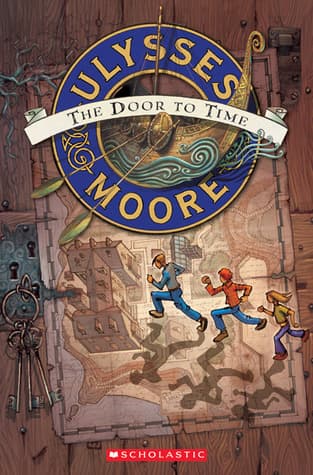
Pierdomenico Baccalario (2005)
Genre
Fantasy / Children's / Mystery / Science Fiction / Young Adult
Reading Time
120 min
Key Themes
See below
Sign in to track this book
In a sprawling mansion by the English sea, eleven-year-old twins Jason and Julia find a hidden door to an ancient mystery, launching them into a world of forgotten secrets and adventure.
Eleven-year-old twins Jason and Julia Covenant, along with their parents and younger sister, Gwen, move from London to Kilmore Cove, a remote English coastal town. Their new home is the large and old Argo Manor, a house full of secrets, hidden passages, and a strange collection of items from around the world. The twins are immediately drawn to the manor's mysteries, especially the many locked rooms and the feeling that the house is alive. They soon meet Rick Banner, a local boy who quickly becomes their friend. Together, they begin to explore Argo Manor, drawn by a sense of wonder and the promise of discovery.
While exploring one of the many dusty rooms in Argo Manor, Jason, Julia, and Rick find a strange, old door hidden behind an old wardrobe. The door is made of a dark wood and has an unusual lock, unlike any they have seen. Intrigued, the children try every key they can find, but none fit. They realize this is not just any door; it is a secret someone intentionally hid. Their curiosity grows, and they become determined to find out what is behind it, believing it holds a significant secret about the manor's history and perhaps even their own family.
Their investigation is interrupted by Oblivia Newton, the manor's stern caretaker, who has been away. Oblivia, a woman with a serious manner but a hidden kindness, at first tries to stop the children from exploring, pointing out the house's dangers. However, sensing their strong curiosity and perhaps seeing a similar spirit in them, she eventually reveals the true nature of the hidden door. She explains that it is the 'Door to Time,' one of four such doors in Kilmore Cove, built by an ancient people called the Olivi. This news excites the children, confirming their suspicions that Argo Manor holds extraordinary secrets.
Oblivia, seeing the twins' unique connection to the house and its secrets, begins to guide them. She shares stories of the Olivi, a highly advanced people who could travel through time. She explains that the four Doors to Time in Kilmore Cove are remnants of their legacy, each able to transport people to different eras. The first door, the one the children found, leads to ancient Egypt. Oblivia also introduces them to the 'Keepers of the Door,' people tasked with protecting these portals and preventing their misuse. This knowledge deepens the twins' understanding of their new home's history and their potential role in it.
Under Oblivia's careful guidance, Jason, Julia, and Rick learn how to activate the Door to Time. It requires not just a key, but also an understanding of the Olivi's principles and a certain 'feel' for the door. After several tries and a thrilling sense of anticipation, they successfully open the portal. The children are transported to ancient Egypt, a world very different from their own. They marvel at the pyramids, the busy markets, and the culture, experiencing history firsthand. This first journey tests their courage and adaptability, proving that Oblivia's stories were true and that the Doors to Time are real.
In ancient Egypt, the children's adventure takes an unexpected turn when they meet the Pharaoh. They learn that an important artifact, an Olivi device that helps maintain the stability of the Doors to Time, has been stolen or lost in this era. The Pharaoh, perhaps sensing something special about the children, asks them to find it. This new mission gives their time-traveling a greater purpose, turning their explorations from mere curiosity into a vital quest. They realize the great responsibility that comes with using the Doors to Time and the potential results if they fail to retrieve the artifact.
Jason, Julia, and Rick begin their quest through ancient Egypt, facing various challenges. They navigate the city, decipher ancient hieroglyphs, and talk with locals, trying to find clues about the missing Olivi artifact. Their modern knowledge and quick thinking are very useful, but they also learn the importance of respecting the past's customs and dangers. The journey tests their problem-solving skills, teamwork, and ability to adapt to new environments. Each step brings them closer to understanding the artifact's importance and the potential impact of its loss.
After several close calls and clever deductions, the children find the missing Olivi artifact. It is hidden in an unexpected place, protected by ancient traps and riddles, showing the Olivi's cleverness. Working together, Jason's logic, Julia's intuition, and Rick's practical skills combine to overcome the final obstacles. They retrieve the artifact, a small but powerful device, understanding its importance to the balance of time. Their success brings a sense of accomplishment and a deeper appreciation for the Olivi's legacy and the delicate nature of time itself.
With the artifact safely in hand, Jason, Julia, and Rick use the Door to Time to return to Argo Manor in Kilmore Cove. They present the artifact to Oblivia, who praises their bravery. The experience has changed them. They now understand that the Doors to Time are not just for adventure but also a responsibility. They realize they are not just visitors to the past but potential guardians of time, like the ancient Keepers. This adventure strengthens their bond and their commitment to protecting the secrets of Kilmore Cove and the Olivi legacy.
As their first time-traveling adventure ends, Oblivia reveals more about the other three Doors to Time. She explains that each door leads to a different important period in history and that their journey to ancient Egypt was just the beginning. The children are excited by the idea of more adventures and finding more Olivi secrets. The book ends with the promise of future explorations, leaving Jason, Julia, and Rick eager to discover what other historical eras and mysteries await them behind the remaining Doors to Time in Kilmore Cove, hinting at a greater destiny for the twins.
The Protagonist
Jason develops from a curious boy into a responsible time-traveler, learning to trust his instincts alongside his logic.
The Protagonist
Julia grows from an impulsive explorer to a more balanced adventurer, learning to combine her intuition with practical action.
The Supporting
Rick evolves from a typical local boy into a trusted member of a time-traveling team, expanding his understanding of the world.
The Supporting
Oblivia transitions from a distant guardian to a more active mentor, guiding the next generation of Keepers.
The Supporting
Gwen remains a secondary character, providing a glimpse into the ordinary family life amidst extraordinary events.
The Mentioned
A static character who serves as a catalyst for the children's mission in ancient Egypt.
The story is driven by the pull of the unknown. From the moment Jason and Julia enter Argo Manor, they are drawn to its hidden passages, locked rooms, and strange items. The discovery of the Door to Time behind the wardrobe is the main example of this theme, pushing the children to overcome obstacles and find the manor's deepest secrets. This theme highlights humanity's natural curiosity and the excitement of finding hidden truths, turning a seemingly ordinary house into a way to extraordinary adventures.
“The house was a maze of secrets, and every locked door was an invitation.”
The bond between the twins, Jason and Julia, is key to their ability to handle the challenges of time travel. Their combined skills—Jason's logic and Julia's intuition—make them a strong team. The addition of Rick, their loyal and practical friend, strengthens this dynamic, showing that teamwork and support are essential for overcoming difficulties. Their shared experiences and trust in each other allow them to succeed in their mission to ancient Egypt, highlighting the importance of connection when facing the unknown.
“Together, they were more than just two; they were three minds, three hearts, beating to the rhythm of adventure.”
Once the children find the Door to Time, they quickly learn that such great power comes with much responsibility. Oblivia Newton's guidance stresses the need for caution and the dangers of misusing time travel. Their mission to retrieve the missing Olivi artifact in ancient Egypt shows this theme: their actions in the past have real effects on the present and the stability of time itself. This theme teaches that extraordinary abilities require careful thought and a commitment to protecting the delicate balance of existence.
“The Doors to Time are not toys, children. They are a trust, a legacy, and a burden.”
The book clearly shows how different historical eras are connected through the Olivi's legacy and the Doors to Time. The children's journey to ancient Egypt is not just a visit to the past; it is an interaction with it, where their actions affect the future. The Olivi, an ancient people with advanced technology, blur the lines between past, present, and even future. This theme suggests that history is not separate events but a continuous, connected story, where every part has importance.
“Every moment, every era, is but a single thread in the vast tapestry of time.”
A magical portal that allows travel to specific historical eras.
The Door to Time is the central plot device, a physical gateway hidden within Argo Manor that transports individuals to ancient Egypt. It serves as the primary catalyst for the children's adventures and the reveal of the Olivi's legacy. Its mysterious nature, requiring a specific key and understanding to activate, builds suspense and provides the mechanism for their time travel. It is one of four such doors, hinting at future explorations and a larger narrative scope.
An ancient, advanced civilization responsible for creating the Doors to Time.
The Olivi are a crucial background plot device. They are an ancient civilization that possessed advanced knowledge of time and technology, responsible for constructing the Doors to Time. Their legacy provides the historical and fantastical framework for the story, explaining the existence of the portals and the artifacts the children encounter. The mystery surrounding their disappearance and their purpose drives much of the narrative's intrigue, establishing a grander mythology for the series.
An ancient, sprawling mansion filled with hidden passages and secrets.
Argo Manor is more than just a setting; it acts as a character itself and a significant plot device. Its labyrinthine structure, hidden rooms, and collection of artifacts create an atmosphere of mystery and discovery. It is the initial stage for the children's explorations and the location of the first Door to Time. The manor's secrets and its connection to the Olivi lineage serve to draw the children into the larger narrative of time travel and ancient mysteries.
A crucial device from the Olivi civilization that must be retrieved from the past.
The missing Olivi artifact serves as the primary MacGuffin for the children's first time-traveling mission. Its theft or loss in ancient Egypt provides a concrete objective for their journey, transforming their exploration into a quest with significant stakes. The artifact's importance to the stability of the Doors to Time highlights the responsibility associated with time travel and motivates the children to act heroically, driving the main conflict of their Egyptian adventure.
“Time is a river, and we are but leaves floating on its surface, carried by its current.”
— Early philosophical musings by the protagonist about the nature of time.
“The past is never truly gone; it echoes in the present and shapes the future.”
— A recurring theme when discussing the impact of historical events.
“Every second is a door, and behind it lies an infinite number of possibilities.”
— A character explaining the concept of choice and its connection to time travel.
“To truly understand who you are, you must first understand where you come from.”
— A mentor advising the young protagonists on their journey of self-discovery.
“The greatest mysteries are not in the stars, but in the ticking of a clock.”
— A reflection on the profound nature of time itself as the ultimate enigma.
“Courage is not the absence of fear, but the willingness to act in spite of it.”
— A moment of encouragement during a dangerous mission.
“Sometimes, the most important journey is the one that leads you back home.”
— A character contemplating the emotional pull of their origins.
“Secrets have a way of revealing themselves, especially when you try hardest to bury them.”
— When a hidden truth begins to unravel, despite efforts to keep it concealed.
“What if the future isn't something we merely experience, but something we actively create?”
— A speculative question posed about free will and destiny.
“Even the smallest change can ripple through time, altering everything.”
— A warning about the dangers of paradoxes and altering historical events.
“The true measure of a person is not their power, but their kindness.”
— A moral lesson learned by one of the characters after encountering various figures.
“Don't just look at the clock; listen to its heartbeat.”
— An evocative instruction on truly understanding the essence of time.
“There are places where time is thin, where the past and present almost touch.”
— Describing magical or significant locations that are crucial to the plot.
“Hope is the anchor that keeps us steady in the wildest currents of time.”
— A moment of reflection during a difficult and uncertain period.
Ready to see how well you understood this book? Take our interactive quiz with 10 questions.

Biography coming soon.







