“Never try to teach a pig to sing; it wastes your time and it annoys the pig.”
— Dan Davis's cynical but practical advice, often repeated.

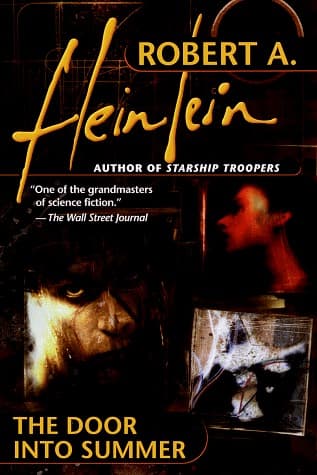
Robert A. Heinlein (1957)
Genre
Fantasy / Science Fiction
Reading Time
360 min
Key Themes
See below
Sign in to track this book
Betrayed and robbed of his revolutionary robot invention, a brilliant engineer from 1970 is tricked into a thirty-year suspended animation, only to awaken in a future where he must reclaim his past and outwit those who wronged him.
It's 1970. Daniel Boone Davis, a brilliant but naive electronics engineer, has invented two products: 'Flexible Frank' (a household robot) and the 'Drawing Room Comforter' (an automated drafting machine). He runs 'Hired Girl, Inc.' with his partner, Miles Gentry, and is engaged to Belle Darkin. As his inventions near success, Belle convinces Dan to put his cat, Pete, into 'cold sleep' for a few months. Soon after, Miles and Belle conspire to steal Dan's controlling stock. They then trick Dan into entering a thirty-year suspended animation, promising him future profits upon his awakening in 2000. Dan agrees, unaware of their full treachery.
Dan awakens in 2000, disoriented and betrayed. A 'Long Sleep' corporation representative informs him his assets were liquidated long ago to cover his cryo-storage fees, leaving him penniless. The world has changed; technology has advanced in ways Dan finds both fascinating and frustrating. He tries to contact Miles Gentry and Belle Darkin, only to find Miles died years ago and Belle is untraceable. His inventions, especially the household robot, are now commonplace, but under different names and produced by other companies, with no credit or profit attributed to him. Dan feels a deep sense of loss and injustice.
Determined to reclaim his legacy and understand what happened, Dan researches the history of his inventions and his betrayers. He learns his 'Flexible Frank' robot is now the 'Household Servant.' During his research, he finds an experimental time travel method called 'cold sleep,' which allows individuals to project their consciousness into their past self, altering history. This revelation gives him a daring idea: to go back in time, not just to reclaim his inventions, but to change the past and prevent the betrayal. He begins to plan this impossible journey.
Dan realizes the 'cold sleep' method, initially for medical use, can be repurposed for time travel. He aims to project his consciousness from 2000 back into his 1970 self, reliving and altering the moments before his betrayal. He needs to acquire funds and knowledge for this complex process. He gets a job as a technician, saving money, and studies the theoretical and practical aspects of 'cold sleep' time displacement. His goal is not merely revenge, but to protect his inventions, his company, and most importantly, his future with his foster daughter, Ricky.
Dan successfully initiates the 'cold sleep' time displacement and projects his consciousness back into his 1970 self, before the betrayal. Armed with thirty years of future knowledge, he immediately makes subtle changes. He secures his patent rights more carefully and makes strategic financial moves. He observes his past self's naivete and Belle and Miles's manipulative actions with a new, cynical eye. He also reconnects with his young foster daughter, Frederica 'Ricky' Gentry, Miles's stepdaughter, experiencing their bond with renewed appreciation and a strong desire to protect her from the future he knows. His presence causes small shifts in the timeline.
Knowing the future, Dan takes decisive action. He secretly patents his 'Drawing Room Comforter' and 'Flexible Frank' under different names and through secure channels, preventing Miles and Belle from stealing them. He also invests wisely, using his future knowledge to build a fortune. He focuses on securing Ricky's future, arranging for her to inherit his wealth and ensuring she gets a good education, free from Miles and Belle's negative influences. He also plans to put Pete, his cat, into a longer cold sleep, ensuring their reunion in the future, an act of hope and continuity.
With his patents secured and finances in order, Dan confronts Miles Gentry and Belle Darkin, revealing his knowledge of their plans. He cuts them out of his company and life, leaving them no opportunity to betray him. The confrontation is tense, but Dan's future knowledge gives him an advantage. He ensures Miles cannot profit from his inventions and Belle cannot manipulate him. With the immediate threat neutralized, Dan proceeds with his plan to enter a thirty-year cold sleep, this time on his own terms and with a clear purpose: to reunite with Ricky and Pete in the future he has engineered.
Dan awakens in 2000, but this time, the world is different. Thanks to his interventions, he is a wealthy man, the rightful owner of his successful inventions. He is greeted by a grown-up Ricky, now his legal guardian and a brilliant, successful woman. She has managed his vast fortune and company, 'Hired Girl, Inc.,' which has become a global powerhouse. Pete, his beloved cat, also awakens from cold sleep, and they share a joyful reunion. Dan feels a profound sense of satisfaction and relief, knowing he averted his tragic past and secured a happy future for himself, Ricky, and Pete.
As Dan settles into his new life in 2000, he reflects on the philosophical implications of his time travel. He grapples with the concept of his 'past self' and 'future self,' and how his consciousness jump created a new, altered timeline. He realizes his journey was not just about revenge or reclaiming his inventions, but about securing happiness and preventing suffering. His love for Ricky and Pete drove his quest. He acknowledges the strangeness of having lived through the same thirty years twice, with different outcomes, and its impact on his identity and understanding of reality. He is a man who has truly cheated fate.
With his past wrongs corrected and his future secured, Dan looks forward to a new beginning. He has his wealth, his successful company, and most importantly, his family: Ricky, now his wife, and Pete. The novel concludes with Dan embracing this hard-won happiness. His journey through time transformed him from a naive inventor into a man who understands vigilance, love, and the power to shape one's destiny. He is no longer a victim but a master of his own fate, ready to enjoy the 'door into summer' he has finally found.
The Protagonist
Transforms from a naive, betrayed inventor into a wise, self-reliant man who successfully alters his past to secure a happy future.
The Supporting
Grows from a vulnerable child into a strong, intelligent woman who becomes Dan's partner in life and business.
The Antagonist
Remains consistently greedy and manipulative, ultimately failing in her schemes due to Dan's intervention.
The Antagonist
Remains opportunistic and easily led, ultimately thwarted in his attempts to profit from Dan's inventions.
The Supporting
Serves as a symbol of loyalty and the enduring hope for reunion, remaining a constant in Dan's life across timelines.
The Supporting
Remains a scientific innovator whose work has unforeseen consequences for time travel.
The Supporting
A static character serving as a narrative device to inform Dan of his ruined status.
The novel explores the philosophical implications of time travel and whether one can truly change the past. Dan's journey suggests that while one cannot alter the fundamental flow of time, one can create a new, parallel timeline by sending consciousness back. This raises questions about identity, fate, and individual choices. Dan's ability to 'go back and fix it' highlights the human desire to overcome regret and control destiny, showing that free will can, in a sense, override a predetermined path, or at least create an alternative one. His success in crafting a better future for himself and Ricky illustrates the impact of conscious intervention.
“A door into summer, where the sun always shines, and the cat is always fed.”
Betrayal is the central catalyst for Dan's journey. The double-cross by his fiancée Belle and partner Miles leaves him devastated and destitute. This betrayal fuels his desire for justice and his quest to rewrite his past. His redemption comes not through revenge in the traditional sense, but by preventing the betrayal in his new timeline. By securing his inventions and protecting Ricky, Dan achieves a personal redemption that restores his life and happiness, changing him from a victim into a victor. This theme underscores the lasting impact of broken trust and the lengths one might go to mend it.
“I wish I could go back and kick myself.”
At its heart, the story is about the enduring power of love, particularly Dan's affection for his foster daughter, Ricky, and his cat, Pete. These relationships are the main motivators for Dan's efforts. His initial decision to enter cold sleep is influenced by Pete, and his drive to change the past is to secure a happy future for Ricky. Their reunion in the altered 2000 is the ultimate reward, proving that love provides the strongest incentive for overcoming adversity. The theme emphasizes that true wealth is not in possessions, but in the bonds shared with loved ones, which transcend even time itself.
“A man's best friend is his cat, and a girl's best friend is her Daddy.”
The novel features various technological advancements, from household robots to suspended animation and, most significantly, a form of time travel. It explores both the utopian potential and the ethical dilemmas of such progress. While Dan's inventions improve daily life, 'cold sleep' technology, intended for medical use, is exploited for both betrayal and time manipulation. The story prompts reflection on the responsibility that comes with scientific discovery and how powerful tools can be used for both good and ill, highlighting the need for ethical foresight in innovation. It also subtly critiques the commercialization and potential misuse of groundbreaking science.
“The future is not something we enter. The future is something we create.”
A technology allowing individuals to enter a state of suspended animation for decades.
Initially presented as a medical procedure for long-term storage, 'cold sleep' is the central plot device. It directly leads to Dan's initial thirty-year jump into the future, enabling the entire premise of his betrayal and subsequent quest. Crucially, the discovery that consciousness can be projected into a past self via 'cold sleep' transforms it into a mechanism for time travel, allowing Dan to alter his own history. This dual function drives both the initial conflict and the ultimate resolution of the story.
The ability to send one's consciousness back in time into a past self.
This unique form of time travel is discovered by Dan in the year 2000. Unlike physical time travel, it involves projecting one's mind into a younger version of oneself, effectively allowing the traveler to 'relive' and rewrite personal history. This device provides a logical framework for Dan's ability to manipulate events without creating paradoxes of physical objects moving through time, allowing him to subtly alter decisions and outcomes based on future knowledge, thus creating an alternate timeline.
A metaphorical and literal escape from an unpleasant present.
This phrase, initially a fanciful thought of Dan's about a cat door that always leads to warmth, becomes a powerful metaphor for escaping an undesirable reality. For Dan, the 'door into summer' represents his desire to escape his betrayed, impoverished future in 2000 and return to a time where he can reclaim his happiness, his inventions, and his family. His successful time jump and the creation of a better future ultimately lead him to the literal 'summer' of his life, symbolizing hope, happiness, and a fresh start.
Dan's revolutionary invention, stolen and later reclaimed.
Dan's invention of the versatile household robot, 'Flexible Frank,' serves as the primary object of desire and conflict. Its immense commercial potential is what drives Belle and Miles to betray Dan. The robot's success in the future (under a different name) highlights the injustice Dan suffered. By reclaiming and properly patenting his invention in the altered timeline, Dan not only secures his financial future but also reclaims his professional legacy, making the robot a symbol of his ingenuity and the fruits of his labor.
“Never try to teach a pig to sing; it wastes your time and it annoys the pig.”
— Dan Davis's cynical but practical advice, often repeated.
“Love is a condition in which the happiness of another person is essential to your own.”
— Dan's reflection on his feelings for Belle and later Ricky.
“If you don't like the weather, wait a minute.”
— A common saying in the story, reflecting changing circumstances.
“A man's got to know his limitations.”
— Dan's assessment of his own abilities and the need for self-awareness.
“The future ain't what it used to be.”
— Dan's observation upon waking up in 2000, finding it different than imagined.
“Always listen to the cat. The cat knows.”
— Dan's trust in his cat, Pete, as an intuitive guide.
“There are no 'impossible' problems, only people who haven't found the solution yet.”
— Dan's determination in overcoming obstacles in his quest.
“The only way to get rid of a temptation is to yield to it.”
— A playful, slightly cynical observation on human nature.
“You can't buy happiness, but you can buy a cat, and that's pretty close.”
— Dan's deep affection for his cat, Pete.
“Sometimes the 'door into summer' is not a physical door, but a state of mind.”
— The underlying theme of the book, representing hope and escape.
“A man who waits to believe in a miracle before he acts is a fool.”
— Dan's belief in taking action rather than relying on chance.
“The past is never dead. It's not even past.”
— Reflecting on how past decisions and relationships continue to influence the present and future.
“It's a poor sort of memory that only works backwards.”
— A whimsical thought about the nature of memory and foresight.
“There's always a way, if you're smart enough to find it.”
— Dan's persistent attitude towards solving complex problems.
Ready to see how well you understood this book? Take our interactive quiz with 10 questions.
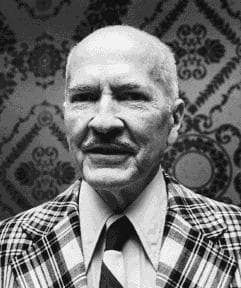
Robert Anson Heinlein was an American science fiction author, aeronautical engineer, and naval officer. Sometimes called the "dean of science fiction writers", he was among the first to emphasize scientific accuracy in his fiction, and was thus a pioneer of the subgenre of hard science fiction. His published works, both fiction and non-fiction, express admiration for competence and emphasize the value of critical thinking. His plots often posed provocative situations which challenged conventional social mores. His work continues to have an influence on the science-fiction genre, and on modern culture more generally.







