“Each of us has his place in the world. If we cannot serve in one way, there is always another.”
— Brother Luke comforts Robin after his illness leaves him unable to walk.

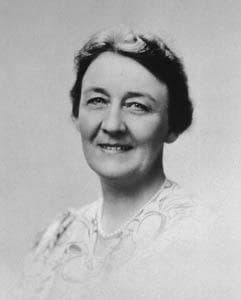
Marguerite de Angeli (1949)
Genre
Fantasy / Children's / Historical Fiction / Young Adult
Reading Time
120 min
Key Themes
See below
Sign in to track this book
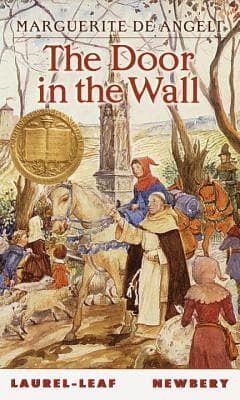
Stricken by plague and abandoned in medieval London, young Robin finds an unexpected path to heroism when a friar's kindness leads him to a besieged castle on the Welsh border, where his crippled body holds the key to its salvation.
In 13th-century London, ten-year-old Robin de Bureford is alone in his family's manor house. His father, Sir John de Bureford, is fighting in Scotland, and his mother, Lady Maud, is serving the Queen. The servants have left because of a spreading plague. Robin suddenly cannot use his legs, becoming helpless and feverish. He cries out for help, feeling completely alone. Unexpectedly, Brother Luke, a traveling friar, finds Robin in his bedchamber. Seeing the boy's bad state, Brother Luke immediately cares for him, giving him food, warmth, and comfort. He diagnoses Robin with a wasting sickness, likely polio, and starts a routine of gentle care and encouragement.
Brother Luke takes Robin to St. Mark's Monastery, a peaceful place of learning. Here, Robin meets the monks, including Brother Matthew, who teaches him to read and write. Despite his initial sadness about not being able to walk, Robin finds new purpose in his studies and in the quiet monastery life. He learns to carve wood, decorate manuscripts, and play the harp, developing skills he never would have learned at home. The monks, especially Brother Luke, say that 'The door in the wall' is always there, meaning there is always a way forward despite problems. This time is important for Robin's mental and emotional recovery, even as his physical limits remain.
After several months at St. Mark's, a messenger arrives with a letter from Sir John, telling Robin to meet him at Castle Lindsay on the Welsh border. This news brings both excitement and worry for Robin, as it means leaving the safety of the monastery and facing the world again with his disability. Brother Luke, understanding the dangers and the need for courage, goes with Robin on the difficult journey. They travel by horse and cart, meeting different people and challenges along the way, but Brother Luke's steady support and practical wisdom help Robin handle the physical demands and his worries about meeting his father again as a changed boy.
Robin and Brother Luke finally arrive at Castle Lindsay, a strong fortress high in the hills near the hostile Welsh border. Robin reunites with his father, Sir John, and his mother, Lady Maud, who has also arrived. His parents are sad about his condition but proud of his resilience. Robin finds the castle very different from the peaceful monastery. He watches the soldiers, the defensive preparations, and the constant watch needed in a border stronghold. Despite his physical limits, Robin tries to help, using his new skills to entertain the castle residents with his harp playing and reading to the soldiers, slowly finding his place in the castle community.
As days pass, Robin becomes more familiar with Castle Lindsay. He spends time with his father, learning about the castle's defenses and the duties of a lord. He notices the castle's strategic layout, its watchtowers, and the surrounding area, including the steep paths and the often-misty valleys. He continues to practice his harp, bringing joy and distraction to the castle's people. His sharp observations, refined during his quiet time at the monastery, make him unusually aware of his surroundings, a trait that will be very valuable. He also forms a bond with the castle's stablemaster and other common folk, getting a broader understanding of life.
A thick, unseasonable fog arrives, covering Castle Lindsay and the surrounding hills. This natural event provides perfect cover for the Welsh, who use the opportunity to launch a surprise attack. The castle guards, usually watchful, are confused by the fog, and the sounds of the approaching enemy are muffled. The castle falls into chaos as the Welsh warriors begin their assault, trying to break through the walls. Sir John and his men rush to defend the fortress, but the low visibility makes defense very hard, and the attackers gain an advantage.
During the battle's chaos, Robin, unable to fight on the walls, shelters inside the castle. His sharp hearing, developed from his quiet observing, lets him hear bits of conversation from Welsh attackers who have gotten into an outer part of the castle. He puts together their plan: they mean to attack a specific, less-defended section of the wall, possibly near a small gate or a weakened tower, using the fog to hide their movements. Robin, remembering his father's lessons on castle defense and his own observations, sees the critical weakness.
Realizing the great danger, Robin knows he must warn his father. Despite his physical limits, he grabs his crutches and begins a desperate, painful journey through the smoke and confusion of the besieged castle. He uses his crutches to move himself, determined to reach Sir John. The castle, usually familiar, is now a maze of shadows and shouting. He pushes through fear and physical discomfort, driven by the urgency of the situation and the knowledge that the castle's fate, and everyone in it, depends on his ability to deliver the message. He struggles through courtyards and up stairs, his small figure a sign of courage amidst the battle.
After a hard and dangerous journey, Robin finally reaches his father, Sir John, in the thick of the battle. Gasping for breath, he tells the Welsh plan and the specific weak point they are targeting. Sir John, at first surprised, immediately sees the value of Robin's information. He quickly sends his men to reinforce the vulnerable section of the wall just as the Welsh are about to break through it. The timely action surprises the attackers, and the castle defenders repel the main assault, driving the Welsh back into the fog and saving Castle Lindsay from falling. Robin's quick thinking and bravery are decisive.
After the battle, Robin is called a hero. His parents, especially Sir John, show great pride and gratitude for his courage and intelligence. The experience changes how they see Robin; they no longer see him only as a boy with a disability, but as a resourceful and valuable member of the family and community. Brother Luke, who saw Robin's journey from sadness to heroism, reinforces that true strength comes in many forms. While Robin still cannot walk unaided, he has found his 'door in the wall,' proving that his mind and spirit are as capable, if not more so, than any knight's physical ability. His future, though different from a knight's, is now clear and full of purpose.
The Protagonist
Robin transforms from a despairing, physically incapacitated boy into a courageous and resourceful young man who finds his worth beyond physical prowess.
The Supporting
Brother Luke remains a steadfast source of wisdom and support, embodying the unchanging values of faith and perseverance.
The Supporting
Sir John evolves from a conventional knight to a father who recognizes and values his son's unique, non-physical strengths.
The Supporting
Lady Maud remains a constant source of maternal love and support for Robin throughout his ordeal.
The Supporting
Brother Matthew serves as an enabler of Robin's intellectual growth, imparting knowledge and skills.
The Supporting
The Stablemaster provides a brief but important connection for Robin to the practical, working world of the castle.
The Antagonist
The Welsh Raiders serve as the catalyst for the climax of the story, their attack challenging the castle and its inhabitants.
The main theme is Robin's ability to overcome a physical disability through strong will, optimism, and the growth of his mind. His journey from despair to finding new purpose at St. Mark's Monastery, where he learns to read, write, and play the harp, shows this. The climax, where he uses his sharp mind and determination to save Castle Lindsay, confirms that true strength is not just physical. His refusal to give up, even when facing big problems, is central to his character.
“'The door in the wall. You will find it, Robin. You will find it.'”
Robin's illness forces him to rethink who he is. Without the traditional path of a knight, he must find new ways to be valuable and have purpose. His time at the monastery allows him to explore intellectual and artistic talents he did not know he had. This time of quiet thought and learning helps him create a new identity, one not defined by his physical limits but by his intelligence, creativity, and courage. He learns that his worth comes from within, not from outside expectations or physical abilities.
“'A man's usefulness does not lie in his legs, but in his head and in his heart.'”
Brother Luke's kind care and steady belief in Robin are important to his recovery. The supportive community of St. Mark's Monastery, with monks like Brother Matthew teaching him new skills, provides a good environment for Robin's growth. This theme shows how guidance, encouragement, and belonging can help people overcome problems. Without Brother Luke's help and the monastery's welcome, Robin's outcome would have been very different, emphasizing the strong impact of good relationships.
“'Each of us has his own gifts, Robin, and you have yours. You have a good mind, and a quick eye, and a loving heart.'”
Robin's paralysis at first makes him sad, but it ultimately helps him find a new, unexpected purpose. His inability to be a knight leads him to develop intellectual and artistic skills, which he then uses to save his family and castle. The book shows that challenges can open up different paths and reveal hidden strengths, turning what seems like a problem into a chance for unique contribution. His disability, instead of being a limit, becomes the very condition that allows him to see and hear what others miss.
“'There is always a way, Robin, always a way through the wall, if you look for it.'”
A recurring metaphor for finding solutions and hope amidst challenges.
This phrase, coined by Brother Luke, serves as a central symbol and guiding principle for Robin. It represents the idea that even when faced with seemingly insurmountable obstacles (a 'wall'), there is always a 'door' or a way forward if one is persistent, creative, and open to alternative solutions. It encapsulates the theme of resilience and finding purpose in adversity, constantly reminding Robin (and the reader) to look beyond obvious limitations and seek out new possibilities. It's both a literal and metaphorical device.
The central conflict that forces Robin's transformation and drives the plot.
Robin's sudden paralysis is the primary catalyst for the entire story. It removes him from his expected noble path, isolates him, and forces him into a new environment (the monastery). This disability is not merely a physical condition but the engine of his character arc, compelling him to develop his inner strengths, intellect, and courage. It's through his physical limitation that he gains a unique perspective and ultimately becomes the unlikely hero, proving that worth isn't solely physical.
A natural phenomenon that enables the enemy attack and heightens suspense.
The dense, unseasonable fog that descends upon Castle Lindsay is a crucial plot device. It provides the perfect cover for the Welsh raiders to launch a surprise attack, disorienting the castle's defenders and creating a sense of vulnerability and suspense. Symbolically, it represents confusion and the unknown, mirroring Robin's initial feelings of being lost. Practically, it is the condition that allows Robin's keen hearing and observation to become uniquely valuable, as he can discern the Welsh plans when others are blinded.
A sanctuary and learning environment where Robin finds healing and new skills.
St. Mark's Monastery serves as a pivotal setting for Robin's transformation. It is a place of refuge from the plague and his illness, but more importantly, it's an environment of intellectual and spiritual growth. Here, Robin is nurtured, educated, and encouraged to develop skills like reading, writing, and music. The quiet, contemplative life contrasts sharply with his previous noble upbringing and the later military life of the castle, highlighting the diverse paths to a meaningful existence and providing the tools for his eventual heroism.
“Each of us has his place in the world. If we cannot serve in one way, there is always another.”
— Brother Luke comforts Robin after his illness leaves him unable to walk.
“Thou hast only to follow the wall far enough and there will be a door in it.”
— Brother Luke encourages Robin to persevere despite obstacles.
“We can walk only one step at a time.”
— Brother Luke teaches Robin patience during his recovery.
“It is better to have a crooked back than a crooked mind.”
— Robin reflects on inner strength versus physical limitations.
“The world is full of doors, but they are not all easy to find.”
— Narrator describes Robin's journey of discovery.
“A man's worth is not in his legs but in his heart and mind.”
— Robin learns to value himself beyond physical ability.
“Even a small light can show the way in darkness.”
— Metaphor for hope during Robin's difficult times.
“The wall is there to be climbed, not to stop you.”
— Robin's determination to overcome his paralysis.
“Kindness is a language the deaf can hear and the blind can see.”
— Brother Luke teaches Robin about compassion.
“What we lose in one way, we may gain in another.”
— Robin discovers new skills after losing his ability to walk.
“The true door in the wall is the one you open yourself.”
— Robin realizes he must take action to change his fate.
“A story is not just for telling; it is for living.”
— Robin applies lessons from stories to his own life.
“Courage is not the absence of fear, but the will to go on.”
— Robin faces his fears during his journey to London.
“The greatest walls are those we build in our own minds.”
— Robin overcomes self-doubt about his capabilities.
Ready to see how well you understood this book? Take our interactive quiz with 10 questions.
Biography coming soon.







