“Annabelle Doll was an eight-year-old doll who had lived in the same dollhouse in the same doll family for as long as she could remember.”
— Introducing the main character and her static existence.

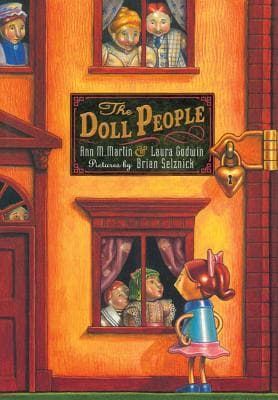
Ann M. Martin (1998)
Genre
Fantasy / Children's / Mystery / Young Adult
Reading Time
288 min
Key Themes
See below
Sign in to track this book
A century-old doll risks turning into a lifeless toy to find her missing aunt, navigating a culture clash with a loud, modern plastic doll family next door.
Annabelle Doll has been eight years old for one hundred years, living a predictable life with her family in their Victorian dollhouse in the Palmer family's study. Her family includes her parents, brother Bobby, and cautious grandmother. Annabelle often feels curious about the world outside their dollhouse and, more so, about her Auntie Sarah's mysterious disappearance 45 years ago. Auntie Sarah vanished from the dollhouse, leaving only a faint memory and a sense of longing for Annabelle. The Doll family follows strict rules to avoid Permanent Doll State, a condition where a doll becomes inanimate if seen by a human, especially the 'Real People'—the Palmer family.
The Doll family's quiet routine changes when a new, modern dollhouse is placed next to theirs. The Funcraft family moves in: the noisy, plastic, and seemingly indestructible parents, Mrs. and Mr. Funcraft, and their children, Tiffany and Brad. The Funcrafts are loud, messy, and fearless, often breaking 'Doll Law' by leaving their house, much to the traditional Doll family's dismay. Tiffany Funcraft is adventurous and quickly becomes friends with Annabelle, despite their different upbringings and Annabelle's family's initial disapproval.
While exploring a dusty corner of the dollhouse's attic, Annabelle finds a tiny, leather-bound diary. It belongs to Auntie Sarah. Reading it, Annabelle learns her aunt was as adventurous and curious as she is, and that Auntie Sarah also wanted to explore beyond the dollhouse. The diary hints at a secret passage or hidden place Auntie Sarah was investigating, suggesting her disappearance was not random but perhaps an intentional journey or an accident related to her explorations. This discovery strengthens Annabelle's resolve to find the truth.
Driven by the diary's clues and her own curiosity, Annabelle decides she must leave the dollhouse to find answers. Despite her family's warnings about Permanent Doll State, she asks Tiffany Funcraft for help. Tiffany, being plastic and less concerned with 'Doll Law,' agrees. Their first trip takes them into the Palmer family's study, a large and dangerous world for dolls. They carefully move across the giant furniture and floor, narrowly avoiding being seen by the 'Real People' and experiencing the thrill and fear of the unknown.
The diary hints Auntie Sarah was looking for something in the Palmer daughter's room, a forbidden place with potential dangers like stray toys and curious human hands. Annabelle and Tiffany plan their journey, using furniture and hidden paths to get from the study to the girl's bedroom. This trip is even more dangerous, as the girl's room is less tidy and more often used. They meet various obstacles, testing their bravery and their growing friendship as they search for any sign of Auntie Sarah or more clues.
After a tense search, Annabelle and Tiffany find Auntie Sarah. She is not lost, but has been living secretly in a hidden compartment within a rolltop desk in the Palmer daughter's room for 45 years. Auntie Sarah explains she found a 'Doll's Eye'—a small peephole—that allowed her to watch the 'Real People' without being seen, and she became fascinated by their lives. She had intentionally left clues in her diary, hoping a curious doll would follow her path, but never expecting to be found herself.
Auntie Sarah shares a revelation: Permanent Doll State is not just caused by a 'Real Person' seeing a doll. Instead, she explains, it happens when a doll stops believing in their own animation, their own 'aliveness.' If a doll is seen and becomes scared, or if they doubt their ability to move and think, they will become an inanimate object. This new understanding challenges everything Annabelle's family, and all dolls, have believed for generations, changing how they see their existence and the source of their magic.
With Auntie Sarah's revelation, Annabelle and Tiffany convince her to return to the dollhouse. The reunion with Annabelle's family is joyful at first, but quickly becomes confusing as Auntie Sarah explains her long absence and the true nature of Permanent Doll State. Annabelle's cautious parents and grandmother find it hard to let go of their beliefs and fears. The Funcrafts, however, are more open to this new idea, as their own carefree life already defied many old 'Doll Laws,' making them more receptive to Auntie Sarah's ideas.
As the Doll and Funcraft families try to use Auntie Sarah's new philosophy, a crisis happens. Bobby Doll, Annabelle's brother, falls from a shelf and breaks badly. The Doll family, traditional, fears he will enter Permanent Doll State. The Funcrafts, with their plastic resilience, are less familiar with such fragile injuries. Annabelle, with Auntie Sarah's wisdom, knows Bobby's belief in himself is most important. This event forces both families to face their fears and work together, showing the strengths and weaknesses of their different approaches to doll life.
With careful mending by the Palmer girl and collective belief and encouragement from both doll families, Bobby slowly recovers. The incident strengthens the bond between the Dolls and the Funcrafts. The Doll family begins to embrace a more adventurous outlook, understanding that life goes beyond their dollhouse, and that real danger is not being seen, but losing one's sense of self. Annabelle, having solved the mystery and brought her aunt home, feels a sense of accomplishment and a new appreciation for her family and her unique doll life.
The Protagonist
Annabelle transforms from a restless, curious doll into a courageous explorer who not only solves a long-standing mystery but also helps her family embrace a more open and adventurous way of life.
The Supporting
Tiffany remains adventurous but learns the value of careful planning and the depth of emotional connection through her friendship with Annabelle and the challenges they face.
The Supporting
Auntie Sarah is 'found' both physically and in her past desire for exploration, ultimately sharing her wisdom and bringing a new perspective to her family.
The Supporting
They gradually learn to question their long-held beliefs and become more open to adventure and new ways of thinking, thanks to Annabelle and Auntie Sarah.
The Supporting
Bobby experiences a near-catastrophic injury that underscores the fragility of doll life and the importance of self-belief.
The Mentioned
She remains unaware of the dolls' true nature, serving as an external force within their world.
The main theme is what it means for a doll to be 'alive.' At first, the Doll family thinks being seen by 'Real People' causes Permanent Doll State, meaning an outside threat to their animation. However, Auntie Sarah reveals a doll's animation comes from their own belief in themselves and their ability to move. This shifts the source of their 'life' from outside vulnerability to inner conviction, giving them power. This is shown when Bobby Doll is broken; his recovery is helped by mending and the collective belief of his family and friends in his aliveness.
“''Permanent Doll State isn't caused by a Real Person seeing you. It's caused by a doll losing their own belief in themselves. If you don't believe you're alive, you won't be.'”
This theme looks at the tension between wanting to explore and needing safety. Annabelle's curiosity drives the plot, pushing her beyond her dollhouse's safe, predictable limits. Her family, especially her parents and grandmother, represent caution, fearing the outside world and Permanent Doll State. The Funcrafts, with their recklessness, show an extreme of curiosity and fearlessness. The story suggests that while caution is needed, curiosity can lead to discovery and growth, showing that a balance between the two makes for a fulfilling life.
“'Annabelle was an eight-year-old doll, and she had been eight years old for one hundred years. She knew she was not supposed to wish for things to be different, but sometimes she did.'”
The difference between the antique Doll family and the modern Funcraft family highlights the clash between tradition and modernity. The Dolls live by strict, century-old 'Doll Laws' and value decorum and caution, representing an older way of life. The Funcrafts are plastic, loud, and disregard rules, embodying a modern, free-spirited approach. Their initial disagreements, from different customs and materials, slowly become mutual respect and understanding as they learn from each other. The Funcrafts' fearlessness inspires the Dolls, while the Dolls' experience provides a grounding influence, showing the benefits of mixing old wisdom with new ideas.
“'The Funcrafts were Real Pink Plastic. They were brightly colored and unbreakable. The Dolls were made of china and wood and fabric. They were breakable, and they knew it.'”
The story emphasizes the power of relationships, both family and friends. Annabelle's search for Auntie Sarah is driven by family loyalty and a desire for connection. Her friendship with Tiffany, unlikely at first due to their different backgrounds, becomes a strong bond built on shared adventure and support. The solidarity shown by both families during Bobby's accident highlights how unity and collective care can overcome challenges. The story celebrates how these connections provide emotional strength, courage, and a sense of belonging, making even hard tasks possible.
“'Annabelle knew, with a certainty that settled deep in her stuffing, that she had never had a better friend than Tiffany Funcraft.'”
A hidden diary acting as a catalyst and clue provider.
The discovery of Auntie Sarah's diary serves as the primary inciting incident for Annabelle's adventure. It provides crucial clues about Auntie Sarah's adventurous spirit and her possible whereabouts, transforming Annabelle's vague curiosity into a focused quest. The diary entries not only advance the plot by guiding Annabelle's expeditions but also reveal Auntie Sarah's character and motivations, making her a more tangible figure even before her physical appearance. It's a classic mystery trope that drives the narrative forward.
A set of rules and a feared consequence that define the dolls' existence.
'Doll Law' refers to the strict rules governing the Dolls' lives, primarily centered around avoiding detection by 'Real People' to prevent 'Permanent Doll State.' This device creates immediate conflict and tension, establishing the stakes for Annabelle's forbidden adventures. Initially presented as an external threat, its true nature is later revealed by Auntie Sarah as an internal psychological phenomenon, shifting the narrative's focus from physical danger to the power of belief and self-determination.
A hidden vantage point allowing dolls to observe 'Real People' unseen.
The 'Doll's Eye' is a small, hidden peephole discovered by Auntie Sarah, allowing her to observe the 'Real People' without being seen herself. This device is pivotal in explaining Auntie Sarah's long absence and her fascination with human life. It symbolizes the dolls' hidden world coexisting with the human world, offering a unique perspective on the 'giants' who unknowingly control their environment. It also represents the allure of the unknown and the desire for understanding beyond one's immediate surroundings.
Contrasting families representing different eras and philosophies of doll life.
The dynamic between the traditional Doll family and the modern Funcraft family is a central plot device. Their contrasting materials (china/wood vs. plastic), customs, and attitudes create both humor and conflict. This contrast highlights themes of tradition versus modernity, caution versus fearlessness, and the evolution of doll identity. Their interactions drive much of the character development and provide opportunities for both families to learn from each other, ultimately leading to a more integrated and adventurous community.
“Annabelle Doll was an eight-year-old doll who had lived in the same dollhouse in the same doll family for as long as she could remember.”
— Introducing the main character and her static existence.
“For a doll, a hundred years is a long, long time. And it can be very boring.”
— Annabelle reflecting on the long, unchanging history of her family.
“Dolls don't grow. They don't get older. They just are.”
— Explaining a fundamental rule of doll existence.
“The most important rule of all was: Never, ever, let a human see you move.”
— Highlighting the primary rule governing doll interactions with humans.
“A doll always stays with her family.”
— Annabelle's mother emphasizing a core value of their doll society.
“We are the Doll family. And we have always been here.”
— Annabelle's mother stating their long-standing presence in the dollhouse.
“Sometimes, when you've been in one place for a very long time, you forget what it's like to be somewhere else.”
— Annabelle contemplating the limitations of her experience.
“It was a dangerous, wonderful, thrilling secret.”
— Annabelle's feelings about the possibility of a new doll family appearing.
“She was a doll who liked adventures, even if she wasn't supposed to.”
— Describing Annabelle's character and her adventurous spirit.
“Perhaps the most exciting thing about them was that they were new. New dolls! Imagine!”
— Annabelle's reaction to discovering the new doll family, the Funcrafts.
“Every doll has a human. And every human has a doll.”
— A philosophical statement about the unique connection between dolls and their owners.
“It's not just about finding Auntie Sarah. It's about finding out who we are.”
— Annabelle realizing the deeper meaning behind their quest.
“Being brave doesn't mean you're not scared. It means you do it anyway.”
— Annabelle demonstrating courage during a difficult situation.
“Sometimes, the biggest secrets are right in front of your eyes.”
— A reflection on the hidden truths that are often overlooked.
Ready to see how well you understood this book? Take our interactive quiz with 10 questions.

Ann M. Martin is a celebrated children's author, best known for the beloved 'The Baby-Sitters Club' series. She has also penned critically acclaimed novels such as 'A Corner of the Universe' and the 'Doll People' series, showcasing her versatility in writing for young readers. Her works often explore themes of friendship, family, and resilience.







