“There are some things you can't escape, even if you try to run to the ends of the earth.”
— Wallander reflects on the inescapable nature of certain truths and his own past.

Henning Mankell (2003)
Genre
Thriller / Mystery
Reading Time
326 min
Key Themes
See below
Sign in to track this book
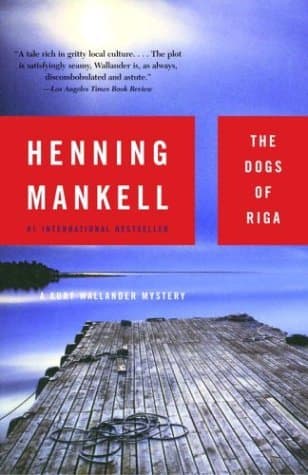
Inspector Wallander tracks a double murder from Sweden to Riga, Latvia, uncovering a dangerous world of post-Soviet crime and political betrayal.
In January 1991, a life raft carrying two dead men, both shot and expensively dressed, washes ashore near Ystad, Sweden. Inspector Kurt Wallander and his team investigate. The men are identified as Latvian citizens, and their deaths look like professional hits. The Swedish police struggle to identify the victims or their motive, as information from behind the Iron Curtain is scarce. This discovery sends Wallander away from Sweden into the unclear world of post-Soviet Latvia, a country close to independence and full of corruption and organized crime. The case immediately becomes a challenge due to its international links and lack of available information.
Because the victims are Latvian, Wallander is sent to Riga to work with Latvian authorities. He meets Major Liepa, an honest and dedicated police officer who leads the homicide department. Liepa explains Latvia's complex political situation, where the Soviet Union still has influence, and the local police force is full of informers and corruption. Wallander quickly finds himself in an unfamiliar and hostile place, where trust is rare and surveillance is constant. Liepa's initial openness gives Wallander a sense of a possible ally, but the underlying tension of Riga's political situation is clear.
Wallander and Liepa begin to identify the two murdered men: Sergei Muntau and Janis Rutkis, both involved in illegal trade. Their investigation leads them to Alfreds Zids, a powerful and ruthless figure in Riga's criminal underworld, suspected of planning the murders. Zids acts without punishment, seemingly protected by high-ranking officials. Wallander sees firsthand the widespread fear and corruption that paralyze the Latvian police, making their work difficult and dangerous. The deeper they dig, the more complicated and risky the web of crime and power becomes, showing the clear differences between Swedish and Latvian law enforcement.
As Wallander and Liepa get closer to uncovering Zids's network, Major Liepa mysteriously disappears. Wallander is left in Riga, increasingly alone and distrustful of the local police, many of whom he suspects are compromised. Liepa's sudden absence is a major setback, removing Wallander's main contact and guide in the unfamiliar city. This event increases Wallander's sense of danger and highlights the brutal realities of the Latvian criminal world, where effective investigation can lead to serious consequences. Wallander realizes he is truly alone, with few resources and many potential enemies.
Wallander continues his investigation despite Liepa's disappearance and lack of support. He faces direct threats and intimidation from Zids's men, making it clear he is on dangerous ground. His hotel room is searched, and he is constantly followed. These incidents serve as warnings for Wallander to drop the case. However, Wallander's strong sense of justice pushes him forward, even as he sees the immense personal risk. The threats confirm his belief that Zids is behind the murders and that powerful forces are protecting him.
Believing Baiba Liepa might have important information about her husband's disappearance and the case, Wallander tries to find her. He eventually does, and she reveals that Liepa had been investigating Zids for a long time and had gathered evidence against him. Baiba also lives in fear, knowing the danger her husband was in and the uncertainty of her own situation. She gives Wallander fragmented but vital information, confirming Liepa's dedication and the deep corruption they faced. Her testimony strengthens Wallander's belief that Liepa was a good man targeted for doing his job.
Sadly, Major Liepa's body is found, confirming Wallander's fears that his ally was murdered for investigating Zids. This event deeply affects Wallander, strengthening his resolve to bring Liepa's killers and Zids to justice. Liepa's murder highlights the brutal reality of Riga's criminal underworld and the high stakes of challenging it. It also motivates Wallander, turning his professional duty into a personal mission to avenge his fallen colleague and friend. The discovery marks a turning point, showing the personal cost of the investigation.
Fearing for her and her daughter's lives after Liepa's murder, Baiba Liepa asks Wallander for help escaping Riga. Wallander agrees, feeling a moral duty to protect her and recognizing the danger she faces. This humanitarian mission adds another layer of difficulty to Wallander's already risky situation. He must now not only seek justice but also arrange a secret escape for Baiba and her child, further involving him in Latvia's dangerous political and criminal world. The escape plan requires careful thought and great risk.
As Wallander prepares to help Baiba and her daughter escape, he uncovers a shocking truth: Major Karlis Mutitis, Liepa's seemingly loyal deputy, is actually working for Zids. Mutitis had been giving information to the crime boss and was involved in Liepa's murder. This revelation shatters Wallander's already fragile trust in the Latvian police and exposes the depth of the corruption. Mutitis's betrayal explains how Zids always seemed one step ahead and highlights the widespread nature of the criminal network, reaching into the highest levels of law enforcement. This discovery leaves Wallander with no one he can truly trust in Riga.
Wallander confronts Mutitis, who, under pressure, confesses his involvement and helps Wallander arrange Zids's capture. In a tense and violent ending, Zids and his associates are arrested. Wallander ensures Baiba and her daughter are safely escorted out of Latvia, keeping his promise. Though justice is done, the experience leaves Wallander deeply affected by the widespread corruption and the personal cost of the investigation. He returns to Sweden, changed, having seen the harsh realities of a society fighting for freedom amid entrenched crime and political instability. The resolution is bittersweet, marked by both success and trauma.
The Protagonist
Wallander's arc sees him confront the harsh realities of international crime and political corruption, deepening his understanding of human depravity and solidifying his commitment to justice, albeit with increased weariness.
The Supporting
Liepa's arc is tragic; he embodies the struggle for justice in a corrupt system, ultimately becoming a martyr for his principles.
The Supporting
Baiba evolves from a fearful widow to a survivor, relying on Wallander to secure her and her daughter's escape from danger.
The Antagonist
Zids remains a consistently dangerous and powerful criminal, ultimately captured but representing the enduring threat of organized crime.
The Supporting
Mutitis's arc reveals his true nature as a traitor, culminating in his confession and reluctant assistance in Zids's capture.
The Mentioned
Their arc is complete at the beginning; their deaths are the inciting incident.
The Supporting
She remains a consistent, reliable colleague.
The Supporting
He remains a consistent, reliable forensic expert.
Widespread corruption is a main theme, appearing in the Latvian police, government, and criminal world. Wallander constantly struggles with whom to trust, finding that even those he first relies on, like Major Mutitis, are compromised. This theme shows how fragile justice is in a system where power and money matter more than morals, as seen when Zids acts freely due to his high-level connections, and Liepa is murdered for challenging this system. The betrayal of trust deeply affects Wallander, forcing him to rely only on his own judgment.
““He had never understood how deeply corruption could corrode a society, how it could turn every official act into a transaction, every trust into a betrayal.””
Wallander's strong pursuit of justice in Riga's chaotic and dangerous environment highlights this theme. Despite facing threats, political instability, and the murder of his ally, Wallander remains committed to holding the criminals accountable. The clear difference between the stable Swedish justice system and the near-anarchy in Latvia emphasizes how hard it is to achieve true justice when institutions are broken. Wallander's personal sense of moral duty drives him to act as a lone force for good, even when the odds are against him, ensuring that Liepa's death is not in vain and Baiba is safe.
““Justice, he thought, was a fragile thing, easily broken, easily bought, but worth fighting for, no matter the cost.””
The novel clearly shows the social and political changes in Latvia after the Soviet Union fell. The country is shown as a place of great uncertainty, fear, and opportunity for organized crime to grow in the power vacuum. The constant surveillance, the fear among ordinary citizens, and the deep corruption within official structures are all direct results of this transition. The unstable atmosphere shapes the entire story, making the investigation more complex and dangerous, and affecting the lives of characters like Major Liepa and Baiba, who are caught in the middle of a changing world.
““Riga was a city of ghosts, Wallander thought, haunted by the past, uncertain of its future.””
Wallander feels very isolated during his time in Riga. Cut off from his familiar surroundings, language, and colleagues, he is thrown into an unfamiliar culture where he understands little and trusts even less. Major Liepa's murder further isolates him, leaving him without a reliable ally. This feeling of alienation increases his sadness and highlights his vulnerability in a hostile place. His struggles with communication and understanding cultural differences emphasize his loneliness, making his pursuit of justice an even more solitary and personal effort.
““He was a stranger in a strange land, a Swede in a city that spoke a language he couldn’t understand, surrounded by people whose intentions he couldn’t decipher.””
The initial discovery that propels the plot.
The life raft containing the two murdered men serves as the MacGuffin, an object that drives the plot forward and sets Wallander's investigation in motion. Its mysterious appearance and the foreign origin of the victims immediately signal an international dimension to the crime, forcing Wallander out of his comfort zone in Ystad and into the unfamiliar territory of Riga. While the raft itself holds no inherent narrative significance beyond its initial role, it is the catalyst for the entire complex and dangerous journey Wallander undertakes.
Misleading early conclusions about the crime.
Initially, the Swedish police assume the murders are a straightforward gangland hit, an 'open-and-shut case.' This initial assumption acts as a red herring, lulling both Wallander and the reader into a false sense of simplicity. The deeper Wallander delves, the more complex and politically charged the case becomes, revealing layers of corruption and international intrigue far beyond a simple criminal dispute. This device highlights the deceptive nature of appearances and the hidden depths of the criminal world.
A guide and ally who is tragically removed from the story.
Major Liepa initially functions as a mentor figure for Wallander in Riga, providing him with essential context, guidance, and a moral compass in the confusing and corrupt Latvian landscape. He is Wallander's primary point of contact and his most trusted ally. His sudden disappearance and subsequent murder serve as a powerful plot device, intensifying the danger, increasing Wallander's isolation, and transforming the professional investigation into a personal quest for vengeance and justice. Liepa's death underscores the high stakes and the pervasive nature of the corruption Wallander faces.
A trusted colleague revealed to be an informant.
Major Karlis Mutitis serves as the 'traitor within' plot device. Initially appearing as a loyal deputy to Major Liepa and a helpful contact for Wallander, his eventual revelation as an informant for Alfreds Zids creates a shocking twist. This betrayal not only deepens the sense of pervasive corruption but also heightens the stakes for Wallander, as it reveals that trusted individuals can be compromised, leaving him truly alone and vulnerable. Mutitis's role amplifies the theme of betrayal and challenges Wallander's ability to discern friend from foe.
“There are some things you can't escape, even if you try to run to the ends of the earth.”
— Wallander reflects on the inescapable nature of certain truths and his own past.
“The past always finds a way to catch up with you, whether you like it or not.”
— A recurring theme as Wallander uncovers old secrets and political machinations.
“He knew that the world was full of shadows, and that sometimes the only way to see was to step into them.”
— Wallander's approach to investigating dark and dangerous cases.
“Silence could be more eloquent than any words, especially when it was the silence of fear.”
— Wallander observes the reactions of people living under oppressive regimes.
“Justice was a fragile thing, easily broken, and even more easily forgotten.”
— Wallander's ongoing struggle with the limitations and failures of the justice system.
“You can never truly know a country until you've seen its dark corners.”
— Wallander's experience in Latvia reveals the hidden realities beneath the surface.
“The dead have a way of speaking, if you only know how to listen.”
— Wallander's detective philosophy, emphasizing attention to detail in crime scenes.
“Loneliness was a constant companion, a shadow that followed him even in the brightest light.”
— Wallander's personal struggle with isolation and the demands of his job.
“Sometimes the greatest betrayals come from those you least suspect.”
— A realization Wallander makes about the intricate web of deceit he uncovers.
“The cold was not just in the air, but in the hearts of men.”
— Reflecting on the harsh environment and the moral climate of post-Soviet Latvia.
“There was a certain weariness that settled into your bones when you dealt with evil every day.”
— Wallander's internal monologue about the toll his profession takes on him.
“The truth, like a river, will always find its way to the sea, no matter how many dams are built against it.”
— Wallander's persistent belief in the eventual revelation of facts.
“He often wondered if peace was just a temporary pause between conflicts, rather than a permanent state.”
— Wallander's philosophical musings on the nature of peace and conflict in the world.
Ready to see how well you understood this book? Take our interactive quiz with 10 questions.
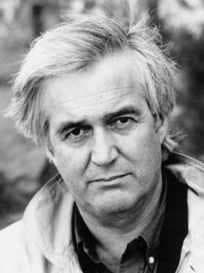
Henning Georg Mankell was a Swedish crime writer, children's author, and dramatist, best known for a series of mystery novels starring his most noted creation, Inspector Kurt Wallander. He also wrote a number of plays and screenplays for television.







