“Perhaps the greatest magic of all is the magic of the human heart.”
— A reflection on the enduring power of emotion amidst the grand narrative of the past.

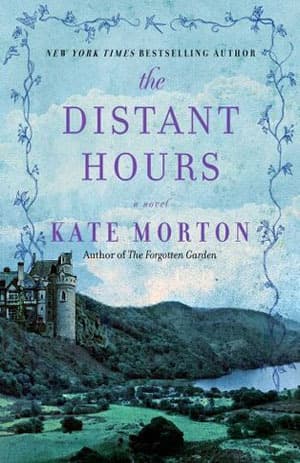
Kate Morton (2010)
Genre
Historical Fiction / Mystery / Romance
Reading Time
10-12 hours
Key Themes
See below
Sign in to track this book
A mysterious letter draws a young woman to a crumbling English castle, where wartime secrets, a jilted bride, and three eccentric sisters force her to confront her own mother's hidden past.
Edie Burchill, a young London book editor, receives an old, peculiar letter. It is addressed to her mother, Meredith, but dated 1941 and has a Milderhurst Castle return address. Meredith is visibly upset by the letter, her usual calm replaced by a rare agitation. She refuses to discuss its contents or the sender, Juniper Blythe, a name Edie has never heard. Curious and concerned by her mother's reaction, Edie feels a strong urge to uncover the mystery behind the letter and her mother's hidden past, a past Meredith has always been reluctant to share.
Driven by curiosity, Edie travels to the remote Kent countryside to Milderhurst Castle, the imposing, gothic home of the Blythe family. She finds the castle in magnificent decay, its grandeur overshadowed by neglect. There, she meets the three elderly Blythe sisters: identical twins, Persephone and Seraphina, who are sharp and guarded, and their younger sister, Juniper, who is frail, seemingly lost, and prone to sudden, unsettling statements. Edie explains she is Meredith's daughter and is cautiously welcomed into their strange, isolated lives, hoping to learn about her mother's wartime stay there.
The story shifts to 1941, detailing thirteen-year-old Meredith Burchill's arrival at Milderhurst Castle as an evacuee during World War II. She is a quiet, observant child, bewildered by the Blythe household's eccentricities. She quickly becomes a companion to Juniper, then a beautiful young woman in love with a pilot, Thomas Cavill. Meredith witnesses the idyllic, yet fragile, world of the Blythes, defined by Juniper's romance, the twins' devotion, and the castle's old traditions. She is drawn into Juniper's stories, particularly 'The True History of the Lady of the Lake,' which Juniper claims is real.
The joyful atmosphere at Milderhurst shatters when Thomas Cavill, Juniper's fiancé, does not return from a mission and is presumed dead. Juniper is devastated, her grief consuming her. The twins, Persephone and Seraphina, try to comfort her, but Juniper's mental state quickly worsens. She becomes withdrawn, confused, and increasingly relies on the fantasy world of 'The Lady of the Lake,' believing Thomas will return for her. Meredith, a silent witness, watches Juniper's descent, an event that impacts her own childhood and leads to her future silence about Milderhurst.
Back in the present, Edie spends weeks at Milderhurst, exploring the castle and gently questioning the Blythe sisters. Persephone and Seraphina are at first evasive, offering carefully constructed stories that leave out important details. They are fiercely protective of Juniper and their family's past, revealing only what they think is appropriate. Edie notices inconsistencies in their stories and senses a deeper, unspoken tragedy beneath Juniper's illness. She begins to piece together information from old documents, hidden rooms, and Juniper's occasional clear, yet cryptic, remarks, realizing the story is far more complex than she imagined.
Edie uncovers more about 'The True History of the Lady of the Lake,' a dark fairy tale written by the Blythe sisters' father, Raymond Blythe, a famous author. Juniper had added to this story, making it her own, and it became tied to her view of Thomas Cavill. Edie realizes the story is not just a childhood fantasy but a metaphor, a way Juniper processes reality and her trauma. The tale's themes of betrayal, love, and sacrifice seem to echo the real events of 1941, suggesting a deeper, more sinister truth hidden within its pages and the castle's history.
After weeks of Edie's absence, Meredith, driven by concern for her daughter and the return of her own suppressed memories, unexpectedly arrives at Milderhurst Castle. Her return creates tension among the sisters. Meredith must confront the place and the people she fled decades ago, especially Juniper. The unspoken history between them begins to surface, and Meredith's calm exterior cracks as the past weighs on her, revealing her deep pain and guilt related to Juniper's fate.
Through fragmented confessions from the sisters and Meredith's own resurfacing memories, the truth about Thomas Cavill's disappearance finally comes out. Thomas had intended to break off his engagement with Juniper, having fallen in love with another woman. The twins, desperate to protect Juniper from heartbreak, intercepted his letter. However, Juniper discovered the truth through a different source, leading to a confrontation that turned tragic. Thomas did not die in the war; he was murdered at Milderhurst Castle, and his body was hidden on its grounds.
The full truth emerges: Juniper, in despair and rage after discovering Thomas's betrayal, was responsible for his death. The twins, out of misguided love and loyalty, covered up the crime, burying Thomas's body and creating an elaborate lie about his wartime disappearance. They then made a lifelong pact of silence to protect their sister, sacrificing their own lives and happiness to care for the increasingly fragile Juniper. Meredith, as a child, had accidentally witnessed parts of the aftermath, leading to her trauma and subsequent silence.
With the truth finally found, the burden of the past begins to lift. Edie understands her mother's lifelong silence and the pain she carried. Meredith, having confronted her traumatic memories, starts to heal and reconnect with Edie. The Blythe sisters, though forever changed by their choices, find some peace in the truth being known, even if it comes at a great cost. The castle, having held its secrets for decades, sees a bittersweet resolution, allowing the characters to move forward, scarred but ultimately freer from the weight of the past.
The Protagonist
Edie transforms from a slightly detached observer of life into an active participant, gaining a profound understanding of her family's history and strengthening her bond with her mother.
The Supporting
Meredith confronts her suppressed trauma and guilt, ultimately finding a measure of healing and forging a deeper, more honest connection with her daughter.
The Supporting
Juniper's arc is tragic; she remains trapped in her past trauma, but her story's full truth is finally revealed, bringing a form of closure to others.
The Supporting
Persephone slowly relinquishes her tightly held secrets, allowing the truth to emerge, even as it exposes the sacrifices she made.
The Supporting
Seraphina, like her sister, slowly reveals the truth, finding a bittersweet release from the secret burden she has carried for decades.
The Mentioned
Thomas's 'disappearance' is the central enigma, and the revelation of his true fate is the turning point of the plot, though he is not a character who develops.
The Mentioned
Raymond's influence is primarily thematic, his stories providing a framework for understanding the characters' motivations and the novel's central mystery.
The novel explores how stories, both fictional and personal, shape our understanding of reality, preserve memories, and can both hide and reveal truth. Juniper's obsession with 'The True History of the Lady of the Lake' shows how fantasy can become a coping mechanism, blurring the lines between myth and reality. The Blythe sisters carefully create a story to protect Juniper, highlighting how storytelling can be used to manipulate. Edie, as a book editor, is able to break down these narratives, understanding that the 'truth' often lies beneath the surface of carefully built tales.
“Stories, you see, are not just about facts and events; they are about emotions, and those emotions are as real as anything that ever happened.”
The novel examines the impact of past trauma on individuals and families, and how people cope with difficult memories. Meredith's lifelong silence about Milderhurst is an example of repression, a way to survive a traumatic childhood experience. Juniper's mental state is a direct result of trauma she cannot process normally, causing her to retreat into a fantasy world. Edie's journey is about uncovering these repressed memories, showing that true healing often begins with confronting the past, no matter how painful.
“Sometimes the things we forget are the things that hurt us the most.”
A central theme is the extreme lengths family members will go to protect each other, even at great personal cost and moral compromise. The Blythe twins, Persephone and Seraphina, dedicate their lives to caring for Juniper and hiding the truth of Thomas Cavill's death. Their actions, though born of love, lead to a lifetime of isolation and deceit. This theme explores the complex, often stifling, nature of family bonds and the blurred lines between love, duty, and tragic self-sacrifice.
“We did what we had to do, for her. For Juniper.”
Milderhurst Castle itself shows this theme; a decaying structure literally holding the secrets of the past within its walls. The novel demonstrates how unresolved historical events continue to influence the present, impacting generations. The long-lost letter acts as a catalyst, forcing the characters to confront decades of buried truths. Edie's investigation reveals that secrets, no matter how deeply buried, inevitably resurface, needing to be acknowledged and understood, highlighting the lasting power of history.
“The past, it seems, is not content to stay in the past. It waits, like a patient predator, for the opportune moment to strike.”
A catalyst for the mystery, linking past and present.
The arrival of the long-lost letter, addressed to Meredith but written decades ago by Juniper Blythe, serves as the primary inciting incident. It immediately establishes the central mystery and propels Edie into her investigation. The letter represents a direct link to the past, a physical manifestation of the secrets that have lain dormant for years, and its unexpected appearance disrupts the carefully constructed peace of both Meredith and the Blythe sisters, forcing a confrontation with 'the distant hours'.
A gothic setting that functions as a character and repository of secrets.
Milderhurst Castle is more than just a setting; it is a character in itself, embodying the decay, grandeur, and hidden depths of the Blythe family. Its labyrinthine corridors, hidden rooms, and general state of magnificent neglect mirror the family's secrets and Juniper's fractured mind. The castle physically holds the past within its stones, from the hidden body to the echoes of Raymond Blythe's stories, creating an atmospheric and claustrophobic environment that amplifies the mystery and the weight of history.
A fictional fairy tale that parallels and illuminates the real-life tragedy.
Raymond Blythe's children's story, 'The True History of the Lady of the Lake,' functions as a crucial plot device. Initially presented as Juniper's childhood obsession, it gradually reveals itself to be a symbolic representation of the real events of 1941. The tale's themes of betrayal, love, and tragedy directly mirror the fate of Juniper, Thomas, and the twins. Edie's analysis of the story helps her decode the family's trauma, making the fictional narrative a key to unlocking the truth of the actual events.
Alternating narratives between Edie's present investigation and Meredith's past experiences.
The novel skillfully employs a dual timeline structure, alternating between Edie's present-day investigation at Milderhurst Castle and Meredith's experiences as a young evacuee in 1941. This allows the reader to experience the unfolding mystery alongside Edie while simultaneously gaining crucial historical context from Meredith's perspective. The two timelines converge, slowly revealing how the past directly shaped the present, building suspense and providing a comprehensive understanding of the complex events.
“Perhaps the greatest magic of all is the magic of the human heart.”
— A reflection on the enduring power of emotion amidst the grand narrative of the past.
“The past, she reflected, was like a great house, full of rooms that were locked and forgotten, but which still held secrets.”
— Meredith's thoughts on the nature of history and memory, particularly in relation to Milderhurst Castle.
“Stories, after all, are just a different kind of truth.”
— A character's contemplation on the power and validity of narratives, both factual and fictional.
“Some truths are too heavy to carry alone.”
— A poignant observation about the burden of certain revelations and the need for shared understanding.
“There are some places that hold their stories so tightly, they hum with them.”
— Describing the palpable atmosphere of Milderhurst Castle, imbued with its long history and secrets.
“Every family has its ghosts, whether they are seen or not.”
— A general reflection on the lingering presence of past generations and their influence on the present.
“It was amazing, she thought, how a single letter, a single forgotten object, could unravel a whole world.”
— Meredith discovering a clue that begins to dismantle her understanding of the past.
“Sometimes, the most important stories are the ones that are never told.”
— A contemplation on the untold narratives and silenced voices within historical accounts.
“Love, like a house, needs to be built on solid foundations.”
— A metaphorical insight into the necessity of trust and honesty in relationships.
“The greatest prison, she realised, was not made of stone and iron, but of secrets and unspoken words.”
— A character's epiphany about the psychological confines created by hidden truths.
“Even in the darkest corners, there is always a flicker of hope.”
— A hopeful sentiment expressed amidst the uncovering of grim past events.
“Memory is a fickle thing, changing shape and colour with each retelling.”
— A character pondering the subjective and unreliable nature of personal recollection.
“Every house has a heart, and Milderhurst's was beating with a slow, ancient rhythm.”
— Describing the profound sense of life and history within Milderhurst Castle.
“We are all, in our own way, searching for a place to belong.”
— A universal reflection on the human desire for connection and home.
Ready to see how well you understood this book? Take our interactive quiz with 10 questions.

Biography coming soon.







