“The past is a foreign country; they do things differently there.”
— A general reflection on how time changes perceptions and understanding of past events.

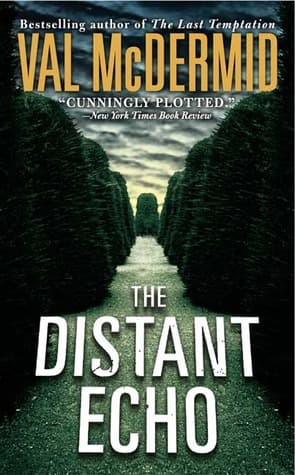
Val McDermid (2002)
Genre
Thriller / Mystery
Reading Time
600 min
Key Themes
See below
Sign in to track this book
Twenty-five years after finding a barmaid's body and being the sole suspects, four friends are haunted by a reopened cold case and a vengeful killer who believes they got away with murder.
In the winter of 1978, four Dundee University students — Alex Gilbey, Kenny Martin, Jimmy Higgins, and Davey Burnside — take a shortcut through a snowy cemetery after a night of drinking. They find the brutally murdered body of Rosie Duff, a young barmaid from their local pub. Panicked and covered in her blood from trying to check for life, they become the main suspects in the investigation led by Detective Inspector Graham Murray. Despite intense questioning and the circumstantial evidence of their location and the blood on their clothes, no clear evidence links them to the murder. The case eventually goes cold, leaving a lasting mark on their lives.
Twenty-five years later, in 2003, the Cold Case Review Unit, led by the now Detective Chief Inspector Graham Murray, decides to re-examine Rosie Duff's unsolved murder. This news affects Alex, Kenny, Jimmy, and Davey. They have all moved on with careers and families, but never truly escaped the past. The reopened case makes them face the traumatic memories of that night and the police scrutiny, bringing back old fears and suspicions.
Soon after the cold case is reopened, Kenny Martin, one of the four friends, dies in a fall from a cliff. It is initially called an accident, but the timing and situation are suspicious, especially with the new interest in Rosie Duff's murder. Alex and the others are disturbed, wondering if Kenny's death is connected to the past. The police, including Murray, investigate but find no clear proof of foul play. The friends are left with a growing feeling that someone might be targeting them.
The feeling of unease turns to terror when Jimmy Higgins, another of the original four, is found dead in his home, seemingly by suicide. However, the police and Alex quickly see that Jimmy was murdered and his death staged. This confirms their worst fears: someone is systematically targeting them, seeking revenge for Rosie Duff's death. Alex, now truly scared for his life and his family's safety, knows he must find the truth.
With two friends dead, Alex Gilbey, a successful academic, feels he must find Rosie Duff's real killer before he and Davey are next. He starts his own investigation, revisiting old places in Dundee and contacting people who knew Rosie or were part of the original inquiry. He looks into the past, trying to put together the events of that night and the days before it. He hopes to find a detail the police missed or a motive not fully explored. His search is dangerous, as the killer is watching.
The killer's plan tightens when Davey Burnside, the last remaining friend besides Alex, disappears. Alex, through his investigation and a race against time, finds Davey. Davey has been drugged and is held captive by the killer. Alex confronts the killer, stopping Davey's murder in a tense standoff. This direct meeting with the killer strengthens Alex's resolve and brings him face-to-face with the person who has been killing his friends.
The killer is Hamish, a former police officer who was somewhat involved in the first Rosie Duff investigation. Hamish loved Rosie and believed the four students killed her. He felt a strong sense of injustice that they were never charged. He planned his revenge for over two decades, waiting for the cold case to reopen as his signal. His plan was to make their deaths look like accidents or suicides, reflecting the perceived lack of justice for Rosie.
As Alex investigates further, he learns a more complex and sad truth about Rosie Duff's life. Rosie was involved with several men, some of whom were powerful and connected in Dundee. She was pregnant when she died, and the father's identity was a secret. Alex learns Rosie planned to leave Dundee and expose the father of her child, which led to her death. Her life was more entangled and dangerous than the initial police investigation suggested.
Working with DI Murray, who has also found new leads, Alex connects the facts. Rosie's real killer was not one of the four students, nor was it Hamish. It was Arthur, a prominent, respectable local businessman who was the father of Rosie's unborn child. Rosie threatened to expose him, which would have ruined his reputation and marriage. In a desperate act to silence her, he killed her and left her body in the cemetery, knowing the students would likely find her and become easy scapegoats.
With Alex and the police working together, Arthur is confronted with clear evidence and confesses to Rosie Duff's murder. Hamish, the avenging killer, is also arrested. The truth about Rosie's murder and the subsequent targeting of Alex and his friends finally comes out. Alex, having faced his past and brought the real killer to justice, can begin to heal from the trauma that has affected him and his friends for twenty-five years. He finds peace, knowing Rosie's death has finally been avenged and his own innocence proven.
The Protagonist
From a man haunted by an unsolved crime, Alex transforms into a determined amateur detective who uncovers the truth and finally finds peace.
The Victim (Central to the plot)
Though deceased, Rosie's character is revealed retrospectively, transforming from a simple victim into a woman with agency and secrets.
The Supporting
Murray's character arc involves confronting his past professional failures and ultimately achieving justice for Rosie.
The Supporting
Kenny's arc is cut short by his murder, serving as a warning to the other friends.
The Supporting
Jimmy's arc ends tragically, solidifying the presence of an active killer.
The Supporting
Davey's arc is one of survival, saved by Alex from becoming the final victim of Hamish.
The Antagonist
Hamish's arc is one of vengeful pursuit, culminating in his capture and the exposure of his crimes.
The Antagonist
Arthur's arc is one of hidden guilt and eventual exposure, leading to his downfall.
The novel shows how an unsolved murder can affect the lives of everyone involved, even decades later. Alex, Kenny, Jimmy, and Davey are forever changed by finding Rosie's body and the police suspicion. Their lives are shaped by the trauma, the unanswered questions, and the lingering feeling of injustice. The reopened cold case brings back old pain, showing that true closure is hard to get until the truth is known. It also shows how memory can change or keep the past.
“Twenty-five years ago, four young men found a body in the snow. They thought they'd forgotten all about it. They were wrong.”
Justice versus revenge is a main theme. DI Murray and Alex seek official justice for Rosie Duff, but Hamish takes matters into his own hands, believing the system failed. His actions, driven by a personal and obsessive sense of injustice, show how dangerous and destructive private revenge is. The novel compares the methodical, legal pursuit of truth with violent, personal retribution. It argues that the legal path is the only way to real resolution, even while acknowledging the human desire for revenge.
“Revenge is a dish best served cold, but this was a meal that had been freezing for twenty-five years.”
The novel relies on the idea that memory is flawed and selective. As Alex looks back at the past, he realizes how his own memories, and those of his friends, have changed over time. Different characters remember the same events and people (especially Rosie) in very different ways, influenced by their own biases, guilt, or emotions. This theme is important for figuring out the true story of Rosie's murder. Alex must sort through subjective memories and old secrets to find objective truth, showing how collective memory can hide reality.
“Memories were like photographs, fading at the edges, losing their sharpness, but still holding the core of a moment.”
The book explores social class in Dundee, especially regarding Rosie Duff's life and death. Rosie, a working-class barmaid, is easily dismissed and judged, making her an easier victim and her case less prioritized by some. The true killer, Arthur, is a wealthy and influential businessman whose status allowed him to avoid suspicion for decades. The story shows how society protects its powerful members while ignoring the vulnerable, and how class differences can impact justice.
“Rosie Duff was just another working-class girl, easily forgotten, easily dismissed. Until she wasn't.”
The bond between Alex, Kenny, Jimmy, and Davey, formed in their youth and tested by the traumatic discovery, is an emotional core of the novel. Despite their different life paths, the shared secret of Rosie's murder creates a strong, though sometimes strained, connection. The murders of his friends push Alex to find the truth, driven by loyalty and a need to protect the last remaining friend. The story examines how shared trauma can both connect and burden friendships, showing the deep impact of their shared past.
“They were brothers, in a way, bound by blood not their own, but blood nonetheless.”
Alternating between 1978 and 2003 to reveal the past and present.
The novel employs a dual timeline structure, alternating chapters or sections between the original 1978 investigation and the present-day cold case reopening in 2003. This device allows the reader to gradually piece together the events of Rosie's murder and its immediate aftermath, while simultaneously experiencing the escalating tension and new investigations in the present. It effectively builds suspense, reveals character development over time, and highlights the enduring impact of the past on the present.
The catalyst for the present-day murders and renewed investigation.
The reopening of Rosie Duff's cold case by DI Murray's unit serves as the central plot device that ignites the present-day narrative. It provides a credible reason for the original suspects to be re-examined and for the killer to emerge from the shadows. This device not only allows for a fresh look at old evidence but also creates the perfect environment for Hamish's revenge plot to unfold, as it brings his targets back into the public eye and forces them to confront their shared past.
Different characters' varying memories of Rosie and the events of 1978.
McDermid uses the concept of unreliable memory as a key plot device. As Alex interviews various characters who knew Rosie or were involved in the original case, their recollections often conflict or are incomplete. This forces Alex, and the reader, to actively participate in sifting through subjective accounts to discern the objective truth. It adds layers of complexity to the mystery, demonstrating how personal biases, trauma, and the passage of time can distort perceived reality and mislead investigations.
The site of the murder, symbolizing death, secrets, and the past.
The cemetery where Rosie Duff's body is found in 1978, and where Alex frequently revisits in 2003, functions as a powerful recurring motif. It symbolizes death, buried secrets, and the inescapable presence of the past. It is a place of both discovery and contemplation, a physical manifestation of the trauma that haunts the characters. Its desolate, cold imagery reinforces the grim nature of the crime and the lingering chill it casts over the lives of the survivors.
“The past is a foreign country; they do things differently there.”
— A general reflection on how time changes perceptions and understanding of past events.
“Sometimes the truth is too inconvenient to be true.”
— Reflecting on the human tendency to ignore or disbelieve truths that disrupt their comfort.
“Grief was a thief, stealing not just the person, but parts of yourself too.”
— Exploring the profound personal impact of loss on the survivors.
“Memories, like old photographs, faded and distorted with time, but never truly disappeared.”
— Contemplating the enduring yet mutable nature of human memory.
“The greatest lies are often told in silence.”
— A thought on the deceptive power of omission and unspoken truths.
“There was a fine line between curiosity and obsession, and he'd long since crossed it.”
— Describing the protagonist's deep immersion in the cold case.
“Justice wasn't about right or wrong, sometimes it was just about who had the loudest voice.”
— A cynical view on the practicalities and unfairness of the justice system.
“Every secret had its own echo, reverberating through time until someone finally heard it.”
— A metaphor for the eventual revelation of hidden truths.
“The past wasn't just behind them; it was woven into the fabric of who they were.”
— Emphasizing the indelible influence of past events on present identities.
“Fear was a primal thing, stripping away the veneer of civilization.”
— Examining the raw, fundamental nature of fear and its effects.
“Nobody really knew what went on behind closed doors, not even those who lived there.”
— A reflection on the private lives and hidden aspects of individuals.
“The truth was rarely simple, and never convenient.”
— A reiteration of the complexity and often unwelcome nature of truth.
“Forgiveness was a luxury some couldn't afford, and others didn't deserve.”
— A nuanced perspective on the act of forgiveness and its limitations.
“Sometimes the greatest monsters wore the most ordinary faces.”
— Highlighting the deceptive appearance of evil in everyday life.
Ready to see how well you understood this book? Take our interactive quiz with 10 questions.
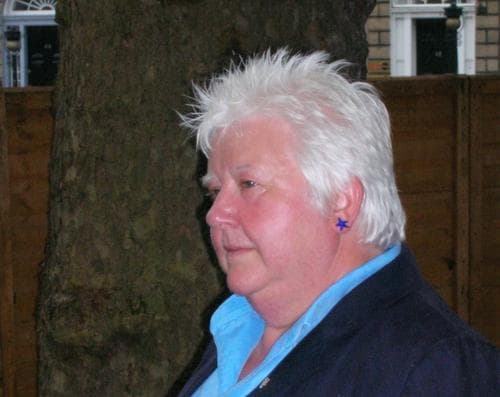
Biography coming soon.







