“I’m not a monster. I’m a human being. And I’m going to make sure that my son doesn’t suffer for something he did when he was too young to understand.”
— Paul defending his son's actions and his own protective stance.

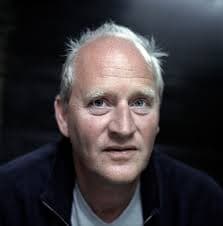
Herman Koch (2013)
Genre
Thriller / Mystery
Reading Time
6-7 hours
Key Themes
See below
Sign in to track this book
Over a multi-course meal, two affluent couples navigate polite conversation as they secretly deal with their sons' crime and the decisions they must make to protect them.
Paul Lohman, the narrator, and his wife Claire arrive at an expensive restaurant in Amsterdam. Paul immediately expresses his dislike for the place, its staff, and the pretentious menu, a feeling that continues through the evening. They are there to meet Paul's brother, Serge Lohman, a prominent politician running for Prime Minister, and Serge's wife, Babette. The initial interactions show Paul's cynical view of society, his brother's public image, and the superficiality around them. Tension is present, though unspoken, as Paul hints at a serious reason for this dinner, which he calls 'the talk'.
As appetizers are served, conversation covers everyday topics: Serge's political campaign, upcoming vacations, and polite pleasantries. Paul, however, constantly makes sarcastic remarks and internal criticisms, especially about Serge's public image and social conventions. Claire and Babette try to act normal, but anxiety is clear in their forced smiles and polite questions. Paul's observations about his brother's political ambitions and his own past mental health struggles offer early clues about his character and the family dynamics. The true, dark reason for the dinner hangs, unspoken, over every polite exchange.
During the main course, the dinner continues its slow, difficult pace. Paul's internal thoughts reveal more about his past, including his history of violence and temper issues. He thinks about his son, Michel, and his nephew, Rick, hinting at their close, sometimes troubling, relationship. Serge, the politician, tries to keep the conversation on safe, public topics, but Paul's pointed remarks about parenting and responsibility begin to crack the facade. The wives, Claire and Babette, grow more uneasy, exchanging knowing glances. The weight of the upcoming 'talk' becomes almost unbearable, as the parents subtly try to gauge each other's readiness to confront the truth about their children's actions.
The moment comes when Serge's phone gets a news alert, showing a video of two boys assaulting a homeless man at an ATM, leaving him for dead. The boys' faces are partly hidden, but the parents immediately recognize their sons, Michel and Rick. This public revelation shatters the dinner's pretense. The conversation now directly addresses the horrific act. Serge worries about the political effects of the video, while Babette expresses shock and fear. Paul, however, shows a detached, almost analytical, response, focusing on the video's technical details rather than the moral implications, hinting at his own complex and perhaps involved nature.
After the video is revealed, Serge, the politician, outlines his plan. He plans to hold a press conference the next day, confessing his son's involvement and taking responsibility. He believes this public act, even if it means losing his chance at becoming Prime Minister, is the only honorable path. Babette supports him, though with clear distress. Serge hopes Paul and Claire will do the same, urging them to consider the moral implications and the need for their sons to face consequences. This proposal immediately creates a rift, as Paul and Claire have a very different, and much darker, way of protecting their son, setting the stage for the family's conflict.
Paul and Claire reject Serge's proposal. They show their unwavering, almost ruthless, determination to protect Michel from legal trouble or public scrutiny. Paul's narrative highlights his own history of violence and his belief that some actions, even horrific ones, are justified when defending family. Claire, who at first seems more calm, reveals an equally fierce, if more subtle, resolve. They discuss ways to hide Michel's involvement, including destroying evidence and changing the story. This section strongly contrasts their moral compass with Serge's, showing the deep difference between the brothers on parental responsibility and justice.
Paul discusses Michel's past, recounting several disturbing incidents that show his son's capacity for cruelty and lack of empathy. He remembers how Michel, as a child, set a cat on fire and later pushed a classmate down stairs, causing serious injury. Paul's accounts show a chilling lack of moral judgment, almost as if he sees these acts as natural expressions of a strong will. Claire also knows about these incidents and has helped cover them up or downplay them. These revelations show a pattern of behavior for Michel and expose the parents' long history of enabling or excusing his violent actions, making their current protective stance more morally ambiguous.
As the dinner goes on, Claire's gentle manner gives way to a shocking display of resolve. She reveals that she has already taken steps to ensure Michel's safety. When Babette's son, Rick, threatens to confess to the police, potentially implicating Michel, Claire confronts him. Paul recounts how Claire, without his direct knowledge at the time, visited Rick and, pretending to offer comfort, subtly coerced him into silence. She then takes an even more extreme measure, hitting Rick over the head with a heavy object, causing a concussion and memory loss, effectively silencing him and destroying his credibility as a witness. This act solidifies Claire's role as a formidable, ruthless protector of her son.
The tension between Serge and Paul finally erupts. Their conversation becomes a bitter argument, revealing years of sibling rivalry, resentment, and different views on life, morality, and parenthood. Paul resents Serge's public success and perceived moral superiority, while Serge is appalled by Paul's cynicism and lack of ethical concern. Serge accuses Paul of enabling Michel's behavior, and Paul criticizes Serge's political ambitions and perceived hypocrisy. This confrontation shows the novel's core conflict: the clash between societal expectations and personal morality, and how far people will go to protect their own, even when faced with clear wrongdoing.
As the dinner ends, the couples have made their choices. Serge, devastated but determined, still plans to hold his press conference, though his political future is now uncertain. Paul and Claire remain firm in their decision to protect Michel at all costs, having successfully removed Rick as a threat. The homeless man's fate remains unclear, and the boys' guilt is effectively hidden, at least for now. Paul, in his final thoughts, expresses a chilling sense of satisfaction and justification, believing he has done what is necessary for his family. The novel ends without a clear resolution, leaving the reader to deal with the moral implications of the characters' actions and the unsettling reality of their choices.
The Protagonist/Unreliable Narrator
Paul begins as a cynical observer and ends as a ruthless protector, solidifying his moral relativism and commitment to his family's dark code.
The Supporting Character/Co-conspirator
Claire transforms from a seemingly gentle wife into a ruthless, active participant in covering up her son's crime, revealing her deep, unwavering commitment to family protection.
The Antagonist/Supporting Character
Serge begins as an idealistic politician determined to do the right thing but is ultimately forced to compromise his morals and political future due to his family's actions and his own need to protect his child.
The Supporting Character
Babette starts as a morally distressed wife supportive of truth but ultimately becomes complicit in the cover-up, demonstrating the corrupting influence of familial protection.
The Mentioned Character
Michel's character arc is inferred through his parents' actions; he remains unrepentant and unpunished, highlighting the failures of justice.
The Mentioned Character
Rick's potential arc towards confession is violently interrupted, leaving him a victim of the adult's protective schemes.
The Mentioned Character
The homeless man is a static character, serving as a symbol of the victimized and forgotten, his fate largely ignored by the self-serving characters.
This theme explores the extreme and often morally compromising lengths parents will go to protect their children, regardless of what their children do. Paul and Claire show this, justifying Michel's violence and actively covering up his crimes, even using violence themselves to silence witnesses. Serge and Babette, while at first more conventional, also ultimately put their son's well-being over strict justice. The novel questions where the line between unconditional love and enabling destructive behavior lies, as seen when Paul rationalizes Michel's cruelty as a 'strong will' and Claire physically attacks Rick to protect Michel's freedom.
“You can't choose your children. They're just there. Your job is to protect them.”
The novel deeply looks at the relativity of morality and the elusive nature of justice, especially when personal stakes are high. Serge, the public figure, initially champions a moral stance, advocating for confession and consequences. However, Paul and Claire operate on a different moral code, one where family loyalty is more important than societal laws and ethical considerations. The discussion around the boys' crime, the homeless man's fate, and the eventual cover-up forces the reader to confront uncomfortable questions about what is 'right' and 'wrong' when faced with familial love and self-preservation. The lack of true justice for the victim highlights the novel's cynical view of legal and moral systems.
“There are things you do for your children that you would never do for anyone else, not even yourself.”
Herman Koch criticizes the pretensions and hypocrisy of the upper-middle class. The entire dinner, set in an expensive restaurant, illustrates this theme. Paul's biting internal commentary constantly points out the absurdities of fine dining, polite conversation, and superficial social rituals. Serge's political career, built on a carefully constructed public image, is another example of this hypocrisy. The characters' desperate attempts to maintain their comfortable lives and reputations, even after their children commit a crime, expose the veneer of civility that often hides darker truths in affluent society. Their concern is often more about appearances and consequences for themselves than with the actual victim.
“We're all animals, Paul. But some of us are better at hiding it than others.”
Paul Lohman's narration is biased, subjective, and self-serving, making him an unreliable narrator. He filters events through his cynical worldview, often misinterpreting others' intentions, rationalizing his own and his family's actions, and holding back information from the reader. His neurological condition is sometimes used as a possible excuse for his behavior or to cast doubt on his perceptions. This narrative technique forces the reader to constantly question the truth of events and the characters' motivations, creating suspense and ambiguity. Paul's selective memory and justifications prevent a straightforward understanding of the plot and the moral landscape.
“I can only tell you what I saw, and what I thought I saw.”
The novel explores the origins of Michel's violent tendencies, asking whether his behavior is innate or a product of his upbringing. Paul's own history of aggression, along with his and Claire's consistent enabling and covering up of Michel's past misdeeds (like the cat incident or pushing a classmate), suggests a complex mix. While Paul hints at a 'dark side' in Michel, the parents' fierce protection and lack of moral guidance seem to have encouraged, rather than stopped, these tendencies. The contrast with Rick, who shows more remorse, further complicates the question of whether environment or inherent disposition is more influential in shaping character.
“Some children are born with a darkness inside them, a little black seed that grows.”
Paul Lohman's biased and subjective perspective shapes the entire narrative.
The story is told entirely from Paul Lohman's first-person perspective, making him an unreliable narrator. Paul's cynical worldview, personal biases, and mental state (he references a 'condition' and past violence) color his interpretation of events, dialogue, and other characters' motivations. He often withholds information, rationalizes morally reprehensible actions, and presents a distorted view of reality. This device forces the reader to question everything, creating suspense and ambiguity about the true nature of the characters and the events, and ultimately leaving the reader to form their own moral judgments.
The high-end restaurant symbolizes the superficiality and moral decay of the characters' world.
The exclusive, pretentious, and meticulously described restaurant serves as more than just a backdrop; it's a powerful metaphor for the social class and moral hypocrisy of the characters. The elaborate, often absurd, descriptions of the food, wine, and service highlight the superficiality and detachment of the wealthy, who can afford to ignore the harsh realities of the world outside its doors. The sterile, controlled environment of the restaurant starkly contrasts with the raw, violent, and morally bankrupt discussions taking place, emphasizing the characters' attempts to maintain an outward appearance of civility while their inner lives are in turmoil.
The progression of the meal mirrors the escalation of tension and revelation.
The novel's structure is neatly divided by the courses of the dinner: appetizers, main course, dessert, and coffee/digestifs. This seemingly innocuous framework belies the escalating tension and the gradual unveiling of disturbing truths. Each course marks a significant shift in the conversation, moving from polite small talk to the full, horrifying revelation of the boys' crime, and finally to the families' desperate attempts to deal with the aftermath. The slow, deliberate pace of the meal mirrors the agonizing psychological unraveling of the characters, building suspense and allowing the moral dilemmas to simmer before boiling over.
Paul's memories and thoughts provide crucial background and character insight.
Paul's narration is replete with extensive internal monologues and flashbacks to past events. These provide crucial background information about his own violent history, Michel's disturbing childhood incidents, and the complex sibling rivalry between him and Serge. The flashbacks reveal the long-standing patterns of behavior and the deep-seated motivations that drive the characters' present actions. The internal monologue allows the reader direct access to Paul's cynical and often disturbing thought process, revealing his true nature and his justifications for his family's morally ambiguous decisions, without the filter of external dialogue.
“I’m not a monster. I’m a human being. And I’m going to make sure that my son doesn’t suffer for something he did when he was too young to understand.”
— Paul defending his son's actions and his own protective stance.
“There are some things you just don't talk about. Not even with your wife. Especially not with your wife.”
— Paul reflecting on secrets he keeps from Claire.
“People always want to believe the best about others, especially if those others are famous. It’s a comfort, a delusion.”
— Paul observing the public's perception of Serge, his brother.
“How far would you go to protect your child? That’s the real question, isn’t it?”
— Paul's internal monologue about the central dilemma of the story.
“Sometimes, the most shocking things happen in the most ordinary places.”
— Paul contemplating the setting of the restaurant versus the gravity of the discussion.
“It’s amazing how quickly you can get used to a lie, how it can become your truth.”
— Paul considering the ease with which people accept fabricated narratives.
“We were all sitting there, pretending to be civilized, while our lives were falling apart.”
— Paul's observation of the strained dinner conversation.
“A good meal can make you forget almost anything. Almost.”
— Paul's thoughts on the power of food amidst the tense discussion.
“The truth is a tricky thing. Sometimes it’s better left buried.”
— Paul's internal debate about revealing or concealing information.
“You can’t just erase what happened. It’s always there, under the surface, waiting.”
— Paul acknowledging the lasting impact of past events.
“What good is a conscience if you don't use it to protect the people you love?”
— Claire's justification for her actions to protect her son.
“There’s a thin line between protecting your children and condoning their monstrous behavior.”
— Paul's internal conflict regarding his son's actions.
“It was a beautiful evening, really. The kind of evening where you almost forget what kind of monsters lurk beneath the surface.”
— Paul's concluding thoughts on the dinner and the facade of normalcy.
Ready to see how well you understood this book? Take our interactive quiz with 10 questions.
Biography coming soon.







